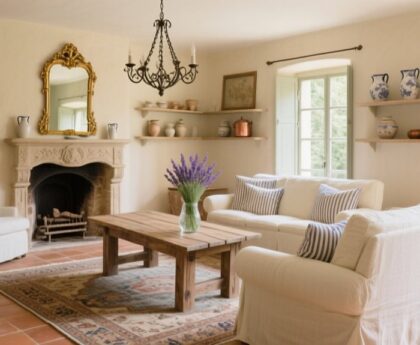
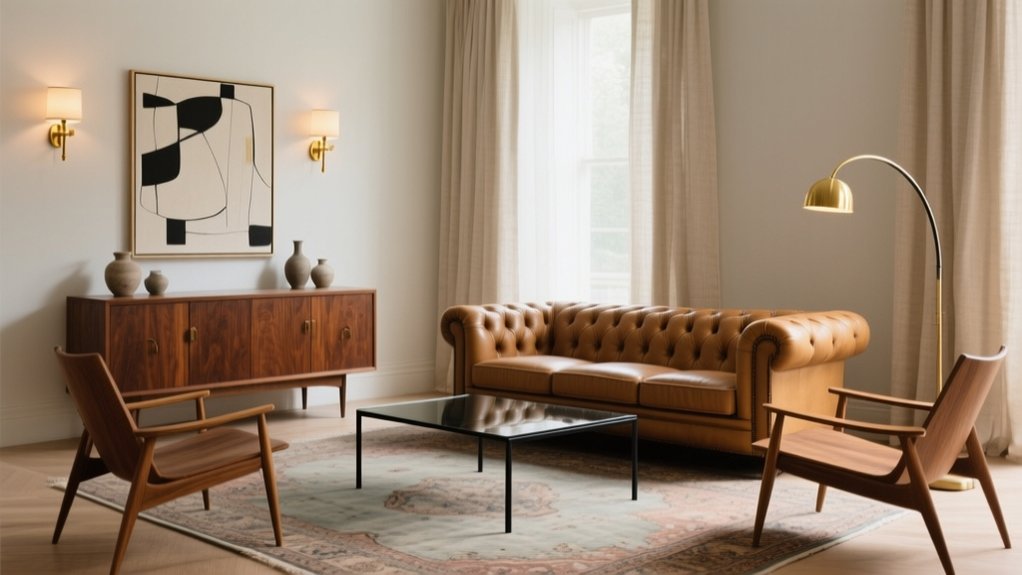

You balance traditional and modern furniture by starting with one anchor piece, then placing it on the room’s main axis and keeping 75–90cm walkways clear. Stick to a 70/30 mix, with big items in one style and a few contrasting accents that feel intentional. Match scale so seat heights and visual weight align. Repeat one timber tone and limit metals to two. Keep two neutrals plus one accent colour, and you’ll pull it all together—next, you’ll see how to apply it room by room.
Key Takeaways
- Start with an anchor piece on the room’s main axis, then build around it while keeping 75–90cm walkways clear.
- Follow a 70/30 mix: keep major furniture in one style, then add a smaller contrasting set for intentional balance.
- Match scale and visual weight by comparing heights, depths, and footprints, and keep seating heights close for comfortable conversation.
- Unify materials with one dominant wood tone repeated three times, limit metals to two, and keep sheen levels consistent across pieces.
- Use a tight palette of two neutrals plus one accent colour, repeating the accent in cushions, art, and accessories to connect old and new.
Start With One Anchor Piece (Classic or Modern)
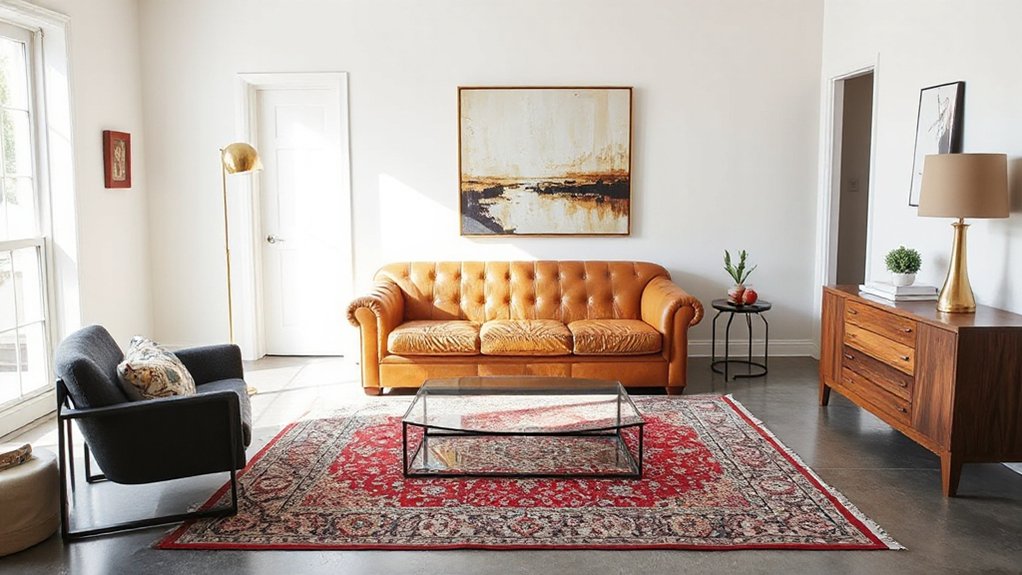
Whether you’re leaning traditional or modern, start by choosing one anchor piece that sets the tone for the whole room. Make it the sofa, a statement dining table, or a heritage sideboard—something you’ll keep even as trends shift. For Anchor piece styling, commit to its shape and finish: a Chesterfield wants crisp, contemporary lighting; a sleek modular sofa benefits from a classic rug or framed prints. Then lock in Furniture placement early. Centre the anchor on the room’s main axis (fireplace, bay window, or TV wall), and keep clear walkways—about 75–90cm works well in most UK terraces. Once it’s positioned, you can add complementary pieces without second-guessing proportions.
Use the 70/30 Rule to Set the Mix
Once you’ve set your anchor piece, use a simple 70/30 split to stop the room feeling undecided: aim for roughly 70% of your furniture in one style (traditional or modern) and 30% in the other. Treat the 70% as your “background” and keep it consistent across big-ticket items like the sofa, bed, and main storage.
Use the 30% to add contrast without chaos: a sleek coffee table beside a Chesterfield, or a carved sideboard under a minimal mirror. This mix lets Historical influences read as intentional rather than fussy, while your modern pieces feel purposeful, not temporary. In UK homes, where period features often dominate, the rule helps you respect the bones and still show Cultural expressions through carefully chosen accents. Count pieces, then adjust.
Match Scale and Proportions Across Styles
Even if you mix eras confidently, the room won’t feel cohesive unless the pieces share similar scale. Aim for Scale harmony by comparing heights, depths, and visual weight before you buy, especially in typical UK lounge sizes where bulky items quickly dominate.
- Match anchor pieces: Pair a traditional sofa with a modern coffee table of similar footprint, not a spindly perch.
- Align seat heights: Keep chairs and sofas within a few centimetres so conversation areas feel settled.
- Balance silhouettes: Offset a high-back wing chair with a taller floor lamp or substantial side table.
- Check proportions to the room: Measure doorways, bay windows, and radiators so proportion balance stays realistic.
When in doubt, sketch a floor plan and test with masking tape.
Repeat Woods, Metals, and Finishes to Unify
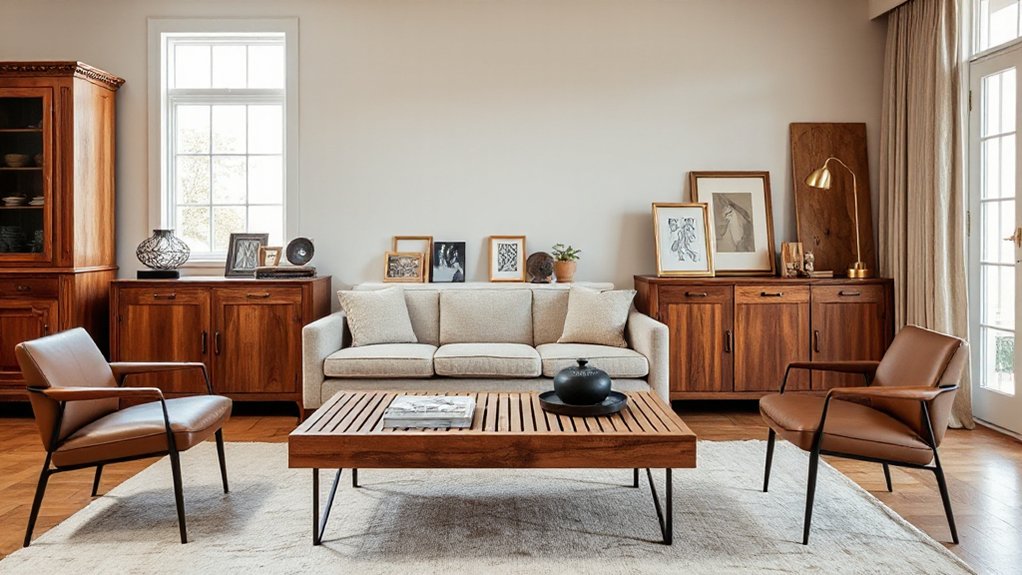
Although you can mix Georgian curves with crisp contemporary lines, you’ll only make the room feel intentional if you repeat a tight palette of woods, metals, and finishes across the space. Pick one dominant timber tone—oak, walnut, or painted joinery—and echo it in at least three places: a sideboard, a frame, and a shelf.
Use Material contrast deliberately, not randomly: pair warm wood with one cool element such as brushed nickel or blackened steel, then repeat that metal on lighting, handles, and a mirror. Keep Finish consistency by matching sheen levels; if your antique is waxed and matte, avoid high-gloss lacquer nearby. When you introduce mixed metals, cap it at two and let one lead. In UK homes, this approach stops period features fighting modern pieces.
Connect Old and New With a Tight Color Palette
If you keep your colour palette tight, you’ll make Victorian details and modern silhouettes feel like they belong in the same room. Aim for Color harmony by limiting yourself to two neutrals and one accent, then repeat them across upholstery, paint, and soft furnishings for instant Design cohesion. In UK homes with changeable daylight, test swatches north- and south-facing before committing.
- Choose grounded neutrals: warm greige, putty, or stone works with both mahogany and black steel.
- Pick one accent: inky blue, sage, or oxblood, echoed in cushions and art.
- Match undertones: keep whites either creamy or crisp; don’t mix.
- Control pattern: stick to one scale and keep colours consistent throughout.
Let One Statement Piece Lead, Keep the Rest Simple
Where do you start when your room mixes eras? Pick one hero item and let it set the tone. A carved mahogany sideboard, a sleek Italian sofa, or a bold pendant can become your lead; everything else should support it. Treat that piece as your anchor for scale and placement, then simplify around it.
Create Statement focal points by giving the hero breathing space: clear surfaces, generous walkways, and one strong sightline from the doorway. Limit competing silhouettes—pair ornate with clean-lined, or angular with gently traditional. Keep décor disciplined: choose Minimalist accessories in matched finishes, repeat them sparingly, and stop at three objects per surface. If in doubt, remove one item; the room will instantly read calmer.
Bridge Styles With Upholstery, Rugs, and Soft Texture
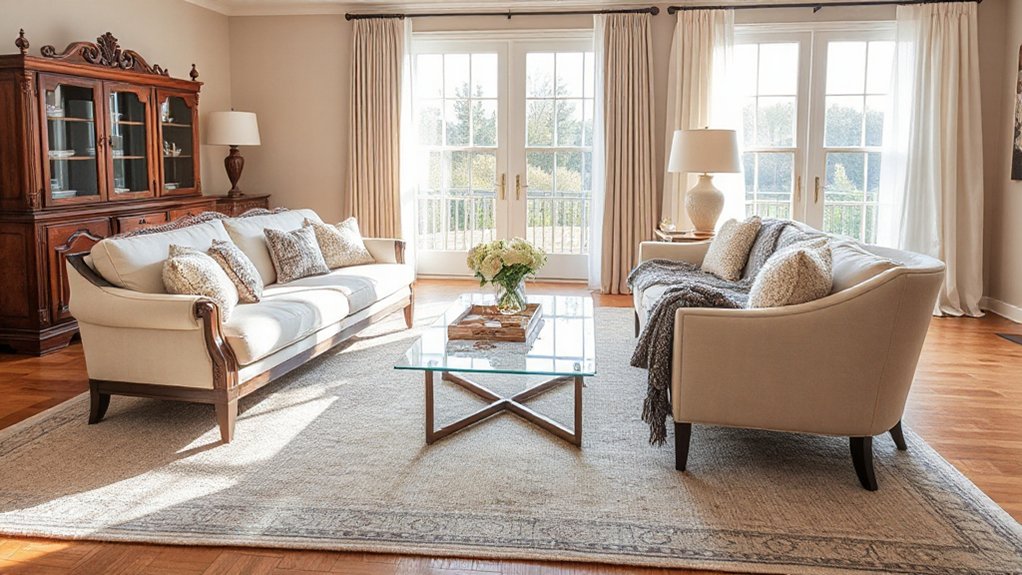
You can knit traditional and modern pieces together by mixing upholstery fabrications—think a classic wool or tweed on one chair and a clean linen or velvet on another. Layer rugs strategically by pairing a larger neutral base with a smaller patterned top rug to control contrast and zone the room. Finish with soft textural accents such as cushions, throws, and curtains to add warmth without muddying the overall look.
Mix Upholstery Fabrications
- Pick a shared base tone (warm greige, inky navy) and repeat it across cushions and curtains.
- Balance texture: pair velvet with boucle or tweed to soften sleek lines and modernise antiques.
- Master Pattern mixing: keep scale varied—one bold check, one small stripe, one plain.
- Use trims sparingly: piping or contrast welting adds tailored definition without looking fussy.
Layer Rugs Strategically
How do you make a room feel cohesive when your sofa leans modern but your sideboard’s unmistakably traditional? Layer rugs strategically to create a visual “handshake” between eras. Start with a large, neutral base rug that reaches under the front legs of key seating, anchoring the layout in typical UK room proportions. Then add a second rug on top—smaller, patterned, or richer in tone—to echo details from your traditional timber and your contemporary upholstery without competing with either. Keep the top layer offset rather than perfectly centred; it looks intentional and avoids a showroom feel. Choose low-pile or flatweave options so doors clear and edges don’t curl, blending textures seamlessly while maintaining crisp lines.
Add Soft Textural Accents
Although clean-lined modern pieces and ornate traditional furniture can clash on paper, soft textural accents make them sit comfortably together in real life. You’ll get harmony faster by focusing on touch, not trends. Aim for Textural contrast so a sleek sofa doesn’t look sterile beside carved wood, and use Material layering to stop heritage pieces feeling heavy. Keep colours controlled, then vary weave, pile, and finish for depth—especially helpful in UK homes with limited light.
- Choose upholstery with body: bouclé, wool, or linen blends to bridge eras.
- Add a deep-pile rug under modern legs to warm up sharp silhouettes.
- Mix cushions: velvet with nubby cotton, but repeat one tone for cohesion.
- Drape a throw over an armchair to soften outlines and invite use daily.
Room-by-Room Examples + the Mistakes to Avoid
When you mix traditional and modern furniture room by room, you’ll get better results by making one style the lead and using the other for contrast, rather than trying to split things 50/50. In your lounge, anchor with a classic Chesterfield, then add a sleek glass coffee table and metal floor lamp for a Minimalist approach without losing Vintage charm. In the dining room, pair a contemporary table with ladder-back chairs, and keep lighting simple with a single pendant. In the bedroom, let a modern platform bed sit beside a carved or rattan bedside table. Avoid common mistakes: matching every finish, overfilling small UK rooms, and buying “in-between” pieces that feel bland. Stick to two key materials and one accent colour throughout.
Frequently Asked Questions
How Do I Blend Heirloom Furniture With Smart-Home Technology Discreetly?
Hide hubs in cabinets, run cables in trunking, and choose discreet sensors in heritage colours. Prioritise vintage preservation with reversible fixings, and plan furniture placement to mask speakers. You’ll keep period charm while upgrading functionality.
What’s the Best Lighting Approach for Mixing Antique and Contemporary Pieces?
Use layered lighting: start with warm ambient lighting on dimmers to unify finishes, then add targeted accent lighting to highlight antiques. Choose slim contemporary fittings, match lamp shades to upholstery, and use UK-standard LEDs.
How Can I Balance Styles in an Open-Concept Space Without Clear Room Boundaries?
You’ll kill two birds with one stone by zoning with rugs and lighting, keeping Color coordination consistent throughout. Use Texture mixing to signal areas—linen, leather, oak—then repeat one hero piece to unify sightlines.
Should I Insure or Appraise Antiques Before Incorporating Them Into Daily-Use Rooms?
Yes—you should appraise and insure them first. Get Antique valuation from a UK-accredited valuer, keep receipts and photos, then review Insurance considerations with your home insurer for accidental damage, wear, and agreed value.
Where Can I Find Affordable Modern Pieces That Complement Vintage Furniture?
Like Theseus choosing his path, you’ll find affordable modern pieces at IKEA, Dunelm, Habitat, and John Lewis sales, plus Facebook Marketplace, Gumtree, and charity shops. Prioritise clean lines for Vintage charm and Modern affordability.
Conclusion
When you balance traditional and modern furniture, you’re not chasing a trend—you’re setting a rule. Start with one anchor, then let the 70/30 mix guide you. Match scale, repeat finishes, and keep your palette tight; do it in the lounge, do it in the hallway, do it in the dining room. Let one statement lead and simplify the rest. Coincidentally, most “mistakes” come from mixing too much, too fast, too often.