


Transitional furniture gives you a timeless, polished look by blending classic proportions with clean, modern lines, so your space feels refined but relaxed. You’ll see tailored arms, gentle curves, and simple wood or metal legs paired with oak, walnut, linen, bouclé, leather, and honed stone. Stick to grounded neutrals like white, greige, taupe, and charcoal, then add matte black or muted navy. Keep scale right, avoid matchy sets, and prioritize quality to learn the easiest ways to combine it flawlessly.
Key Takeaways
- Transitional furniture blends traditional proportions with contemporary simplicity for a polished, livable look that avoids short-lived trends.
- Look for clean silhouettes with softened curves, tailored arms, low profiles, and simple wood or metal legs.
- Choose quality materials like oak or walnut, linen or bouclé, top-grain leather, and honed stone in grounded neutral palettes.
- Use transitional pieces as quiet anchors, then add one modern or traditional statement item while repeating finishes to keep cohesion.
- Avoid common mistakes by measuring scale, skipping matching sets, and prioritizing solid construction, durable fabrics, and supportive cushions.
Transitional Furniture: What It Is and Who It’s For
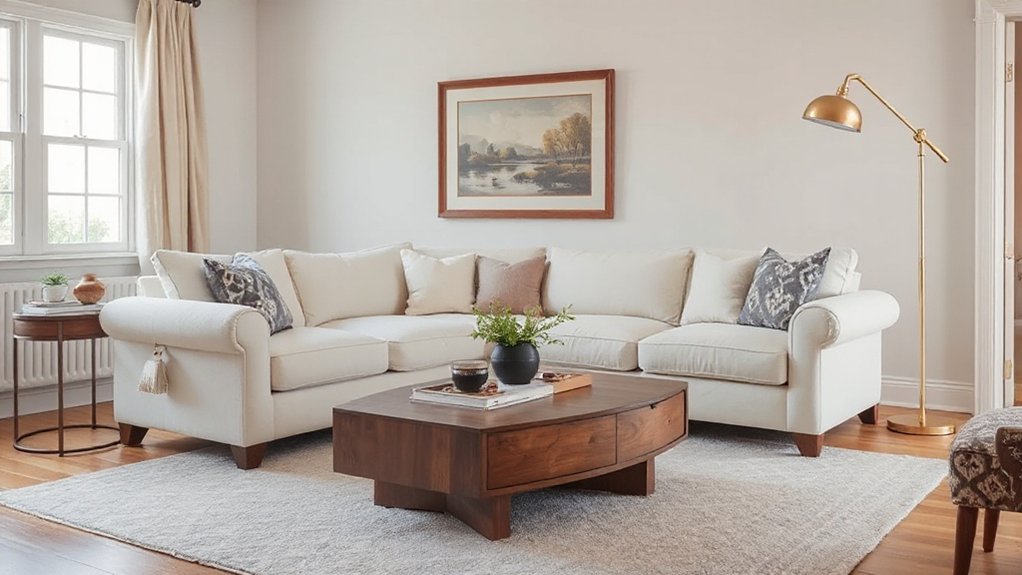
Why has adaptable furniture become the go-to look in so many modern homes? Transitional furniture gives you a balanced, livable middle ground between traditional formality and contemporary simplicity, so your rooms feel current without looking trendy. You’ll recognize its Historical influences in how it respects classic proportions and familiar silhouettes, yet it edits the overall feel for today’s lifestyles.
You’re a fit if you want pieces that move easily from one home—or one phase of life—to the next. If you mix heirlooms with newer finds, or you entertain often and need a polished-but-relaxed backdrop, this style supports you. Its Cultural versatility helps you pair global art, collected textiles, and diverse decor without the space feeling themed or chaotic.
Key Design Cues of Transitional Furniture (Shapes, Materials, Color)
Because gradual style lives in the middle, its design cues read as intentional edits rather than bold statements: silhouettes stay clean but not sharp, with softened corners, gentle curves, and classic profiles stripped of heavy ornament. You’ll see tailored arms, low profiles, and simple legs in wood or metal, often in slim, refined proportions. Materials skew tactile and credible: oak, walnut, linen, bouclé, top-grain leather, and honed stone, balanced with subtle sheen from brushed brass or blackened steel. Color stays grounded—warm whites, greige, taupe, and charcoal—then you layer controlled contrast through matte black, navy, or muted sage. Vintage accents show up as ribbing, cane, or aged finishes, while Eclectic pairings are unified by consistent undertones and restraint.
How to Mix Transitional Furniture With Modern or Traditional
When you mix transitional furniture with modern or traditional pieces, treat transitional as the “editor” that sets the baseline and keeps the room from tipping too stark or too ornate. Start with a quiet anchor—clean-lined sofa or tailored dining chairs—then layer one statement item from the other style.
Keep Color palettes disciplined: pair warm neutrals with one saturated accent, or use tone-on-tone creams and charcoals to bridge eras. If you’re leaning modern, add transitional texture (linen, oak, boucle) to soften hard edges. If you’re leaning traditional, choose simplified silhouettes and limit ornament to one focal piece. Dial in furniture placement by balancing visual weight: float sleeker pieces opposite heavier classics, and repeat finishes twice so the mix looks intentional.
The Best Rooms for Transitional Furniture (Living, Bedroom, Dining)

Although versatile furniture works almost anywhere, it performs best in the rooms you use hardest—living, bedroom, and dining—because its clean silhouettes and softened details make it easy to balance comfort, durability, and style. In the living room, anchor seating with a tailored sofa, then refine furniture placement by floating chairs to create conversation lanes without blocking traffic. Use color coordination to bridge materials: warm woods, black metal, and a muted rug with one accent tone. In the bedroom, choose an upholstered headboard and streamlined nightstands; keep surfaces calm with layered neutrals and a single contrasting finish. In the dining room, pair a simple table with updated classic chairs, and echo tones through linens, lighting, and art for a cohesive, current look.
Transitional Furniture Buying Mistakes to Avoid (Scale, Sets, Quality)
Getting fluid style to look effortless in your living, bedroom, and dining spaces comes down to smart buying, not just good styling. First, don’t misjudge scale: oversized arms, deep seats, or bulky casegoods can crush walkways and throw off furniture placement. Measure room clearances, sightlines, and rug boundaries before you buy. Second, skip matching sets. Transitional rooms feel current when you mix silhouettes and finishes; keep cohesion through restrained color palettes and repeated materials, not identical pieces. Third, don’t bargain-shop construction. Prioritize kiln-dried frames, corner blocking, solid-wood or quality veneer, durable performance fabrics, and smooth full-extension drawers. Check cushion density and suspension too. When you balance proportion, curated variety, and lasting build quality, your “best of both worlds” look won’t date fast.
Frequently Asked Questions
Is Transitional Furniture More Expensive Than Modern or Traditional Styles?
You won’t always pay more; shift costs range from mid to premium depending on materials and brands. In a Price comparison, you’ll see modern varies similarly. You’re paying for Design versatility, clean lines, and quality.
How Do I Clean and Maintain Transitional Upholstery and Mixed Materials?
You’ll keep upholstery and mixed materials pristine for ages: vacuum weekly, blot spills instantly, and rotate cushions. For Upholstery care, use fabric-safe cleaner; for Material preservation, dust wood, wipe metal dry, and condition leather quarterly.
Which Transitional Furniture Brands Offer the Best Warranties and Customer Support?
You’ll get the strongest Warranty policies and Customer service quality from Room & Board, Ethan Allen, and Arhaus; also consider Restoration Hardware. You’ll want long-frame coverage, responsive claims handling, and clear exclusions—always register purchases promptly.
Can Transitional Furniture Work in Small Apartments With Limited Natural Light?
Yes, you can make transitional furniture work in small, low-light apartments. Focus on Lighting considerations like warm LEDs, reflective finishes, and pale upholstery, and prioritize Space optimization with slim profiles, multifunction pieces, and legs.
What’s the Typical Delivery Time for Custom Transitional Furniture Pieces?
You’ll typically wait 6–12 weeks for custom pieces, depending on your delivery timeline and customization options. You’ll get faster turnarounds with standard finishes, while bespoke fabrics, made-to-measure sizing, and artisan details add lead time.
Conclusion
When you choose transitional furniture, you’re not “playing it safe”—you’re editing with intention. Think of it like a well-tailored blazer: it pulls jeans and dress pants into the same sharp look. Last year, a designer I worked with swapped a client’s bulky rolled-arm sofa for a clean-lined, neutral piece; the room instantly felt 30% lighter—without losing warmth. Keep scale honest, skip matchy sets, and invest in solid frames and lasting fabrics.