


Key Takeaways
- Define how you’ll use the space daily, then map circulation routes and storage early to prevent clutter.
- Let the house architecture set the style, aligning key axes, focal points, and detailing with the façade.
- Limit hardscape to three materials and one metal finish, using a restrained palette tested outdoors in different light.
- Create planting cohesion by repeating forms and evergreen structure, adding seasonal flowers in controlled, consistent doses.
- Choose scaled furniture, layered lighting, and well-drained containers, then finish with crisp edging and mulch for a polished look.
Start With How You’ll Use the Outdoor Space

Before you choose paving, planting, or furniture, decide exactly how you’ll use your outdoor space day to day. Map your routines: weekday coffee spot, children’s play zone, BBQ area, or a quiet corner for reading.
Measure the footprint you’ve actually got, then set clear circulation routes from back door to bins, shed, and gate.
List practical needs that affect layout. If you do regular garden maintenance, you’ll want a tap nearby, a hose run that won’t snag, and hardstanding for a green waste bag or wheelbarrow.
Plan outdoor storage early: allocate space for a bike store, log store, or compact bench box, and keep access dry and well-lit. This prevents clutter and keeps the scheme coherent year-round.
Choose an Outdoor Style That Fits Your Home
Choose an outdoor style that mirrors your home’s architectural character, so a Victorian terrace, Georgian townhouse, or modern new-build reads as one coherent scheme.
You’ll get the best result when you balance materials and colours across hard landscaping and furniture—think brick with clay pavers, sandstone with muted greys, or painted timber echoed in planting pots.
Keep the palette tight and the finishes consistent, and your garden will feel purpose-built rather than pieced together.
Match Architectural Character
Although you can mix influences, your outdoor scheme looks most convincing when it echoes your home’s architectural character. Start by reading the façade: roof pitch, window proportions, brick bond, and any bay or porch detailing. This establishes architectural harmony, so your paving layout, paths, and garden structure feel intentional rather than imposed.
Respect historical context, especially with period terraces, Victorian villas, or Arts and Crafts houses common across the UK. Keep sightlines to key features such as sash windows, stone lintels, or decorative bargeboards, and let these dictate where you place focal points like a main path axis or a seating court.
If you live in a 1930s semi, favour clean geometry and orderly planting beds; if it’s a cottage, use softer, informal routes.
Balance Materials And Colors
Once you’ve taken cues from the house, you need to control your material and colour palette so the garden reads as one scheme rather than a patchwork of finishes. Aim for Material harmony by repeating two or three primary surfaces—say, London stock brick, honed sandstone, and blackened steel—then vary texture, not type.
Lock in Color coordination with a tight range: warm buff, soft grey, and one dark accent often suits UK light and drizzle, keeping everything calm in winter. Test samples outdoors; rain deepens tones and algae can green up porous stone.
- Limit hardscape to 3 materials to feel settled.
- Repeat one metal finish for quiet confidence.
- Echo a house colour in pots for belonging.
- Use one bold hue sparingly for delight.
Pick a Cohesive Outdoor Color Palette (3–5 Colors)
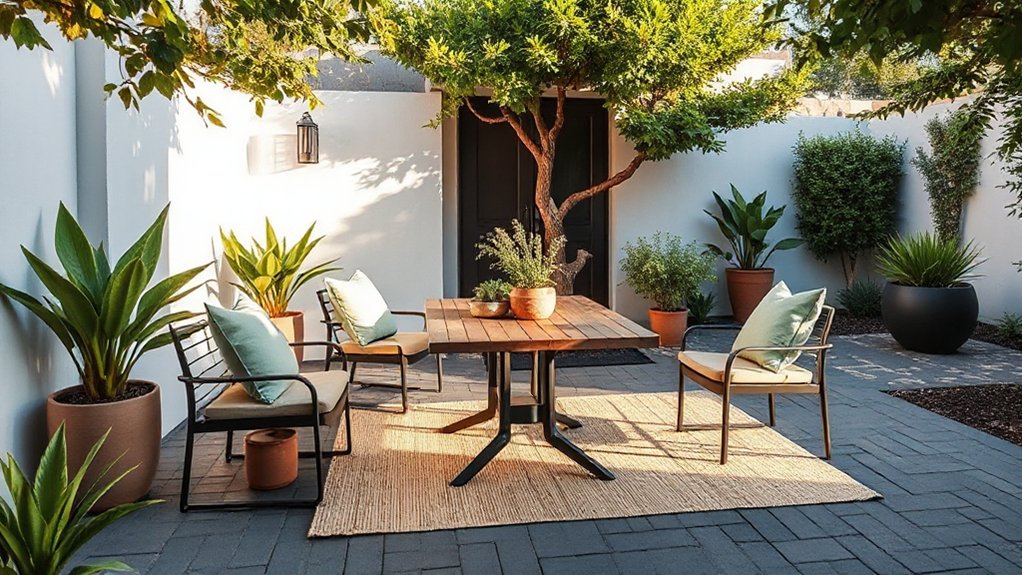
Pick a tight outdoor palette of three to five colours, starting with one base shade for large areas such as paving, fences, or render.
Then add two or three accents for pots, cushions, and planting.
Balance crisp neutrals—soft greys, warm stone, or off-white—with natural tones drawn from timber, brick, and foliage so everything sits comfortably in your garden setting.
Keep the accents consistent across materials and finishes, and you’ll avoid a patchy look while still giving the space definition.
Define Base And Accents
Before you buy cushions, paint, or planters, define a clear base-and-accent colour palette so every outdoor element reads as part of one scheme. Choose one base colour for the largest surfaces—decking stain, fencing, rattan, or paving—then select two to four accents that’ll contrast focal points and define visual hierarchy.
In the UK’s changeable light, test swatches outdoors at morning, noon, and dusk; what looks crisp in a showroom can turn flat under cloud cover. Keep the base consistent across zones, but let accents appear in smaller, repeatable hits so the garden feels calm, not busy.
- Pick a base that makes you exhale.
- Choose accents that spark delight, not noise.
- Repeat accents to create reassuring rhythm.
- Stop at five colours to stay confident.
Balance Neutrals With Naturals
Because UK gardens sit in a shifting mix of grey skies, low winter sun, and lush summer greens, your 3–5 colour palette works best when you anchor it in calm neutrals (stone, putty, warm grey, charcoal, soft black) and then echo the natural tones already on site—timber, brick, terracotta, hedging, and seasonal foliage.
Keep hard landscaping in neutral tones so it stays steady through the seasons, then layer natural textures to add warmth and depth.
If your paving reads cool, choose warmer woods, buff sandstone planters, and russet clay pots.
If you’ve got red brick, temper it with soft black metalwork and muted greens.
Repeat each colour at least three times—pots, cushions, slats, edging—so the scheme feels intentional, not piecemeal.
Repeat Key Outdoor Materials (Stone, Wood, Metal)
Although plants change with the seasons, repeating a tight palette of hard materials—stone, wood, and metal—keeps your outdoor scheme looking deliberate all year.
Choose Outdoor material textures that echo across paving, edging, steps, and screens: honed limestone beside rough-sawn oak, then a matt black steel detail to stitch it together.
Keep Material durability considerations front and centre in the UK climate: specify frost-resistant stone, use FSC hardwood with proper sealing, and opt for galvanised or powder-coated metal to resist rain and coastal air.
When you repeat these finishes, the space feels calm, intentional, and quietly luxurious.
- Let one stone tone ground you and steady the view.
- Repeat timber grain to add warmth you can almost feel.
- Use metal lines to sharpen edges and boost confidence.
- Limit variations so every detail feels chosen, not accidental.
Choose Outdoor Furniture That Matches Scale and Style
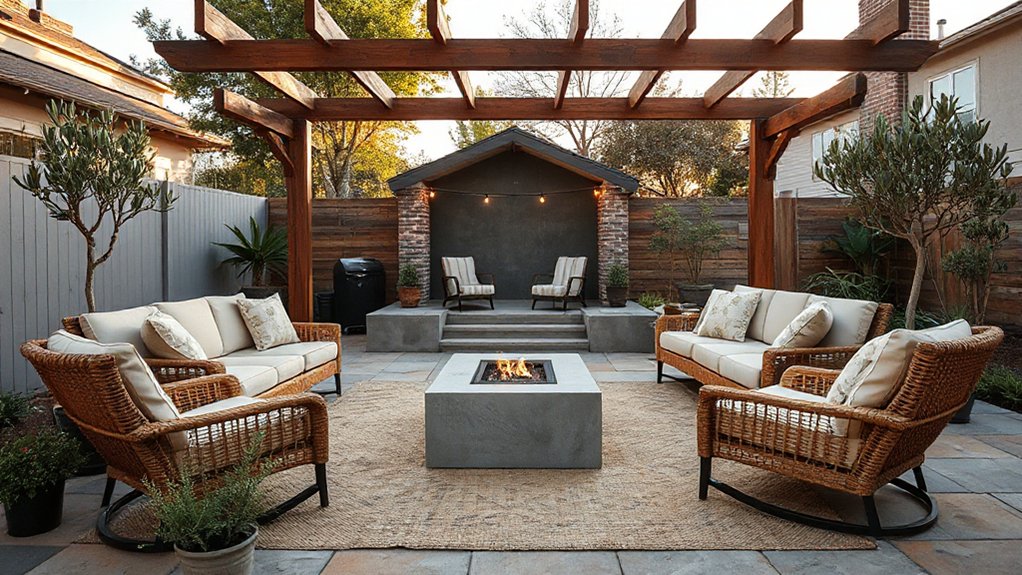
When your furniture matches the scale and style of the space, the whole garden reads as one designed scheme rather than a collection of pieces.
Start by measuring your patio or lawn zone and leaving clear routes to doors, bins, and borders; tight UK terraces need slimmer footprints and stackable forms.
Prioritise matching furniture proportions: choose low loungers for wide, open plots, and compact bistro sets for courtyards. Keep seat height consistent across pieces so dining and lounging don’t clash visually.
Then lock in style harmony by echoing your home’s architecture—powder-coated aluminium suits modern extensions, while painted timber complements cottages and Victorian brick.
Finally, repeat one dominant finish and one accent colour to prevent the set looking mixed-up.
Layer Outdoor Lighting, Textiles, and Décor Accents
How do you make an outdoor space feel finished after you’ve nailed the furniture? You layer light, texture, and small accents so it feels intentional from dusk to dawn.
Start with warm-white string lighting at eye level to soften hard edges and extend evenings. Then add decorative textiles—weatherproof cushions, a washable throw, and an outdoor rug—to make the seating feel inviting, not temporary. Keep metals and finishes consistent, and repeat one accent colour so the scheme reads as one.
- Hang lights to create a gentle “ceiling” that feels cosy, not harsh.
- Choose textiles that beg you to sit down, even when there’s a nip in the air.
- Add lanterns or battery candles for calm, wind-safe glow.
- Finish with a tray, hooks, and a few sculptural objects for polish.
Tie the Cohesive Outdoor Design Together With Plants
Once you’ve layered lighting, textiles, and finishing touches, plants lock the whole outdoor scheme together by echoing your colours, softening boundaries, and adding year-round structure.
Start with plant placement: repeat the same form at key sightlines, like clipped box spheres by steps, tall pleached hornbeam along fences, and a statement pot by seating.
Build cohesion through foliage variety, not random blooms. Pair evergreen backbone (yew, holly, sarcococca) with consistent leaf shapes, then add seasonal performers in controlled doses—lavender, salvias, or hardy geraniums.
In UK gardens, plan for wind, shade, and wet winters: choose hardy, disease-resistant plants and keep pots on feet for drainage.
Finish with mulch and edging so planting reads intentional, crisp, and calm.
Frequently Asked Questions
How Do I Design a Cohesive Outdoor Space on a Tight Budget?
Plan a tight-budget outdoor space by reusing materials, limiting your palette, and repeating shapes. Add affordable landscape lighting with solar stakes, plus DIY outdoor art. Shop UK clearance, grow from seed, and prioritise multipurpose seating.
Which Outdoor Materials Require the Least Maintenance Year-Round?
For year-round ease, choose Low maintenance, Weather resistant materials—composite decking, porcelain paving, aluminium furniture, and galvanised steel fixings; they’re your “ironclad shield” against British rain, algae, and frost, needing only occasional washing.
Do I Need Permits for Patios, Pergolas, or Outdoor Kitchens?
You’ll often need permits: patios may require planning if raised or draining poorly; pergolas exceed size/height limits; outdoor kitchens need building regs for gas/electrics. Check council guidance; Landscape lighting, Garden sculptures can trigger rules.
How Can I Make My Outdoor Design More Private From Neighbors?
Boost privacy by installing privacy screens and choosing robust fencing options like closeboard or slatted panels. Add evergreen hedging, trellis with climbers, and pergola curtains. Check boundary lines, height limits, and local planning guidance.
What Are the Best Ways to Protect Outdoor Furniture From Weather?
Use Furniture covers that fit snugly, vent, and buckle against UK winds. Apply Weatherproof finishes annually. Store cushions indoors. Choose rust-resistant frames. Lift furniture off wet paving, and don’t leave it uncovered overnight.
Conclusion
Funny how the moment you decide how you’ll actually use the garden, everything else falls neatly into place. Choose a style that suits your home’s architecture, then limit yourself to 3–5 colours and repeat materials—timber, stone, powder-coated metal—for instant cohesion. Scale your seating properly, and layer lighting, cushions, and outdoor rugs for comfort after dusk. Finally, let planting link it all: repeated forms, clipped structure, and seasonal interest.