


Transform your bedroom with six earthy tones: sandy beige to open up small rooms, clay or terracotta for instant warmth, warm taupe as a cosy neutral base, soft sage for calm that won’t feel cold, olive green for grounded mood, and deep cocoa brown for dramatic accents. Match undertones to your light, keep ceilings slightly lighter, and use matte paint. Repeat the shade through linen, jute, and warm metals. Keep going for easy pairing tips.
Key Takeaways
- Sandy beige on the largest wall brightens small bedrooms; choose warm undertones for north light and greige beige for strong sun.
- Clay and terracotta add instant warmth; use as a headboard accent wall and repeat in rust-toned textiles.
- Warm taupe creates a cosy neutral base; layer linen, brushed cotton, and matte wood with cream, camel, and olive accents.
- Soft sage feels calm, not cold; pair with creamy off-whites, honey oak, and warm metals like brushed brass or aged bronze.
- Olive green with deep cocoa brown delivers a grounded, moody look; keep trim warm off-white and limit dark accents to 10–20%.
Sandy Beige Earthy Tones: Brighten Small Rooms

If your bedroom feels tight or dim, sandy beige is the earthy tone that opens it up without looking stark. Use Sandy beige tones on the largest surface you see first—typically the wall behind the bed—to set a calm, expansive backdrop. Choose a warm, slightly yellow undertone if you face north; pick a greige-leaning beige for strong southern light to avoid glare. For Brightening small spaces, keep ceilings a half-step lighter and trim in a soft off-white to sharpen edges without high contrast. Layer texture, not color: linen bedding, a jute rug, and light oak nightstands prevent the room from reading flat. Finish with matte paint to hide wall imperfections and soften reflections.
Clay & Terracotta Earthy Tones: Instant Warmth
Use clay and terracotta tones when you want instant warmth without darkening the room. Start with a terracotta accent wall behind the headboard, then build depth with clay-toned textiles—linen bedding, a woven throw, and layered cushions in rust and sienna. Finish the scheme with warm lighting pairings like 2700K bulbs, brass or matte-black fixtures, and shaded bedside lamps that soften the colour and keep it cosy.
Terracotta Accent Wall Ideas
Why does a terracotta accent wall instantly make a bedroom feel warmer and more grounded? You’re seeing clay’s natural red-brown undertones, which visually “advance” and reduce the room’s perceived chill. Paint the wall behind your headboard for the strongest anchor, or choose the wall opposite the window to balance bright daylight. Use a matte finish to mimic fired clay and hide minor drywall flaws. If you want depth, color-block with a lighter clay band at picture-rail height, or add a limewash effect for subtle variation. Keep adjacent walls warm off-white or sand so the terracotta reads rich, not heavy. Echo it with terracotta pottery on a shelf, or pull tones from terracotta garden ideas like sunbaked planters and brick paths.
Clay Textiles And Layers
How do clay-toned textiles make a bedroom feel instantly warmer without repainting a wall? You get saturation and softness exactly where your eye lands: the bed, window, and floor. Start with a clay or terracotta duvet cover in Natural fiber cotton or linen; it reads grounded, not loud. Add a lighter sand sheet set to keep contrast clean. Then layer Organic textures: a ribbed throw at the foot, a nubby wool cushion, and a small bouclé lumbar pillow. Anchor the palette with a rust-toned rug or woven runner so the warmth spreads beyond the bed. Keep patterns minimal—thin stripes or tone-on-tone checks—and repeat one clay shade three times for cohesion. Rotate covers seasonally; the tone stays consistent.
Warm Lighting Pairings
Although clay and terracotta already bring visual warmth, the right lighting makes those earthy tones look rich rather than flat. Choose warm LEDs at 2200–2700K to deepen orange and red undertones, and avoid cool 4000K bulbs that turn walls dull or pink. Layer light: a dimmable ceiling fixture for fill, a shaded bedside lamp for soft spill, and a low floor lamp to graze textured plaster or linen.
Aim for meditative lighting by using dimmers or smart bulbs with an evening scene set around 30–40% brightness. Pick shades in cream, linen, or matte clay to diffuse glare. For character, use vintage bulb styles in amber glass, but keep them under 450 lumens so they don’t overpower the palette.
Warm Taupe Earthy Tones: The Cosy Neutral Base
Use warm taupe as your bedroom’s neutral base, then build depth by layering textures like nubby linen, brushed cotton, boucle, and matte wood finishes. Keep the palette cohesive by mixing light and mid-tone taupes across walls, bedding, and rugs, and vary sheen to prevent the room from feeling flat. Add complementary accents—cream, camel, olive, rust, and aged brass or black metal—to sharpen contrast while keeping the overall look cosy.
Layering Warm Taupe Textures
When you build a bedroom around warm taupe, you get a cosy neutral base that feels grounded without looking flat. Use color psychology to your advantage: taupe’s muted warmth lowers visual noise and encourages rest, so keep your layers soft-edged and calm.
Create texture contrast so the palette reads intentional, not monotonous. Start with matte taupe wall paint, then add a linen or cotton duvet in a slightly different undertone. Bring in a nubby wool throw, a velvet cushion, and a low-pile rug to vary sheen and hand-feel. Mix smooth wood with brushed metal on bedside hardware for subtle bite. Repeat taupe across at least three surfaces—walls, bedding, rug—so the room feels cohesive, then vary weave, pile, and finish.
Complementary Accents For Taupe
Because warm taupe sits in the middle of the spectrum, you can steer the mood with a few well-chosen accents that either deepen its cosy feel or sharpen it with contrast. For richer warmth, add terracotta, clay, or rust in cushions, a throw, or a ceramic lamp base; keep finishes matte to stay grounded. For a cleaner, modern edge, pair taupe with soft black, charcoal, or brushed bronze in curtain rods, frames, and bedside hardware. If you want calm Neutral palettes, lean into cream, oatmeal, and sand, then vary texture rather than colour. For accent color coordination, repeat each accent at least twice—art plus pillow, or rug plus vase—so the room reads intentional, not scattered. Stick to two accent hues max.
Soft Sage Earthy Tones: Calm Without Feeling Cold
Although sage sits on the cooler side of the spectrum, you can make this earthy green feel calm and welcoming by pairing it with the right warmth and texture. Use Color psychology to your advantage: sage lowers visual intensity, so balance it with creamy off-whites, warm greige, or soft sand to prevent a chilled look. Choose a muted, greyed sage on walls, then layer in honey oak, cane, or walnut to add warmth. Bring in natural pigment sources through clay-based paint tones, linen, jute, and stonewashed cotton; these materials keep the colour grounded, not icy. Aim for warm metals—brushed brass or aged bronze—over chrome. Finish with warm bulbs (2700K) and diffused lampshades to soften undertones at night.
Olive Green Earthy Tones: Grounded, Moody Depth
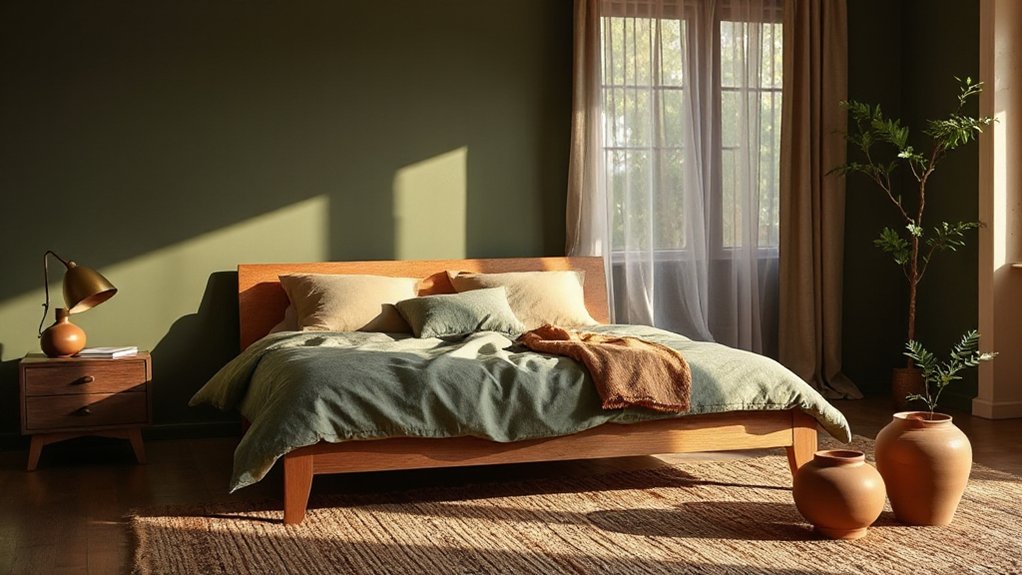
How do you get that rich, grounded bedroom mood without making the space feel heavy? Choose olive green with a muted, greyed undertone and place it where you need depth: a headboard wall, built-ins, or lower half panelling. Keep the ceiling and trim warm off-white to preserve lift, and add matte finishes to avoid glare. Balance olive with flax linen, wool throws, and brushed brass hardware for controlled warmth. Lean into botanical influences through leafy prints, olive-branch artwork, or a single large plant, but keep patterns low-contrast. For sustainable sourcing, pick low-VOC paint, certified wood furniture, and recycled-textile bedding. Use layered lighting—soft bedside lamps plus dimmable overhead—to keep the tone moody, not murky.
Deep Cocoa Brown Earthy Tones: Dramatic Accents
Olive green sets the botanical, grounded base, and deep cocoa brown sharpens that mood with dramatic, tailored contrast. Use Deep cocoa brown accents where you want structure: a painted headboard wall, walnut nightstands, or a chocolate-toned bed frame that anchors the room.
Keep the rest of your earthy colour palettes warm and controlled. Pair cocoa with creamy linen bedding, camel throws, and brushed brass hardware so the dark tone reads rich, not heavy. Balance it with texture: boucle, woven rattan, and matte ceramics prevent flatness. If your room runs small, limit cocoa to 10–20% of the visual field and repeat it twice—lamp base plus picture frames—to look intentional. Finish with soft, layered lighting; cocoa needs warm bulbs to stay inviting.
Frequently Asked Questions
Which Earthy Paint Finishes Hide Wall Imperfections Best?
You’ll hide imperfections best with matte or flat earthy paints, especially Natural mineral finishes that diffuse light. In Matte vs. satin sheens, choose matte for bumps; use satin only on high-touch areas.
How Do Earthy Tones Affect Sleep Quality and Circadian Rhythm?
Earthy tones can improve sleep quality by reducing arousal and supporting melatonin-friendly light perception at night. You’ll notice Effects on mood: calmer, less stress. Their Connection to nature reinforces safety cues, helping circadian rhythm stabilize.
What Bedding Textures Pair Best With Earthy Colour Palettes?
Pair earthy palettes with textured duvet covers and linen pillowcases for depth and breathability. Add washed cotton sheets for softness, a wool or boucle throw for warmth, and a jute or knit blanket for grounded texture.
How Can Renters Use Earthy Tones Without Painting Walls?
Like swapping a jacket, you’ll use removable textiles: terracotta bedding, olive throws, jute rug, linen curtains. Add peel-and-stick art, clay planters, and wood accents for Eco friendly decorating. Choose thrifted finds for Budget friendly earth tones.
Which Earthy Tones Work Best Under Warm Versus Cool LED Lighting?
Under warm LEDs, you’ll get richer terracotta, camel, ochre, and olive; under cool LEDs, you’ll see cleaner sage, stone, taupe, and clay-gray. Use Natural accent walls and Complementary decor choices to balance undertones.
Conclusion
You’ve now got six earthy tones that work like a grounded palette: sandy beige opens the room like morning light; clay and terracotta bank the fire; warm taupe lays a steady foundation; soft sage settles the air; olive green anchors the shadows; deep cocoa draws clean, dramatic lines. Use them with natural textures, warm lighting, and balanced contrast, and you’ll turn your bedroom into a quiet refuge that holds you up, night after night.