


You get modern farmhouse right when you mix clean contemporary lines with honest, hardworking materials. Start with a chalky neutral palette, then add warmth through natural oak, linen upholstery and clay-toned accents. Bring contrast with blackened steel ironmongery, crittall-style frames and simple lighting that nods to vintage silhouettes. Choose Shaker cabinetry, quartz or honed stone worktops, and practical built-in storage to keep it calm, not themed. Keep going and you’ll see how to apply it room by room.
Key Takeaways
- Modern farmhouse blends rural heritage with contemporary simplicity, using clean lines, practical layouts, and honest, durable materials.
- Build a cohesive neutral palette with warm woods and clay tones, then add contrast through blackened steel or matte-black accents.
- Layer texture with linen, wool, rattan, and weathered timber, keeping finishes consistent across rooms for seamless flow.
- Choose functional staples: Shaker cabinetry, quartz or honed stone tops, oversized pendants plus task lighting, and built-in storage to reduce clutter.
- Keep it authentic and sustainable: avoid gimmicky shiplap and faux distressing, use low-VOC finishes, and select repairable fixtures and long-lasting materials.
Modern Farmhouse Style: The Defining Elements
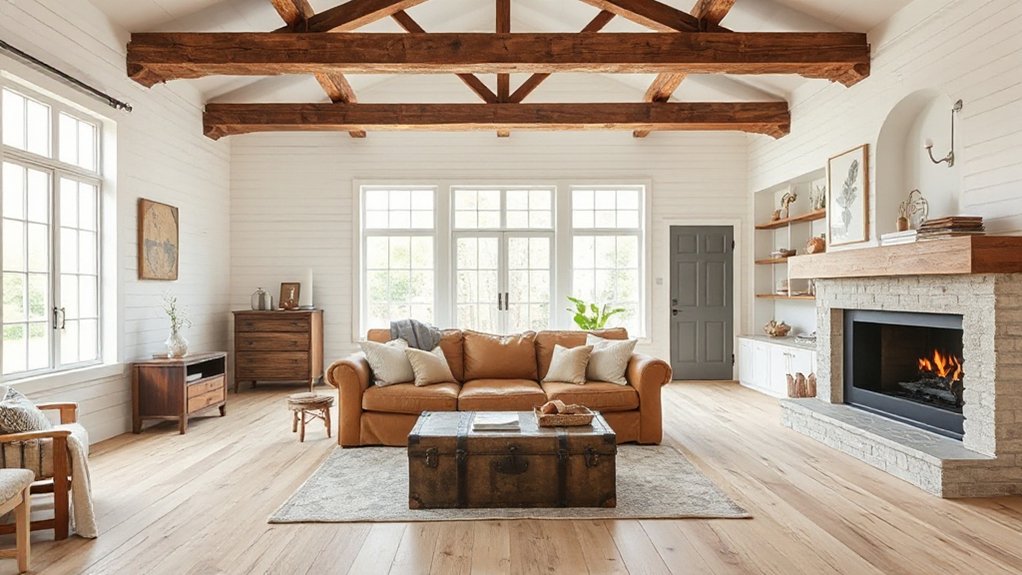
While modern farmhouse leans on rural heritage, it’s defined by a deliberate edit: clean lines, honest materials, and a calm, functional layout that feels current rather than kitsch. You prioritise proportion and practicality, planning sightlines, circulation, and built-in storage before styling. Choose robust timber, stone, and painted joinery with crisp profiles; skip fussy mouldings and overly distressed finishes. Let structural features read—exposed beams, simple panelling, and a straightforward inglenook—then balance them with streamlined cabinetry and uncluttered worktops. You’ll keep Farmhouse decor disciplined: fewer, larger pieces, vintage where it earns its keep, and lighting that’s architectural rather than cutesy. Done well, you get Rustic charm without pastiche, suited to UK terraces, barn conversions, or new-builds alike.
The Modern Farmhouse Formula: Color, Contrast, Texture
You start with a neutral base—think chalky whites, soft greys, and muted stone—to keep the scheme crisp and timeless. You’ll add warm undertones through oak, brass, and clay shades, then sharpen the look with high-contrast black accents on ironmongery, lighting, and window frames. You finish by layering natural textures—linen, wool, rattan, and weathered timber—so the space feels grounded, tactile, and modern.
Neutral Base, Warm Undertones
Where does modern farmhouse start when every finish competes for attention? You begin with a Neutral palette that calms the room and lets craftsmanship speak. Choose soft whites, oatmeal, putty, and stone as your base; they read clean in British light and make smaller terraces feel airy. Then layer warm undertones so the scheme doesn’t turn clinical. Look for creamy whites rather than stark, greige with a touch of biscuit, and natural timber that leans honey not ash. In paint, test swatches morning to dusk; north-facing rooms need extra warmth to avoid looking flat. In textiles, use flax linen, wool, and brushed cotton to echo that gentle heat. Keep flow seamless across hallway, kitchen, and snug for a coherent flow.
High-Contrast Black Accents
Once the neutral base is in place, high-contrast black accents give modern farmhouse its crisp, contemporary edge without stripping out the warmth. Use them to frame key moments: Crittall-style glazing, slimline picture frames, matte-black ironmongery, and a statement pendant over the island. Keep the finish consistent—powder-coated or satin reads modern, while glossy can feel too sharp.
Balance is everything. Repeat black accents in small, deliberate hits so the scheme feels edited, not themed: tapware, cabinet pulls, stair balustrades, and a simple fireplace surround. Let contrast details do the heavy lifting by outlining junctions and highlighting proportions, especially in open-plan layouts where you need visual structure. If you overdo it, the room turns graphic and cold. Stay measured and intentional.
Layered Natural Textures
Although a calm palette and sharp black detailing set the structure, layered natural textures give modern farmhouse its lived-in warmth and stop it feeling flat. You’ll get the balance right by mixing honest materials with crisp modern lines, then repeating them across the room so it reads intentional, not rustic clutter. Prioritise tactile, hard-wearing finishes that suit British light and daily use, and let imperfections do the softening. Anchor the scheme with textured textiles and layered linens, then add timber, stone, and metal in measured doses for depth and contrast.
- Slubby linen curtains that filter grey daylight
- Chunky wool throws over tailored sofas
- Rattan or rush dining chairs beside an oak table
- Honed limestone or brick slips on the hearth
- Aged brass or blackened steel hardware for edge
Signature Materials: Wood, Metal, Stone, Linen
While modern farmhouse feels effortless, it relies on a disciplined palette of signature materials—wood, metal, stone and linen—to balance warmth with crisp structure. You’ll get rustic charm by choosing oak or reclaimed pine for floors, beams, and a generous dining table, then keeping profiles clean for contemporary farmhouse decor.
Introduce metal as a sharpened outline: blackened steel brackets, brushed brass taps, or powder-coated iron hardware. You should use stone for permanence and tactility—limestone hearths, slate thresholds, or quartz worktops with subdued veining—so the room reads grounded, not themed. Finish with linen to soften edges: relaxed Roman blinds, washable slipcovers, and naturally creased bedding in chalk, oatmeal, or stone-grey. Keep tones muted, repeat finishes across rooms, and let patina do the storytelling.
Modern Farmhouse Lighting: Vintage Meets Modern

You’ll get modern farmhouse lighting right when you pair vintage silhouettes—like a schoolhouse pendant or an aged lantern—with sleek, minimal fittings that sharpen the look. Choose honest materials and considered finishes: patinated brass, blackened steel, and opal glass work best when you repeat them across the room for cohesion. Control scale with purpose—go oversized above the dining table, keep bedside and task lights tighter—so the scheme feels balanced, not busy.
Mixing Vintage And Sleek
How do you blend a timeworn lantern with a crisp linear pendant without the scheme feeling confused? You set clear roles: let one fixture lead and the other support, so the room reads intentional, not busy. Use vintage charm as the welcoming note, then introduce sleek contrast to sharpen sightlines and modernise the mood. Keep placements deliberate, align key fittings to architectural cues, and repeat shapes across the plan to unify the look.
- Suspend a lantern over the farmhouse table as the anchor
- Run a linear pendant above the island to emphasise workflow
- Add pared-back wall lights to frame the hearth or artwork
- Use discreet downlights for task areas, not centre stage
- Mirror silhouettes between rooms so the story carries through
Materials, Finish, And Scale
Because modern farmhouse lighting lives on contrast, materials, finish, and scale need to do the heavy lifting: pick one dominant metal family (aged brass, blackened steel, or satin nickel) and let the other elements act as accents, then keep finishes consistent across sightlines so the mix feels curated rather than accidental. Balance that metal with honest textures—oak, rattan, linen, and mouth-blown glass—prioritising sustainable materials where you can. Use custom finishes to bridge eras: a lightly patinated brass reads heritage, while a crisp powder coat feels current. Get scale right by sizing pendants to the island width, and choosing oversized shades in open-plan rooms so the light doesn’t disappear. Keep ceiling roses and flex discreet, and you’ll maintain a clean, modern line.
Modern Farmhouse Kitchens: Cabinets, Counters, Hardware
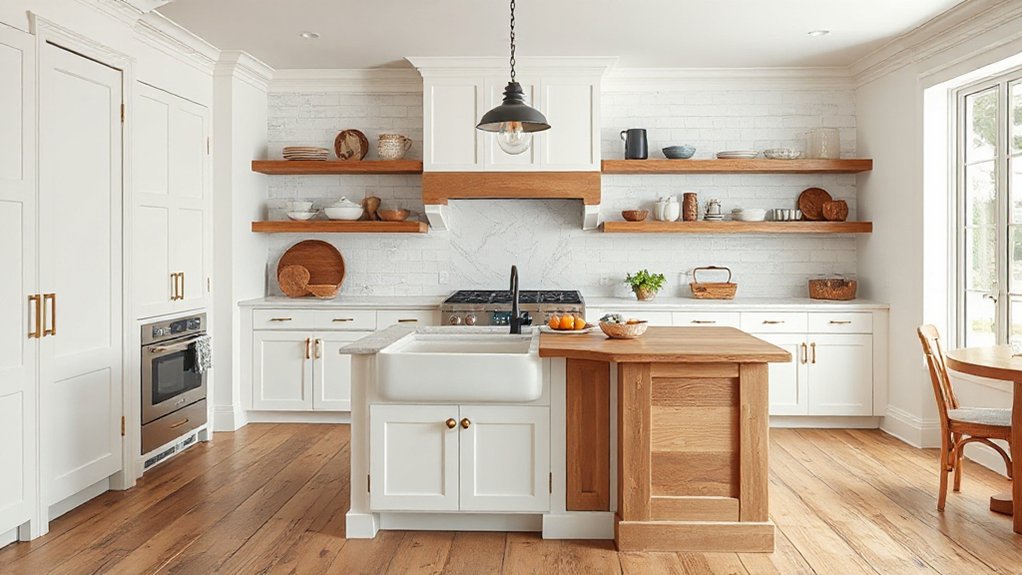
While the modern farmhouse look leans on simplicity, your kitchen’s success really comes down to the trio of cabinets, worktops, and hardware, all working in balance. Choose Shaker-style cabinets in painted oak or ash; they nod to rustic decor without feeling fussy. Pair them with durable quartz or honed granite worktops, keeping tones soft and chalky for a calm, UK-friendly palette. Then use hardware to sharpen the contrast: blackened steel feels current, while aged brass warms the scheme. Keep proportions honest, like joinery you’d see by a farmhouse garden door.
- In-frame Shaker doors, matte paint
- Chunky stone worktop, eased edge
- Deep Belfast sink, simple drainer grooves
- Cup pulls and knurled knobs, mixed metals
- Slim timber shelf for everyday ceramics, neatly styled
Modern Farmhouse Living Rooms: Furniture and Layering
If you get the furniture scale and layering right, a modern farmhouse living room feels relaxed rather than themed. Start with a generous sofa in a hardwearing linen or cotton mix, then add one structured armchair to balance the squish. Choose a solid timber coffee table with honest grain; it anchors Farmhouse decor without looking fussy.
Layer tactility, not trinkets. Put a large flatweave or jute rug down first, then a smaller patterned wool rug on top to soften the zone. Mix cushions in checks, stripes, and neutrals, and drape a chunky knit throw for Rustic charm. Keep storage practical: a painted sideboard or reclaimed dresser hides clutter and supports lamps. Finish with one oversized artwork and a few matte-ceramic vessels.
Modern Farmhouse Bathrooms: Tile, Vanities, Fixtures
A modern farmhouse bathroom works best when you treat tile, vanity, and fixtures as one tight palette rather than a jumble of “rustic” cues. Start with hardwearing porcelain that nods to stone or encaustic, then keep grout calm so the room reads crisp in British light. Choose a vanity with simple shaker fronts, topped with quartz or honed limestone, and anchor it with properly scaled brassware.
- Large-format floor tile in warm greige
- Half-height metro tiles with a slim pencil trim
- Timber vanity in oiled oak, soft-close drawers
- Wall-mounted mixer taps in brushed nickel or aged brass
- Black-framed mirror with integrated LED, IP-rated
Specify Eco friendly finishes and low-VOC sealants, and opt for Sustainable design through repairable taps and refillable soaps.
Modern Farmhouse Mistakes That Make It Look Dated
Because modern farmhouse sits on a fine line between timeless and trend-led, a few common choices can tip your scheme into “2017 Pinterest” fast—think overdone shiplap, stark black-and-white everything, fussy distressed finishes, and decorative barn-door hardware where it doesn’t suit the architecture. You’ll date the look further if you default to grey ‘weathered’ laminate, mass-produced signs, and uniform matte-black taps in every room. In a Farmhouse renovation, keep panelling purposeful: use it to correct proportions, not to cover every wall. Swap high-contrast schemes for warmer neutrals, aged brass, and natural oak. For Vintage decor integration, edit hard: choose one or two honest pieces—an antique dresser, stoneware, or linen—and let them breathe. Finally, prioritise authentic materials and tidy detailing over gimmicks.
Frequently Asked Questions
How Can I Create Modern Farmhouse Style in a Small Apartment?
Choose a neutral palette, layer vintage decor, and add rustic accents like reclaimed-wood shelves. You’ll keep lines clean, use slim furniture, and soften with linen, black metal, and warm lighting to suit compact UK flats.
What Is the Average Cost to Redesign a Home in Modern Farmhouse Style?
You’ll typically spend £15,000–£60,000+; treat it like laying a new hearthstone. Costs shift with scope, trades, and finishes. Prioritise rustic charm, vintage accents, bespoke joinery, and durable worktops to control spend.
Which Paint Brands Best Match Popular Modern Farmhouse Color Palettes?
You’ll match popular palettes with Farrow & Ball, Dulux Heritage, Little Greene, and Benjamin Moore. Use colour palette inspiration from muted whites, sage, and charcoal; rely on paint brand comparisons for undertone accuracy and durability.
How Do I Blend Modern Farmhouse With Mid-Century Modern Without Clashing?
You blend modern farmhouse with mid-century modern by treating it like my mate’s 1960s sideboard beside a reclaimed table—one calm palette. Pair Vintage furniture with clean lines, add Rustic accessories sparingly, repeat timber tones, and balance silhouettes.
Is Modern Farmhouse Style a Good Choice for Increasing Resale Value?
Yes, you’ll often boost resale value with modern farmhouse, because buyers like its warmth and practicality. Keep it neutral, add Vintage accessories and Rustic accents sparingly, and prioritise quality joinery, lighting, and cohesive finishes.
Conclusion
Bring modern farmhouse home by balancing heritage charm with crisp, current lines. You’ll lean on a calm palette, then sharpen it with contrast and honest texture—timber grain, blackened metal, veined stone, washed linen. Choose lighting that nods to the past but performs like today, and keep kitchens and bathrooms disciplined with simple cabinetry, robust worktops, and tactile hardware. Don’t let “rustic” tip into clutter; think of it as a well-cut tweed jacket.