


Start with one contemporary anchor piece—a low-profile sofa, sculptural chair, or slab coffee table—and lock its finish, silhouette, and scale so it’s the first thing you see from the entry. Build a tight palette around it: two neutrals plus one saturated accent. Keep 70% of the room clean-lined and modern, then use 30% warm wood or artisanal texture for contrast. Add one or two curves, and finish with warm 2700–3000K layered lighting and art scaled to the wall. Keep going to refine the details.
Key Takeaways
- Start with one contemporary anchor piece, lock its finish and scale, and build a palette of two neutrals plus one accent.
- Use the 70/30 rule: keep 70% clean-lined contemporary basics and 30% warm woods, vintage accents, or artisanal textiles.
- Warm modern pieces with a single warm color thread and layered textures, balancing matte fabrics with glass, metal, or lacquer.
- Mix straight lines with one or two intentional curves per zone, repeating the curve at different scales while keeping circulation clear.
- Finish with layered warm-white lighting on dimmers and properly scaled art hung at eye level to reinforce the contemporary focal point.
Pick One Contemporary Anchor Piece First
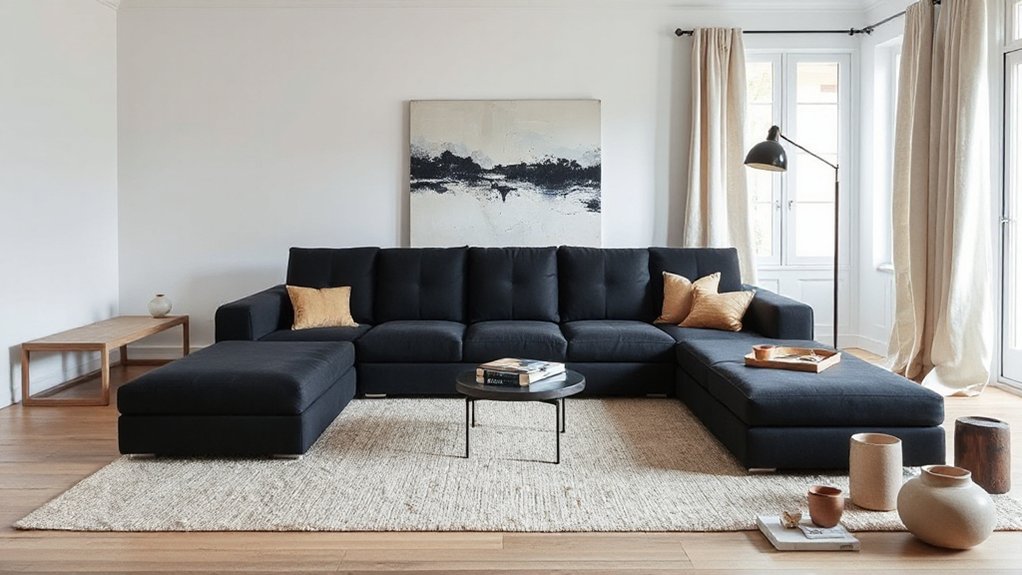
Where do you start when contemporary design can feel like a moving target? You start by choosing one anchor piece that sets the spec for everything else: a low-profile sofa, sculptural chair, or slab coffee table. Lock in its finish, silhouette, and scale, then build a tight palette around it (two neutrals plus one accent). Measure clearances and sightlines so the anchor reads first from the entry. Use lighting to validate form—aim for crisp, high-CRI LEDs that reveal texture. When you begin mixing patterns, echo one color from the anchor and vary only the pattern scale. Finish with decorating with plants: pick one architectural plant to mirror the piece’s geometry and soften hard edges without visual noise.
Blend Contemporary Decor Using the 70/30 Rule
Although contemporary style evolves fast, the 70/30 rule keeps your room readable: hold 70% of the visual weight in your core contemporary language (clean-lined silhouettes, restrained neutrals, consistent finishes) and spend the remaining 30% on controlled contrast—warm woods, vintage accents, artisanal textiles, or a single curved profile that breaks the grid. Start by mapping what’s dominant: large furniture, casegoods, and major lighting should stay within one contemporary system. Then layer minority elements that reference Mid century modern or Scandinavian minimalism without diluting cohesion. Keep contrasts disciplined by repeating one secondary material or era cue twice, max, and matching scale. Try this mix:
- low-profile sofa + matte metal legs
- slab-front media console
- walnut accent chair with tapered arms
- sculptural arc floor lamp
Warm Contemporary Decor With Color and Texture
If your contemporary room reads too cool or flat, you can warm it up fast by tuning the palette and pushing texture—not by adding more objects. Start with Color harmony: pick one warm anchor (camel, terracotta, tobacco, or ochre) and thread it through two touchpoints—rug and art, or pillows and ceramics—so the warmth feels intentional.
Then engineer Textural contrasts. Pair matte plaster, boucle, or brushed cotton against sleeker finishes like lacquer, glass, or stainless, keeping sheen changes within one vignette for control. Swap stark white for warm white (2,700–3,000K lighting) and choose wood tones with visible grain to soften edges visually. Use a single saturated accent, not many, and let negative space stay clean.
Balance Contemporary Clean Lines With Curves
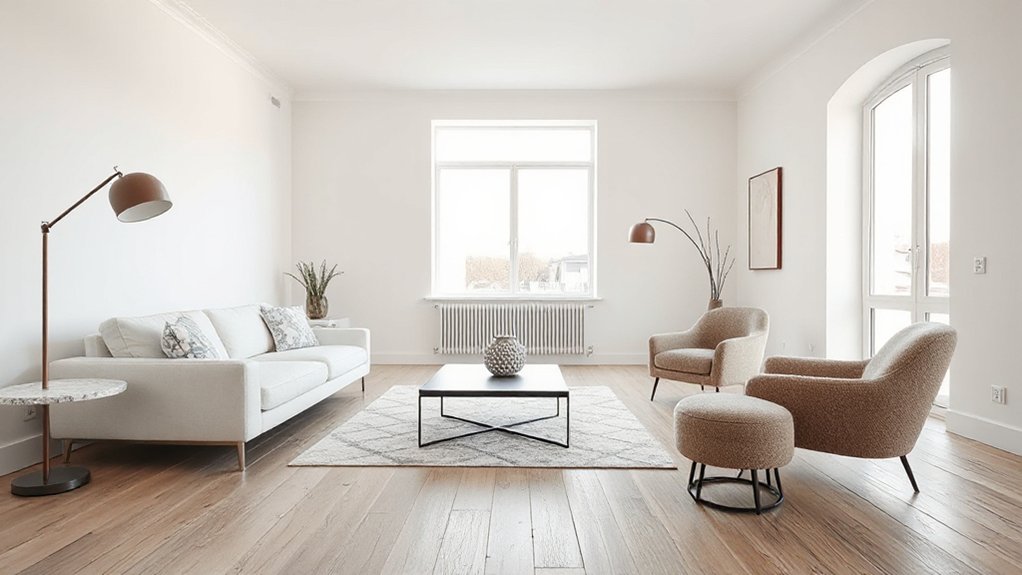
Even when your contemporary space nails crisp geometry, it can still feel hard-edged, so introduce curves that interrupt the grid without diluting the clean-line brief. You’ll keep the modern read by pairing radius with restraint: one or two arced forms per zone, repeated at different scales, then anchored by straight-casework and rectilinear rugs. Favor organic shapes that look intentional, not fussy, and temper them with natural materials for tactile balance.
- A low, rounded sofa against a linear credenza
- An arched mirror over a squared vanity or console
- A pebble-top side table in oak, travertine, or cork
- A curved-back dining chair set around a rectangular table
Maintain clear circulation, align edges, and let curves soften corners, not clutter sightlines.
Finish Contemporary Decor With Lighting and Art
You’ll lock in contemporary impact by specifying statement lighting that reads sculptural, not decorative—think linear LEDs, oversized pendants, and matte-black or brushed-metal finishes. Build layered illumination with ambient, task, and accent sources on dimmers to control glare, contrast, and nighttime mood. Then scale and place art with intent: hang to eye level, size to the wall and furniture footprint, and use lighting to create a crisp focal hierarchy.
Statement Lighting Selections
- An oversized globe chandelier centered over a minimal dining table
- A linear pendant that tracks a kitchen island’s long axis
- A sculptural sconce pair framing large-format art
- A woven rattan or alabaster piece adding tactile warmth
Layered Illumination Techniques
Because contemporary rooms rely on clean lines and controlled contrast, layered illumination finishes the decor by balancing ambient, task, and accent light in deliberate ratios. Start with a dimmable ceiling source or cove to set an even Ambient glow at 2700–3000K, then add task layering where you work: a slim floor lamp by the sofa, under-cabinet LEDs in kitchens, or a focused desk light. Use narrow-beam accents (15–30°) to create depth on textured walls and to pick up metal or lacquer finishes without glare. Keep fixtures visually light: recessed trims, linear pendants, and low-profile sconces. Put everything on separate circuits with smart scenes so you can shift from daytime clarity to evening softness instantly.
Art Placement And Scale
Even in a minimalist scheme, art needs disciplined placement and scale to read intentional under contemporary lighting. You’ll get cleaner sightlines when you set your centerline at 57–60 inches, then adjust for furniture height and viewing distance. Prioritize scale harmony: pair larger works with negative space, and group smaller pieces on a shared grid so they act as one visual mass. Aim your accent lights at 30 degrees to cut glare, and keep glass reflectance low with matte frames.
- Float a 48-inch canvas 6–8 inches above a sofa back
- Align gallery rows to one datum line, not frame tops
- Size art to 60–75% of console width for balance
- Leave 2–3 inches between frames for crisp rhythm
Avoid These Contemporary Decor Mistakes in Any Room
While contemporary decor thrives on clean lines and intentional restraint, it can fall flat fast when you overdo trends, ignore scale, or treat “minimal” as “empty.” The most common missteps show up in any room: mismatched proportions, lighting that’s too harsh or too weak, palettes that lack contrast, and furniture layouts that prioritize looks over circulation. Fix scale by anchoring with one oversized piece, then keeping supporting items slim. Layer lighting: ambient, task, and a dimmable accent to avoid glare and dead zones. Add contrast through warm woods, matte metals, or Vintage accents so the space doesn’t read sterile. Use Pattern mixing with discipline: limit to two motifs, vary scale, and repeat one color to keep it cohesive. Finally, preserve pathways—36 inches minimum—to make it livable.
Frequently Asked Questions
How Do I Style Contemporary Decor in a Small Rental Without Painting Walls?
Use peel-and-stick wallpaper, large-scale art, and removable hooks to add contemporary impact without paint. Stick to Neutral color palettes, layer Minimalist accessories, choose multipurpose furniture, add mirrors, and use sleek lighting.
What Contemporary Materials Are Best for Homes With Kids and Pets?
You’ll coincidentally love performance bouclé, solution-dyed acrylic, and microfiber—kid-friendly fabrics that resist stains—plus Pet safe materials like top-grain leather, sealed concrete, porcelain tile, and powder-coated metal. You’ll keep it sleek, durable, compact.
How Can I Mix Contemporary Pieces With Antiques Without Looking Mismatched?
You can mix contemporary pieces with antiques by anchoring with one dominant era, then echoing forms across styles. Use Mixing textures and balancing colors via a tight palette, repeat metals/woods, and scale proportionally. Keep negative space.
What’s the Best Way to Choose Contemporary Decor on a Tight Budget?
Like a scalpel, you’ll cut costs by prioritizing modular, multiuse staples, then layer Budget friendly upgrades via peel-and-stick finishes and smart lighting. You’ll shop resale and refillable materials for Sustainable decor options that scale.
How Do I Maintain Contemporary Furniture Finishes and Prevent Visible Wear?
Maintain contemporary finishes by dusting microfiber weekly, wiping spills immediately, and using pH-neutral cleaners. Add felt pads, coasters, and UV-filtering film. Schedule Furniture maintenance checks; rotate use zones for Finish preservation and reduced wear.
Conclusion
Funny how you’ll spot the perfect contemporary anchor piece the moment you stop chasing “matchy.” Start there, then let the 70/30 rule do the heavy lifting so the room reads curated, not clinical. You’ll warm sleek finishes with layered texture, tuned color, and a few organic materials. Mix clean lines with intentional curves to soften the grid. Lock it in with targeted lighting and scaled art. Skip clutter, cold palettes, and under-sized rugs.