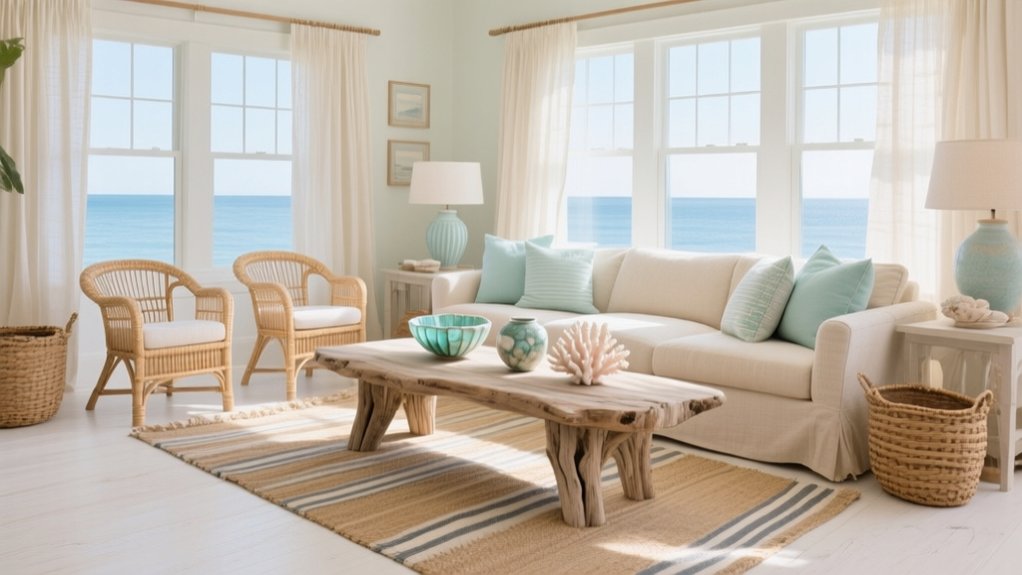

Bring coastal style into any UK home by keeping it calm and unfussy: start with warm white or light grey walls, then layer sand-and-stone neutrals with seafoam or misty blue accents. Swap heavy fabrics for linen sheers, crisp cotton bedding, and a jute or flatweave runner to add breathable texture. Use pale oak, rattan, and woven baskets for warmth, and keep nautical hints subtle. Next, you’ll see easy room-by-room swaps that pull it together.
Key Takeaways
- Start with warm white or light grey walls, layered with sand, stone and soft grey neutrals for an airy, calm base.
- Add sun-washed pastels like seafoam and misty blue in small doses, balancing them with natural textures to avoid a themed look.
- Layer linen, cotton and jute through curtains, cushions and rugs to keep rooms breathable, tactile and relaxed.
- Choose light woods, rattan and wicker for one or two anchor pieces, mixing in matte vintage finds for weathered character.
- Keep coastal cues subtle with muted artwork and brushed metal accents, and use layered warm lighting to soften typical UK daylight.
What “Coastal Style” Means (and What It Isn’t)
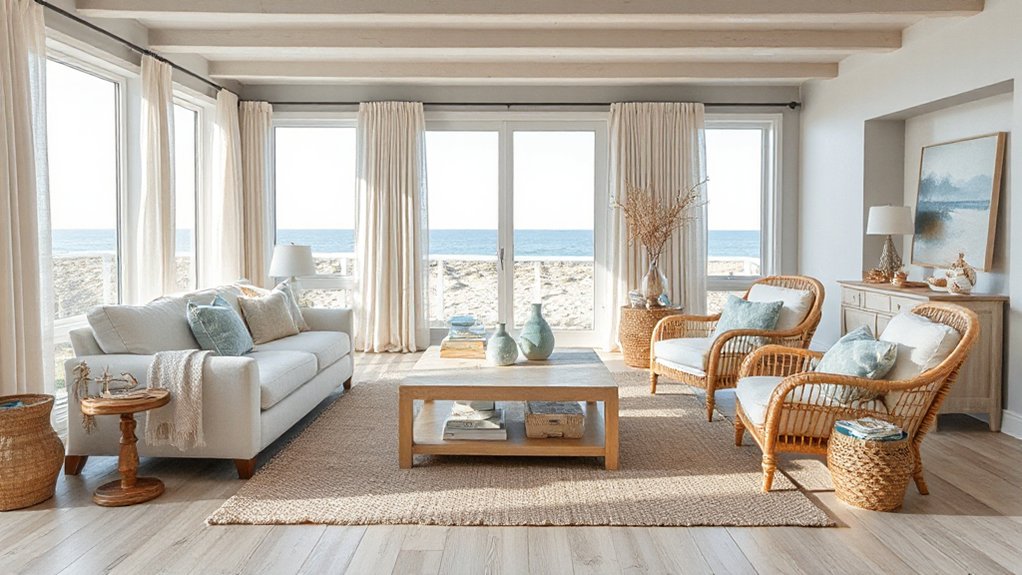
What exactly does “coastal style” mean in a UK home? It means you create a calm, light, seaside-informed look that feels lived-in, not themed. You’ll lean on natural textures, practical finishes, and a sense of airiness, as if your rooms could cope with sandy feet and wet coats. You can use Beachfront accessories sparingly—glass fishing floats, rope baskets, driftwood frames—so they read as details, not a costume.
What it isn’t: a holiday-let cliché packed with anchors, stripes everywhere, or mass-produced shells. Nautical symbolism works only when it’s subtle and purposeful, like a single brass porthole mirror or a framed chart. In the UK, aim for restrained, heritage-aware coastal cues, not kitsch.
Start With a Breezy Coastal Color Palette
Start your coastal scheme with ocean-inspired neutrals like sand, stone, and soft greys to keep the room calm and liveable in UK light. Layer in sun-washed pastels—seafoam, misty blue, and blush—through paint, cushions, or ceramics for a gentle lift. Finish with crisp white accents on woodwork, ceilings, and key pieces to sharpen the look and bounce light around.
Ocean-Inspired Neutrals
Although bold seaside hues can be tempting, coastal style lands best in most UK homes when you build it on ocean-inspired neutrals: crisp whites, soft sands, pebble greys, and sea-glass greens that echo the shoreline without turning the room into a theme. Start with walls in warm white or light grey to suit changeable British light, then layer in sandy linen, pale oak, and rattan for texture. Anchor the scheme with matte black or aged brass hardware, like you’d see in Seaside architecture, to keep it modern. Add Marine inspired patterns sparingly—fine stripes, subtle wave jacquards, or a tonal shell print on cushions—so the room stays calm. Finish with ceramic lamps and clear glass to mimic sea-worn surfaces.
Sun-Washed Pastels
If you want coastal colour without the “beach hut” cliché, sun-washed pastels give you that light, airy feel while still working with typical UK skies. Choose chalky seafoam, misty blue, shell pink, and sandy peach, then layer them on one or two key walls, upholstery, or linen curtains so the room stays calm, not sugary. Keep finishes matte or softly washed to mimic weathered paint seen in Cornish villages. Balance pastels with natural textures—jute rugs, oak, rattan, and brushed brass—so the palette reads grown-up. Add Seaside inspired artwork in watercolour or muted photography, and repeat tones in nautical themed accessories like striped cushions, rope-handled baskets, or glazed ceramics. Stick to two pastels per room for cohesion.
Crisp White Accents
Sun-washed pastels feel freshest when you sharpen them with crisp white accents. Use white to lift rooms that lack light, especially in typical UK terraces and flats, and you’ll get that clean, beach-house contrast without repainting everything.
- Choose a warm white for walls, then add brighter white on skirting, architraves, and panelled doors for definition.
- Swap in white linen or cotton: curtains, Roman blinds, sofa covers, and bedding keep it airy and washable.
- Add glossy white ceramics and painted timber: lamps, vases, stools, and a sideboard echo Vintage maritime finishes.
- Layer Seaside motifs in restrained doses—striped cushions, rope details, and framed charts—so white stays the hero.
Add Airy Textures: Linen, Jute, Cotton
Layer breathable linen and crisp cotton on sofas and beds to keep your coastal scheme light and relaxed. Add jute rugs underfoot and woven baskets for storage to bring in that beachy, natural texture you can live with every day. Mix these finishes across soft furnishings and flooring, and you’ll create the airy depth that makes coastal style work in a UK home.
Layer Linen And Cotton
Even when you’re miles from the sea, airy natural fibres can bring that relaxed coastal feel straight into your home. Layer linen and cotton to soften light, keep rooms breathable, and add that crisp, washed finish you see in smart UK beach houses. Use Vintage seascapes on the wall to anchor the palette, then echo their faded blues in textiles. Dress your table for Coastal cuisine with simple cotton napkins that wash well and look better slightly rumpled.
- Swap heavy curtains for linen sheers to filter daylight and cut glare.
- Add a cotton throw on the sofa, then top with a linen cushion for contrast.
- Choose pale, yarn-dyed stripes for bedding to suggest seaside deckchairs.
- Stick to off-white, sand, and sea-glass tones for easy mixing.
Add Jute Rugs And Baskets
Once you’ve got linen and cotton doing the softening, bring in jute to add structure and that barefoot-by-the-coast texture. Choose a flatweave jute rug for high-traffic spots like the hallway or under a dining table; it hides crumbs and copes with British weather tracked in. In the living room, size it so front sofa legs sit on it for a grounded, tailored look. Add lidded jute baskets to corral throws, toys, and logs, and use smaller ones on shelves for chargers and remotes. Keep tones natural to balance Sea inspired patterns on cushions or curtains, and let coastal artwork pop against the warm, sandy weave. Vacuum regularly; blot spills fast to prevent staining.
Mix Textures For Airiness
If your rooms feel heavy or a bit closed-in, mixing airy textures will lift them fast without changing the layout. Work like Seaside fashion: layer light, breathable fabrics with a few tactile natural fibres, so everything looks relaxed yet pulled together. Keep colours simple and let the materials do the work, especially in UK light.
- Swap velvet or thick weaves for linen curtains; they filter daylight and soften edges.
- Add cotton throws and slipcovers; they’re washable, practical, and instantly fresher.
- Balance smooth cotton with jute accents—stools, trays, or baskets—for dry, beachy grit.
- Tie it together with nautical art in pale frames, so the textures read intentional, not cluttered.
Mix In Rattan, Wicker, and Light Woods
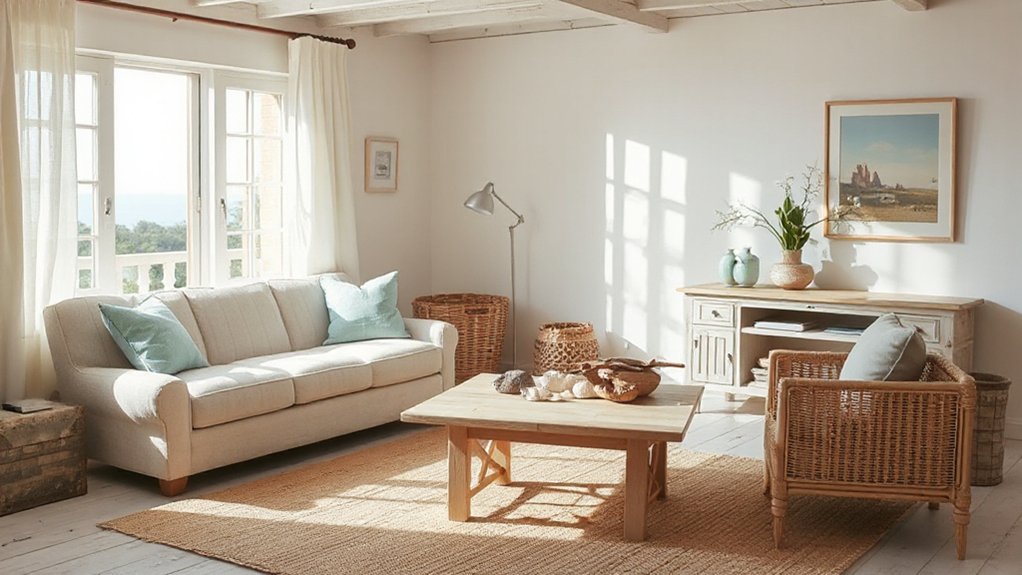
While crisp whites and sea-glass tones set the mood, rattan, wicker, and light woods give coastal style its texture and warmth. Start with one anchor piece: a cane armchair, woven pendant, or rattan storage basket that adds pattern without weight. Balance it with pale oak, ash, or birch—think a simple coffee table or open shelving—so the room stays light, not rustic. Choose Sustainable materials where you can; FSC-certified timber and responsibly sourced rattan wear well in busy UK homes. Mix in Vintage finds from local antique shops or online marketplaces for character: a bamboo side table or wicker trunk works brilliantly as a bedside. Keep finishes matte, tones sandy, and shapes clean for a calm result.
Keep Decor Simple With Subtle Nautical Notes
Because coastal interiors can tip into theme-park territory fast, keep your decor simple and add nautical notes with a light touch. Let textures and colour do the heavy lifting, then choose a few cues that feel collected, not costume. In UK homes, restraint reads modern and works with period features as well as new-builds.
- Hang Beach inspired artwork in muted tones (sea grasses, horizon lines), and use one oversized piece per wall.
- Swap novelty prints for nautical themed accessories like a rope-trim tray, brass porthole-style mirror, or striped cushion.
- Choose ceramics in chalky whites and stormy blues; avoid glossy “seaside shop” finishes.
- Style shelves with negative space: one glass float, a stack of paperbacks, and a simple vase.
Layer Lighting to Keep Rooms Bright
Even on grey UK afternoons, layered lighting keeps a coastal scheme feeling crisp rather than flat. Start with ambient light: a dimmable ceiling pendant or discreet downlights to lift the whole room without glare. Add task lighting where you read, cook, or work—an adjustable lamp by the sofa, under-cabinet LEDs in the kitchen, or a focused desk light—so you don’t rely on one harsh source. Finish with accent lighting to create depth: a picture light over Marine motifs, a small uplighter behind a plant, or LED strips along a shelf displaying Seaside souvenirs. Choose warm-white LEDs (around 2700–3000K) and fit good shades to soften pools of light and reduce reflections on pale walls.
Coastal Style Swaps for Every Room
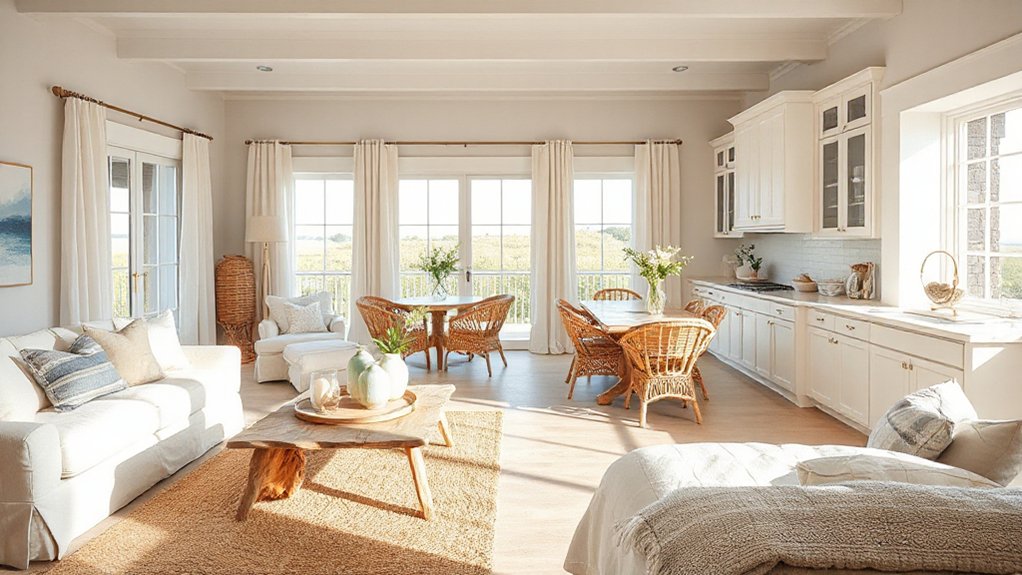
If you want coastal style without turning your home into a themed set, make small, room-by-room swaps that lift light and add texture. Focus on Modern coastal decor: clean lines, pale woods, and a breezy palette, then layer in tactile finishes that suit UK homes and weather.
- Hallway: Swap a dark runner for a jute or flatweave stripe; add a slim oak bench and woven baskets for grab-and-go storage.
- Living room: Choose Coastal furniture choices like a linen sofa cover and a light timber coffee table; switch heavy curtains to voiles.
- Kitchen: Replace glossy handles with brushed nickel; add open oak shelving for everyday ceramics.
- Bedroom: Use crisp cotton bedding, a textured throw, and rattan bedside lamps for softness.
Frequently Asked Questions
How Do I Make Coastal Style Work in a Small Apartment?
Make coastal style work in your small flat by sticking to Beach inspired color palettes—soft whites, sand, sea blues—and keeping furniture slim. Add nautical accessories sparingly, use mirrors, linen, and rattan for airy texture.
What Flooring Options Best Complement a Coastal-Inspired Home?
Choose Light wood flooring like bleached oak or pale laminate; it brightens UK rooms and suits seaside palettes. Add porcelain “weathered plank” tiles for kitchens. Keep grout sand-toned, and finish with Seashell accents sparingly.
How Can I Incorporate Coastal Style With Existing Dark Furniture?
Keep your dark furniture, but brighten around it with a beach inspired color palette: crisp whites, sandy neutrals, soft blues. Add nautical decor accents, swap in linen curtains, jute rugs, and rattan lamps.
What Are Budget-Friendly Ways to Achieve Coastal Style Without Renovations?
You can nail coastal style cheaply: 70% of the look comes from colour and accessories, not building work. Use Nautical color schemes with paint, cushions, throws; add Beach inspired accessories—rattan, striped rugs, glass jars.
How Do I Keep Coastal Decor Looking Fresh Year-Round, Not Seasonal?
Keep it fresh by rotating Seashell accents and textiles monthly, not theming for holidays. Stick to nautical color palettes year-round, then update with UK seasonal greenery, linen swaps, and functional rattan storage to avoid kitsch.
Conclusion
Bring coastal style home by keeping it light, tactile, and uncluttered. Stick to airy whites, sand, and sea-glass tones, then soften rooms with linen, cotton, and jute. Choose rattan, wicker, and pale woods to lift the mood without shouting “theme”. Add only a nod to the nautical—like Odysseus steering by the stars, you want direction, not drama. Finish with layered lighting to hold that fresh, bright feel all year.