
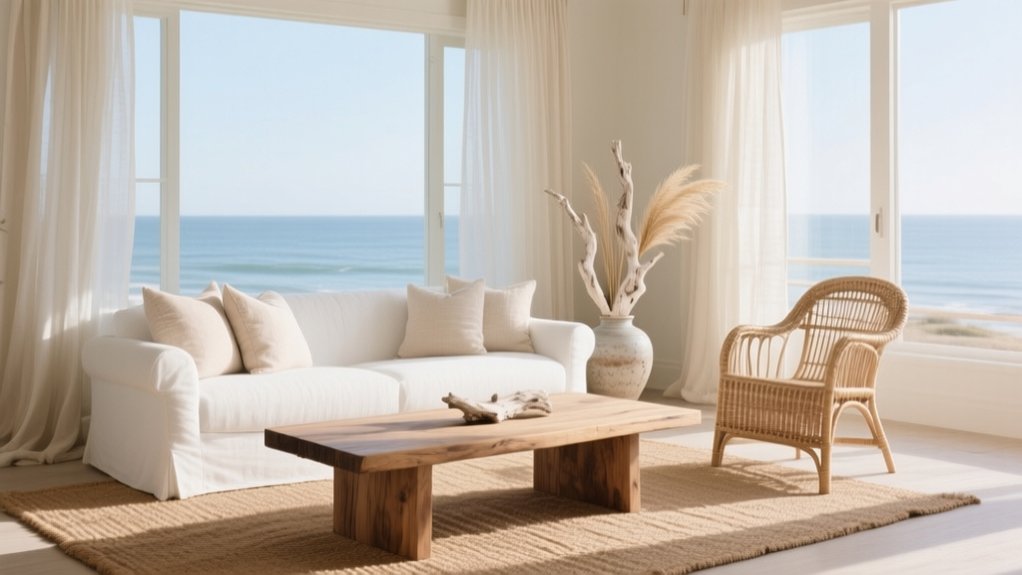

You get a light, airy, relaxed coastal look by choosing low-profile, clean-lined pieces with slim legs, open bases, and softly tapered frames that keep sightlines clear. Stick to pale woods like white oak or teak in matte finishes, then add warmth with rattan, cane, seagrass, and performance linen blends. Build a calm palette of warm whites, sandy beiges, and muted ocean blues, and skip glossy “orange oak” or nautical themes. Next, you’ll see easy room-by-room picks.
Key Takeaways
- Choose low-profile, open-base furniture with slim legs and clean lines to keep sightlines clear and the room breezy.
- Mix pale, humidity-friendly woods like white oak or teak with rattan, cane, or seagrass to layer texture without heaviness.
- Stick to matte or satin finishes and performance fabrics like linen blends or slipcovers for an easy, beach-ready, lived-in feel.
- Build an airy palette of warm whites and sandy neutrals, then add muted ocean blues and sunwashed accents for relaxed depth.
- Avoid matching sets, bulky casegoods, glossy orange finishes, and high-contrast patterns; prioritize negative space and cohesive, calm styling.
Coastal Furniture Essentials: Light, Low, Natural, Airy
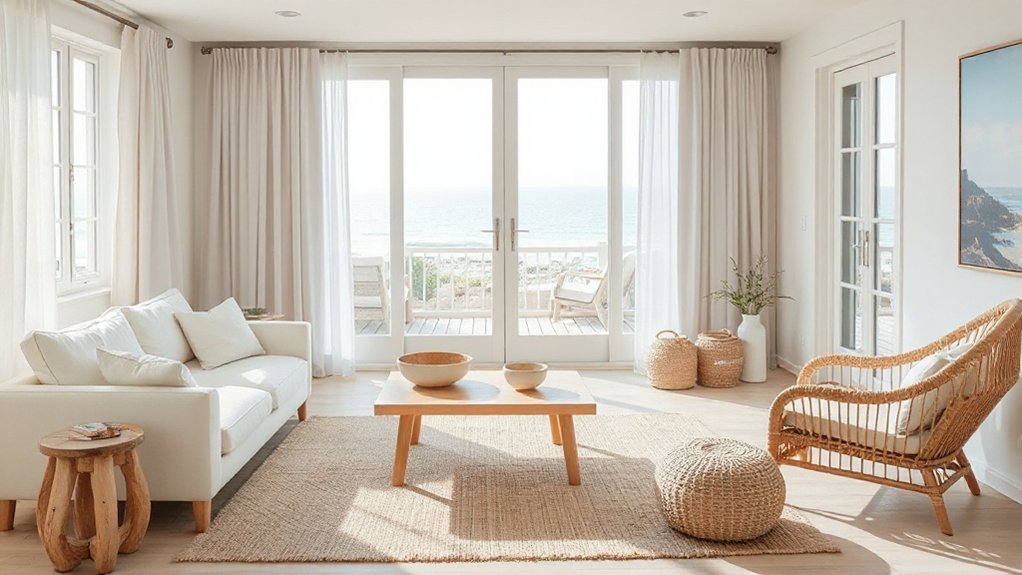
If you want a room to read “coastal” without leaning on clichés, start with furniture that feels light, low, natural, and airy. Choose pale woods (white oak, ash, bleached walnut) and matte finishes that bounce daylight instead of absorbing it. Keep upholstery breathable: linen, cotton canvas, or performance weaves in sand, salt, and soft white.
Prioritize pieces with visual lift—open bases, slim rails, and woven elements—so the floor line stays uninterrupted and the space reads calm. Balance Modern minimalist restraint with a touch of vintage charm: a lightly weathered console, a rattan side table, or a cane-front cabinet. Stick to honest materials, minimal hardware, and subtle texture layering for that relaxed, edited coastal ease.
Pick Coastal Furniture Silhouettes (Simple, Not Themed)
While coastal style often gets reduced to themed props, the right silhouettes do the heavy lifting without a single shell motif. Start by choosing low-profile sofas with clean arms and slim legs; they keep sightlines open and read breezy. Favor Modern geometric forms—rectangular coffee tables, cube ottomans, and simple plinth consoles—to add structure without visual noise. Balance that with Vintage silhouettes like a gently rolled club chair, a spindle-back dining chair, or a ladder-back bench; their familiar lines feel relaxed, not kitschy. Keep profiles airy: open bases, tapered frames, and negative space under casegoods. Skip overly ornate curves, heavy skirts, and literal nautical shapes. If a piece looks good in a gallery, it’ll look coastal at home.
Choose Coastal Furniture Materials and Finishes
Clean silhouettes set the tone; materials and finishes make coastal furniture feel lived-in, light, and durable instead of themed. Start with solid woods that tolerate humidity: white oak, teak, or ash, then balance them with rattan, cane, or woven seagrass for breathable texture. Choose matte or satin topcoats over high-gloss; they hide micro-scratches and keep glare down in sunlit rooms. If you want Vintage charm, lean into wire-brushed grain, lightly cerused finishes, and softened edges that look collected, not distressed. For modern minimalism, use smooth-planed surfaces, slim blackened-steel accents, and refined stone or travertine tops. Prioritize performance fabrics—linen blends, indoor-outdoor weaves, and slipcovers you can wash—so everything stays effortless year-round.
Build a Calm Coastal Furniture Color Palette
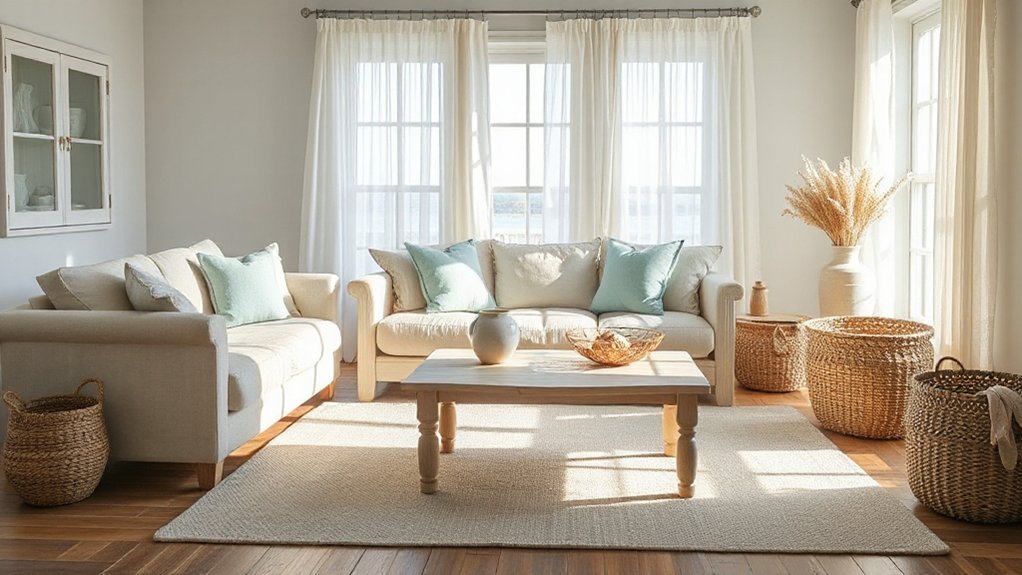
You’ll set a calm coastal foundation by starting with soft neutrals—warm whites, sandy beiges, and light greiges—that keep furniture looking airy and current. Then you’ll layer ocean-inspired blues, from misty sky to deep navy, to add depth without overpowering the room. Finish with sunwashed accent tones like sea-glass green, faded coral, or pale terracotta to bring in that beach-worn warmth.
Start With Soft Neutrals
If you want coastal furniture to feel airy instead of themed, start by anchoring the room in soft neutrals. Choose warm whites, sand, oatmeal, and pale driftwood tones for sofas, slipcovers, and larger casegoods; they reflect light and keep sightlines clean. Favor matte or linen-like textures over shiny finishes to maintain that relaxed, modern coastal look.
Then build quiet contrast with natural materials: bleached oak, rattan, seagrass, jute, and honed stone. Keep patterns low-contrast—thin stripes, subtle checks, or tone-on-tone weaves—so Beach inspired decor reads refined, not costume. If you like nautical motifs, use them sparingly in hardware or a single accessory, not across every surface. This neutral foundation stays current and makes future swaps effortless.
Layer Ocean-Inspired Blues
Once your neutral base sets the tone, layer ocean-inspired blues to add depth without breaking the room’s calm. Start with a soft sea-glass blue on upholstered seating, then ground it with a slightly darker denim or slate on a rug or drapery. You’ll get Deep sea inspiration without making the space feel heavy.
Keep contrast controlled: choose blues with the same undertone, preferably muted and gray-leaning, so everything reads cohesive in daylight. Add Tide inspired patterns sparingly—think subtle stripes, watercolor waves, or micro-checks on pillows and throws—to create movement without visual noise. For wood pieces, pair blue accents with weathered oak or whitewashed finishes, and repeat the blue twice more across the room to lock in a relaxed, curated rhythm.
Add Sunwashed Accent Tones
Ocean-leaning blues set the mood; sunwashed accent tones bring the warmth that keeps coastal furniture from reading cold or overly nautical. Work in faded terracotta, muted coral, bleached sand, and honeyed rattan to echo driftwood and late-afternoon light. Keep saturation low so your palette stays calm, not kitschy.
Use Sunwashed accent tones in small, repeatable hits: a linen lumbar pillow, a washed-ochre throw, a clay table lamp, or a vintage-inspired rug with sunbaked pinks. Balance each warm note with crisp white upholstery or pale oak to maintain that airy lift. Finish with beach inspired accessories—sea-glass vases, rope-wrapped trays, and matte-ceramic bowls—in soft neutrals so the warmth feels intentional, relaxed, and current.
Layer Coastal Furniture Textures for Warmth
To keep coastal furniture from feeling flat, you’ll layer textures the way designers do: pair natural fiber materials like rattan, jute, and linen with cleaner woods and matte ceramics. You’ll balance soft and structured by setting plush slipcovered seating against tailored casegoods and crisp-lined frames. Finish with cozy woven accents—chunky knit throws, seagrass baskets, and braided rugs—to add warmth without losing that airy, coastal polish.
Mix Natural Fiber Materials
How do you keep coastal furniture from feeling flat or overly crisp? You mix natural fiber materials that add quiet depth without visual noise. Start with woven rattan or cane for breathable structure, then bring in seagrass, jute, or abaca to vary weave scale and sheen. Aim for Sustainable sourcing: look for FSC-certified wood frames, responsibly harvested rattan, and low-impact dyes on cotton or linen slipcovers. Lean into the Vintage revival by pairing a weathered wicker chair with a newly woven rush-seat stool; the patina reads collected, not themed. Keep tones sun-faded—sand, salt, oat, driftwood—and let texture do the work. Finish with a sisal rug and a linen throw for tactile continuity.
Balance Soft And Structured
Even if you’ve nailed the right palette, coastal furniture can still read chilly unless you balance clean-lined structure with soft, sink-in layers. Start with a tailored sofa or streamlined slipcovered seating, then temper it with plush performance cushions and a high-pile area rug that quiets echo and adds warmth underfoot.
Keep silhouettes crisp to honor Modern minimalism, but introduce tactile contrast: nubby bouclé on an accent chair, brushed linen drapery, and a velvet lumbar pillow for low-sheen depth. Mix in Vintage charm through one patinated wood console or an aged brass lamp—structured forms, softened finishes. Aim for three texture levels in every vignette: smooth (painted casegoods), medium (upholstery), and plush (rugs, throws). You’ll get that relaxed, lived-in coastal ease.
Add Cozy Woven Accents
Where does coastal furniture get its instant warmth? You add it through woven accents that soften clean silhouettes without weighing down the room. Start underfoot with Woven rugs in jute, sisal, or flatweave cotton; they ground pale woods, hide everyday sand and pet hair, and echo shoreline texture. Scale matters: go large enough to tuck front legs of seating, so the layout feels intentional, not scattered.
Then layer Textured throws in chunky linen blends, slubbed cotton, or a light waffle knit. Drape one over an armchair and fold another at the sofa corner to create depth and a lived-in, resort vibe. Finish with rattan trays, cane-front storage, or seagrass baskets—small moves that read tailored, current, and cozy.
Coastal Furniture Ideas by Room (Living, Bed, Dining)
Although coastal style feels effortless, each room needs furniture choices that balance light, texture, and everyday function. In the living room, anchor the space with a slipcovered sofa in crisp white or sand, then add a rattan lounge chair and a pale-wood coffee table with softened edges. Keep storage airy with open shelving, styled with Beach inspired accessories and a few nautical decor accents in brass or weathered navy.
In the bedroom, choose a linen-upholstered headboard or a whitewashed wood bed, paired with woven nightstands for warmth. Layer a low bench at the foot for easy lounging.
In the dining room, pick a light oak pedestal table and mixed seating—woven-back chairs plus a simple bench—to maintain flow. Finish with a cane-front sideboard for refined utility.
Coastal Furniture Mistakes That Ruin the Relaxed Look
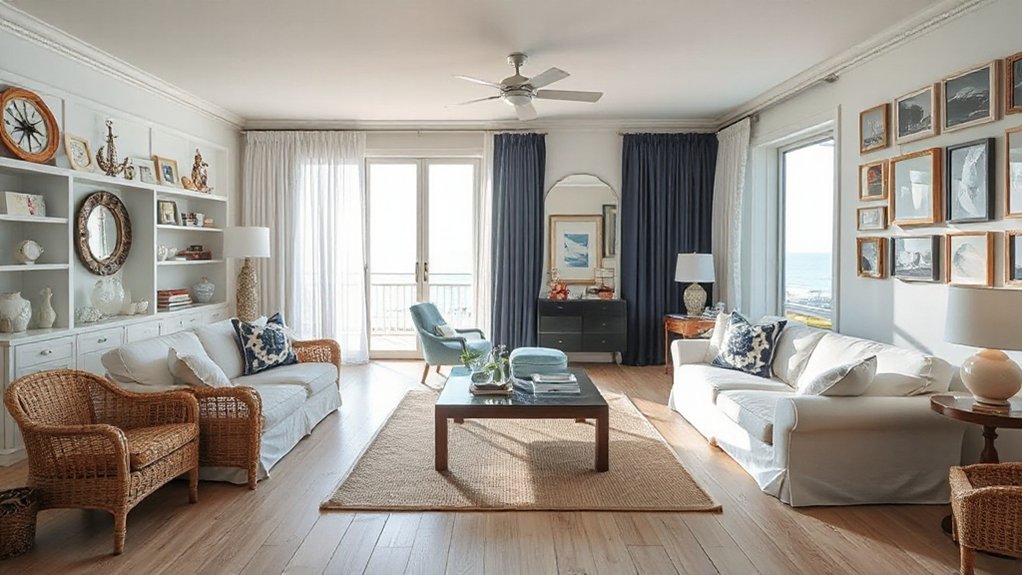
Because coastal style relies on lightness and breathing room, a few common furniture missteps can instantly make your space feel themed, heavy, or cluttered instead of calm. First, you can’t cram in oversized sectionals or bulky casegoods; choose lower profiles and leave negative space. Don’t default to matching sets—coastal looks current when you mix textures, not duplicates. Skip glossy orange “oak” and overly distressed faux-rustic finishes; they read dated and dirty. Watch your palette: too much navy, black, or high-contrast patterning overwhelms the airy baseline. Avoid tiny accent tables that create visual noise; scale matters. Anchor with Modern minimalist lines, then add warmth through Vintage repurposing—one patinated bench or rattan chair, not five. Finally, don’t block windows with tall hutches; keep sightlines open.
Frequently Asked Questions
How Do I Protect Coastal Furniture From Salty Air Corrosion?
You protect coastal furniture from salty air by rinsing, drying, and wiping weekly, then applying Protective coatings. Choose stainless or powder-coated hardware, add wax, and use Rust prevention sprays. Cover items, ventilate storage, and inspect fasteners.
What Coastal Furniture Is Safest for Homes With Toddlers and Pets?
You’ll keep toddlers and pets safest with rounded-edge teak or HDPE pieces, low-profile seating, and washable slipcovers. Prioritize pet friendly materials like performance fabric and marine-grade resin; add childproofing tips: anchoring, corner guards, non-slip pads.
Can Coastal-Style Furniture Work Well in a Small Apartment?
Yes, coastal-style furniture works in a small apartment if you scale pieces, prioritize legs and open bases, and keep clutter low. Use beach inspired decor and a seaside color palette to brighten, not overwhelm.
What’s the Best Way to Clean Slipcovers Without Shrinking Them?
By the book, you’ll cold-wash on gentle, use mild detergent, and air-dry to prevent shrinkage. For slipcover maintenance and fabric cleaning, pre-treat stains, zip covers, avoid heat, and re-fit slightly damp.
How Do I Prevent Mold and Mildew in Humid Coastal Climates?
You prevent mold and mildew by prioritizing ventilation tips: run exhaust fans, crack windows, and circulate air with ceiling fans. For moisture control, use a dehumidifier, fix leaks fast, and clean monthly with vinegar.
Conclusion
Keep your coastal furniture feeling light, low, and effortless by choosing clean silhouettes over themed décor, and leaning on natural woods, rattan, linen, and matte finishes. Stick to a calm palette—sand, salt white, fog gray, and sea-glass accents—then layer textures for warmth without visual weight. Room by room, prioritize airflow and negative space. Done right, your home becomes a deep exhale: relaxed, current, and quietly refined, never kitschy.