


You’ll modernise Victorian furniture by starting with solid timber pieces that have tight joints and intact drawers, then preserving details like dovetails, maker’s marks, and original hardware. Lighten heavy silhouettes with warm whites, soft greiges, or a pickled stain, and seal with a matte topcoat. Swap ornate pulls for streamlined matte black or brushed nickel. Reupholster in bouclé or linen blends, and balance dark wood with airy colours, negative space, and layered warm lighting. Keep going for room-by-room ideas.
Key Takeaways
- Choose structurally sound Victorian pieces with simple silhouettes; avoid severely damaged veneer, woodworm, or overly ornate showpieces needing specialist restoration.
- Preserve value by keeping maker’s marks, dovetails, patina, and original proportions; document changes and store any replaced hardware or parts.
- Modernise finishes with warm whites, soft greiges, or muted sages in matte/eggshell; clean, scuff-sand, prime, and seal with a matte topcoat.
- Update hardware using streamlined pulls in matte black, brushed nickel, or champagne brass; match hole spacing and use backplates for clean fit.
- Style for today with one hero piece, minimal patterns, slim companions, and layered warm lighting (2700–3000K) to lighten heavy timber visually.
Choose Victorian Pieces You Can Safely Update
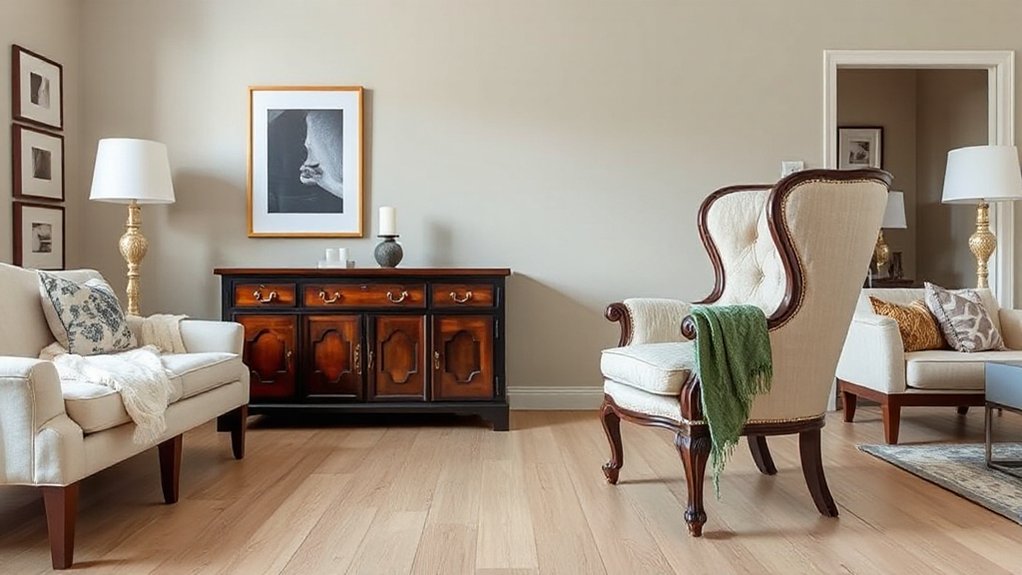
Before you pick up a sander or paintbrush, choose Victorian pieces that can handle a modern update without losing their integrity. Start with solid timber case goods—dressers, sideboards, and washstands—with tight joints and minimal warping. Check drawers for smooth runners, square carcasses, and intact bottoms; if they rack or sag, you’ll spend more fixing than revitalizing. Prefer simple silhouettes and repeatable panels that take new finishes well, and skip heavily carved showpieces where altering details can look cheap. Inspect for woodworm, deep splits, or crumbling veneer; those demand historical restoration skills, not weekend DIY. Seek original hardware you can clean and replate, and prioritize pieces with clear signs of Victorian craftsmanship so your update looks intentional.
Decide What to Preserve for Value and Character
While a fresh finish can make a Victorian piece feel current, you’ll get the best results if you protect the elements that signal age and quality. Start by identifying what’s original: maker’s marks, hand-cut dovetails, carved details, marble tops, and intact hardware. These features carry Historical significance and help the piece hold value in a resale market that rewards provenance.
Prioritise structural integrity over cosmetic perfection. Keep sound joints, original patina, and period-appropriate fittings whenever possible; replace only what’s missing or unsafe. If parts must change, store the originals and document every step, including photos and receipts, so you can prove Authentic restoration later. Finally, preserve proportions and silhouette—Victorian scale is part of its character, and altering it can make the piece look generic.
Lighten Victorian Furniture With Paint or Stain
Once you’ve decided what to keep, you can instantly modernise Victorian pieces by lightening their visual weight with paint or stain. Choose airy paint colours—warm whites, soft greiges, or muted sages—to make heavy profiles feel current without losing definition. If you prefer to show grain, use a light wood stain like white oak, ash, or a subtle pickled finish to brighten the tone while keeping it authentic.
Choose Airy Paint Colors
Although Victorian pieces often lean dark and heavy, you can instantly modernise them by choosing airy paint or stain colors that bounce light around the room. Reach for crisp whites, soft greiges, pale sage, or powdery blues to calm ornate carving and make silhouettes feel lighter. Use a matte or eggshell finish for a current, chalky look that hides minor flaws without looking dusty.
Before you paint, clean thoroughly, scuff-sand, and prime to block tannin bleed and guarantee even coverage. Keep hardware simple: swap shiny brass for brushed nickel or blackened steel, then style with Vintage accessories sparingly. If you love Bold patterns, let them live in upholstery or wallpaper while your refreshed piece stays quiet, modern, and versatile.
Use Light Wood Stains
If your Victorian piece feels visually heavy, a light wood stain can modernise it fast without erasing the grain that gives it character. Choose tones like white oak, natural ash, or pale walnut to lift the silhouette and make carvings read as detail, not darkness.
Start by stripping wax and old polish, then sand evenly with 120–180 grit so the stain absorbs consistently. Test on the back first, because Victorian timbers vary and can blotch. If it does, apply a pre-stain conditioner or use a gel stain for control. Seal with a matte water-based topcoat for today’s low-sheen look while protecting those Wooden textures. You’ll keep the Vintage charm, yet the piece will sit comfortably beside modern upholstery and clean-lined lighting.
Update Hardware for a Cleaner, Modern Look
Once you’ve refreshed the finish, swap ornate Victorian knobs and pulls for sleek, streamlined shapes to instantly sharpen the silhouette. Choose modern metal finishes—matte black, brushed nickel, or champagne brass—to create clean contrast and a current, cohesive look. Keep scale and spacing consistent, and you’ll make the piece feel intentional rather than “updated.”
Sleek Knobs And Pulls
While you might love the carved details of Victorian furniture, swapping the hardware delivers the fastest modern upgrade with almost no disruption. Keep the Vintage charm, but choose sleek knobs and pulls with simple profiles that visually “quiet” ornate drawers and doors. Aim for clean cylinders, slim bars, or low-domed knobs to sharpen lines without fighting the original craftsmanship.
Measure the existing hole spacing before you buy, and match it whenever possible to avoid drilling. If you must change sizes, use backplates or wood filler and touch-up stain for a seamless reset. Keep proportions in check: longer pulls suit wide drawers, smaller knobs balance narrow fronts. Make consistent choices across a piece so your hardware updates read intentional, not piecemeal. Test a sample on one drawer first.
Modern Metal Finishes
Ever notice how the same Victorian drawer front looks instantly newer with the right finish? Modern metal finishes let you refresh hardware without erasing character. Choose tones that echo existing wood warmth, then keep shapes simple so the finish does the work. For antique preservation, store original pulls, label screws, and avoid enlarging holes; you can always revert for historical accuracy. Prioritise durable, fingerprints-resistant coatings, and test samples in your room’s lighting before committing.
- Satin brass for warm, current contrast
- Brushed nickel for crisp, low-glare balance
- Matte black for graphic definition on ornate fronts
- Oil-rubbed bronze for depth without shine
- Polished chrome for a sharp, gallery-clean look
Swap consistently across a piece, and you’ll get a cleaner, modern read fast.
Reupholster With Modern, Durable Fabrics
If you want your Victorian chair or settee to feel current without losing its character, reupholstering it in modern, durable fabric is the quickest upgrade you can make. Start by evaluating the frame and springs so you’re not wrapping new cloth around hidden problems. Then choose Textile textures that look updated—bouclé, brushed cotton, performance velvet, or tightly woven linen blends—while keeping the silhouette authentic. Prioritise Fabric durability: ask for rub counts (Martindale/Wyzenbeek), stain resistance, and colourfastness, especially for sunny rooms or busy households. Keep patterns scaled to the piece; small florals can read fussy, while larger geometrics or solids feel cleaner. Finish with new padding and contrast piping to sharpen lines and make the carving pop.
Mix Victorian Pieces With Modern Furniture

How do you stop ornate Victorian pieces from feeling heavy in a modern room? You curate contrast: let one statement antique lead, then flank it with clean-lined companions. Keep Victorian ornamentation as the “texture,” while modern forms handle the geometry and negative space. Start with Antique restoration so your vintage anchor looks intentional, not tired, then build a tight mix around it.
- Pair a carved settee with a low, modular sofa opposite
- Add a slim metal-and-glass coffee table to sharpen silhouettes
- Choose contemporary art to offset busy detailing
- Mix finishes: matte black, brushed brass, and warm oak
- Repeat one motif (curves, tufting, or reeded legs) across eras
Edit ruthlessly: fewer pieces, clearer sightlines, better flow.
Use Light Colours to Balance Dark Wood
While dark Victorian timber brings instant gravitas, you can stop it from dominating by surrounding it with light, reflective colours that lift the whole palette. Start with warm whites, soft stone, or pale greys on walls to create Color harmony, then repeat those tones in rugs, linen curtains, and upholstery. Choose matte finishes to keep the look current, and add a few glossy accents—glass, lacquer, or glazed ceramics—to bounce light without feeling fussy.
Use contrast techniques deliberately: pair ebony or mahogany with chalky pastels, or offset heavy carvings with crisp black-and-white prints for a tailored edge. Keep metal finishes light (brushed nickel, aged brass) and add greenery to freshen the wood’s warmth. Edit accessories so the timber reads intentional.
Make Victorian Furniture Work in Small Rooms
Because Victorian pieces tend to run deep and visually “heavy,” you’ll get the best results in a small room by treating them like anchor items and planning the layout around clear circulation. Start by choosing one statement piece—a settee, étagère, or chest—and let everything else stay streamlined. Keep negative space visible so the craftsmanship reads as intentional, not crowded, and edit accessories for tighter Victorian decor impact.
- Float key pieces slightly off walls to preserve pathways.
- Swap bulky side tables for slim nesting options.
- Use vertical storage to lift visual weight upward.
- Pair ornate silhouettes with low-profile modern seating.
- Limit patterns to one focal textile to prevent busyness.
These small space solutions let you keep period character while making the room feel agile, contemporary, and comfortable.
Add Modern Lighting and Avoid Common Mistakes
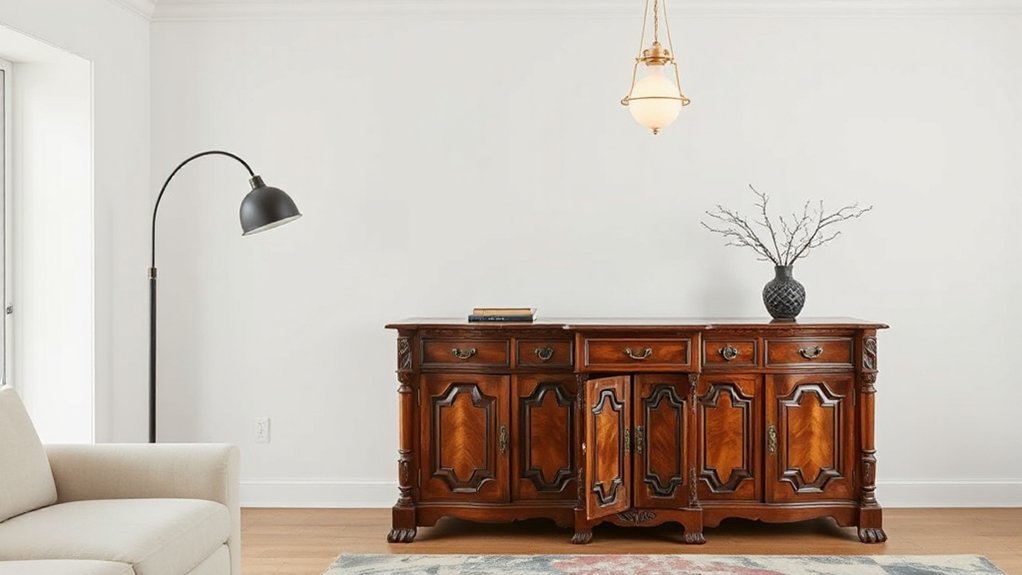
Even if you keep every carved detail intact, modern lighting instantly updates Victorian furniture by changing what the eye notices first. Layer ambient lighting with slim floor lamps and concealed LED strips inside cabinets or under marble tops to lift heavy silhouettes. Use warmer 2700–3000K bulbs to flatter dark timber and gilding without turning it orange. Add statement fixtures above a sideboard or dining table—think linear pendants, opal globes, or matte-black chandeliers—to introduce clean geometry against ornate forms. Avoid common mistakes: don’t rely on one harsh ceiling light, don’t choose cool white LEDs that make antiques look flat, and don’t spotlight every flourish. Instead, highlight one hero piece and keep the rest softly lit for balance.
Frequently Asked Questions
What Is the Best Way to Insure Valuable Victorian Furniture?
Get a specialist antiques policy with agreed value, updated appraisals, and detailed photos; you’ll cover transit, restoration, and accidental damage. Use vintage restoration records and antique preservation plans to prove condition and reduce premiums.
How Do I Remove Cigarette Smoke Odours From Antique Wood Furniture?
You’ll remove cigarette smoke odours by wiping with diluted vinegar, then drying fast. Use Odor Absorption with activated charcoal or baking soda nearby, and run Air Purification with a HEPA-carbon filter for days.
Where Can I Find Replacement Parts for Missing Victorian Carvings or Trims?
You’ll find Victorian carvings and Replacement trims through architectural salvage yards, antique hardware dealers, specialty restoration suppliers, and Etsy/eBay. Bring photos and measurements, match wood species, and consider commissioning a local woodcarver for accuracy.
How Can I Tell if My Victorian Piece Contains Lead Paint?
Like a hidden toxin under lace, you’ll confirm lead paint by using an EPA-recognized lead test swab or lab chip sample, then follow Lead paint identification steps. For Vintage paint safety, avoid sanding; seal or strip professionally.
What’s the Safest Method to Move Heavy Victorian Furniture Without Damage?
Disassemble what you can, wrap with moving blankets, strap it to a dolly, and lift with a partner using gloves. For Moving safety, protect joints and finishes; Furniture restoration pros recommend sliders, corner guards, and slow turns.
Conclusion
Modernising Victorian furniture works best when you test a simple theory: contrast creates timelessness. When you lighten heavy wood, swap ornate pulls, and choose crisp, durable upholstery, you’re not erasing history—you’re making it readable in a modern room. Keep one or two authentic details so the piece still has a “why.” Pair it with clean-lined furniture, pale walls, and smart lighting, and you’ll prove the past can feel current.