
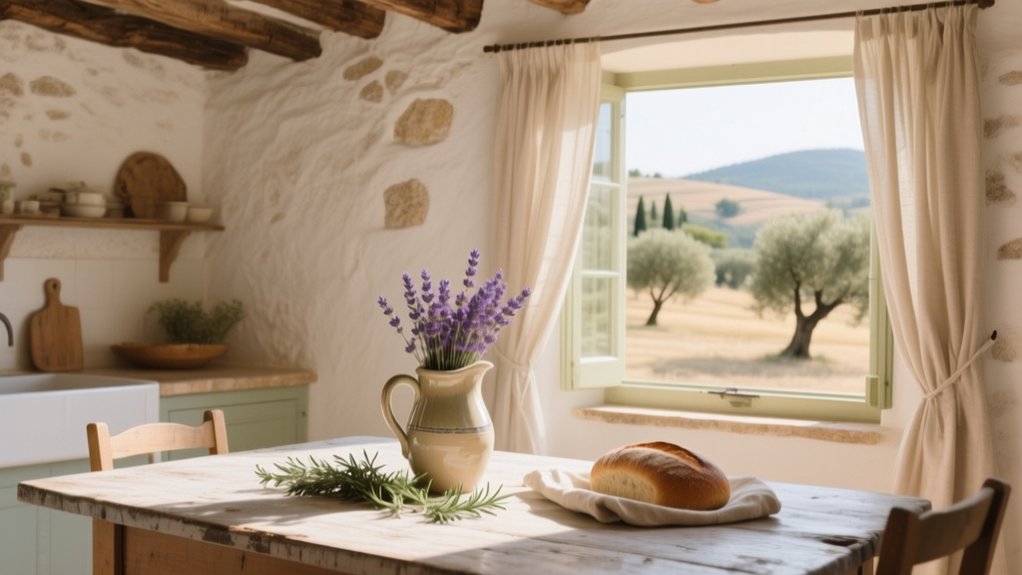

You’ll get a light, relaxed, rustic Provençal look by starting with sun-washed warm neutrals—chalky whites, sand, faded ochre, dusty lavender, and muted greens—in matte or eggshell finishes. Layer honest materials like limewashed plaster, aged oak, terracotta, and natural stone, then choose simple, gently curved furniture with open bases and timeworn hardware. Add softness with linen, cotton, and wool, plus stripes, florals, or checks in faded tones. Next, you’ll see how to style each room.
Key Takeaways
- Use sun-washed neutrals and dusty earth tones in matte or eggshell finishes to create a bright, calm, low-glare backdrop.
- Favor natural materials like limewashed plaster, aged oak, terracotta, and stone for an authentic, rustic foundation.
- Choose sturdy, handmade-looking furniture with gentle curves, tapered legs, and open bases to keep the room visually light.
- Layer relaxed linens and subtle stripes, checks, or faded florals, balancing one lead pattern with quieter companions.
- Add a few collected accents—ceramics, wrought iron, patinated brass, baskets, herbs—while avoiding clutter, heavy dark pieces, and high-gloss finishes.
What Is Provencal Interior Style?

If you want a home that feels relaxed but intentionally finished, Provençal interior style delivers it through sun-washed color, timeworn textures, and rustic elegance rooted in southern France. You create rooms that look gently aged, not worn out, by balancing refined forms with country character. Think of plastered walls, limestone or terracotta underfoot, and natural wood that shows its grain and history. You lean on a palette of creamy whites, soft ochres, faded blues, and muted greens that mimic Mediterranean light. You support Provençal charm with pieces that feel inherited: simple silhouettes, curved lines, and hand-finished surfaces. Rustic elegance comes from restraint—nothing feels precious, yet everything feels considered and welcoming.
Provencal Style Essentials (and What to Avoid)
Start with the core Provence elements: sun-washed neutrals, weathered woods, natural stone, wrought iron, and linen or cotton textiles in muted florals and soft stripes. Keep the palette chalky and the finishes matte so the room reads relaxed, not polished or ornate. Watch for common mistakes—overusing lavender motifs, going too “Tuscan” with heavy dark furniture, or cluttering with themed props—because Provence works best when it’s edited and authentic.
Core Elements Of Provence
What instantly makes a room feel Provençal isn’t a single “French” motif—it’s the disciplined mix of sun-washed color, honest materials, and lived-in restraint. Start with a chalky palette: warm whites, faded ochres, dusty lavender, and soft sage, then keep contrast low and edges imperfect. Choose limewashed plaster, aged oak, terracotta tile, and stone; you’re aiming for tactile, matte surfaces that catch light gently. Anchor the space with sturdy, turned-leg tables, rush-seat chairs, and linen slipcovers you can live with daily. Add forged-iron or patinated brass hardware, plus simple ceramics and wicker for texture. Echo Provence inspired gardening with herbs, olive branches, and clay pots. Reference Mediterranean culinary traditions through open shelving, a breadboard, and a generous farmhouse counter.
Common Provencal Style Mistakes
Because Provençal style relies on restraint as much as romance, the quickest way to miss the mark is to overdo the “French country” cues—too much distressing, too many toile prints, or a roomful of matching faux-antique pieces. Instead, limit patina to one or two anchor items and keep patterns to small doses. Another mistake is choosing bulky, dark Provencal style furniture that blocks light; you’ll get closer with slim silhouettes, bleached woods, and cane details. Don’t ignore scale: a giant farmhouse table in a tight room kills the easy flow. Skip high-gloss finishes and heavy drapes; use matte paint, linen, and woven shades. Finally, don’t treat Modern Provencal decor like a theme—mix old and new, but edit hard.
Choose a Sun-Washed Provencal Color Palette
Start with sun-faded neutrals—chalky white, warm stone, and weathered linen—to set a calm, lived-in base that reads authentically Provençal. Then add lavender in controlled doses on textiles or ceramics to bring softness without tipping into sweetness. Finish with ochre accents in terracotta, lamp bases, or framed art to echo sun-baked earth and keep the palette grounded.
Sun-Faded Neutrals
Although Provençal interiors feel effortless, they rely on a disciplined, sun-washed palette that looks naturally faded rather than freshly painted. Start with sun faded neutrals: chalky limestone white, warm sand, oat, greige, and pale clay. Choose low-sheen finishes (matte or eggshell) so walls absorb glare and read soft in natural light.
Build contrast through value, not color. Pair a creamy wall with slightly deeper beige beams, a putty floor, and off-white trim so edges stay gentle. Test swatches in morning and late-afternoon light; a true Provençal neutral shifts subtly, never turning stark or muddy. Keep undertones consistent—either warm mineral (stone) or dusty earth—so every room feels calm, continuous, and sun-dusted.
Lavender And Ochre Accents
Once your neutrals feel convincingly sun-faded, layer in lavender and ochre as restrained, timeworn accents rather than loud statements. Pull lavender from Lavender fields: a gray-violet throw, dusty linen napkins, or a single ceramic vase glazed in muted mauve. Keep saturation low so it reads like pigment softened by years of light.
Use Ochre accents to warm the scheme without turning it brassy. Choose clay-toned stripes in a runner, a honeyed wood frame, or a small pot of mustard paint on the inside of a cabinet door. Repeat each color twice, then stop; you’re aiming for balance, not a theme. Anchor these hits with blackened iron or aged brass so the palette stays rustic and grounded.
Layer Weathered Wood and Aged Provencal Finishes
To capture Provencal character, you’ll want to build a deliberate mix of weathered wood and softly aged finishes rather than rely on a single “distressed” statement piece. Start with one anchor—an oak table, console, or ceiling beam—then layer smaller pieces that repeat its grain and patina. Use limewashed walls, chalky paint, and hand-rubbed wax to soften sheen; keep wear believable at edges and handles. Balance warm and cool tones so the room feels sunlit, not muddy. Commit to Weathered wood and Rustic finishes as a quiet backdrop, not a costume, and you’ll get depth that reads authentic.
- Run your hand over nicks that tell a lived-in story
- Let faded paint hint at summers gone by
- Watch candlelight glow on waxed, timeworn surfaces
Use Linen, Cotton, and Wool for Provencal Softness
When you want a room to feel unmistakably Provencal, reach for natural textiles—linen, cotton, and wool—because they soften hard surfaces without looking fussy. Start with Linen textures on drapery and slipcovers; choose washed linen in oatmeal, ivory, or faded blue so the wrinkles read relaxed, not careless.
Bring in Cotton softness through matelassé quilts, voile curtains, and crisp percale sheets; keep patterns small-scale, like ticking stripes or tiny florals, to stay timeless. Add wool with a lightweight throw or a low-pile rug in heathered neutrals to warm the palette and tame echo.
Limit shine: skip satin finishes and choose matte weaves. Mix three weights—sheer, midweight, and chunky—for depth without clutter. Keep edges simple: hemmed, piped, or fringe-free.
Add Stone, Terracotta, and Plaster Textures

Although soft textiles set the mood, stone, terracotta, and plaster give Provencal rooms their grounded, sun-baked character. Bring in Textured surfaces that look aged, not perfect: limewashed plaster walls, tumbled stone hearths, and terracotta floors with softened edges. You’ll get Rustic charm by choosing matte finishes and warm, earthy tones, then letting natural wear stay visible. Keep grout lines and trowel marks subtle but present; they catch light and add depth without feeling busy. Seal porous materials properly so they patina, not stain, and layer in a few raw elements instead of overdoing it.
- You’ll feel instant calm when walls look sun-faded
- You’ll sense permanence in cool stone underhand
- You’ll enjoy warmth rising from terracotta at dusk
Mix Classic Provencal Patterns (Stripes, Florals, Checks)
Textured stone, terracotta, and plaster set the sun-baked backdrop; classic Provençal patterns bring the room to life on top of that calm, matte foundation. Start with one “lead” print, then support it with two quieter companions so the mix feels intentional, not busy. Pair narrow ticking stripes with small-scale florals and a simple check; keep them within the same sun-faded palette—cream, wheat, ochre, lavender, and soft blue.
Scale matters: use larger florals on drapery or a feature cushion, medium checks on table linens, and slim stripes on chair pads. Repeat one color at least three times to unify. Choose Provencal fabric patterns in linen or cotton, and echo Rustic decorative motifs through block-printed borders, rooster accents, and olive-branch repeats.
Pick Provencal Furniture With Simple, Curved Lines
To keep Provençal style relaxed and authentic, choose furniture with restrained ornament and gentle curves that echo handmade craftsmanship. Favor curved furniture like cabriole-leg tables, ladder-back chairs, and softly rounded armoires; they feel inviting without looking fussy. Keep silhouettes light, with tapered legs and open bases, so rooms breathe and daylight travels. Select solid wood pieces with honest joinery and subtle carving rather than heavy moldings, and you’ll preserve rustic charm while still feeling refined.
- You’ll sink into a chair that looks like it’s been loved for decades.
- You’ll notice how a rounded edge softens the room’s mood instantly.
- You’ll feel calm when every line flows, not fights, for attention.
Finish With Ceramics, Baskets, and Vintage Accents

Once you’ve set the room’s main pieces, lock in Provençal character with everyday accents that look collected, not staged—glazed earthenware pitchers, hand-thrown bowls, and olive jars on open shelves; woven market baskets for linens and kindling; and a few vintage touches like a weathered brass candlestick, a framed botanical print, or a small antique mirror. Keep finishes matte or softly glazed, and stick to sun-washed tones: cream, sand, sage, and dusty blue. Group ceramics in odd numbers, varying height and belly shape, and leave breathing room so each piece reads. Use Ceramic vases for fresh cuttings or dried lavender, and let small chips show. Choose woven baskets with sturdy handles and tight weave, then tuck them under consoles to hide clutter. Limit vintage to two or three pieces per zone.
Room-by-Room Provencal Styling: Kitchen to Bedroom
Whether you’re styling a compact city flat or a sprawling farmhouse, you’ll get the most convincing Provençal look by tailoring the same core ingredients—sun-faded color, honest materials, and lived-in function—to each room’s job. In the kitchen, anchor Provencal kitchen decor with painted wood cabinets, open shelves for everyday pottery, and a worn butcher-block or stone counter. Keep metals aged: unlacquered brass, iron hooks, and a simple rail for utensils. In the bedroom, soften the palette with linen bedding, a matelassé quilt, and lightly distressed nightstands. Prioritize Provencal bedroom lighting: a petite wrought-iron pendant plus bedside lamps with pleated shades to warm the walls at dusk.
- Morning light on chalky paint feels calm
- The scent of bread and herbs feels grounded
- Evening lamplight makes rest feel earned
Frequently Asked Questions
How Do I Blend Provencal Style With Mid-Century Modern Furniture?
Blend Provencal with mid-century modern by pairing clean-lined pieces with aged wood accents. Keep a muted Color palette, then soften with Linen and cotton Textile choices. Add patinaed metals, ceramics, and simple botanical arrangements.
What’s the Best Lighting Temperature for an Authentic Provencal Glow?
Choose 2700K–3000K warm-white bulbs for an authentic Provencal glow. You’ll light rooms like twilight guiding travelers home, flattering Vintage textiles and Rustic color palettes. Use dimmers, avoid cool LEDs, and favor matte glass shades.
Can Provencal Style Work Well in a Small Apartment or Studio?
Yes, you can make it work in a small apartment if you keep a restrained Color palette, prioritize airy Fabric choices like linen, and use slim furniture, wall-mounted storage, and mirrors to maintain light.
How Do I Maintain Whitewashed Finishes Without Constant Touch-Ups?
Like a calm breeze, you maintain whitewashed finishes by sealing with matte topcoat, cleaning gently with pH-neutral soap, and spot-sanding. You’ll camouflage wear using vintage textiles and a pastel color palette, reducing touch-ups dramatically.
Where Can I Source Affordable Antique-Looking Provencal Decor?
You’ll find affordable antique-looking Provençal decor at flea markets, estate sales, and Facebook Marketplace; set saved searches and negotiate. Check Etsy for Vintage textiles and local pottery seconds for Rustic ceramics. Visit architectural salvage yards.
Conclusion
You’ve built Provencal style by keeping everything sun-washed, tactile, and quietly imperfect. Stick to chalky creams, soft blues, and muted terracotta; layer weathered wood, linen, and simple curved furniture; then finish with ceramics, baskets, and a few true vintage finds—don’t over-polish or over-match. When I stayed near Aix, the host kept one cracked olive jar on the counter; guests lingered longer. That’s the metaphor: character invites pause, room by room.