


Start by choosing one or two clean-lined, leggy “anchor” pieces, like a low sofa and a teak or walnut credenza, then keep other furniture slim and unfussy for typical UK room sizes. Stick to 2–3 materials per room and repeat warm wood with matte metal or glass. Use a calm neutral base, then add mustard, teal, or burnt orange accents. Finish with a geometric rug, sculptural lighting on dimmers, and curated accessories—more ideas follow.
Key Takeaways
- Choose clean-lined, low-slung furniture with tapered legs and slim profiles to capture authentic mid-century silhouettes.
- Limit each room to 2–3 natural materials, repeating warm woods and matte metals for a cohesive, “honest materials” look.
- Start with 1–2 statement anchors, like a walnut-legged sofa or teak credenza, then add one sculptural accent chair.
- Use a calm neutral base with small doses of mustard, teal, or burnt orange, plus bold geometric patterns in rugs or cushions.
- Layer warm, dimmable lighting with a statement ceiling fixture and floor lamps, keeping surfaces curated and clutter-free with closed storage.
Mid-Century Style Basics: Lines, Legs, Materials
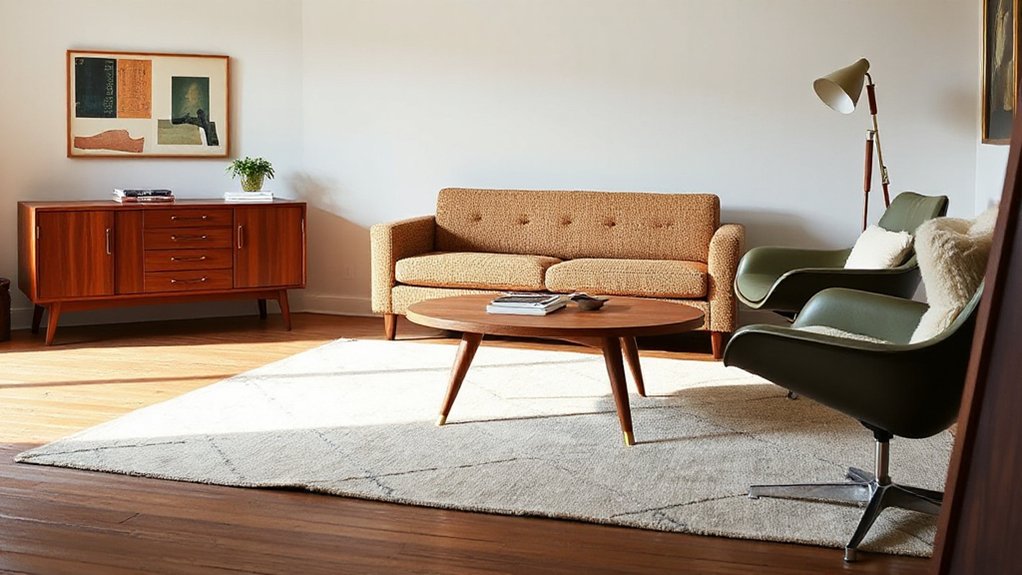
If you want to nail mid-century style without turning your home into a set piece, start with the fundamentals: clean, unfussy lines, raised “on-legs” silhouettes, and honest materials. Keep profiles slim and horizontal; avoid bulky arms, deep skirts, and fussy trims. Look for tapered legs and gently rounded corners that lift pieces visually and make UK rooms feel larger. Prioritise wood tones like teak, walnut, and oak, and balance them with matte metal or glass for a crisp finish. Choose upholstery that looks purposeful: tightly tailored cushions, neat piping, and Vintage fabric in small geometrics or muted colour blocks. Stick to two or three materials per room, repeat them across finishes, and you’ll get coherence without themed décor.
Pick 1–2 Mid-Century “Anchor” Furniture Pieces
To make mid-century style feel intentional, you should start with one or two anchor pieces and build the room around them. You can choose a statement sofa as your main focal point, add a classic credenza for streamlined storage, or select iconic accent chairs to sharpen the look. Keep the shapes clean and the footprint practical, so it suits typical UK room sizes without feeling cramped.
Choose A Statement Sofa
Because mid-century interiors rely on strong silhouettes more than lots of ornament, a statement sofa is the easiest way to set the tone fast. Choose a low-backed, clean-lined shape with tapered legs in walnut or oak, and keep arms slim to emphasise the profile. Aim for balanced proportions: in most UK living rooms, a 2.5–3 seater gives impact without swallowing the space.
Get practical about Fabric choices and Upholstery durability. For busy households, pick tightly woven wool blends or hardwearing textured weaves; they resist pilling and show fewer marks than flat cotton. If you prefer leather, go for corrected grain for easier upkeep, and check for a solid hardwood frame, quality webbing, and high-resilience foam. Order swatches, test colours in daylight, then commit.
Add A Classic Credenza
Once you’ve set the seating, a classic mid-century credenza gives the room a second “anchor” without adding bulk. Place it on the longest clear wall, or behind the sofa in an open-plan space, keeping walkways at least 90cm for easy flow in UK-sized rooms. Choose tapered legs and a low profile so the room still feels light.
Prioritise storage solutions: sliding doors for media kit, deep drawers for linens, and a cable cut-out if you’re housing a router or record player. Look for solid teak, walnut veneer, or well-made oak, then match Vintage finishes to your palette—warm oils for a cosy feel, or matte lacquer for a sharper look. Keep the top styled with one lamp and a single artwork.
Select Iconic Accent Chairs
One or two iconic mid-century accent chairs can do most of the heavy lifting in your scheme, adding sculptural shape without crowding a UK-sized room. Choose a proven silhouette: a teak-framed lounge chair with tapered legs, a low-slung bucket chair, or a wingback with clean lines. Keep scale tight so it clears radiators, door swings, and narrow bay-window corners.
Buy one “hero” chair, then add a simpler mate if you need balance. Look for solid wood joints, sprung seats, and intact Vintage upholstery; if you reupholster, pick a hard-wearing wool or boucle rated for daily use. Use one accent color—mustard, rust, or petrol blue—to link cushions, art, and rugs. Place a slim side table beside it for a reading nook.
Choose Mid-Century Silhouettes (Sofas, Chairs, Tables)
If you want your room to read “mid-century” at a glance, start with the silhouettes: low-slung sofas, slim-armed lounge chairs, and clean-lined tables do most of the heavy lifting. Choose a sofa with a tight back, tapered legs, and a shallow profile that won’t swallow a typical UK lounge.
Next, use silhouette variations to keep it authentic: pair a straight, boxy settee with a curved tub chair, or mix a wingback-inspired lounge with a simple armless slipper chair. For tables, prioritise slim tops, splayed legs, and geometric forms—oval coffee tables, round pedestal side tables, or rectangular dining tables with minimal aprons. Let vintage influence guide proportions, but buy for comfort: check seat height, depth, and arm clearance before you commit.
Add Warm Wood Tones and Mixed Textures
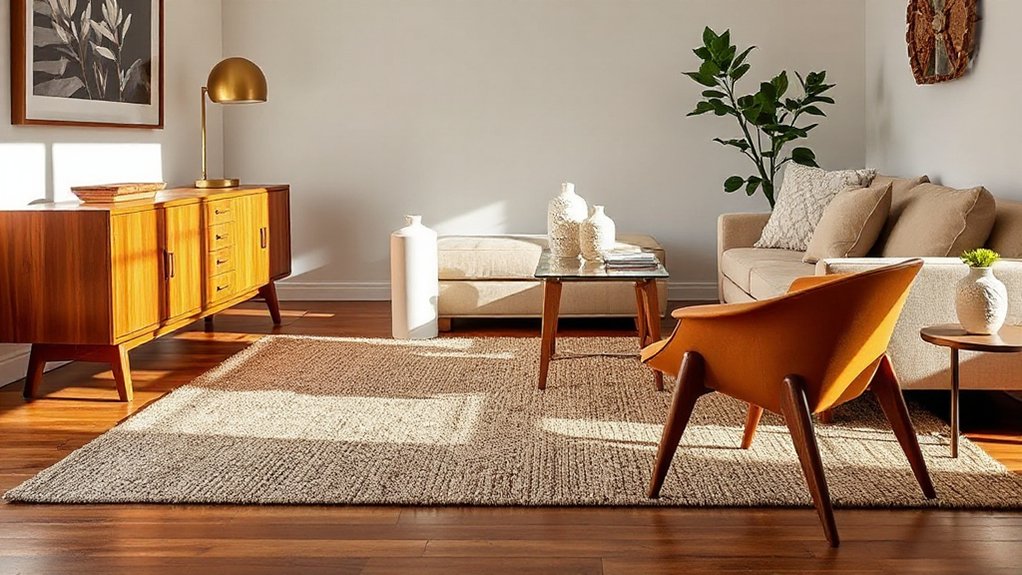
Because mid-century interiors lean on natural materials, warm wood tones instantly make a space feel more authentic and less flat. Prioritise teak, walnut, oak or ash in key pieces, then repeat the timber in smaller touches such as shelving, picture frames, or a slatted sideboard front. If you’re buying in the UK, check veneer edges and drawer runners; solid joins and good grain match signal quality.
Balance wood with mixed textures so the room doesn’t feel showroom-stiff. Add wool throws, boucle cushions, linen curtains, and a low-pile rug to soften hard lines. Bring in leather on a chair or footstool for contrast. Finish with Vintage accessories in brass, glass, or ceramic to add depth without cluttering surfaces.
Use a Mid-Century Color Palette + Bold Accents
While mid-century rooms often look bold at a glance, they actually rely on a calm base palette you can build on. Start with warm neutrals: off-white, stone, oatmeal, or soft greige on walls and larger upholstery. Then lock in colour harmony by choosing one grounded shade such as olive, tobacco, or navy for cabinetry, a sideboard, or a feature chair.Use accent hues sparingly but decisively. Mustard, burnt orange, teal, and cherry red work best in small, high-impact doses: a ceramic lamp base, a glazed vase, a pair of cushions, or painted shelf backs. Stick to two accent hues max so the room feels intentional, not busy. In UK light, test samples morning and evening before committing.
Bring in Graphic Patterns (Rugs, Pillows, Curtains)
Anchor the room with a bold geometric rug—think chevrons, atomic motifs, or sharp colour blocks that suit typical UK-sized spaces. Then layer in graphic cushions and curtains, mixing scales (one large print, one small) while keeping to your mid-century palette so it doesn’t look chaotic. Repeat one or two colours across the textiles to make the pattern mix feel intentional.
Choose Bold Geometric Rugs
One bold geometric rug can instantly inject mid-century character into your room, adding graphic punch without a full refit. Look for Geometric patterns like diamonds, chevrons, or atomic motifs in warm ochres, teal, rust, and charcoal to echo classic 50s and 60s palettes. Keep the scale confident: larger motifs suit open-plan lounges, while tighter repeats work in smaller flats.
Choose Rug textures that feel substantial underfoot; a low pile wool or wool-blend suits busy hallways and living rooms, while a flatweave works well under dining tables and makes chair movement easier. Anchor the rug under the front legs of your sofa and armchairs to define the seating zone. Finish with simple furniture lines so the rug stays the hero.
Mix Patterns In Textiles
If you want a mid-century look that feels lived-in rather than themed, start mixing graphic patterns across your soft furnishings. Pair a bold geometric rug with cushions that echo one colour from it, then add curtains in a smaller-scale print to keep the room balanced. For pattern coordination, stick to two or three tones and vary the scale: large on the floor, medium on pillows, small at the window. Use texture to soften the graphics—bouclé, wool, and brushed cotton work well in UK homes. Prioritise textile durability where it matters most: choose hard-wearing rug fibres, removable cushion covers, and lined curtains to reduce fading. Finally, repeat a motif once more (stripe, chevron, or dot) to tie everything together neatly.
Swap in Mid-Century Statement Lighting Fast
- Fit dimmable LED bulbs (2700K) to keep the glow cosy in UK evenings.
- Place the floor lamp beside your sofa or reading chair, not in a corner.
- Choose a multi-arm ceiling light sized to the room: bigger for open-plan, smaller for box rooms.
Style Mid-Century Decor: Curated, Not Cluttered

Once you’ve nailed the lighting, keep the rest of the room disciplined: mid-century style looks best when it’s curated, not crowded. Aim for minimal clutter by choosing fewer, better pieces with clear purpose—sideboard for storage, a tidy coffee table, and one strong armchair rather than extra seating you won’t use.
Keep surfaces calm: limit accessories to two or three items per zone, and group them on a tray to stop visual sprawl. Use closed storage to hide cables, remotes, and paperwork, and leave negative space around key furniture so the silhouettes read properly. Choose functional aesthetics: pieces should solve a need and look good doing it. Finally, edit weekly—if it doesn’t earn its place, move it on.
Mix Modern With Mid-Century: and Shop Smart on Any Budget
Even though mid-century design has a distinct look, you don’t need a full set of matching vintage pieces to get it right. Mix one statement retro item with clean-lined modern basics, and you’ll keep the room feeling current, not themed. Start with shape and proportion, then layer in warmth through timber, brass, and textured fabrics.
- Buy a new sofa in a simple silhouette, then add Vintage accessories like a teak tray, ceramic lamp, or atomic clock.
- Use high-street lighting or IKEA storage, and upgrade with walnut handles or tapered legs.
- Hang Contemporary artwork to bridge eras; bold abstracts suit mid-century palettes and modern frames.
Shop smart in the UK: check charity shops, Gumtree, and local auctions, and spend more on quality upholstery and solid wood.
Frequently Asked Questions
What Years Define True Mid-Century Modern Design?
You’ll usually define true mid-century modern as 1945–1969, with a UK peak in the 1950s–60s. You’ll spot it in Vintage furniture, and Retro color schemes, clean lines, and honest materials.
How Can I Spot Authentic Pieces Versus Reproductions?
You can spot authentic pieces by checking maker’s marks, construction, patina, and period materials; ask for provenance and UK dealer receipts. Compare joinery and wear on Antique furniture, and inspect wiring, labels on Vintage lighting.
Are There Eco-Friendly Ways to Achieve a Mid-Century Look?
Yes—you can time-travel with a smartphone: buy vintage locally, choose sustainable materials like FSC oak and recycled fabrics, and prioritise eco friendly furniture from UK makers. Use low-VOC finishes, repair pieces, and avoid fast-furnishings.
What Wall Art Styles Pair Best With Mid-Century Interiors?
You’ll get the best results with Abstract prints, Geometric patterns, vintage travel posters, and minimalist line drawings. Choose teak or walnut frames, keep colours muted, and hang in tidy grids at eye level. Shop UK makers.
How Do I Blend Mid-Century Style With an Open Floor Plan?
Blend mid-century style in an open plan by zoning with furniture arrangement: float a low sofa, anchor rugs, and align sideboards to define areas. Use lighting choices—arc floor lamps and pendants—to separate zones.
Conclusion
You don’t need a time machine to get mid-century right—just the restraint most of us swear we’ll use. Start with one anchor piece, keep the legs slim, and let warm woods do the heavy lifting. Add a confident palette, a graphic rug, and one proper statement light, then stop. The irony? The more “vintage” you chase, the newer it looks. Curate, don’t clutter, and your home feels quietly iconic.