


Edwardian style (1901–1914) lets you look polished without heavy Victorian fuss. You’ll lean into airy fabrics like voile, linen, and light wool, plus crisp lace at collars, cuffs, and insets for clean, architectural detail. Choose high-key neutrals—ivory, cream, dove gray—softened by powder blue or blush accents. Keep tailoring refined and proportionate, with subtle vintage cues like gloves or a watch chain. Keep going and you’ll see how to wear it today.
Key Takeaways
- Edwardian style (1901–1914) shifts from heavy Victorian ornament to lighter, refined elegance with meticulous workmanship.
- Aim for the S-bend-inspired silhouette: controlled posture, lean tailoring, and balanced proportions rather than costume exaggeration.
- Choose airy fabrics like voile, linen, light wool, and tweed; layer sheers over slips for movement and polish.
- Use lace architecturally at collars, cuffs, and yokes, plus restrained ribbons or embroidery with clean edges and minimal motifs.
- Stick to high-key neutrals and soft pastels, adding one subtle vintage accessory—gloves, straw hat, or filigree jewelry—for restraint.
Edwardian Style: Era, Origins, and Key Traits

Although it’s often used as a catchall for “early 1900s,” Edwardian style refers specifically to the years surrounding King Edward VII’s reign (1901–1910) and the wider period up to World War I, when design shifted from heavy Victorian ornament to lighter, more refined elegance. You’ll recognize it in airy materials, pale palettes, and meticulous workmanship: lace, eyelet, tucks, fine embroidery, and delicate beadwork. Social change and improved manufacturing let you pair practicality with polish, so daywear looks crisp while evening pieces feel ethereal. For an authentic finish, you’ll choose Vintage accessories such as long gloves, straw boater hats, and filigree jewelry. If you’re styling for today, you’ll use Modern adaptations—simplified trims, breathable fabrics, and cleaner lines—while keeping the era’s restrained, luminous character.
Edwardian Style Silhouette: The S-Bend and Its Variations
That airy Edwardian refinement only lands when you build it on the era’s defining line: the S-bend silhouette. You’ll angle the torso forward, push the hips back, and let the chest read high and proud, all while keeping your waist visually long. As silhouette evolution progresses into softer, later Edwardian variants, you can relax the curve and raise the natural waistline without losing elegance. Fit matters: you’re aiming for controlled posture, not costume exaggeration. Nail the look with smart accessory pairing that reinforces proportion and direction:
- A high-crowned hat that balances the lifted bust line.
- A long necklace or tie that lengthens the torso’s forward sweep.
- Gloves and a structured bag to sharpen the lean, tailored finish.
Edwardian Style Fabrics: Lace, Voile, and Light Layering
You anchor Edwardian authenticity by treating lace as a signature detail—placing it at collars, cuffs, yokes, and insets to sharpen the garment’s finish. You then build the look with voile, using its fine weave and soft drape to create controlled sheerness without sacrificing coverage. You’ll get the period’s airy refinement by layering light fabrics strategically, so every translucent panel reads intentional and balanced.
Lace As Signature Detail
Because Edwardian fashion prized a light, refined silhouette, lace became the signature detail that delivers both structure and softness at once. You’ll get the most authentic effect by choosing lace with crisp motifs and clean edges, then placing it where it controls the line: collar, cuffs, yoke, and bodice panels. Treat lace as architecture, not garnish, so your look reads elegant rather than busy.
- A high lace collar framing your jaw, anchored by a narrow ribbon tie.
- Scalloped lace cuffs peeking from tailored sleeves, finishing your gestures.
- An inset lace panel on the bodice, guiding the eye upward and elongating you.
Pair these with Vintage accessories—filigree brooches, glove buttons—then select modern reinterpretations in trims and appliqués to keep wearability high.
Voile Layers And Sheerness
While lace defines the Edwardian line, voile creates the era’s most convincing sense of air and movement through controlled sheerness. You’ll get the right effect by layering voile over a smooth slip or lightweight lining, letting the outer layer float without clinging. Choose fine, tightly woven voile that holds crisp gathers and pintucks, then place panels where light can pass: sleeves, yokes, and skirt overlays. Keep transparency intentional—use strategic opacity at bodice seams and waistband to maintain polish. Pair the look with Vintage accessories like a narrow belt, long gloves, or a hat, but keep metals delicate. For Modern adaptations, swap in cotton-voile shirting, add a tonal camisole, and keep silhouettes slim to balance volume. This approach reads refined, not costume-like.
Edwardian Style Colors: Lighter, Brighter Palettes
As the Edwardian era moved fashion away from heavy Victorian hues, it favored lighter, brighter palettes that looked fresh in daylight and photographed cleanly. You’ll get the most authentic effect by building outfits around high-key neutrals—ivory, cream, and soft dove gray—then adding restrained pastels like powder blue, blush, lilac, and primrose. Choose colors that flatter your skin under natural light; they should read airy, not washed out, and they should coordinate across head-to-toe pieces.
- Imagine an ivory day dress with a pale blue sash and tan gloves.
- Picture dove gray suiting brightened by a primrose blouse and straw hat.
- Try blush with pearl-toned Vintage accessories, then finish with Modern adaptations in nude leather.
Edwardian Style Details: Trims, Collars, and Embroidery
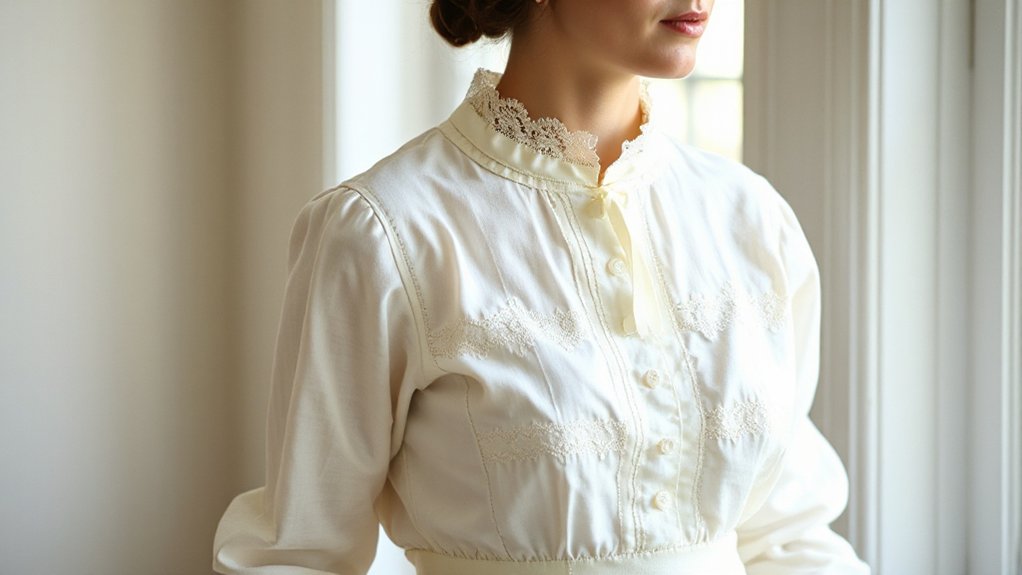
To get Edwardian style right, you’ll finish the look with purposeful lace trims and well-placed ribbons that frame the silhouette without overpowering it. You’ll rely on high collars to sharpen the neckline and deliver that crisp, period-correct structure. You’ll then choose embroidery with controlled scale and placement—cuffs, yokes, and bodices—to add texture and refinement where it matters most.
Lace Trims And Ribbons
How did Edwardian fashion turn even the simplest bodice into a statement? You did it with lace trims and ribbons, placed to guide the eye and refine the silhouette. This fashion evolution keeps a Victorian influence, yet it feels lighter: you swap heavy ornament for airy edging, narrow bows, and controlled drape. When you choose trims, you balance scale, color, and placement so the garment looks intentional from every angle.
- A scalloped lace flounce skimming the neckline edge, softening the gradation to skin.
- A ribbon waist tie, knotted slightly off-center to create movement and a tapered line.
- Tiny lace insertions along seams, adding texture without adding weight.
Specify fiber, width, and stitch method so your pieces wear cleanly and lie flat.
High Collars And Embroidery
Even when the bodice stays simple, a high Edwardian collar sharpens the neckline and sets a disciplined frame for your face, while embroidery adds controlled richness without bulk. Choose collars in crisp cotton, batiste, or fine lace, and keep the height proportional to your neck so you look poised, not constrained. Anchor the look with secure closures—hook-and-eye or tiny buttons—so the collar stands cleanly all day. Let Historical influences guide placement: think yokes, cuffs, and plackets, where tonal whitework or shadow embroidery reads refined. For Modern interpretations, specify lighter thread, negative space motifs, or sparse satin stitch that won’t stiffen the fabric. You’ll get Edwardian polish with contemporary comfort and movement.
Edwardian Style for Men: Relaxed Tailoring and Essentials

While Edwardian menswear often gets mislabeled as stiff and formal, it actually introduced a more relaxed, athletic kind of tailoring that you can still wear convincingly today. You’ll notice softer shoulders, cleaner chest lines, and higher armholes that let you move without pulling. Trousers sit higher, drape straighter, and often finish with a neat cuff for visual weight.
Build your wardrobe around these essentials:
- A three-piece suit in worsted wool, with a lightly suppressed waist and moderate lapels.
- A starched shirt with a detachable collar, plus a sober tie or ascot for controlled polish.
- Vintage accessories—watch chain, tie pin, bowler—balanced with Modern interpretations like slimmer braces and subtler patterns.
Choose pieces that fit precisely through the back and seat.
How to Wear Edwardian Style Today (Not Costume)
If you treat Edwardian style as a set of proportions rather than a period uniform, you’ll get the elegance without the stagey effect. Start with a higher rise trouser and a slightly nipped waist: that long, clean line is the point. Choose a soft-shouldered blazer or belted coat in light wool, linen, or tweed, and keep lapels moderate, not theatrical. For shirts, pick a crisp white or pale stripe with a semi-spread collar; skip detachable collars unless you’re evening-ready. Use Modern adaptations: knit ties, suede oxfords, and a slim cardigan instead of a waistcoat. Cap it with casual elegance—one vintage cue only, like a watch chain or tie pin—then stop. Aim for restraint, not reenactment.
Frequently Asked Questions
What Hairstyles and Hats Best Complement Edwardian Outfits?
You’ll complement Edwardian outfits with Vintage hairdos like soft pompadours, Gibson buns, and side-swept waves. For Hat selection, choose wide-brim picture hats, straw boaters, or feathered toques, matched to your neckline and occasion.
How Do I Care for Antique Lace and Delicate Voile Safely?
You’ll protect textiles by testing fibers, supporting weight, and avoiding agitation. For antique lace preservation, you’ll store flat in acid-free tissue. For delicate voile cleaning, you’ll hand-wash cool with pH-neutral soap, air-dry.
Where Can I Buy Authentic Edwardian Pieces Versus Reproductions?
You’ll find authentic Edwardian pieces at vetted estate dealers, auction houses, and specialized vintage shops; choose reproductions from reputable costumers. I once chased a “bargain” and got burned—use Vintage jewelry hallmarks and Authentic fabric sources.
What Undergarments Are Needed for Comfort Without a Corset?
Skip the corset by wearing a supportive longline bra, high-waist briefs, and a lightweight slip. Choose breathable fabrics like cotton batiste or bamboo. Add modern alternatives: stretchy shapewear shorts or a soft camisole.
How Can Edwardian Style Work for Plus-Size and Petite Bodies?
You’re in the driver’s seat: you’ll make Edwardian style flatter plus-size and petite frames by prioritizing Historical accuracy in proportioned skirts, raised waistlines, and tailored jackets, and leveraging Style versatility with adjustable closures and strategic layering.
Conclusion
You don’t need a time machine to channel Edwardian ease. Take the era’s S-bend spirit—then soften it: a high collar, lace or voile, and light layers that move. Choose brighter creams, pale blues, and gentle pastels, like mornings in a London garden. Add trims and embroidery with restraint, not clutter. For men, keep tailoring relaxed but precise. Wear one period cue at a time, and you’ll look elegant—not costumed.