


Let’s say your new place has “room for improvement.” As a first-time homeowner, you’re not just filling space—you’re defining how you want to live every day. That means nailing your style, choosing a restrained color palette, and scaling furniture so it actually fits and functions. When you layer lighting and texture correctly—and avoid a few common rookie mistakes—your home starts to feel intentional rather than accidental. Here’s where that transformation begins.
Key Takeaways
- Define your overall style and three guiding adjectives first, then use them to filter every purchase, color, and material choice.
- Start with a scaled floor plan, ensuring at least three feet of clear circulation between major furniture pieces before buying anything.
- Invest in quality big-ticket basics—sofa, bed, dining table, rugs—before spending on decorative accessories or trendy items.
- Use a restrained color palette and consistent metals, then layer lighting (ambient, task, accent) and textures to create cohesion and depth.
- Float furniture to create conversation zones, avoid pushing everything against walls, and embrace negative space so rooms feel intentional, not cluttered.
Start With a Vision: Define Your Interior Design Style
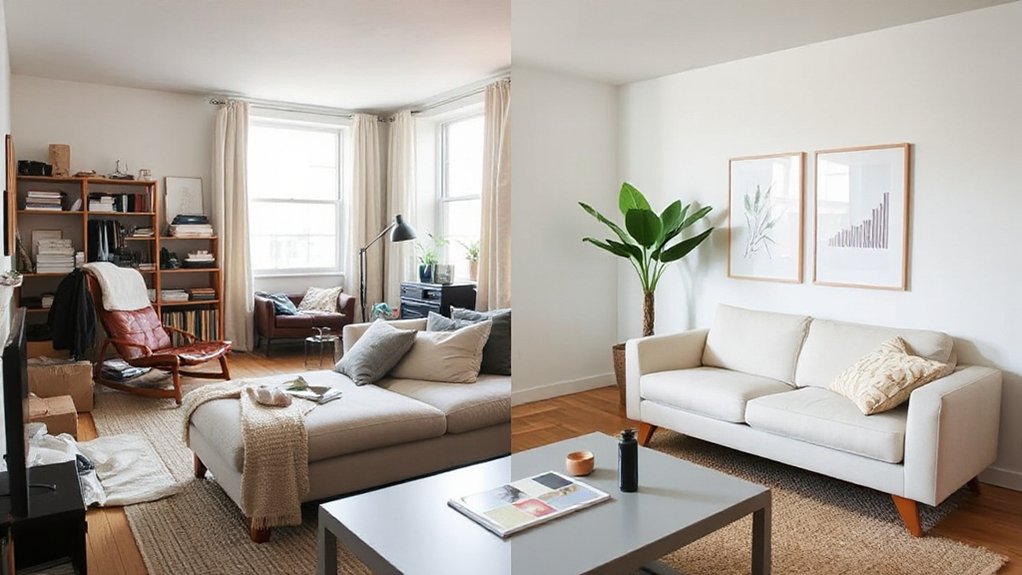
Before you buy a single sofa or paint swatch, you need a clear vision of the look and feel you want your home to embody. Start by gathering images that genuinely resonate with you—note recurring colors, materials, and moods. Are you drawn to clean lines and muted tones, or layered textures and saturated hues?
Name your style in simple terms, like “warm modern” or “refined rustic,” then define three core adjectives that guide every choice. Use them to evaluate furniture placement, finishes, and decorative accessories so everything supports that vision.
Prioritize continuity: repeat metals, woods, and accent colors from room to room. When you’re tempted by trends, ask if they enhance your concept or dilute it—and edit ruthlessly.
Plan Your Layout: Make Every Square Foot Work Hard
Once your vision is clear, you need a layout that supports how you actually live, not just how a room looks in photos. Start by mapping traffic paths and keeping at least three feet of clear circulation between major pieces.
Let function drive your furniture arrangement: anchor each room with a primary activity zone, then add secondary zones only if they fit comfortably.
Use space optimization strategies to avoid dead corners and cramped areas. Float furniture off walls when it improves flow, and choose pieces with slim profiles or open bases to maintain visual lightness.
Scale is essential—oversized sofas or tables will dominate small rooms. Finally, test multiple layouts on paper (or an app) before moving anything, so every square foot works harder.
Prioritize Big-Ticket Basics Before Small Décor
Even if you’re enthusiastic to style shelves and buy throw pillows, your budget and attention should go first to the elements that shape how a room feels and functions every day. Invest in a quality sofa, supportive mattress, durable dining table, and hard‑wearing rugs before you think about accessories.
Plan furniture placement with clear circulation paths and scaled pieces. A well‑sized sofa that doesn’t block doors or windows will always look better than a trendy lamp squeezed into a cramped corner.
Prioritize integrated storage solutions: closed cabinets for visual calm, drawers near entry points for keys and mail, and vertical shelving where floor space is tight. Once these big-ticket foundations work, smaller décor can layer on without compensating for functional flaws.
Use Color, Lighting, and Texture to Tie Your Home Together
Although every room has its own purpose, your home feels cohesive when color, lighting, and texture quietly follow the same logic. Start by choosing a restrained palette—three to five core hues—then apply color psychology: calming blues and greens for bedrooms, warmer tones for social spaces, neutrals as a connective backdrop. Repeat key colors in textiles, artwork, and accessories so sightlines feel intentional.
Layer lighting in every room: ambient for overall glow, task for function, accent to highlight architecture and art. Keep metal finishes and color temperatures consistent.
Finally, use controlled texture contrast. Pair smooth leather with nubby bouclé, sleek metal with open-weave linen, matte walls with subtly lustrous textiles. Vary texture scale, but repeat materials from room to room.
Avoid Common First-Time Homeowner Design Mistakes

Because your home is a major investment, the fastest way to undermine it is by repeating the same preventable design mistakes so many first-time owners make. Don’t start with paint; start with a clear floor plan and measurements. Impulse buys that ignore scale and proportion quickly crowd rooms and drain your budget.
Respect budget constraints by prioritizing structural pieces—sofa, bed, dining table—before accessories. Cheap, flimsy “fillers” cost more when you replace them within a year.
Plan furniture arrangement around function and circulation, not walls. Leave pathways at least three feet wide. Avoid pushing every piece against a wall; float key items to create conversation zones.
Finally, edit: negative space lets your best pieces breathe and look intentional.
Frequently Asked Questions
How Much Should I Budget for Furnishing My First Home Overall?
You should budget 10–20% of your home’s value for furnishing. Use strict budget planning, prioritize core furniture costs (sofa, bed, dining), then layer lighting, rugs, and decor as funds allow, watching quality-versus-quantity tradeoffs.
What Interior Design Choices Add the Most Resale Value to My Home?
You plant value when you choose timeless color schemes, layered lighting options, quality flooring, and updated kitchens/baths; you harvest profit when buyers see move‑in readiness, cohesive materials, neutral walls, abundant brightness, and flexible, uncluttered spaces that feel universally livable.
How Do I Work With an Interior Designer on a Limited Budget?
You prioritize scope: hire the interior designer for consultations only, then execute budget friendly upgrades and DIY decorating yourself. Share clear goals, negotiate phased plans, reuse key pieces, request trade discounts, and focus spending on high-impact rooms.
Which Furniture Items Are Best to Buy Secondhand Versus New?
Buy sofas, mattresses, and frequently used upholstery new. Source wood dressers, dining tables, sideboards, and Vintage accents secondhand. Prioritize solid construction, real wood, and timeless lines. Use Thrift shopping for accent chairs, mirrors, lamps, and framed art.
How Can I Make My Home More Sustainable Through Interior Design Choices?
You make your home more sustainable by testing the idea that aesthetics and responsibility align: prioritize eco friendly materials, specify durable finishes, choose Energy efficient lighting, maximize daylight, upcycle furnishings, and select low-VOC paints, rugs, and cabinetry.
Conclusion
In the end, you’re not just arranging furniture—you’re composing a visual symphony. Every sofa, paint strip, and lamp becomes a deliberate note, not background noise. When you define your style, map your layout, invest in essentials, and layer color, light, and texture, your home turns into a well-tailored suit: precise, flattering, and unmistakably yours. Resist clutter and impulse buys, and your rooms will breathe, speaking with quiet, confident elegance.