
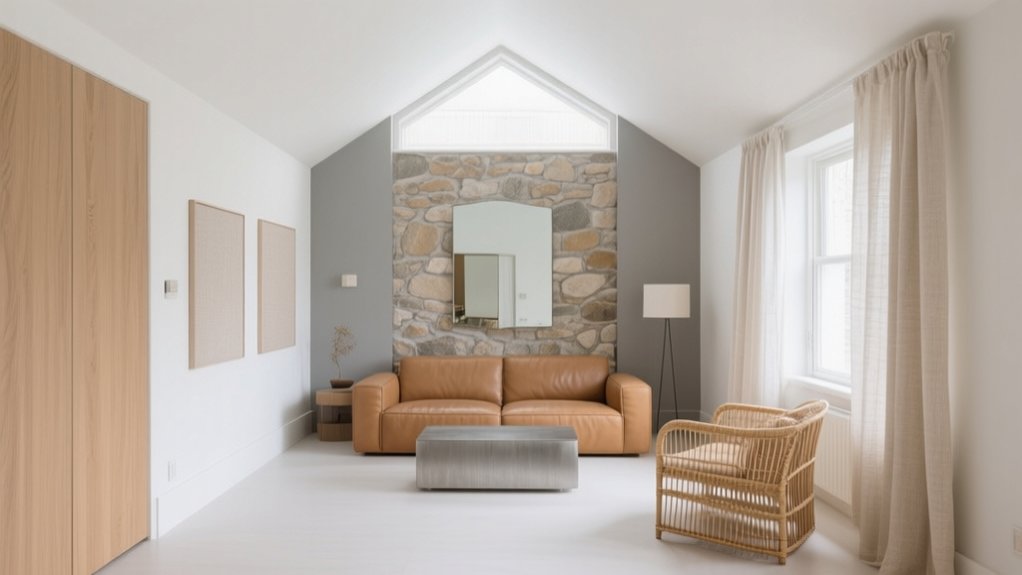

To make a small living room feel bigger, you’ll get the most mileage from light-bouncing neutrals and consistent undertones. Try a warm white palette on walls, ceiling, and trim for seamless edges; greige for depth without heaviness; sand-and-beige to lift low light; taupe in three tones for cozy mid-contrast; pale gray for an airy, cool push-back effect; and a cream-and-black scheme, using black sparingly for crisp definition—keep going to see how to layer texture and finishes.
Key Takeaways
- Use warm white on walls, ceiling, and trim to bounce light, soften shadows, and visually widen corners in small rooms.
- Choose greige with consistent undertones across paint, rugs, and upholstery to add depth without making the space feel heavy.
- Layer sand and beige tones with light-reflective finishes (brass, glazed ceramics) to brighten low-light rooms and lift shadows.
- Create cozy mid-contrast with light taupe walls and deeper taupe furniture, limiting to three shades for clear, spacious layering.
- Opt for pale gray walls with crisp white trim and textured neutrals to push surfaces back and make the room feel airier.
Warm White Palette for Small Living Rooms

Why does a warm white palette work so well in a small living room? It bounces light, softens shadows, and visually widens tight corners without feeling sterile. Color psychology matters: creamy whites read as calm and welcoming, so the room feels airy yet livable. Choose a warm white with a subtle yellow, beige, or peach undertone, then repeat it on walls, ceiling, and trim for a seamless envelope that blurs edges. Keep contrast low but intentional by adding texture—bouclé, linen, pale oak, matte ceramics—so it doesn’t look flat. Dial in furniture placement: float a compact sofa on slim legs, keep pathways clear, and anchor with a light-toned rug to extend the floor plane.
Greige Palette for Depth Without Heaviness
Because it sits right between beige warmth and gray coolness, a greige palette gives a small living room instant depth without making it feel boxed in. Keep undertones consistent so walls, upholstery, and rugs read as Monochromatic harmony, then layer finishes for quiet richness. You’ll get an airy look that still feels tailored and modern, especially with matte paint and lightly textured textiles.
- Paint walls a light greige and trim a half-step lighter to lift edges.
- Add tonal contrast with a deeper greige sofa or built-ins to anchor the room.
- Choose warm metals (brushed brass or champagne nickel) to prevent a flat, icy cast.
- Use oak, boucle, and woven wool to bring dimension without changing the colour story.
Sand-and-Beige Palette to Warm Up Low Light
When your small living room lacks natural light, a sand-and-beige palette instantly makes it feel warmer and more inviting. You’ll get the best results by layering sand textures—think linen, jute, and matte ceramics—to add depth without darkening the space. Then you can sharpen the look with beige accents in higher-reflectance finishes, so the room reads brighter and more polished.
Layered Sand Textures
If your small living room doesn’t get much natural light, a layered sand-and-beige palette can warm it up without making it feel heavy. Your goal is depth through textural contrast, not more colour. Build a quiet base, then stack tactile finishes that catch lamp light and add dimension. Keep undertones consistent (golden, not pink) so the room reads seamless and larger. Use natural materials to avoid a flat, synthetic look, and vary weave scale to prevent visual clutter. Try these upgrades:
- Swap a smooth sofa throw for a chunky boucle or ribbed knit.
- Add a low-pile wool rug over sisal for soft-on-structured layering.
- Mix linen curtains with a matte clay lamp and sand-washed wood.
- Finish with plaster-look accessories and woven baskets for storage.
Beige Accents For Brightness
Even in a low-light small living room, beige accents can bounce warm lamplight around and make the space feel cleaner and more open without turning it stark. Use a sand-and-beige palette on high-touch pieces: a linen throw, textured cushions, or a slim rug with a pale border that visually widens the floor. Choose warm beige with a slight yellow or pink undertone; it lifts shadows better than cool greige and keeps skin tones flattering. Add one reflective element—brass, champagne metal, or a lightly glazed ceramic lamp base—to amplify the glow. Keep your base walls and sofa in quiet Neutral colour schemes, then layer beige in repeat doses for small space illusions that feel cohesive, not busy.
Taupe Palette With Cozy Mid-Contrast Layering
Because taupe sits between warm beige and cool gray, it gives your small living room a neutral base that feels modern without turning flat. Use cozy mid-contrast layering to add depth while keeping the footprint calm, relying on subtle shading instead of stark jumps.
- Paint walls in light taupe, then choose a deeper taupe for one upholstered piece to create neutral contrast.
- Add texture: boucle pillow, linen curtains, and a low-pile wool rug in tone-on-tone bands.
- Ground the room with warm wood (oak or walnut) and a matte black accent in small doses (lamp, frame).
- Keep metals consistent—brushed brass or soft nickel—so the palette reads intentional.
Aim for three taupe values, not more, and let light do the rest.
Pale Gray Palette for a Cooler, Airier Look
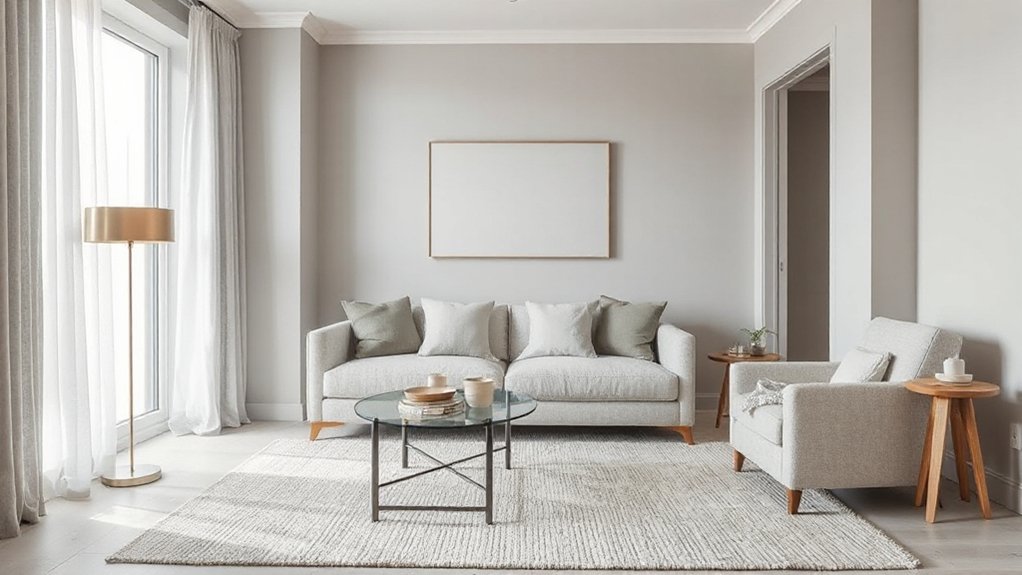
Choose cool pale gray for your walls to visually push them back and make your small living room feel bigger and calmer. Pair it with crisp white trim, soft greige upholstery, and matte black accents to keep the undertones clean and current. Then build light layering with texture—think linen curtains, bouclé cushions, and a flatweave rug—so the space stays airy but never looks bare.
Cool Gray Wall Pairings
When you want a small living room to feel cooler and more open, cool gray wall pairings deliver that crisp, airy backdrop without turning the space stark. Choose paints with balanced neutral undertones so the room stays inviting under both daylight and lamps. Then coordinate nearby finishes to keep sightlines clean and the palette intentional.
- Pair cool gray walls with soft white trim to sharpen edges and boost brightness.
- Add greige upholstery to prevent a blue cast from feeling chilly.
- Ground the scheme with charcoal or black accents in frames, hardware, or a rug.
- Consider accent wall options in dusty slate or pale blue-gray to define a zone without shrinking it.
Keep contrast moderate and repeat tones across the room for an expansive, modern look.
Light Layering With Texture
Although pale gray reads sleek and spacious, it can fall flat without deliberate light layering and tactile texture, so build your scheme with a mix of warm and cool light sources and matte, touchable finishes. Start with an ambient ceiling light at 2700–3000K to keep the room inviting, then add a directional floor lamp for reading and a small table lamp to soften corners. Bounce daylight with a large mirror and sheer, pale-gray curtains. For textural contrast, choose a nubby wool rug, brushed linen cushions, and a bouclé or tweed accent chair. Use fabric layering: pair sheers with heavier drapes, and stack throws in slightly different grays. Keep metals quiet—brushed nickel or black—to maintain that airy, modern edge.
Cream-and-Black Palette for Crisp Definition (Used Sparingly)
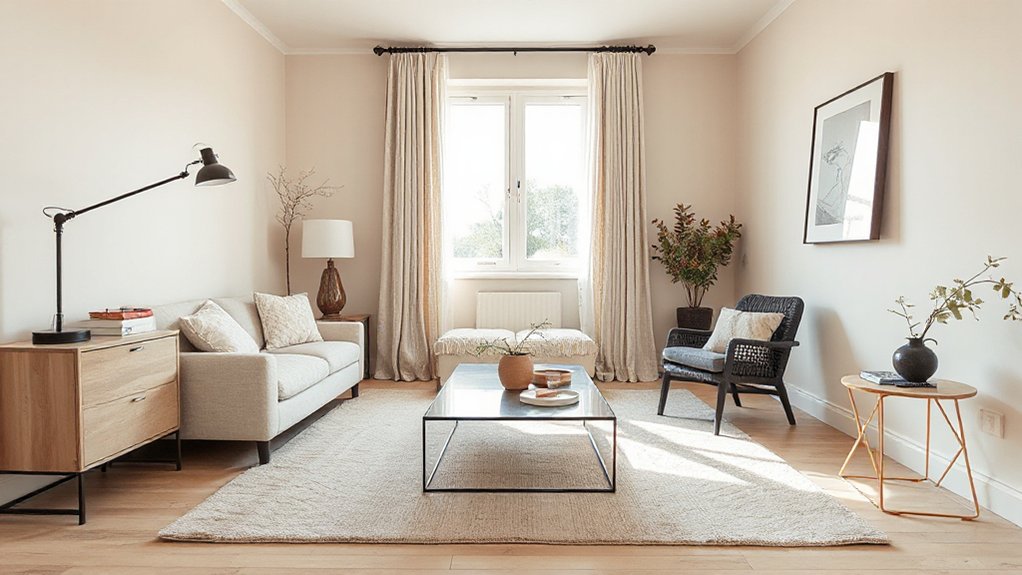
If you want a neutral scheme that still feels sharp and modern, pair creamy off-whites with small hits of black to create crisp definition without shrinking the room. This approach keeps Neutral colour schemes airy while adding structure that suits minimalist decor and today’s tailored look. Keep black to 5–10% of the palette so edges read clean, not heavy, and repeat it in a few spots for cohesion.
- Choose warm cream walls and a similar-toned rug to blur boundaries.
- Add black only in thin lines: picture frames, curtain rods, or a slim floor lamp.
- Anchor with one matte-black accent (side table or mirror) instead of multiple bulky pieces.
- Balance with light wood, boucle, or linen so contrast stays soft.
Frequently Asked Questions
What Sheen of Paint Best Reflects Light in a Small Living Room?
You’ll get the most light reflection from Glossy finishes, especially high-gloss, since they create Reflective surfaces. Use semi-gloss on trim and doors for bounce, but reserve high-gloss for accents to limit glare.
How Can I Keep Neutral Walls From Looking Flat or Boring?
Keep neutral walls from looking flat by pairing smooth paint with textured finishes, then add contrast through layered lighting and bold art. You can also create subtle accent walls with limewash, slats, or tonal wallpaper.
Which Neutral Colours Best Hide Scuffs and Fingerprints in High-Traffic Areas?
Choose warm greige, taupe, mushroom, or putty in an eggshell finish; they camouflage scuffs and fingerprints best. Add subtle wall texture and stronger furniture contrast so marks disappear while the space still feels current.
How Do I Choose Warm or Cool Neutrals to Match Existing Flooring?
If 70% of your flooring reads warm (golden oak), pick warm neutrals; if it skews gray, go cool. Then add Complementary accent colors and refine Texture and fabric choices to bridge undertones cleanly.
What Lighting Colour Temperature Works Best With Neutral Colour Schemes?
Choose 2700–3000K colour temperature for most neutral palettes; it keeps whites inviting and greiges balanced. Use 3500K if you want a crisper, modern feel. Match lighting fixtures’ bulbs across zones, too.
Conclusion
You don’t need bold colour to make a small living room feel bigger—you need the right neutral mix. Choose warm white to bounce light, greige to add depth without weight, sand-and-beige to soften shadows, taupe for cozy contrast, pale gray for an airy edge, or cream-and-black for sharp definition used sparingly. Layer tones, vary textures, and keep sightlines clean. Done right, your space will open up like a window.