


You’ll brighten a dark hallway fastest with warm whites that reflect light without a harsh blue cast, or a soft greige paired with slightly softened white on ceilings and woodwork. In narrow spaces, use pale blue on long walls with crisp white trim to add depth. For warmth, choose blush beige with creamy off-white details, or light sage with creamy white for calm lift. Add layered lighting and durable matt or eggshell finishes to keep it looking fresh. Keep going for step-by-step picks and application tips.
Key Takeaways
- Choose warm whites with subtle cream/beige undertones to reflect light gently and prevent blue-grey shadows in dark hallways.
- Use warm greige on walls with softened white ceilings and woodwork, avoiding cold tones that look flat in low daylight.
- Paint longer walls pale blue with a slight grey base, pairing crisp white trim to visually widen and brighten narrow halls.
- Combine blush beige walls with creamy off-white ceilings and trim for a warmer glow, finishing woodwork in eggshell or satin.
- Opt for light sage walls and creamy white trim for calm brightness, and use warm 2700–3000K lighting to keep tones welcoming.
Warm Whites That Instantly Brighten a Hallway
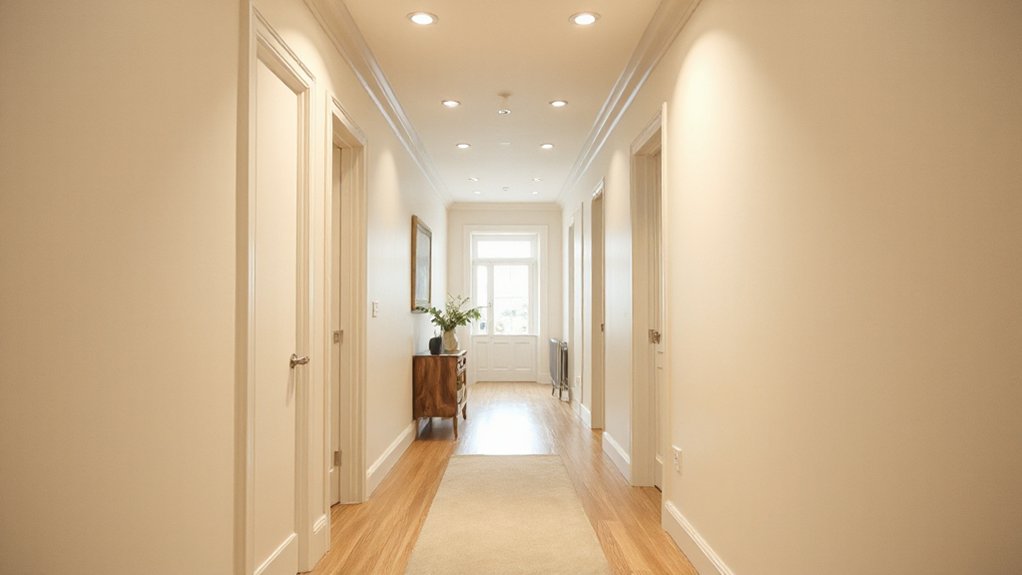
Although dark hallways can feel narrow and uninviting, a warm white paint instantly lifts the space by reflecting light without the harshness of a cool, blue-leaning white. Choose a shade with a subtle cream or beige undertone to counter grey shadows and make the corridor feel broader.
Use a durable matt or eggshell on walls and reserve satinwood for skirting boards and doors so you control sheen. Pay attention to paint texture: smoother finishes bounce light more evenly, while heavy roller stipple can trap shadow. Add Accent lighting with slim wall lights or a picture light to wash the surface and reduce contrast at corners. Keep ceilings the same warm white to avoid a visible break and maintain a continuous, brighter envelope.
Soft Greige + White for Shadowy Hallways
When your hallway sits in shadow for most of the day, pair a soft greige on the walls with crisp white on woodwork and the ceiling to create contrast without making the space feel stark. Choose a greige with a warm undertone so it won’t read cold under low daylight, and keep the white slightly softened rather than brilliant.
Support the scheme with lighting techniques: use layered light from a slim ceiling fitting plus wall lights to wash the greige evenly, and fit warm LED lamps (around 2700–3000K) to prevent a flat look. Consider wall texture choices too; a matte or eggshell finish reduces glare, while subtle limewash or a fine-grain paint adds depth that lifts shadows. Keep trims in a durable satin for easy cleaning.
Pale Blue + Crisp White to Open Narrow Halls
Soft greige and softened white create gentle contrast in shadowy corridors, but a pale blue paired with crisp white can make a narrow hall feel wider and cleaner. Use pale blue on the longer walls to push them back visually, and keep ceilings, architraves, and skirting boards in a sharp white to lift the light level.
Apply Color psychology: blue reads calm and airy, so you’ll reduce the “tunnel” feeling without making the space cold. Choose a blue with a slight grey base and a high light reflectance value. For paint application techniques, cut in carefully along edges, then roll in a W pattern to avoid lap marks. Finish walls in durable matt or eggshell for scuff resistance.
Blush Beige + Off-White for a Warmer Glow

Because dark hallways often look flat and chilly, a blush beige on the walls paired with an off-white on the ceiling, architraves, and skirting boards will give you a warmer glow without making the space feel smaller. Choose a blush beige with a gentle pink undertone and keep the off-white slightly creamy to avoid a stark contrast under artificial light.
Use a matt finish on walls to soften glare, then add a satin or eggshell off-white on woodwork to bounce light and resist scuffs. For Complementary accents, introduce brushed brass hooks, oak frames, or a terracotta runner in muted tones. Build Texture layering with a wool carpet, a ribbed shade, and a linen-look blind so the scheme feels considered, not sweet. Keep artwork simple and warm.
Light Sage + Creamy White for Calm Brightness
Although a dark hallway can feel narrow and airless, painting the walls a light sage and keeping the ceiling, skirting boards, and architraves in a creamy white will lift the space while staying calm and understated. In colour psychology, sage reads as restorative and balanced, so you’ll soften harsh shadows without making the corridor feel cold. Choose a mid-sheen washable matt for walls to diffuse light, and a satin or eggshell for woodwork to bounce it gently. For clean lines, you’ll want low-tack masking tape and a quality angled brush for cutting in. Use a short-pile microfibre roller, keep a wet edge, and apply two thin coats. Finish by placing a warm LED bulb to keep the white creamy, not stark.
Frequently Asked Questions
How Do I Choose Bulbs to Match My Hallway Paint Colour Scheme?
Choose bulbs by matching light temperature to your paint undertone: 2700K suits warm hues, 4000K suits cool. Set bulb brightness for size—around 800 lumens. Test samples at night; choose high-CRI LEDs.
Should I Paint the Hallway Ceiling and Trim the Same Light Colour?
Yes, you can paint the ceiling and trim the same light colour for a seamless, taller feel. For ceiling and trim coordination, match finishes. If you want definition, choose contrasting trim options in a crisp white.
What Sheen (Matte, Eggshell, Satin) Works Best for Hallway Walls?
Choose eggshell for hallway walls; like a well-cut suit, it balances refinement and resilience. You’ll mask minor wall texture, clean marks easily, and still reflect light from lighting fixtures without satin’s glare or matte’s scuffs.
Will Light Paint Colours Show Scuffs and Fingerprints More Easily?
Yes, you’ll notice scuffs and fingerprints more on light paint, especially on smooth wall texture. Choose a tougher eggshell or satin for better paint durability, washability, and touch-up ease; fit a hallway runner.
How Can Mirrors and Runners Enhance Brightness in a Dark Hallway?
Worried mirrors will feel vain? You’ll gain light: use mirror placement opposite lamps or doorways to bounce illumination, and choose runner patterns with pale stripes to reflect light, draw the eye, and elongate your hallway.
Conclusion
Choose a light scheme and you’ll watch your dark hallway lift like morning mist. Warm whites bounce light neatly, while soft greige steadies shadows without feeling cold. Pale blue with crisp white stretches narrow walls, and blush beige adds a gentle, welcoming glow. Light sage with creamy white brings calm, like a quiet garden indoors. Test sample pots under your usual bulbs, then finish with clean skirting lines for a polished, brighter passage.