
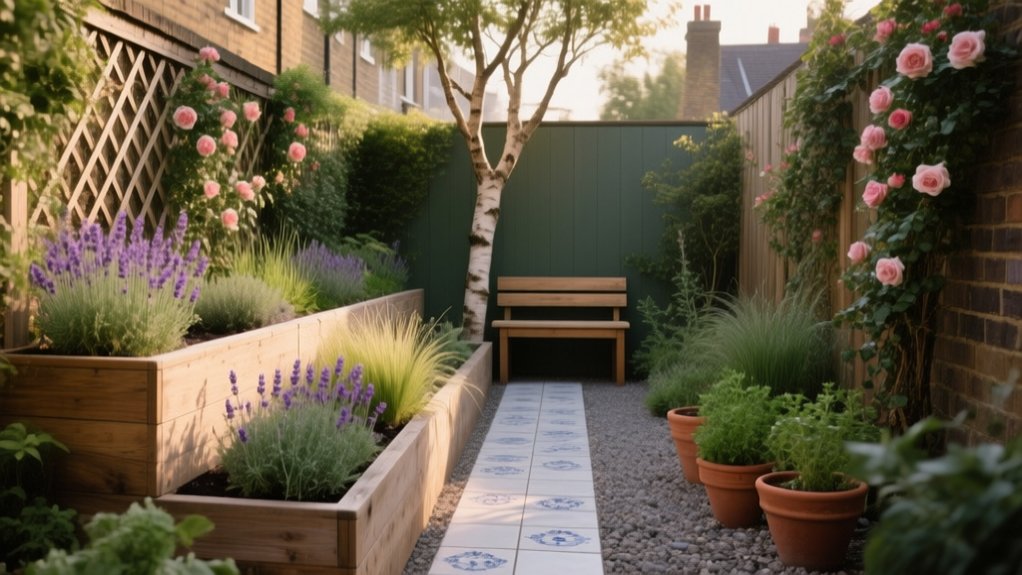

Like a well-planned London terrace, a small UK garden can feel bigger, brighter and far more useful when you’re strategic about every inch. You’re not just choosing plants; you’re deciding how people move, sit, and look around the space. With the right layout, surfaces, planting and lighting, you can turn a cramped plot into an outdoor room that works all year—once you know which ideas genuinely suit British conditions.
Key Takeaways
- Use gentle curves, layered planting heights, and “garden rooms” with trellis or screens to create the illusion of more space and depth.
- Define zones with contrasting surfaces, compact lawns, and slim furniture to combine dining, relaxing, and planting in a small footprint.
- Maximise vertical space using wall planters, climbers, and modular green screens for privacy without losing ground area.
- Choose low-maintenance, drought-tolerant and shade-tolerant plants, using mulch and dense planting to reduce watering and weeding.
- Add layered, low-glare lighting, small water features, mirrors, and simple focal points to extend use, brighten shade, and add character affordably.
Make a Small UK Garden Feel Bigger With Smart Layout
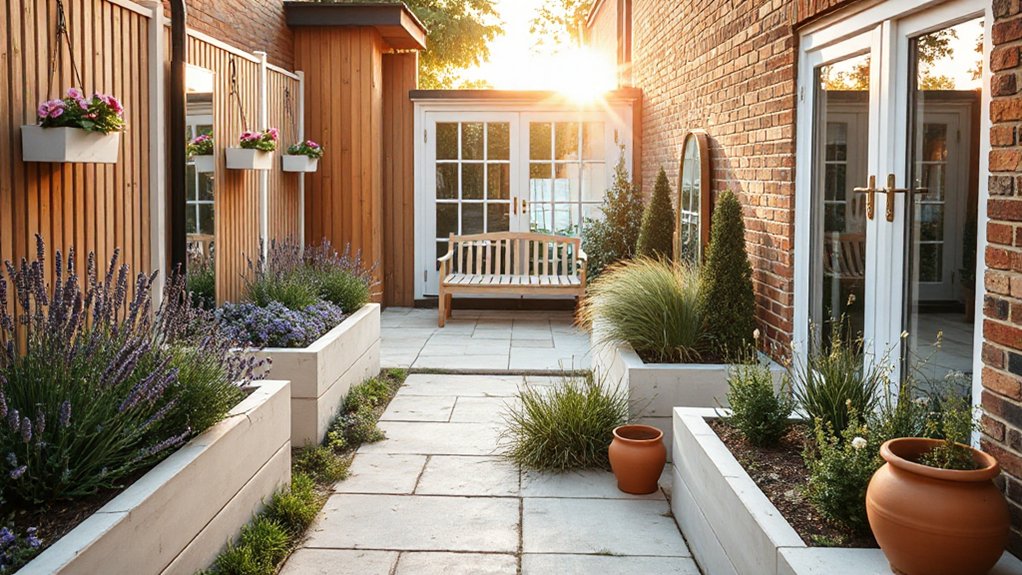
When space is tight, the way you arrange paths, planting, and key features will decide whether your small UK garden feels cramped or surprisingly generous. Start by setting a clear route, ideally a gentle curve that leads the eye away from boundaries.
Use staggered heights: low groundcover, mid-height shrubs, and a few taller accents to draw attention upwards, useful in overlooked urban plots.
Break the space into “rooms” using trellis, pleached trees, or slatted screens that suit UK winds and shade. Keep color schemes restrained; repeated tones in plants, pots, and fences create visual flow.
Add compact water features, such as a narrow rill or wall-mounted fountain, to reflect light and mask street noise without overwhelming the scale.
Best Small Garden Landscaping Ideas for Patios and Courtyards
Even the smallest patio or courtyard can become a hard‑working outdoor room if you treat it like an extension of your home rather than leftover space.
In the UK, you’ll get the best results by choosing durable, frost‑resistant materials and planning for year‑round use.
- Define clear zones with porcelain paving, gravel, or brick setts, leaving space for a compact bistro set or built‑in bench.
- Introduce Garden art as focal points – a sculptural planter, mosaic panel, or metal screen that stands up to British weather.
- Add discreet water features, such as a wall‑mounted fountain or bowl, to mask traffic noise and attract wildlife.
- Layer pots and troughs at ground level to soften hard surfaces and provide seasonal colour.
Vertical Gardening Ideas to Maximise Space and Privacy
When floor space is tight, you can turn walls, fences, and even sheds into productive growing areas with well-planned vertical planters.
By choosing hardy, UK-suited plants and weatherproof structures, you’ll add colour and texture without sacrificing room for seating or storage.
You can also create living green privacy walls that soften boundaries, cut wind, and screen neighbouring windows in even the smallest London terrace or suburban plot.
Space-Saving Vertical Planters
Although small UK gardens can feel restrictive, space‑saving vertical planters let you grow more without surrendering precious ground. By combining container gardening with simple vertical walls, you turn fences, sheds, and even awkward corners into productive growing surfaces.
To make vertical planters work in a British climate, focus on drainage, frost‑hardy plants, and accessible watering. Think about:
- Choose modular stackable pots or pocket planters so you can replant easily with the seasons.
- Fix treated timber battens to brick walls or fences, then hang metal or plastic containers securely.
- Group thirsty plants lower down and drought‑tolerant herbs higher, where they dry faster.
- Use lightweight peat‑free compost and slow‑release fertiliser to keep weight down and feeding consistent.
Living Green Privacy Walls
While small UK gardens often sit cheek‑by‑jowl with neighbours, living green privacy walls let you screen views, mute noise, and add lush planting without swallowing valuable floor space. Fix slimline trellis panels or wire systems to existing boundaries, then train climbing plants such as clematis, jasmine, or evergreen honeysuckle for year‑round cover.
For a faster effect, install pre‑grown modular living fences that slot into posts; they’re ideal along patios or overlooked seating areas.
In shaded, north‑facing gardens, choose ivy or climbing hydrangea, and use robust supports fixed with masonry screws.
Combine vertical planting with wind‑permeable panels so strong UK gusts don’t topple your structure.
Add drip irrigation or leaky hose to keep maintenance low and growth dense.
Low-Maintenance Planting Ideas for Small UK Gardens
To keep a small UK garden looking good with minimal effort, you’ll want planting that works hard for you all year. Start by using evergreen shrubs and grasses to give reliable structure and shape.
Then layer in drought-tolerant choices that cope with erratic British rainfall and hosepipe bans.
Finally, add easy-care seasonal colour with bulbs and long-flowering perennials so you’re not constantly replanting or fussing over borders.
Evergreen Structure And Shape
Even in the tiniest UK garden, evergreen structure gives you year-round backbone, privacy, and neatness with very little effort. Focus on reliable, hardy plants that respond well to light pruning and cope with British winters and wind.
- Use evergreen hedges (yew, privet, Griselinia) to define boundaries, screen neighbours, and create garden “rooms” without constant clipping.
- Add structural trees such as Amelanchier or small hollies to draw the eye upward and make the space feel larger.
- Introduce clipped shapes—box balls, pittosporum domes, or dwarf conifers—to punctuate borders and frame paths.
- Repeat key evergreens along your fence line or patio; repetition simplifies maintenance and creates a strong, cohesive layout all year.
Drought-Tolerant Plant Choices
Although UK summers are still unpredictable, hotter, drier spells and hosepipe bans are increasingly common, so choosing drought-tolerant plants will keep a small garden looking good with minimal watering.
Focus on xeriscape plants that thrive in UK conditions: lavender, rosemary, thyme, sedum, and hardy ornamental grasses such as Stipa or Festuca.
Choose drought resistant shrubs for structure: Cistus, Perovskia (Russian sage), Hebe, and small forms of Ceanothus cope well in free-draining soil.
In tight spaces, plant into raised beds or gravel mulches to improve drainage and reduce evaporation.
Water deeply in the first growing season, then gradually cut back so roots go down rather than sideways.
Group plants with similar water needs together, and avoid thirsty lawn in favour of gravel or paving with pockets of tough planting.
Easy-Care Seasonal Colour
Drought‑tolerant planting gives your small UK garden a solid backbone, but you also want steady colour without constant fuss. Focus on layered, easy‑care Flower beds that carry you from early spring to late autumn with minimal input.
Use cool, unified Color schemes so your space feels larger and calmer. Then repeat a few hard‑working plants through borders and containers for rhythm rather than clutter.
- Choose long‑flowering stalwarts such as geraniums, nepetas, and hardy fuchsias that shrug off UK weather.
- Add bulbs—daffodils, alliums, crocus—for reliable, low‑effort spring colour.
- Use evergreen structure (box, dwarf pittosporum, hebe) to keep beds tidy in winter.
- Rely on mulch and dense planting to reduce watering and weeding while keeping colour strong.
Small Garden Seating, Dining and Entertaining Ideas
While a compact plot can feel limiting at first glance, you can turn a small UK garden into a surprisingly versatile space for seating, dining and entertaining with a few smart layout choices. Focus on scale first: choose foldable or stackable small garden furniture that fits your narrowest dimension, then build the layout around it.
Create a social “hub” close to the back door so outdoor dining feels effortless, even in drizzle. A simple bistro set works for weekday suppers; add a bench with storage for extra cushions and blankets when evenings turn cool.
Use vertical space for lanterns, festoon lights and wall-hung planters to free up floor area. Finally, consider a compact fire pit or chimenea to extend your entertaining season into autumn.
Space-Saving Lawn, Paths and Patio Surface Ideas
Once you’ve planned where you’ll sit and eat, the next step is shaping the ground itself so every square metre works hard. In a small UK garden, keep lawn compact; a simple rectangle or L‑shape is easier to mow and leaves room for paths and a patio. Define every garden edge sharply with steel, brick, or stone; it visually enlarges the space and improves weed control.
Use a mix of surfaces so the garden drains well and stays usable in wet weather:
- Porcelain paving for low‑maintenance, non‑slip terraces.
- Permeable gravel paths with firm stabilising grids.
- Narrow brick or setts to link doors, sheds and bins.
- Artificial turf in deep shade or high‑traffic play areas.
Lighting and Décor Ideas to Transform a Tiny Garden
Even in a tiny UK garden, clever lighting and a few well‑chosen decorative touches can make the space feel bigger, safer and more inviting after dark. Start by planning garden lighting in layers: wall‑mounted fittings for general light, spike spots to pick out feature plants, and warm white string lights along fences or pergolas. Use low‑glare, IP‑rated fittings that withstand rain and winter frost.
Add decorative accents that double as focal points. A simple metal fire bowl, a painted bistro set, or a slim water feature reflects light and adds movement. Hang weatherproof mirrors to bounce light back into darker corners, but angle them away from neighbours.
Choose compact lanterns and solar stake lights to guide steps and define the patio edge.
Budget-Friendly Weekend Landscaping Projects for Small Gardens
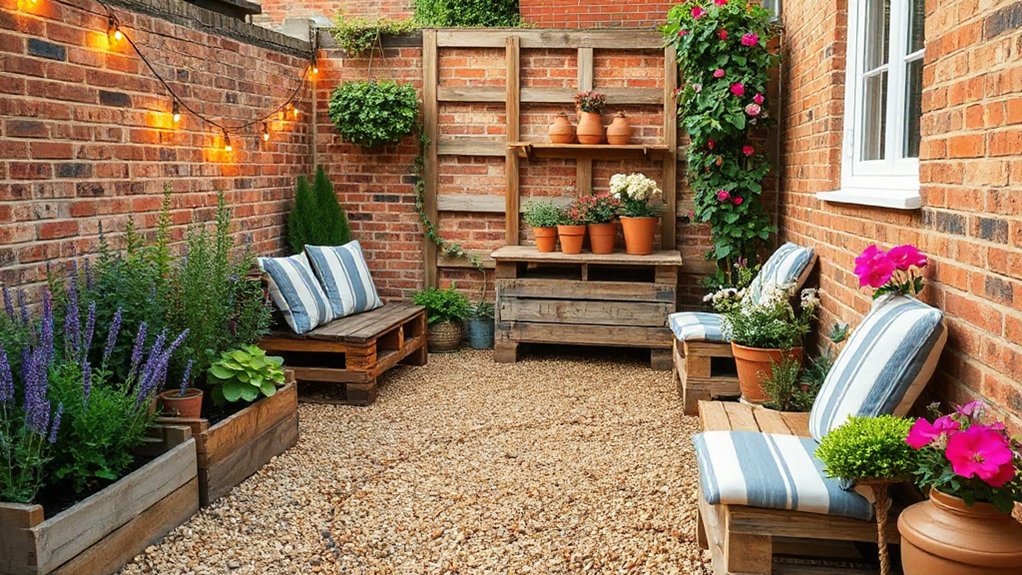
Although a small UK garden can feel limiting, you can transform it over a single weekend with a few low‑cost, high‑impact jobs. Focus on simple changes that cope well with rain, cool temperatures, and changeable light.
- Create clear structure: edge lawns with brick or gravel, and define beds with sharp lines so your space feels ordered and larger.
- Add compact water features: a half‑barrel with a solar pump brings movement, reflects light, and suits a tight patio.
- Build wildlife habitats: stack logs, sink a shallow dish for birds, and plant nectar‑rich herbs like thyme and lavender.
- Refresh surfaces: jet‑wash paving, top up gravel, and add a small bistro set to turn a dull corner into a usable seating nook.
Small Garden Ideas for Shade, North-Facing and Awkward Spaces
Because so many small UK gardens are north‑facing, overshadowed by fences, or pinched into narrow side returns, you’ll get better results by working with the shade rather than fighting it. Start by mapping how light moves, then group shade loving plants where they’ll thrive: ferns, hostas, heucheras and foxgloves cope well in cool, damp spots.
In gloomy north facing corners, brighten boundaries with pale gravel, light‑coloured masonry paint, or slatted timber stained soft grey. Use mirrors sparingly to bounce light, angling them away from neighbours’ windows.
For awkward side passages, lay a simple stepping‑stone path with groundcover between slabs, and keep planting vertical: climbers on wires, wall baskets, and slim, tall containers to lift foliage and colour to eye level without stealing floor space.
Frequently Asked Questions
How Can I Make a Small Garden More Child- and Pet-Friendly?
You prioritise soft lawn, clear sightlines and secure pet safe fencing. You choose non-toxic, robust, child friendly plants like lavender, hardy herbs and lawn daisies, avoid spiky species, add bark-mulch play zones and non-slip, permeable paving.
What Are Common Planning Permission Issues for Small UK Garden Changes?
You’ll wrestle mostly with height limits, overlooking neighbours, and listed-building rules, especially for decking, outbuildings, and tall garden lighting. You must also check boundaries, drainage, and protected trees when planning plant selection in UK small gardens.
How Do I Design a Small Garden to Increase Property Resale Value?
You boost resale value by creating low‑maintenance structure: define zones with patios and lawns, add subtle garden lighting, choose compact, tidy planting, integrate small water features, guarantee privacy with fencing, and keep everything neat, safe, and family‑friendly for UK buyers.
What Uk-Specific Garden Safety Considerations Should I Keep in Mind?
You guard against slippery British patios, then the sun appears and blinds you. You’ll install RCD‑protected outdoor sockets, secure garden lighting, fence ponds, choose non‑toxic plants, preserve wildlife habitat, and maintain sturdy, BS‑compliant railings on all changes in level.
How Can I Reduce Noise From Neighbours in a Tiny Garden?
Use dense hedging, fence-mounted garden soundproofing panels, and solid timber noise barriers to block neighbours’ noise. Add a small water feature for masking sound, and choose evergreen UK-native shrubs like yew or laurel for year-round acoustic cover.
Conclusion
When you plan smartly, your small UK garden can punch above its weight. Use vertical planting, clever zoning, and low‑maintenance schemes to make every inch earn its keep. Choose surfaces that suit our damp climate, layer lighting for long evenings, and add one strong focal point to avoid visual clutter. Don’t bite off more than you can chew—tackle changes in stages and you’ll gradually turn even the tightest plot into a hardworking, welcoming outdoor room.