
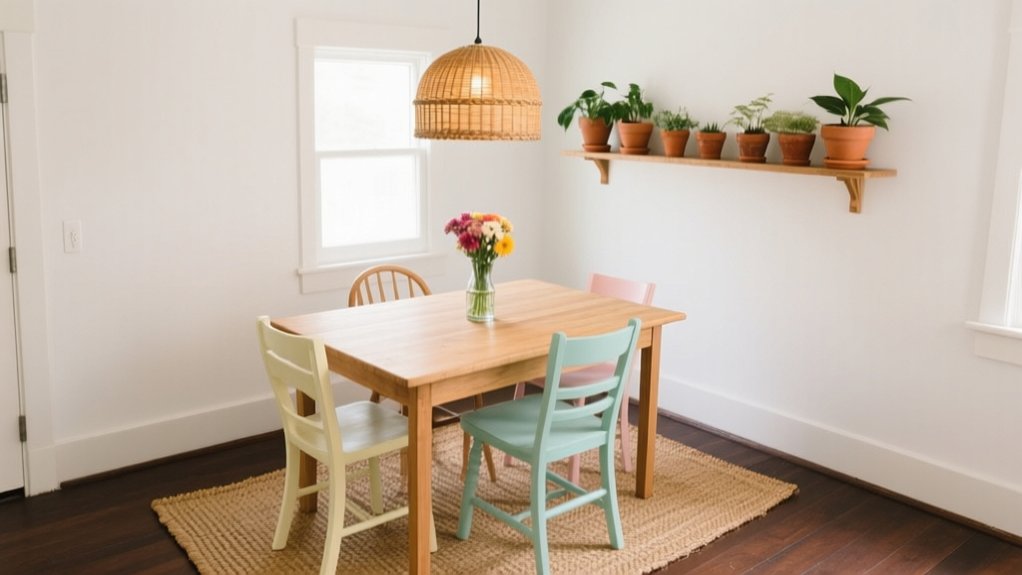

Your dining room could look like a high-end show suite on a takeaway budget if you approach it with the right strategy. When you map out a realistic scope—factoring in paint systems, light reflectance values, and existing joinery—you’ll avoid costly missteps. By prioritising surface impact over new furniture, and pairing saturated wall colour with efficient lighting and layered textiles, you can reconfigure the whole atmosphere for far less than you’d expect, once you know how.
Key Takeaways
- Start with a measured layout, clear functional priorities, and a category-by-category budget so every update is intentional and cost-controlled.
- Transform the room with paint: accent walls, contrasting trim, and color-blocked areas behind art for high-impact, low-cost changes.
- Refresh existing furniture by tightening joints, refinishing wood surfaces, and unifying mismatched pieces with consistent stain or paint.
- Upgrade ambiance cheaply using dimmable LED fixtures, layered rugs, and vintage or secondhand textiles and décor.
- Use small-space styling tricks—single centerpiece, round table, low-back chairs, and correctly sized rugs—to make the room feel larger and more polished.
Start With a Realistic Dining Room Makeover Plan
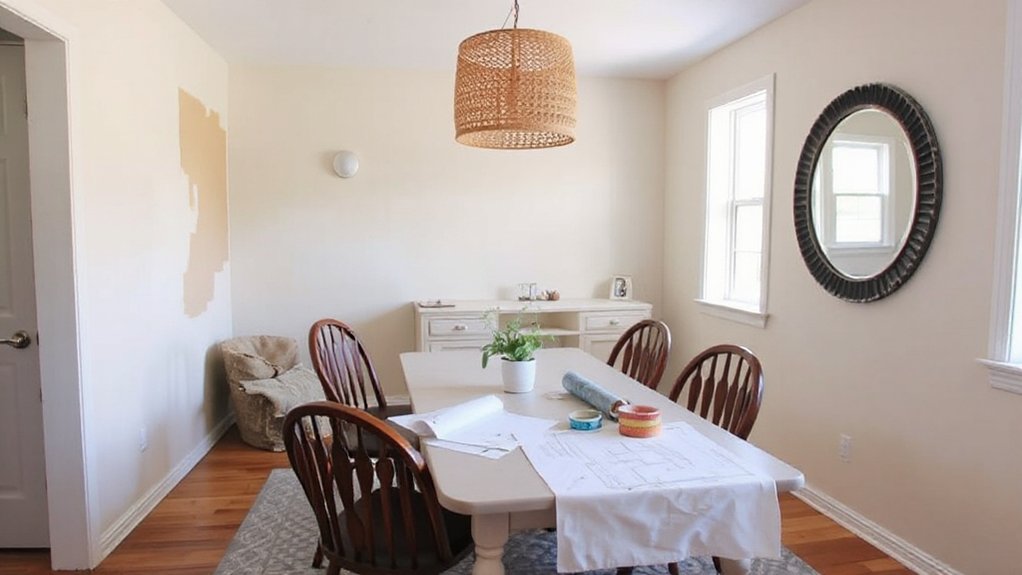
Before you move a single chair, define a realistic dining room makeover plan that aligns with your floor plan, lifestyle, and budget constraints. Start by measuring the room, noting radiators, outlets, circulation routes, and any architectural features. Sketch a scaled layout to test furniture arrangement options: table orientation, chair clearances, and sideboard placement.
Next, establish functional priorities—everyday dining, entertaining, homework—then specify seating capacity and storage needs. Assign a maximum spend to each category: table, chairs, lighting, textiles, accessories. Integrate seasonal decorating into the plan instead of treating it as an afterthought; designate zones for rotatable accents like table runners, wreaths, or centerpieces.
Finally, create a phased schedule so you can implement upgrades systematically without disrupting daily use.
Budget Dining Room Ideas Using Paint and Color
With a pragmatic layout and budget in place, you can now extract maximum impact from the most cost-effective tool at your disposal: paint and strategic color. Focus on high-visibility surfaces and cohesive undertones to make the room feel curated, not improvised.
- Use a saturated accent wall to anchor the table; choose wipeable, eggshell paint for durability in a high-traffic zone.
- Paint dated trim and doors in a contrasting neutral to sharpen architectural lines and visually “frame” the dining area.
- Color-block behind wall art so inexpensive prints gain gallery-level presence and depth.
- Coordinate rug layering with your palette: pair a large, low-cost neutral rug with a smaller, patterned one that echoes your wall color, reinforcing continuity across the room.
Low-Cost Furniture Upgrades and DIY Projects
Although your dining set might look tired or mismatched, you can dramatically elevate it through targeted, low-cost upgrades and simple DIY joinery-level tweaks.
Start by tightening loose mortise-and-tenon joints with wood glue and clamps, or reinforce wobbly legs using corner braces and pocket-hole screws.
Refinish solid-wood tabletops with low-VOC stains derived from sustainable materials, then seal with a hardwax oil for a durable, food-safe surface.
Swap out dated chair backs with slatted or ladder-back designs, using a jigsaw and biscuit joiner for clean, structural connections.
Source vintage finds from car-boot sales, Facebook Marketplace, or local charity shops, then standardise them with a unified stain or paint system so your chairs, benches, and sideboards read as an intentional, cohesive suite.
Affordable Lighting, Textiles, and Décor Swaps
Ever wondered why some dining rooms feel polished even on a modest budget? You can radically upgrade the atmosphere by targeting three high-impact categories: Eco friendly lighting, Vintage textiles, and curated décor accents. Focus on fixtures, soft furnishings, and tabletop styling that deliver visual weight without a premium price tag.
- Replace outdated pendants with Eco friendly lighting: LED bulbs, dimmable fixtures, and ENERGY STAR–rated flush mounts reduce bills and sharpen ambience.
- Layer Vintage textiles—kilim runners, linen tablecloths, and hand-loomed napkins—for tactile richness and patina.
- Swap generic wall art for framed prints, flea-market oil paintings, or architectural salvage to add character.
- Edit accessories: consolidate clutter into a single vignette—ceramic jug, tapered candles, and a low-profile centerpiece.
Styling Tricks to Make Any Small Dining Room Shine
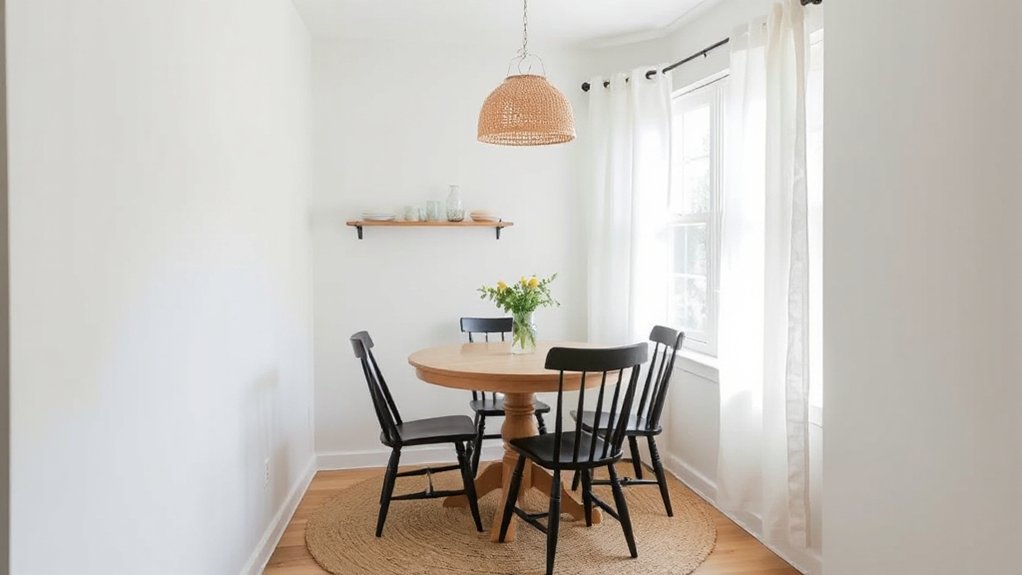
Smart swaps in lighting, textiles, and décor set a strong foundation; now you can fine-tune how a compact dining zone actually reads in the room. Start by editing visual clutter: limit table accessories to a single focal vignette so sightlines stay open.
Layer artificial lighting—pendant, sconces, and a low-wattage lamp—to create depth and avoid harsh overhead glare. Use a round or oval table to improve circulation in tight floor plans, and choose armless, low-back chairs to reduce visual bulk.
Install wall art at eye level to elongate the wall plane, and opt for a large-scale piece instead of a busy gallery grid. Finally, float the rug so its perimeter sits just beyond chair legs, visually expanding the footprint.
Frequently Asked Questions
How Do I Set a Realistic Total Budget for a Dining Room Makeover?
You calculate a realistic total budget by prioritizing furniture selection, defining color schemes, then itemizing materials, labor, contingencies, and sales tax. Benchmark costs with local contractors, apply regional price indices, and cap discretionary décor at a fixed percentage.
What Unexpected Costs Should I Plan for During My Dining Room Update?
You should anticipate surprise expenses: outdated wiring for lighting fixtures, substrate repair behind wall treatments, baseboard and trim replacement, flooring shifts, permit fees, delivery surcharges, change-order labor, plus contingency for lead-paint or asbestos remediation if you’re in older housing stock.
How Can I Prioritize Upgrades if My Budget Is Extremely Limited?
You prioritize visual impact: repaint walls, then install affordable lighting for focal illumination. Next, upgrade textiles—curtains, table linens—for cohesive color stories. Finally, create DIY wall art to add architectural interest and perceived value without structural modifications.
How Long Does a Budget-Friendly Dining Room Makeover Usually Take?
You’ll typically complete a budget-friendly dining room makeover in 2–7 days, assuming you phase tasks: recalibrating furniture placement, optimizing color schemes, executing surface prep, and allowing sufficient curing intervals for paints, stains, and region-specific humidity adjustments.
Are There Ways to Finance a Dining Room Makeover Without Using Credit Cards?
You can absolutely avoid credit cards. Leverage alternative funding like installment plans, lay‑by, or community grants, and use DIY financing through savings buckets, zero‑interest “kupuna” loans, trade‑for‑labor agreements, or local building‑supply cooperative accounts.
Conclusion
You’ve seen how a strategic plan, saturated color, and a few thrifty DIYs can recalibrate your dining room like a finely tuned instrument. Now prioritize high-impact surfaces, rotate in budget-friendly textiles, and upgrade to efficient fixtures that respect both your hydro bill and your aesthetic. With each deliberate swap, you’ll engineer a cohesive, inviting space that functions beautifully for weeknight suppers and full-on Sunday roasts—without blowing your renovation budget.