


Industrial furniture brings factory-built practicality into your home, using robust steel, reclaimed timber, and honest construction with exposed fixings and visible welds. You’ll spot it through clean, workbench-like geometry, sturdy handles, castors, and the patina of real wear. Choose a metal-and-wood coffee table or dining table first, then soften the look with rugs, linen, and warm lighting. Stick to concrete greys, matte black, and heritage tones—and there’s plenty more to help you get it right.
Key Takeaways
- Industrial furniture is purpose-built, using robust metal frames and simple joinery to deliver strength, durability, and everyday functionality.
- Identify the style by exposed fixings, visible welds, straight geometry, and workshop-inspired hardware like castors, brackets, and labeled drawers.
- Signature materials include reclaimed wood, steel or iron, and concrete, valued for raw texture, honest finishes, and character-rich patina.
- Style it with tactile softeners—dense rugs, linen curtains, cushions—and warm lighting to balance hard surfaces and prevent a cold, echoing feel.
- Buy for quality: thick-gauge steel, tight joints, seasoned timber, corrosion protection, and sustainable sourcing; maintain with gentle cleaning and prompt spill drying.
Industrial Furniture: Definition and Factory Roots

Although the term now covers everything from reclaimed-wood dining tables to steel-framed shelving, industrial furniture started as strictly functional kit made for factories, workshops, and warehouses. You define it by purpose-led construction: robust frames, straightforward joinery, and materials chosen for durability, not decoration. Early pieces prioritised load-bearing strength, easy maintenance, and modularity, so staff could shift benches, lockers, and carts as production changed.
You still see those roots in today’s designs: exposed fixings, visible welds, and honest finishes that echo working environments. When you bring it home, you’re borrowing that no-nonsense engineering while adding Vintage charm through wear, patina, and reclaimed timber. Urban influence pushes the look further, pairing hard-edged metal with compact, adaptable forms suited to modern flats and studios.
How to Spot Industrial Furniture Fast
When you need to identify industrial furniture at a glance, focus on function-first build cues rather than decorative styling. Look for exposed fixings, visible joints, and straightforward geometry designed for heavy use. Check proportions: pieces often sit low and wide, with clear working surfaces and no fussy edging.
Next, read the hardware like a toolkit. You’ll spot sturdy handles, castors, brackets, and labelled drawers that echo workshop storage. Patina should look earned, not painted on: dents, burnished corners, and worn pull points suggest real service. Forms borrowed from Vintage machinery—such as trestle bases, gantry-style frames, and adjustable elements—are strong signals. Finally, picture it in an urban loft: if it suits open-plan living and still feels utilitarian, you’ve likely got industrial.
Industrial Materials That Matter (Wood, Metal, Concrete)
Start with reclaimed wood if you want instant character, visible grain, and a story in every knock and mark. Choose steel or iron when you need hard-wearing strength and slim, reliable frames that won’t flex under load. Add concrete for raw texture and serious weight, but plan for moving, floor protection, and sealing to manage staining.
Reclaimed Wood Character
Because it carries its history on the surface, reclaimed wood gives industrial furniture a character you can’t fake with fresh-sawn boards. You’ll see saw marks, nail holes, and sun-bleached grain that add character depth without any contrived distressing. Reclaimed wood also behaves differently, so you need to choose pieces that suit daily use and your room’s humidity.
Prioritise performance as much as looks:
- Check moisture content and stability so tops don’t cup or split.
- Inspect for insect damage, embedded metal, and weak joins before you buy.
- Specify a hard-wearing finish (oil, wax, or lacquer) matched to your use case.
If you want a calmer look, pick tighter grain and fewer scars; if you want drama, embrace knots and colour variation.
Steel And Iron Strength
Reclaimed wood brings warmth and history, but steel and iron supply the backbone that makes industrial furniture feel solid and dependable. You feel it in a table frame that won’t rack, a shelving unit that won’t sag, and chair legs that stay true under daily use. Choose thicker gauge steel for long spans, and look for welded joints with clean beads and full penetration.
You’ll also benefit from urban resilience: these metals tolerate knocks, humidity swings, and constant rearranging far better than softer materials. For Material sustainability, specify recycled content, powder-coated finishes with low VOCs, and designs that use bolts so you can repair or refinish rather than replace. Keep an eye on corrosion protection; galvanised or properly sealed steel saves you time and prevents staining.
Concrete Texture And Weight
While timber and metal give you flexibility, concrete locks in a raw, tactile character that reads instantly industrial. You’ll feel it in the cool surface, pinholes, and subtle aggregate that signal Concrete craftsmanship rather than factory gloss. Use it where you want permanence: tops, plinths, and integrated basins, and pair it with warm wood to stop the room feeling stark. Manage weight perception by balancing thick slabs with slim frames and clear floor lines, so the piece looks grounded, not clumsy. Prioritise performance and longevity with these checks:
- Specify a sealed finish to resist staining from coffee, wine, and oils.
- Allow for movement—use flexible fixings between concrete and timber.
- Plan handling: confirm access, lifting points, and floor load capacity.
Industrial vs Rustic vs Modern Farmhouse
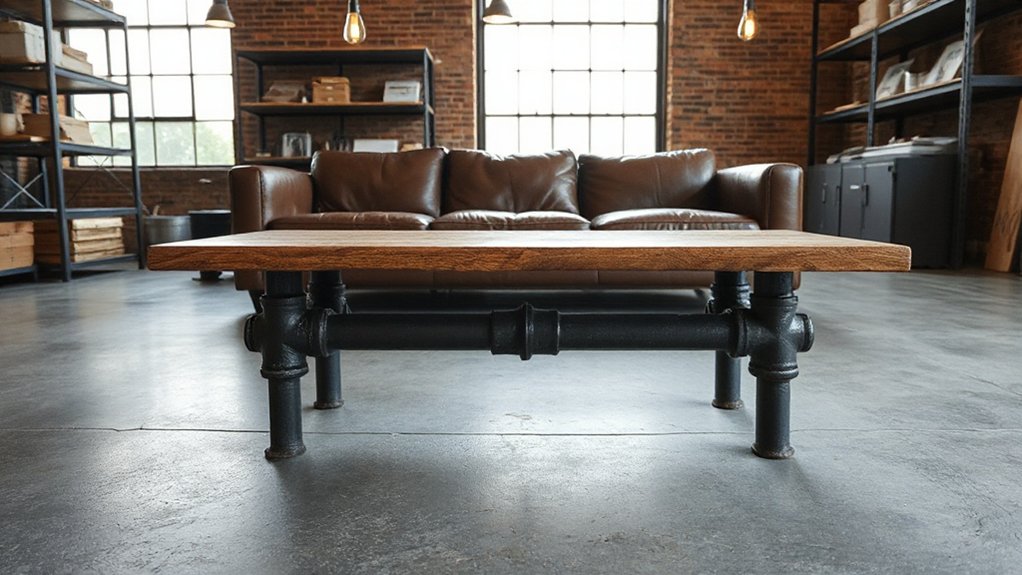
You can spot industrial, rustic, and modern farmhouse by reading the materials and textures: raw steel and concrete feel crisp and utilitarian, while weathered timber and softer grains skew warmer. You’ll also see clear differences in form and finish—industrial favours clean lines and exposed fixings, rustic leans chunky and distressed, and modern farmhouse balances refined profiles with matte, painted surfaces. Match them to the room: use industrial in loft-style kitchens and home offices, rustic in snug living rooms, and modern farmhouse in family dining spaces that need warmth without clutter.
Material And Texture Cues
Because materials and surface finishes telegraph a style faster than any silhouette, you can usually spot industrial, rustic, and modern farmhouse furniture by its metalwork, timber character, and texture choices. Industrial leans on steel, cast iron, and concrete with a cool, weighty hand-feel; you’ll notice Material durability and purposeful wear. Rustic prioritises solid wood with knots, checks, and open grain, so Texture variations read as organic and irregular. Modern farmhouse blends painted timber with blackened or brushed metal, keeping tactile contrast but a cleaner, homelier touch. Use these cues when you shop:
- Run your fingers: industrial feels hard and cold; rustic feels fibrous; farmhouse feels smooth-yet-grained.
- Check edges: industrial stays crisp; rustic stays uneven; farmhouse stays softened.
- Look for joins: bolts, pegs, or simple brackets signal the camp.
Forms And Finishing Differences
Although the three styles can share similar materials, their forms and finishing choices make them easy to separate at a glance. With industrial pieces, you’ll spot square-edged silhouettes, exposed fixings, and purposeful weld lines; finishes stay matte or lightly sealed, showing patina for Vintage charm rather than hiding it. Rustic furniture shifts to chunkier proportions, softened corners, and visible grain; it often uses distressed stains, hand-scraped surfaces, and heavier clear coats to emphasise warmth. Modern farmhouse keeps cleaner profiles than rustic but avoids the hard geometry of industrial; you’ll see tapered legs, framed panels, and painted bases with timber tops, usually in eggshell or satin. For Sustainable sourcing, choose reclaimed metal, FSC-certified timber, and low-VOC sealers. Avoid over-polishing; let wear read as honest use.
Best Room Style Pairings
Those form and finish cues don’t just define the piece; they also dictate which rooms it’ll strengthen. In Urban lofts, lean into exposed steel, reclaimed timber, and hard-edged silhouettes; they match open plans and concrete floors without looking fussy. In a rustic scheme, you’ll soften industrial lines with warmer grains, woven textiles, and vintage accents, keeping the metalwork blackened or brushed so it reads aged, not shiny. For modern farmhouse, use industrial as a counterpoint: choose slimmer frames, matte hardware, and light woods to sit alongside shaker fronts and painted panelling.
- Choose one dominant material (metal or wood) and let the other support.
- Match finishes: matte with matte, oiled with oiled.
- Repeat one colour cue twice for cohesion.
Industrial Furniture by Room: What to Buy First
When you’re furnishing a home with industrial style, prioritising by room helps you spend wisely and get the biggest impact fast. Start in the living room with a solid metal-and-wood coffee table and a robust media unit; they anchor the space and handle daily use. Next, upgrade Industrial lighting—an oversized factory pendant or articulated wall lamp changes the mood instantly without major spend.
Move to the dining area and buy the table first, then add mismatched steel dining chairs or a bench. In the bedroom, prioritise a sturdy bed frame and compact bedside lockers; storage matters more than statement pieces here. Finally, tackle the hall with a slim console and hooks, then finish with vintage industrial accessories like enamel signs, metal bins, and cast-iron bookends.
How to Keep Industrial Style From Feeling Cold
If you love the raw look of steel, concrete, and reclaimed timber, you’ll need to balance it with warmth so the room feels lived-in rather than like a workshop. Start by softening hard surfaces with tactile layers: a dense rug, linen curtains, and cushions that invite you to sit. Use Industrial lighting with warmer bulbs and shaded fittings to prevent harsh glare and create comfortable pools of light. Then add human-scale detail; Industrial decor accents work best when they’re functional and personal, not clutter. Finally, break up echo and emptiness with sound-absorbing materials and varied heights.
- Layer textiles on seating and floors to cut chill and noise.
- Choose warm-bulb Industrial lighting and add task lamps.
- Use Industrial decor accents with purpose: clocks, trays, storage, art.
Best Color Palettes for Industrial Interiors
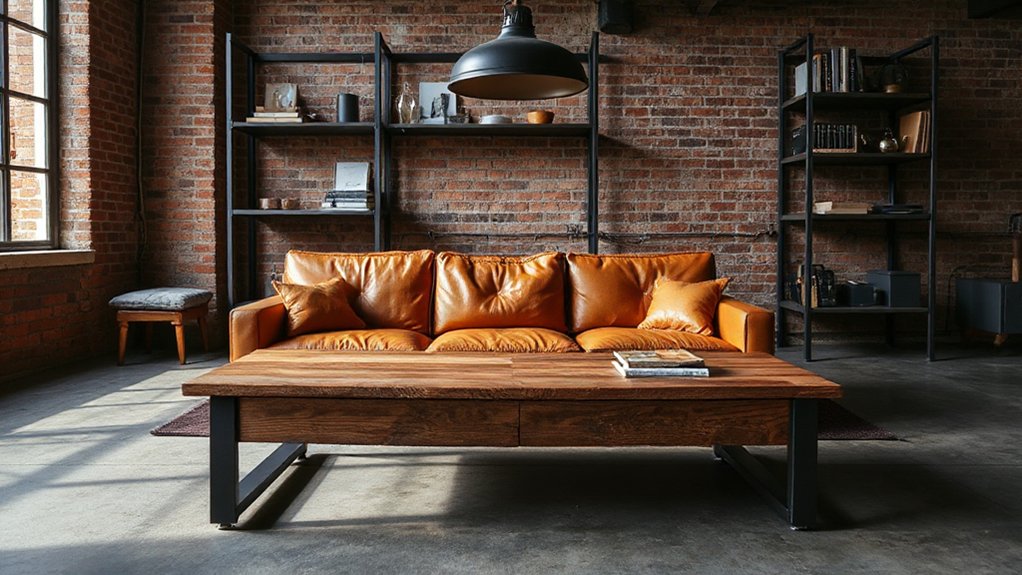
Three colour families consistently suit industrial interiors: grounded neutrals, deep heritage tones, and sharp monochrome accents. Start with concrete grey, warm taupe, and soft chalk white to echo steel and brick while keeping the room calm; Color psychology suggests these hues reduce visual noise and let textures lead. Add heritage tones—oxblood, bottle green, navy—on one anchor wall or upholstery to bring depth without fuss. For crisp definition, use matte black on frames, ironwork, or window trims, then balance it with brushed brass or aged copper. Always test swatches under your actual lighting effects: cool LEDs can flatten browns, while warm lamps enrich reds and greens. Keep ceilings lighter to lift the space and stop it feeling heavy.
How to Shop for Quality Industrial Furniture
Although industrial style celebrates raw finishes, you’ll only get the look long-term by buying pieces built to take daily knocks. Start by checking structure, not patina: welded steel should be continuous, joints tight, and timber tops properly seasoned, not just stained to look “reclaimed”. Ask for load ratings on shelving and tables, and confirm the maker uses powder-coated or sealed metal where needed for real-world use.
Prioritise:
- Material honesty: solid wood, thick-gauge steel, and visible fixings—not foil wraps or flimsy tubing.
- Sustainable sourcing: FSC-certified timber, traceable mills, and transparent supply chains.
- Provenance: choose reputable dealers for vintage restoration, with documented repairs and replacement parts.
Finally, measure access routes and room scale so you don’t buy beautifully built pieces that won’t fit.
Care Tips for Industrial Wood and Metal
Because industrial pieces mix porous timber with hard-working metal, you’ll keep them looking intentional—not tired—by cleaning little and often and sealing where it counts. Dust weekly with a microfibre cloth; wipe spills fast using a barely damp cloth, then dry. For wood, avoid silicone sprays; use a pH-neutral soap and re-oil or wax when it looks chalky. Choose Eco friendly industrial finishes such as hardwax oil or water-based varnish to resist stains without heavy fumes. For metal, use mild detergent, not abrasives; treat rust spots promptly with fine wire wool, then apply a clear lacquer or wax. Fit felt pads, lift—don’t drag—heavy items, and keep away from radiators. That’s Industrial furniture maintenance done right.
Frequently Asked Questions
Is Industrial Furniture Pet-Friendly and Scratch-Resistant?
Yes, you can make it pet-friendly and fairly scratch-resistant. Choose sealed metal, hardwood, and top-coated surfaces for Pet safety and Scratch resistance. Avoid raw steel edges, loose bolts, and unfinished timber that splinters.
Can Industrial Furniture Work in Small Apartments Without Feeling Cramped?
Yes, you can make it work without feeling cramped by prioritising Space optimization and furniture versatility. Choose slim-profile frames, open shelving, and multifunctional pieces. Keep finishes light, use wall-mounted storage, and measure clearances carefully.
What’s the Best Lighting to Pair With Industrial Furniture?
Choose industrial lighting with warm LED bulbs and dimmers: it’s the backbone, not the garnish. Pair black metal pendants, cage sconces, and modern fixtures with opal glass to soften edges, keep glare down, and balance.
Are There Eco-Friendly or Reclaimed Options for Industrial Furniture?
Yes, you can choose reclaimed or low-impact pieces: look for Reclaimed wood tops, recycled steel frames, and Eco friendly finishes. You’ll also want FSC certification, low-VOC sealants, and local makers to cut transport emissions.
How Do I Mix Industrial Furniture With Vintage Décor Without Clashing?
You mix industrial furniture with vintage décor by repeating materials and finishes, then using Vintage accents as bridges. Keep Color coordination tight with two neutrals and one highlight. Balance heavy pieces with softer textiles, avoid overcrowding.
Conclusion
You don’t choose industrial furniture for fuss; you choose it for performance and presence. When you prioritise steel frames, solid timber, and honest finishes, you get pieces that outlast trends and hide everyday wear. That matters: UK households generate around 1.7 million tonnes of bulky waste each year, much of it furniture—buying better reduces replacements. Keep the look warm with textured textiles, layered lighting, and a restrained palette, and your space stays functional, not harsh.