
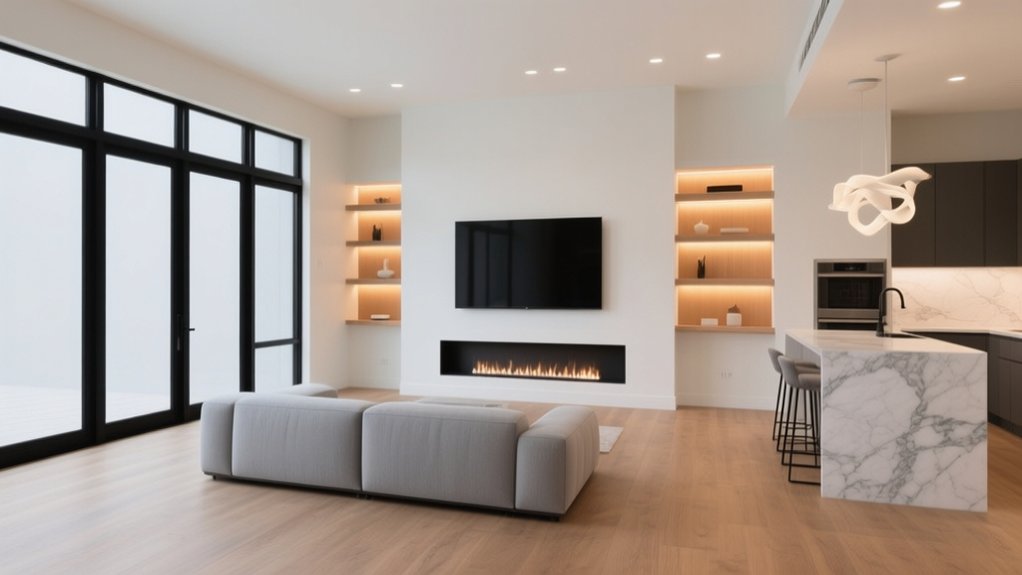

Like a well-edited gallery, a modern interior can quietly signal higher market value before buyers see the price. When you simplify layouts, tighten your color palette, and invest in durable, low-maintenance finishes, you’re not just decorating—you’re strategically managing perceived value per square foot. Data on resale trends shows particular rooms, materials, and features consistently outperform others, and once you understand which levers to pull, you can transform even an average property into a standout asset.
Key Takeaways
- Open floor plans, clear circulation, and built-in storage make spaces feel larger, more functional, and visually appealing, directly supporting higher offers and faster sales.
- Light neutral color schemes with cohesive, textured finishes and controlled bold accents increase perceived quality and reduce apparent future renovation costs.
- Upgrading kitchens and bathrooms with flat-panel cabinetry, quartz worktops, large-format tiles, and modern fixtures significantly boosts buyer appeal and appraised value.
- Layered lighting with LEDs, dimmers, and feature pendants brightens interiors, highlights architectural elements, and improves perceived spaciousness and quality.
- Integrated smart home technology—thermostats, security systems, sensors, and efficient appliances—signals a modern, low-maintenance property and justifies higher price expectations.
Start With Buyer-Friendly Modern Layouts

Before you select finishes or furnishings, you need a buyer-friendly modern layout that optimizes flow, daylight, and functional zones, because this is what appraisers and purchasers actually price in. You should prioritize open floor plans that visually expand square footage, improve sightlines, and support flexible furniture arrangements.
Define clear circulation paths between kitchen, dining, and living zones so buyers can intuitively “read” how the space functions. Remove non-structural partitions that block daylight, and align key rooms with window exposure to maximize perceived volume.
Maintain minimal clutter by integrating built-in storage, concealed wiring, and streamlined casework. This reduces visual noise, making rooms photograph better for listings.
Data from listing platforms shows well-planned layouts and decluttered interiors correlate with faster sales and higher offer-to-list ratios.
Use Modern Color Schemes to Lift Perceived Value
You can use modern color strategy to raise perceived value by pairing neutral foundations with calibrated bold accents and rigorous palette cohesion.
Data from leading real estate platforms repeatedly shows that buyers rate properties with light, neutral bases and restrained contrast as more “move‑in ready” and higher quality.
When you apply a consistent, harmonized color scheme across rooms, you create visual continuity that makes the home feel larger, more expensive, and professionally designed.
Neutral Foundations, Bold Accents
While trends evolve, properties with neutral base palettes and carefully calibrated accent colors consistently achieve higher buyer appeal and faster sale times. By establishing Neutral palettes as your foundation—think layered whites, warm greiges, and desaturated taupes—you create visual continuity that photographs exceptionally well and suits a broad demographic.
Use Bold accents strategically to inject character without alienating buyers or triggering costly repainting.
- Specify walls in LRV 60–75 neutrals; they reflect more light and enlarge perceived volume.
- Anchor with black or charcoal hardware for crisp contrast and perceived quality.
- Introduce accent colors through textiles, art, and occasional furniture, not fixed finishes.
- Limit your accent spectrum to one saturated hue and one supporting tone to prevent visual noise and preserve a high-end look.
Cohesive Palettes For Flow
Because buyers now evaluate homes holistically through listing photos and walkthrough videos, a cohesive color palette across rooms functions as a visual “through line” that measurably elevates perceived value. When you engineer color harmony, the eye reads spaces as larger, calmer, and more upscale, which aligns with how appraisers and buyers unconsciously score quality.
Specify one dominant neutral, one secondary neutral, and one to two accent hues, then repeat them strategically to create visual continuity. Maintain consistent undertones (all warm or all cool) so flooring, walls, and furnishings don’t visually clash.
Use adjacent tones on the color wheel for gradual shifts between open-plan zones, and reserve higher-saturation accents for decor, not fixed finishes, to preserve broad buyer appeal and resale flexibility.
Upgrade Key Rooms With Modern Interior Design
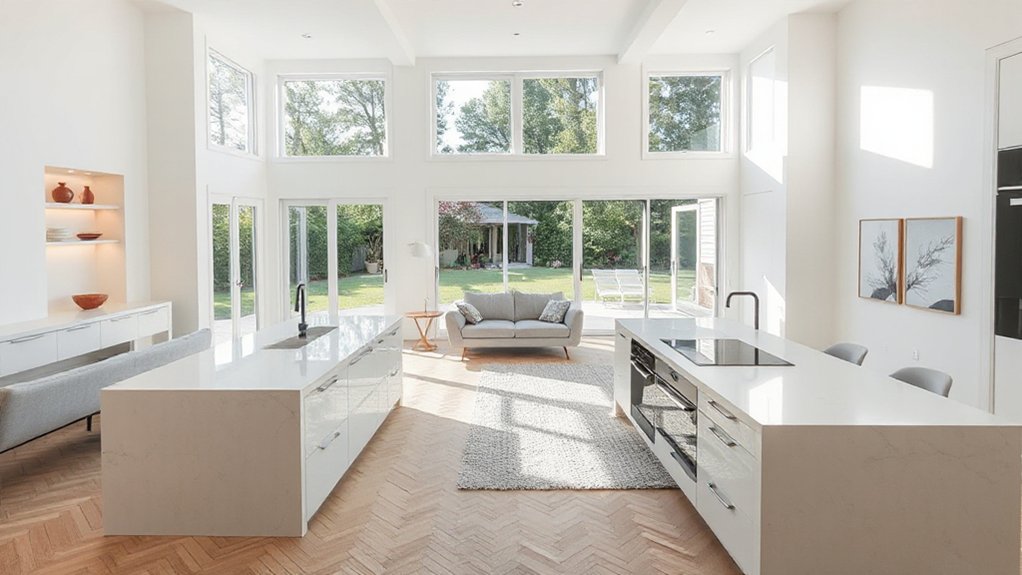
When you prioritize high-impact areas like the kitchen, bathrooms, and living room, modern interior design becomes a measurable value driver rather than a cosmetic upgrade. Buyers scrutinize these rooms first, and appraisers often reflect their condition in the final valuation.
You can still leverage Vintage furniture and traditional decor, but you’ll need to edit, streamline, and contrast them with contemporary elements for maximum perceived value.
- Kitchen: Install flat-panel cabinetry, quartz worktops, and energy-efficient appliances to meet buyer expectations.
- Bathrooms: Specify large-format tiles, wall-mounted vanities, and black or brushed-metal fixtures.
- Living Room: Use clean-lined seating, layered lighting, and low-profile media walls.
- Continuity: Repeat finishes, metals, and color temperatures to create visual cohesion and a higher-end impression.
Add Storage and Built-Ins That Feel High-End
You can substantially increase perceived value by integrating high-end storage solutions that optimize every cubic foot.
Custom floor-to-ceiling cabinetry, built-in seating with concealed compartments, and hidden storage wall systems create a streamlined visual field while boosting functional square footage—an attribute buyers consistently prioritize in market surveys.
When you treat storage as architectural millwork rather than afterthought furniture, you signal quality, longevity, and efficient space planning.
Custom Floor-to-Ceiling Cabinetry
Although finishes and furniture tend to get most of the attention, custom floor-to-ceiling cabinetry is one of the most powerful—and quantifiable—ways to elevate a home’s value. You maximize vertical real estate, conceal visual clutter, and reinforce minimalist aesthetics that buyers associate with luxury developments.
Design your cabinetry to:
- Integrate tall pantry, wardrobe, or media units that increase functional cubic storage without expanding the footprint.
- Specify sustainable materials—FSC-certified plywood, low-VOC finishes, and recycled hardware—to appeal to eco-conscious buyers and meet emerging regulations.
- Use consistent door reveals, integrated pulls, and slab fronts for a clean elevation that photographs exceptionally well in listings.
- Add adjustable shelving, concealed lighting, and integrated power to future-proof the cabinetry and support flexible usage scenarios.
Built-In Seating With Storage
Extending the same space- and value-optimizing logic as custom cabinetry, built-in seating with integrated storage converts underutilized zones—bay windows, dining nooks, stair landings—into high-yield square footage. By combining hidden storage with multifunctional seating, you increase usable area without expanding the footprint, a feature buyers increasingly prioritize in dense urban markets.
Specify deep, fully hinged bases or smooth soft-close drawers to house bulky items like seasonal textiles, small appliances, or kids’ gear. Integrate electrical outlets or USB ports into seat bases to create work-friendly banquettes.
Use durable, furniture-grade plywood, moisture-resistant finishes, and high-resilience foam cushions to signal longevity and quality. When executed with custom millwork and cohesive upholstery, these installations read as tailored architecture, often outperforming freestanding furniture in perceived value.
Hidden Storage Wall Systems
While square footage remains a primary driver of resale value, buyers increasingly scrutinize how efficiently that space is organized, making hidden storage wall systems a high-impact upgrade. When you integrate storage into full-height walls, you free up floor area, reduce visual clutter, and signal custom-quality construction that appraisers and buyers notice.
Consider these implementation strategies:
- Modular panels with push-latch hidden compartments that maintain a seamless, minimalist elevation.
- Concealed drawers integrated into base panels, ideal for media accessories, linens, or office supplies.
- Flush bookcase doors that pivot to reveal secondary spaces, creating a “wow” factor during showings.
- Vertical pantry walls in kitchens, using full-extension hardware to maximize cubic capacity.
Properly detailed, these systems elevate perceived value beyond their material cost.
Layer Modern Lighting, Textures, and Finishes
Because buyers subconsciously equate layered design with quality construction, strategically combining modern lighting, textures, and finishes can materially increase your property’s perceived and appraised value.
When you layer lighting—ambient, task, and accent—you control focal points, eliminate dark zones, and visually expand square footage. Appraisers and buyers both respond to bright, evenly lit interiors, often correlating them with higher maintenance standards.
Prioritize LED recessed cans, linear cove lighting, and statement pendants on dimmers to calibrate mood and functionality. Pair this with textured finishes—matte cabinetry, ribbed wood panels, fluted glass, and boucle or woven upholstery—to create depth without visual clutter.
Uniform, high‑quality finishes across rooms signal cohesion, reducing perceived “update costs” and supporting stronger offer prices during negotiations.
Incorporate Smart Home Features That Buyers Expect
Modern interiors with layered lighting and cohesive finishes perform even better when you integrate the smart home features today’s buyers already assume they’re paying for. You’re not just adding gadgets; you’re installing an ecosystem that signals efficiency, security, and long‑term value.
1. Install voice activated systems
Centralize control of lighting, HVAC, and media; buyers read this as future‑proof infrastructure.
2. Specify energy efficient appliances
ENERGY STAR–rated dishwashers, refrigerators, and induction ranges cut operating costs and elevate appraisal perception.
3. Upgrade to smart thermostats and sensors
Zonal climate control and occupancy sensing optimize comfort and consumption.
4. Integrate security and access tech
Smart locks, video doorbells, and networked cameras provide measurable safety and strong buyer appeal.
Frequently Asked Questions
How Much Should I Budget for Modern Interior Updates Before Selling?
You should typically allocate 1–3% of your home’s market value for modern interior updates. Prioritize budget planning, validate renovation costs with contractor estimates, and focus on high-ROI areas: kitchens, bathrooms, lighting, and flooring replacements.
Which Modern Design Trends Are Most Likely to Date Quickly?
You’ll see rapid dating in ultra-minimalist all-white palettes, high-gloss cabinetry, oversized geometric feature walls, and trendy metallic finishes. Instead, stabilize visual longevity by integrating timeless Vintage accents and restrained Rustic elements with neutral backdrops and durable, low-maintenance materials.
Do Buyers Prefer Professionally Staged Interiors Over Lived-In but Updated Homes?
Yes, buyers typically favor staged interiors because they optimize spatial perception, emotional resonance, and photographic appeal. Buyer preferences data shows staged homes sell faster and often command higher offers than occupied, lived‑in but updated properties.
How Do I Balance Modern Design With My Home’s Original Character?
You balance both by prioritizing Architectural preservation—retain moldings, original floors, and window profiles—then layer restrained modern finishes. Use neutral palettes, streamlined fixtures, and concealed technology to highlight Vintage charm while maintaining functional efficiency and broad buyer appeal.
Can Small Condos Gain Significant Value From Modern Interior Changes Alone?
Yes, you can; even small condos realize notable appreciation when you implement targeted Luxury upgrades and rigorous Space optimization, because buyers statistically pay premiums for high perceived quality, functional efficiency, and turn‑key finishes in constrained urban square footage.
Conclusion
When you apply modern layouts, cohesive palettes, and upgraded finishes, you don’t just refresh aesthetics—you strategically raise market appeal. Homes with updated kitchens and baths alone can recoup up to 75–80% of their renovation costs at resale, visually proving the ROI of modern design. By layering lighting, integrating smart tech, and adding built-ins, you position your property as low-maintenance, future‑ready, and competitively superior in any buyer‑driven market.