

Key Takeaways
- Divide the garden into compact zones—seating, dining, storage—linked by consistent paving to create structure and function.
- Use interrupted sightlines with screens, tall grasses, or specimen plants to break the tunnel effect and add depth.
- Choose path layouts carefully: slim straight paths for direct access, or diagonal paving to widen perceived space and slow movement.
- Layer planting by height and season—low front, mid middle, tall back—with a tight colour palette for year-round interest.
- Add vertical features like trellis, slatted screens, climbers, and lit focal points at mid or far ends to boost privacy and height.
Plan Narrow Garden Zones (Seating, Dining, Storage)
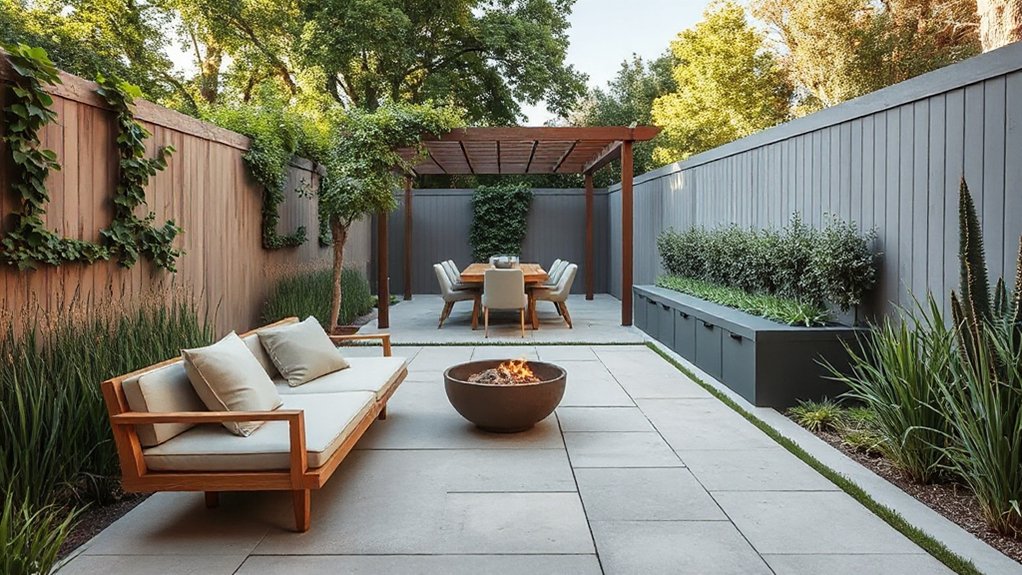
Where do you start when your garden feels like a corridor? You start by zoning it, so each stretch has a job. Map three compact zones: seating near the house for daily use, dining mid-garden for entertaining, and storage at the far end to keep clutter out of view.
Use consistent paving or decking to stitch zones together, then switch textures—gravel, timber slats, low planting—to signal boundaries without bulky dividers. Choose slimline garden furniture: armless chairs, a narrow bistro table, or built-in benching with lift-up lids for hidden storage.
Add outdoor lighting that reinforces function: warm wall lights at seating, pendant-style festoons over dining, and discreet spike lights guiding you to storage. Keep circulation clear with a straight, minimum-width path.
Make a Narrow Garden Feel Wider With Sightlines
Even if your garden’s only a few metres wide, you can make it feel broader by controlling what you see and when you see it. Start by breaking up the full-length view: place a specimen tree, tall grass clump, or slatted screen to partially mask the end, so your eye pauses and resets.
Then create deliberate “windows” with pergola uprights, clipped shrubs, or an arched trellis to frame a focal point beyond, strengthening visual perspective. Use layered planting—low at the front, mid-height in the centre, taller at the back—to build depth without crowding.
Add reflective surfaces like dark water bowls, mirrors, or glossy foliage for subtle optical illusions. Keep focal points bright, and backgrounds calmer, so width reads instantly.
Choose Narrow Garden Paths (Diagonal vs Straight)
Although a straight path feels intuitive in a long, narrow garden, you’ll usually get better proportions by choosing your route deliberately: straight runs emphasise the “corridor” effect, while a diagonal (or gently offset) line tricks the eye into reading more width.
Use Straight paths when you need clean accessibility: bins, bikes, prams, or a direct run to a shed or back door. Keep them slimmer than you think, and break the tunnel feel with a change of material or a widened “pause” point.
Choose Diagonal pathways to slow the journey and reveal the space in stages; even a subtle angle works. For a modern look, set large-format pavers on a diagonal, or run gravel with crisp steel edging to keep lines sharp.
Layer Narrow Garden Planting for Year‑Round Interest
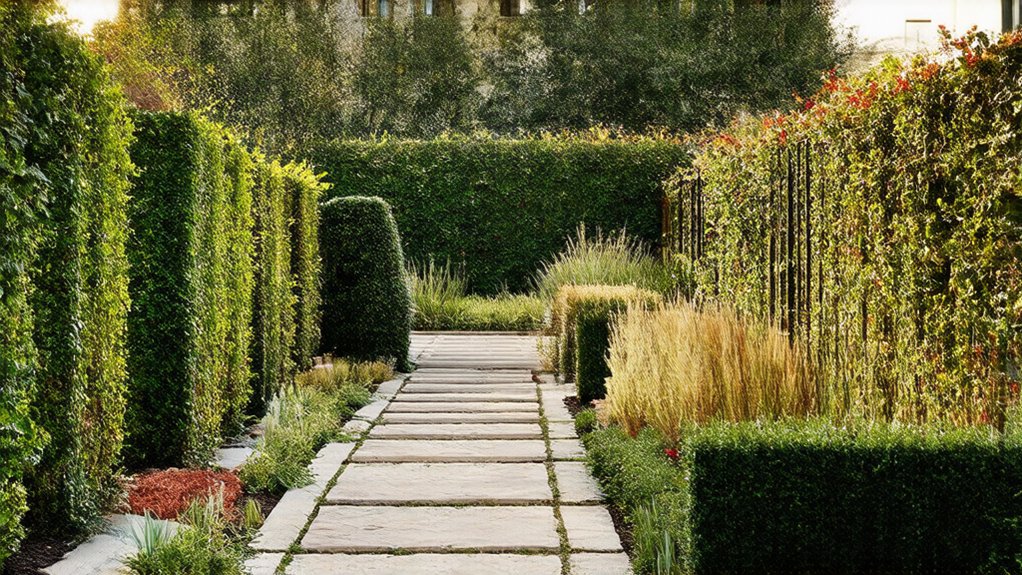
Because a long, narrow garden gives you limited “real estate” across the width, you’ll get the most impact by planting in layers—groundcover at your feet, mid-height structure in the middle, and taller screening at the boundaries—so the space reads fuller and more balanced in every season.
Start with evergreen groundcovers to knit beds together, then add clumping grasses or compact shrubs for rhythm and repeat them down the run. Weave in seasonal plantings—bulbs for spring, hardy perennials for summer, seedheads for autumn, and winter stems—so something’s always working.
Keep your color schemes disciplined: two main hues plus a neutral foliage palette reads modern and elongates the space. Finally, stagger bloom times in each layer, and leave breathing room for plants to mature without crowding.
Add Vertical Features and Focal Points (Privacy + Height)
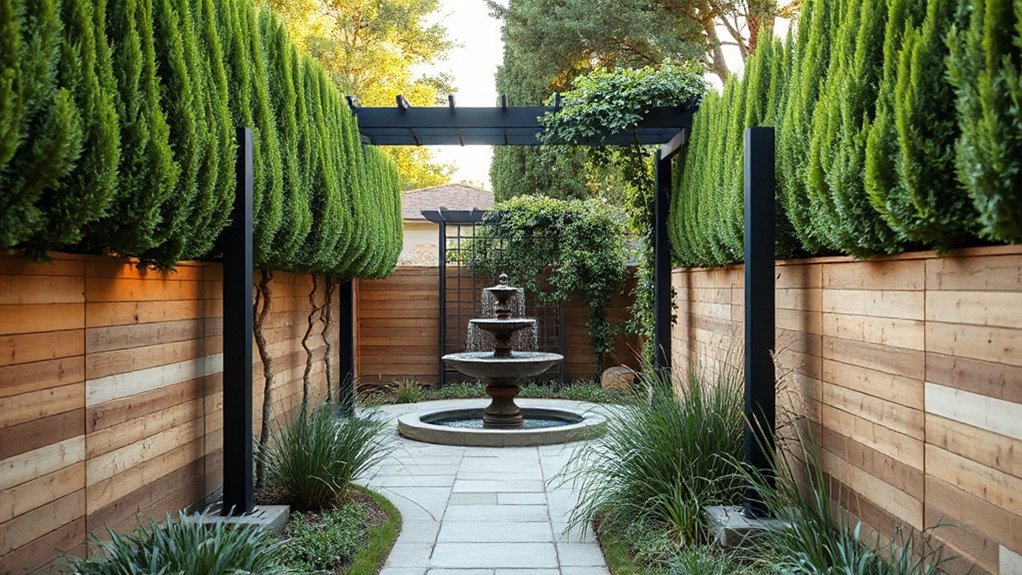
Layered planting fills the borders, but vertical features give a long, narrow garden the height, privacy, and visual “stops” it needs to feel intentional rather than corridor-like.
Place height where sightlines run longest—at the far end, midway, and beside seating—so the space reads as a sequence of outdoor rooms.
- Install Privacy screens: slatted timber, powder-coated steel, or pleached trees; keep gaps to let light through and avoid a boxed-in feel.
- Build Vertical gardens: wall planters, trellis panels, or cable systems for jasmine, clematis, or edible espalier; they add depth without stealing width.
- Add a focal anchor: a tall pot, sculptural boulder, or compact water blade; light it from below for night drama.
Keep verticals aligned to your main path.
Frequently Asked Questions
How Much Does It Cost to Landscape a Long, Narrow Garden?
You’ll typically pay $3,000–$15,000 to landscape it, depending on garden design complexity, plant selection, hardscaping, and access. You can cut costs with phased installs, native plants, and simple edging, lighting.
Do I Need Planning Permission for Fences, Decks, or Garden Buildings?
You don’t always need permission, but you must follow fence height regulations and check garden building permits locally. Decks and outbuildings often qualify as permitted development unless they’re too tall, near boundaries, or listed.
What Are the Best Low‑Maintenance Materials for Narrow Garden Hardscaping?
Choose porcelain pavers, resin-bound gravel, or composite decking—they resist stains and need minimal upkeep. Use permeable paving to manage runoff. Pair with native plants in gravel beds and steel edging so you’ll weed less.
How Can I Improve Drainage in a Long, Narrow Garden?
Drainage works like a well-cut trench coat: it keeps water moving. You’ll regrade for a gentle garden slope, install a French drain or channel drain, add gravel trenches, and amend soil for fast, durable drainage solutions.
Which Lighting Options Work Best for Narrow Gardens at Night?
You’ll get the best results with low-glare path lights, slim wall washers, and discreet spike spots. Use layered garden lighting styles and outdoor illumination techniques—warm LEDs, downlighting, and timed sensors—to elongate sightlines without clutter.
Conclusion
Treat your long, narrow garden like a well-designed train carriage: every “compartment” has a job. When you zone seating, dining, and storage, then pull sightlines diagonally, the space instantly feels broader. A client of mine cut a straight path into two angled runs and gained the feel of “an extra metre” without moving a fence. Layer plants for four-season texture, and add vertical screens or a bold focal point—privacy and height make it feel intentional, not squeezed.