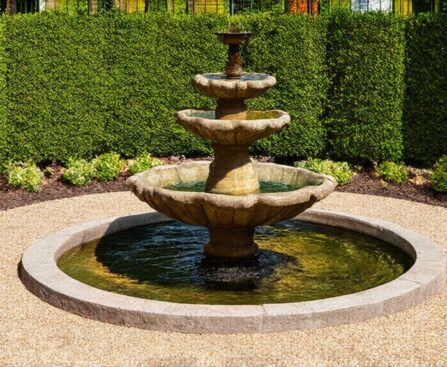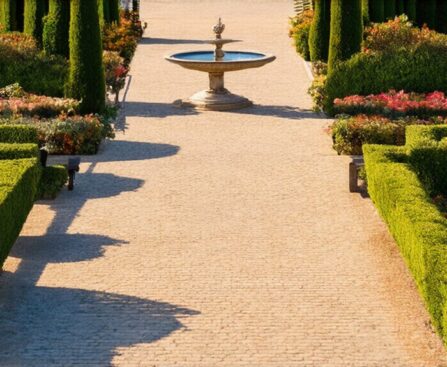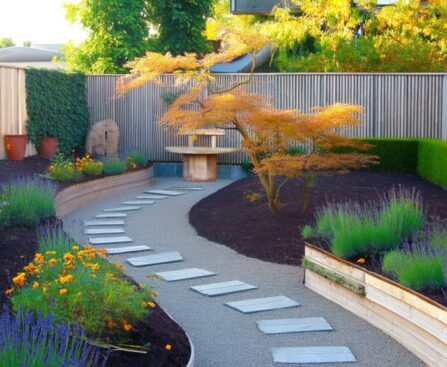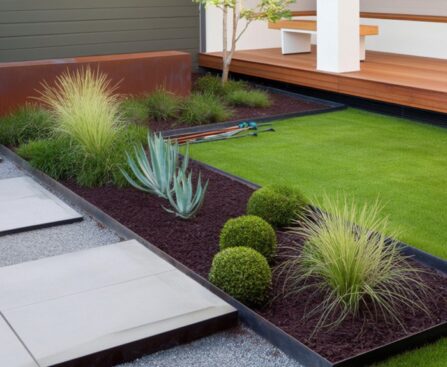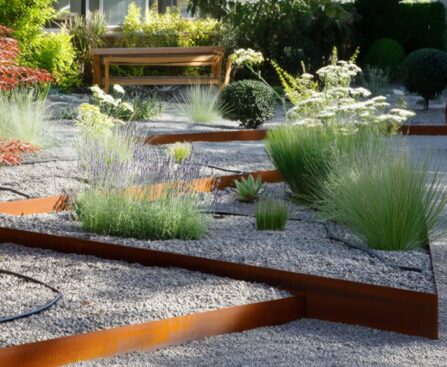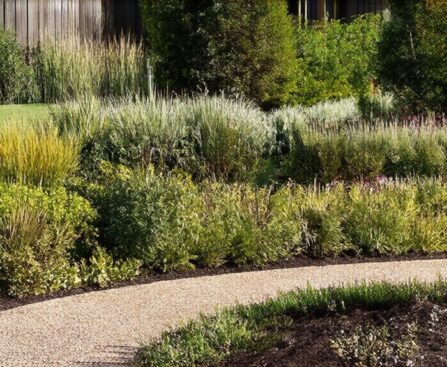
Key Takeaways Match hardscape materials to your home’s style, and test slab colours against brickwork and frames in daylight for cohesion. Add character with texture: riven stone softens spaces, while sawn finishes create crisp, modern lines. Define outdoor “rooms” using paver pattern shifts, borders, and level changes to create distinct, purposeful zones. Build low walls, […]
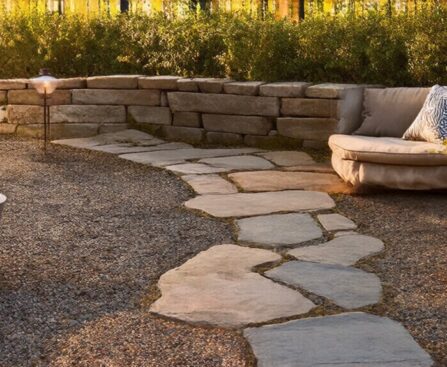
Key Takeaways Choose a focal point to anchor views, create hierarchy, and reduce visual clutter. Place it on primary sightlines and at path termini, bends, or door thresholds for deliberate visual landing. Match the focal element to garden style, materials, and formality for coherence. Scale the focal point to viewing distance and garden size, testing […]
Key Takeaways Establish a main axis from entry to focal point, aligning paths, lawn edges, and beds for clear, balanced sightlines. Mirror entry and path details—widths, edging, materials, steps, and lighting—to make routes feel intentional and cohesive. Use paired anchors like urns, posts, benches, or clipped shrubs, placed equidistant from the centerline to reinforce symmetry. […]
It’s no coincidence that the most compelling gardens often use the fewest elements, arranged with precision. When you strip your space back to clean lines, controlled color palettes, and clear focal points, you amplify structure and impact. By manipulating contrast, repetition, and vertical layering, you can transform even a modest plot into a highly legible, […]
When you approach garden landscaping as a targeted investment, you turn unused outdoor space into a genuine value driver for your property. Buyers notice cohesive design, low-maintenance planting, and outdoor zones that feel move‑in ready. The key is aligning plant selection, hardscape materials, and layout with your block, climate, and likely buyer profile—while avoiding features […]
By coincidence, the proportions of your plot probably already echo the clean lines you want in a modern garden—you just haven’t mapped them yet. When you methodically survey the site, note sun angles, drainage patterns, and awkward dead zones, you’ll see where crisp axes, geometric beds, and low-maintenance planting can sit naturally. From there, the […]
When you design a low-maintenance garden that still looks stunning, you treat the space like a functional system, not just a planting area. You’ll map circulation routes, simplify the layout into bold geometric beds, and specify permeable surfaces for drainage and access. Then you’ll select structural plant palettes that tolerate neglect yet maintain strong form […]
Key Takeaways Map sightlines from windows, patios, and paths across seasons to decide where to keep views open and where to add screening. Place seating first, then screen at seated eye level using light, layered elements like pleached trees, slatted panels, or climbers on trellis. Define public-to-private zones with soft transitions, using curved paths, thresholds, […]
Key Takeaways Divide the garden into compact zones—seating, dining, storage—linked by consistent paving to create structure and function. Use interrupted sightlines with screens, tall grasses, or specimen plants to break the tunnel effect and add depth. Choose path layouts carefully: slim straight paths for direct access, or diagonal paving to widen perceived space and slow […]
Key Takeaways Map key viewing points and sightlines, then sketch foreground, midground, and background layers to plan depth deliberately. Use curving paths and crisp edging to guide the eye, hiding and revealing views as people move through the garden. Add vertical structures like trellises or arches to create scale cues, frame views, and visually compress […]