
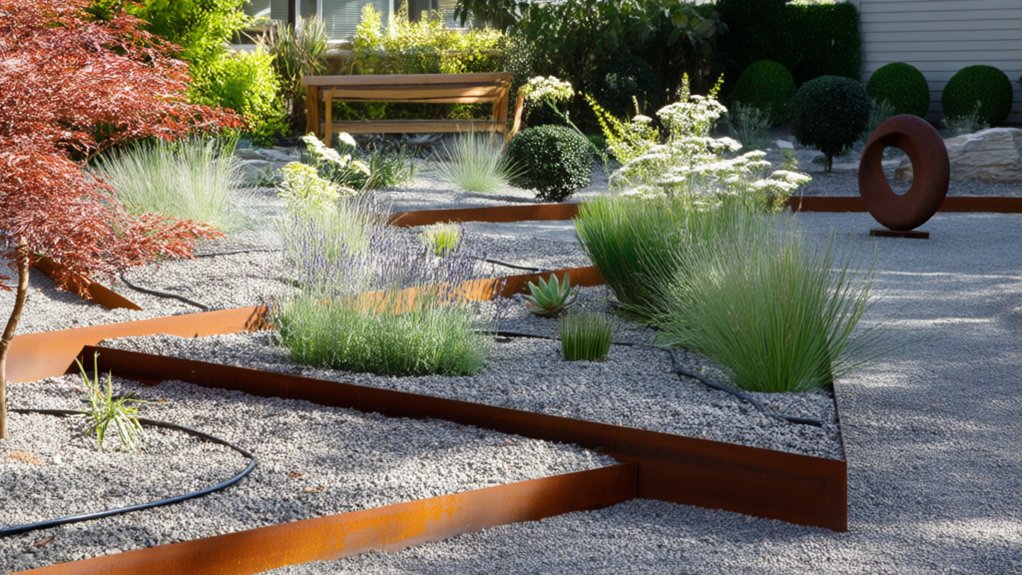

When you design a low-maintenance garden that still looks stunning, you treat the space like a functional system, not just a planting area. You’ll map circulation routes, simplify the layout into bold geometric beds, and specify permeable surfaces for drainage and access. Then you’ll select structural plant palettes that tolerate neglect yet maintain strong form and seasonal interest. The result is a garden that works hard for you—once you understand a few key design moves…
Key Takeaways
- Plan simple, spacious layouts with clear paths, grouped beds, and zones by use to minimize traffic damage and complex upkeep.
- Choose drought-tolerant, pest-resistant plants and repeat reliable “workhorse” species for cohesive, low-effort impact year-round.
- Use dense ground covers and consistent mulching to suppress weeds, conserve moisture, and visually unify planting areas.
- Add durable, permeable hardscaping and place furniture on solid surfaces to reduce edging, mud, and erosion problems.
- Maintain with a light annual routine: seasonal pruning, quick inspections, mulch top-ups, and targeted pest control instead of constant tinkering.
Start With the Right Layout for a Low-Maintenance Garden
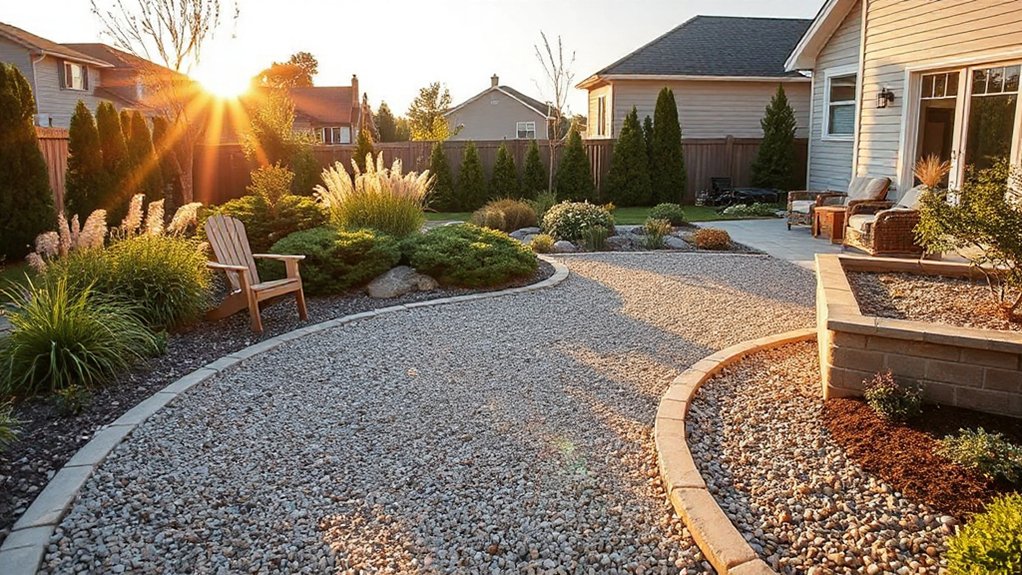
Before you choose a single plant, you need a clear, efficient layout that minimizes labor by design. You start by mapping fixed elements: paths, seating, storage, irrigation lines, Garden lighting, and Water features.
Prioritize strong circulation routes with generous, straight runs that support wheelbarrow access and reduce edging.
Zone the site by use and maintenance intensity: high-use near the house, low-intervention zones at the perimeter.
Favor large, simple geometry—broad beds, long borders, and consolidated planting areas—to reduce mowing edges and awkward corners.
Integrate hardscaping with permeable surfaces that manage runoff and limit weeding.
Position Water features where you can access pumps and filters easily.
Place Garden lighting along primary paths and focal points, using low-voltage systems to streamline installation and upkeep.
Choose Plants That Thrive on Neglect (and Still Wow)
Once your layout’s resolved, plant selection becomes the engine that actually delivers a low‑maintenance garden. You’ll prioritize species that tolerate drought, poor soils, and episodic care—think architectural grasses, structural evergreens, and resilient perennials with deep root systems.
Favor plants with natural resistance to common pests and diseases; they’ll function as passive garden pest control, reducing interventions.
Use seasonal planting to maintain visual impact with minimal work. Combine early‑spring bulbs, long‑flowering perennials, and late‑season grasses so something always performs without constant replanting. Select cultivars with persistent seedheads or foliage for extended ornament.
Group plants by water and light requirements to streamline irrigation. Limit high‑maintenance divas; instead, repeat a tight palette of proven workhorses for a cohesive, enduring design.
Use Smart Ground Covers and Mulches to Cut Back Weeding
Thoughtful plant selection sets the stage, but the soil surface determines how much you’ll actually weed. Treat it as a designed layer, not an afterthought.
Use dense, mat-forming ground covers to create a living mulch that shades out weed seeds and stabilizes soil structure. Prioritize native plants and drought tolerant options; they knit into existing ecosystems, require less irrigation, and maintain visual coherence.
Select species with overlapping canopies and similar water needs, then plant on tight spacings to close gaps quickly.
Where living carpets aren’t practical, apply mineral or organic mulches at a consistent 2–3 inch depth, keeping material off crowns and stems.
Repeat mulch colors or textures across beds to unify the composition while dramatically cutting maintenance.
Add Hardscaping and Features That Save Time, Not Add Work
When you treat hardscaping as the structural backbone of a low‑maintenance garden, every surface and feature starts working to reduce labor instead of generating it. Prioritize permanent materials—pavers, gravel, and retaining walls—that stabilize soil, define circulation, and minimize mow strips. Use permeable paving to manage runoff and reduce muddy maintenance zones.
Position garden furniture on solid, cleanable surfaces so you’re not trimming grass around chair legs. Select durable, weather‑resistant materials—powder‑coated metal, hardwood, or high‑grade resin—that withstand UV and moisture without constant refinishing.
Choose water features with closed recirculating systems, integral filtration, and accessible pumps. Opt for simple rills, wall-mounted spouts, or self-contained bowls rather than high-splash fountains, which create algae-prone wet zones and extra cleanup.
Keep Your Stunning Garden Low-Maintenance Year After Year
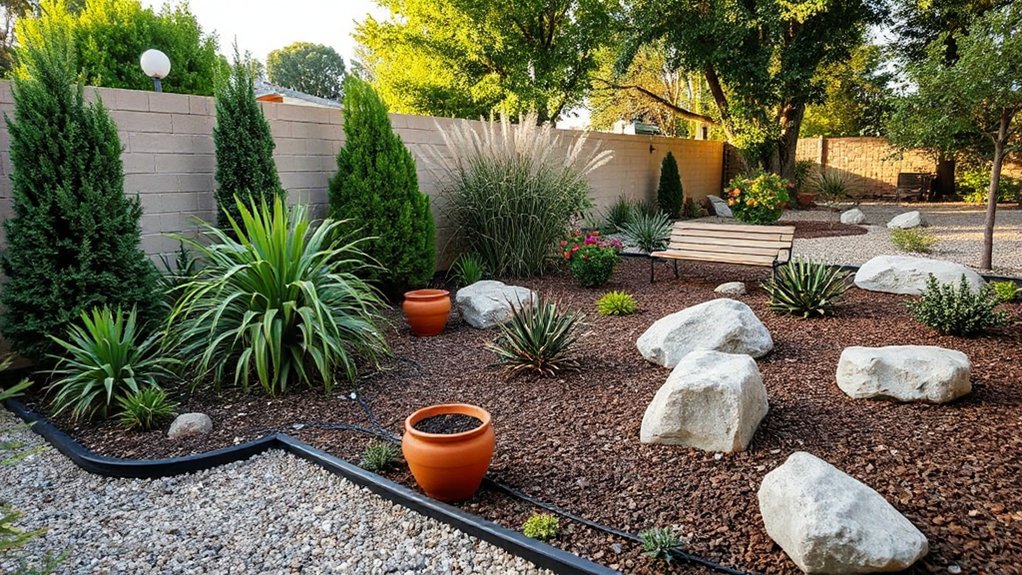
As your planting matures, the key to keeping a low‑maintenance garden truly low‑maintenance is establishing a streamlined annual care protocol that prevents small issues from escalating into labor‑intensive problems. You’ll rely on scheduled inspections rather than crisis response.
Create a simple calendar: seasonal pruning in late winter to maintain structure, light editing after flowering to preserve form, and an autumn cleanup focused on removing diseased material only. This keeps plant architecture crisp without constant clipping.
Incorporate integrated pest management: monitor for garden pests weekly, encourage beneficial insects, and use targeted, low-toxicity controls only when thresholds are exceeded.
Refresh mulch annually to suppress weeds, stabilize soil moisture, and visually unify beds so your design stays coherent with minimal intervention.
Frequently Asked Questions
How Can I Design a Low-Maintenance Garden for a Rental or Temporary Space?
You prioritize portability: implement container gardening with modular planters, lightweight materials, and cohesive color palettes. Specify drought tolerant plants, automated drip irrigation, mulching, and slow-release fertilizers. You maximize vertical space with trellises and staging, ensuring effortless relocation between rentals.
What Are Budget-Friendly Ways to Start a Low-Maintenance Garden From Scratch?
You start cheap by prioritizing native plants; they’re resilient, so you won’t waste money replacing failures. Layout modular beds, buy seedlings in trays, use deep garden mulching with wood chips, and install drip irrigation for long-term, low-labor performance.
How Do I Adapt a Low-Maintenance Garden for Pets and Small Children?
You prioritize Pet safe plants, avoid toxic species, and specify dense groundcovers to cushion falls. You integrate Child friendly features—rounded edges, clear sightlines, non-slip hardscape—and install secure fencing, covered water elements, and durable, chew-resistant materials for long-term, low-maintenance safety.
Can a Low-Maintenance Garden Still Support Pollinators and Local Wildlife Effectively?
Yes, you can. Specify drought-tolerant native perennials for robust pollinator support, integrate layered shrub structure and log piles for wildlife habitats, use continuous-bloom planting matrices, avoid pesticides, and incorporate water sources to sustain biodiversity with minimal upkeep.
How Do I Transition an Existing High-Maintenance Garden Into a Low-Maintenance One?
You shift by phasing out labor-intensive species, installing drought-tolerant native plants, and consolidating beds. Replace thirsty lawns with mulch, automate irrigation, and simplify water features. You’ll create a coherent, resilient planting scheme that minimizes pruning, staking, and seasonal replanting.
Conclusion
When you combine a clean, geometric layout, climate-appropriate plants, and smart hardscaping, your garden practically runs itself while still looking curated. Picture a small urban courtyard: four raised steel-edged beds, gravel paths for perfect drainage, Mediterranean shrubs and grasses on drip irrigation, and thyme between pavers. With one seasonal cutback and a quick mulch top-up, you’ll enjoy a modern, high-impact landscape that stays stunning without hijacking your weekends.