


Key Takeaways
- Match hardscape materials to your home’s style, and test slab colours against brickwork and frames in daylight for cohesion.
- Add character with texture: riven stone softens spaces, while sawn finishes create crisp, modern lines.
- Define outdoor “rooms” using paver pattern shifts, borders, and level changes to create distinct, purposeful zones.
- Build low walls, terraces, and broad steps with consistent risers, integrated drainage, and optional riser lighting for usable, sculpted spaces.
- Layer in subtle details—brick or stone inlays, engraved setts, warm-white LED path lights, and uplighters—to highlight features after dark.
Pick Hardscape Materials That Match Your Style

Start by choosing one or two hardscape materials that suit both your home’s character and how you’ll use the space. If you live in a Victorian terrace, reclaimed brick or sandstone often looks authentic; for newer builds, porcelain paving or smooth concrete can feel appropriately crisp.
Prioritise material texture: riven stone adds softness underfoot, while sawn finishes read clean and contemporary. Manage maintenance expectations too—porcelain resists staining, whereas natural stone may need sealing in the UK’s wet winters.
Achieve strong colour coordination by sampling slabs or setts against your brickwork, render, and window frames in daylight. Keep tones consistent across paths, edging, and steps, and limit contrasting colours to one accent, such as a charcoal border.
Create Outdoor Rooms With Hardscaping
You can create outdoor rooms by using pavers to define clear zones for dining, lounging, and circulation in your garden.
Add low walls to set boundaries, provide informal seating, and shelter spaces from wind.
Install a pergola to frame the area, introduce height, and offer adaptable shade suited to UK weather.
Define Spaces With Pavers
One well-laid run of pavers can define an outdoor room as clearly as an interior wall. You can mark a dining zone by shifting direction, changing paver patterns, or setting a soldier course as a crisp border. Keep joints straight and levels consistent so furniture sits securely and rain sheds away from the house.
Use colour coordination to separate functions without clutter: choose warmer tones for seating areas and cooler greys for paths, while matching edging to existing brickwork typical in UK gardens. If you’ve got a lawn, create a clean threshold with a narrow strip of pavers to stop gravel and soil migrating.
Plan dimensions around how you’ll move—allow comfortable circulation between door, table, and bins—then set out with string lines before you order materials.
Add Walls And Pergolas
Where does a patio end and a proper outdoor room begin? You create that shift with low walls and a pergola that frame views, block wind, and give seating a clear boundary.
Choose brick, reclaimed stone, or rendered blockwork that suits your house and meets UK frost resistance and drainage needs. Add coping stones and subtle lighting so edges feel finished and safe.
Use Decorative wall textures, such as flint panels, ribbed render, or recessed joints, to add depth without clutter.
Position a pergola to shade a dining set, then soften it with pergola planting ideas: trained wisteria, climbing roses, or evergreen jasmine for year-round structure.
Keep posts anchored to proper footings and allow airflow to reduce damp.
Add Levels With Steps and Retaining Walls
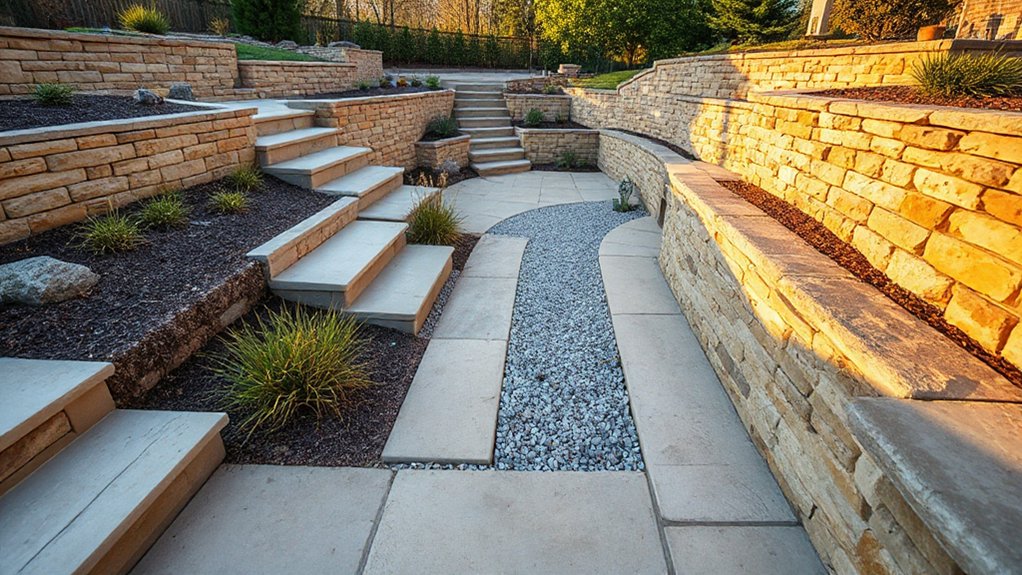
If your garden sits on a slope, you can create terrace gardens with retaining walls to gain usable, level planting areas.
You’ll get a safer, cleaner route through the space by integrating step progressions that match your paving and wall materials.
You must also plan for drainage and soil control, using appropriate backfill and weep holes to manage UK rainfall and reduce pressure on the wall.
Terrace Gardens With Walls
Although a sloping plot can feel awkward to use, terrace gardens with walls turn that gradient into practical, level spaces by combining retaining walls with well-placed steps. You’ll gain usable patios, planting beds, and safer circulation without heavy regrading, which suits many UK gardens with clay soils and winter rain.
Choose retaining wall materials that match your house: brick for Victorian terraces, stone for cottages, or concrete for a crisp contemporary edge. Specify proper drainage behind walls, including free-draining backfill and weep vents, so pressure doesn’t build after downpours.
Vary wall textures to add character and reduce the look of mass. Incorporate vertical planting with trellises or pockets to soften masonry and boost biodiversity. Keep each terrace deep enough for furniture, and plan access for maintenance and bin routes.
Integrated Step Transitions
Terrace gardens work best when you link each level with integrated steps and low retaining walls, so the change in height feels deliberate rather than awkward. Set step runs to suit everyday use: broad treads for carrying pots, and consistent risers to meet UK building expectations for safety.
Align steps with desire lines from patio to lawn, and use landings where paths turn.
For landscape blending, continue wall materials into step cheeks, or echo coping stones as step nosings. Check material compatibility between paving, walling, and edging so colours weather together and joints stay crisp.
Choose a textured finish for year-round grip, and keep step widths generous for bins and buggies. Add subtle lighting in risers to improve evening access without glare.
Drainage And Soil Control
When you add levels with steps and retaining walls, you must manage drainage and soil pressure from the outset, or you’ll end up with saturated beds, staining, and movement in the masonry.
In the UK’s wet climate, you should treat rainwater management as part of the build, not an afterthought. Provide controlled outlets, keep water off tread surfaces, and relieve hydrostatic pressure behind walls so they don’t bow.
- Specify free-draining granular backfill behind retaining walls
- Install perforated land drains to a lawful outfall or soakaway
- Add weep holes at regular centres, set just above paving level
- Compact in layers and use geogrid where needed for soil stabilization
- Grade finished ground to fall away from walls and step risers
Build a Hardscape Focal Point With Fire Pit Seating

To anchor your garden’s hardscape with purpose, build a fire pit seating area that naturally draws people in and defines how the space gets used. Begin with considered fire pit placement: choose a level, non-combustible base, keep clear of fences, sheds, and overhanging branches, and allow safe access from the house. Check local guidance and manufacturer clearances, and plan for prevailing winds so smoke doesn’t drift indoors or towards neighbours.
Design seating arrangements to suit your entertaining style. A circular layout encourages conversation; a straight bench works in narrower plots. Keep a comfortable distance from the heat, provide space for side tables, and include a firm path for year-round use.
Specify frost-resistant paving and drainage falls to avoid pooling water.
Add Character With Hardscape Edging and Borders
Although borders seem like a small detail, hardscape edging gives your garden structure by crisply separating paving, gravel, and planting while stopping materials from migrating under foot. You’ll also add definition to curves, steps, and level changes, making routes feel intentional rather than improvised.
Choose Decorative edging that suits your property’s era: reclaimed setts for period homes, steel for contemporary plots, or brick-on-edge for classic UK gardens. Set edging on a compacted sub-base so frost heave won’t twist lines, and keep heights consistent to avoid trip points.
Pair borders with Border plants to soften hard lines without letting roots undermine joints.
- Recessed kerbs to contain resin-bound gravel
- Granite setts to frame patios and paths
- Corten steel for crisp, thin borders
- Brick soldier courses to echo house detailing
- Timber sleepers for raised beds (treated, rot-resistant)
Tie It Together With Lighting and Inlay Accents
Clean edging and borders give your hardscape clear lines; lighting and inlay accents then reinforce those lines after dark and add detail up close.
Use low-glare, warm-white LED path lights to guide movement and meet UK garden safety expectations without dazzling neighbours. Place uplighters to skim walls, steps, and raised planters so you control lighting effects and reduce trip risks.
Choose IP65-rated fittings and route cables through conduit, or opt for solar where wiring’s impractical.
Tie surfaces together with stone or brick inlays: a contrasting soldier course, metal strips, or resin-bound bands that echo your border colour. Keep joints flush for wheels and prams.
Finish with subtle garden art—engraved setts or mosaic inserts—so character appears even in daylight.
Frequently Asked Questions
How Do I Prevent Weeds Growing Between Pavers and Joints?
You prevent weeds between pavers by removing growth, topping up kiln-dried sand, and applying Joint sealing. For Weed prevention, install a geotextile membrane, improve drainage, sweep regularly, and spot-treat with UK-approved herbicide.
Do I Need a Permit for a Patio, Retaining Wall, or Fire Pit?
You may need a permit; it depends on size, location, and heat risks. Like walking a legal tightrope, check Landscaping zoning with your local council, and schedule inspections early so Construction deadlines don’t derail your build.
What’s the Best Way to Handle Drainage Around New Hardscaping?
Use drainage solutions by directing water away from buildings with precise grading techniques: keep falls of 1:60 minimum. Install permeable paving, soakaways or channel drains. You’ll prevent pooling and protect foundations, especially in heavy UK rain.
How Can I Make Hardscaping Safer for Kids, Pets, and Seniors?
Choose slip-resistant paving, add handrails and good lighting, and avoid sharp edges. Use playground safety surfacing near play zones, and select pet friendly materials. Keep levels even, fit ramps, and maintain clear paths.
What Maintenance Schedule Keeps Hardscaping Looking New Year-Round?
In a Surrey courtyard, you’ll keep hardscaping new with weekly sweeping, monthly weed-control, seasonal pressure-washing, and annual jointing/sealing. Use Landscaping tips and smart Material selection: permeable paving, UV-stable sealants, and grit-safe de-icing each winter.
Conclusion
Choose hardscape materials that suit your home’s character, then use them to define outdoor “rooms”, add levels with steps or retaining walls, and create a clear focal point such as a fire pit with seating. Finish with crisp edging, borders, and subtle lighting or inlay accents to unify the space. In the UK, you’re likely to spend about 90% of your time at home indoors—so design hardscaping that makes every outdoor moment count.