
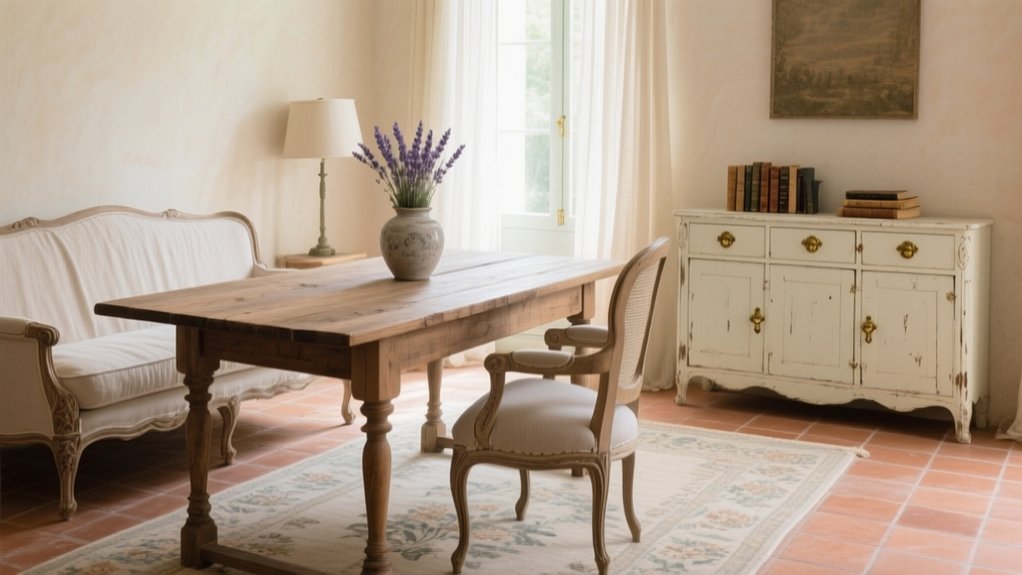

You get French country style by choosing sturdy, comfortable pieces with relaxed curves and a gently timeworn patina. Look for cabriole legs, softened corners, subtle scrollwork, and crisp carvings, then favour chalky, layered paint or waxed timber in ivory, putty, greige, duck-egg, or faded blue. Avoid sprayed gloss perfection; you want soft rub-through and mellow wear. Use refectory tables, dressers, and slim consoles, and you’ll find buying checks and room-by-room ideas ahead.
Key Takeaways
- French country furniture blends rustic practicality with refined charm, featuring comfortable, durable pieces that feel collected over time.
- Look for gentle curves, cabriole legs, softened corners, and crisp, proportionate carvings rather than sharp, ultra-modern lines.
- Choose chalky, layered finishes in ivory, cream, greige, or muted blues with authentic patina, worn edges, and subtle rub-through.
- Mix with modern elements using neutral backdrops, vintage brass or iron accents, and faded linens, toile, or ticking for cohesion.
- Buy from reputable dealers; check timber type, solid joinery, safe finishes, UK compliance, measurements, and delivery logistics before purchasing.
What Is French Country Furniture Style?
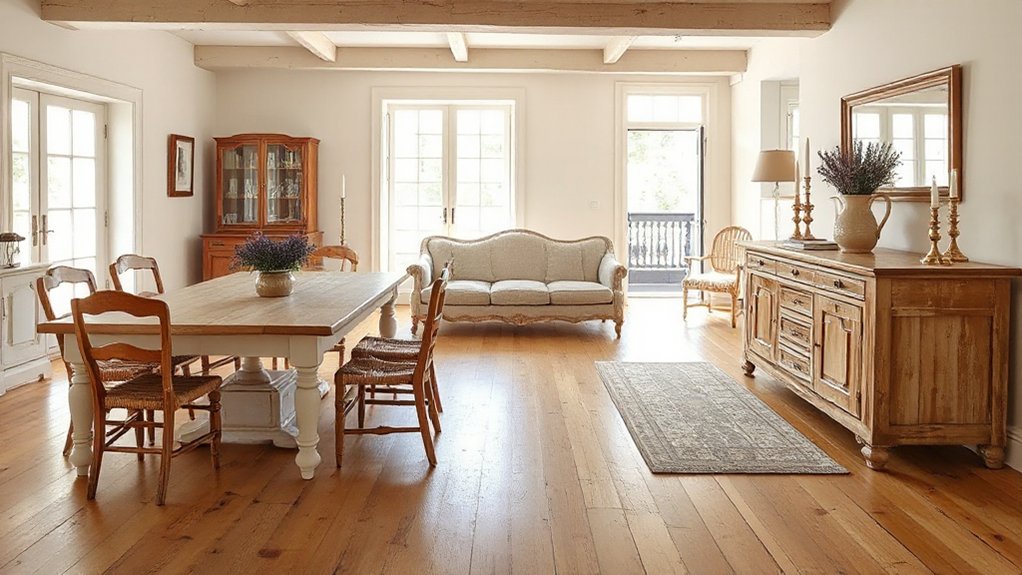
If you want a home that feels both elegant and lived-in, French country furniture style gives you that balance by blending rustic farmhouse practicality with refined, provincial charm. You’ll recognise it by its emphasis on comfort, durability, and a gently timeworn look rather than sharp, ultra-modern lines. You choose pieces that feel collected over time: sturdy tables, relaxed seating, and storage that works hard in real family rooms.
You keep the overall effect calm and welcoming, using a mix of soft neutrals and muted tones that suit UK cottages and period terraces alike. Done well, it delivers Vintage charm without looking fussy, and Rustic elegance without feeling rough. You’re aiming for everyday usability with a polished, heritage-minded finish throughout.
What Details Make Furniture Feel French Country?
You’ll spot French country character in the finish first: look for gently distressed paint, worn edges, and a mellow patina that suggests years of use rather than showroom perfection. Next, choose pieces with curved lines—cabriole legs, softened corners, and subtle scrollwork—that keep the silhouette light and graceful. When you combine authentic-looking wear with tasteful carvings, your furniture reads French country without looking fussy.
Distressed Finishes And Patina
Although French country furniture can look effortlessly relaxed, its character comes from deliberate distressing and a well-earned patina rather than a factory-perfect finish. You’ll spot soft rub-through on edges, gentle knocks on corners, and chalky, layered paint that suggests years in a farmhouse kitchen, not a showroom. The result is vintage charm with genuine antique appeal, and it feels lived-in without looking shabby.
- Check high-touch zones: drawer pulls, table rims, and chair rails should show subtle wear, not harsh sanding lines.
- Favour muted tones: cream, sage, duck-egg, and warm grey read authentic under UK light.
- Choose natural patina: waxed timber, oxidised brass, and time-darkened oak add depth and warmth without gloss.
Curved Lines And Carvings
Distressing and patina give French country pieces their lived-in warmth, but the silhouette and detailing make them unmistakably French. You’ll spot it in gentle serpentine fronts, cabriole legs, and softened corners that look hand-shaped rather than factory-sharp. Prioritise proportion: curves should feel relaxed, never fussy, and they should guide the eye along the frame.
Look next at the joinery and decoration. Quality pieces use curved moldings around drawer fronts, panels, and cornices to add depth without bulk. Choose ornate carvings sparingly—think acanthus leaves, florals, or a scallop shell—placed on knees, aprons, or crest rails. Run your hand over the carving; it should feel crisp, not gummy. In UK shops, check it hasn’t been over-sanded.
Which French Country Finishes and Colors Work Best?
You’ll get the most authentic French country look by starting with timeless neutrals and whites that brighten a room and let carved details stand out. Add soft pastels and washed blues to keep the palette calm and lived-in without turning sugary. Finish it off with distressed wood and a gentle patina, so your pieces look properly settled rather than freshly bought.
Timeless Neutrals And Whites
If you want French country furniture to feel calm yet characterful, start with timeless neutrals and whites that echo sun-bleached plaster, aged linen, and chalky limestone. You’ll get an easygoing backdrop that still shows patina, grain, and hand-finished edges.
- Choose warm whites (ivory, putty, cream) on larger pieces; they soften north light and hide scuffs better than bright brilliant white.
- Layer greige, stone, and oatmeal through paint, limewash, or waxed finishes, letting darker undercoats peek at corners for honest age.
- Add contrast with Elegant accessories in antique brass or blackened iron, then bring in Vintage textiles—grain-sack stripes, washed ticking, or faded florals—to keep it rooted and inviting.
Keep walls and woodwork related, not matching, so the room looks curated, not clinical.
Soft Pastels And Blues
While neutrals set the calm baseline, soft pastels and blues bring that unmistakable French country lift without turning the room sugary. Choose dusty duck-egg, faded cornflower, and muted sage rather than bright candy tones, and you’ll keep the look grown-up.
Use colour with intent: paint a dresser in chalky blue and pair it with warm timber and brass pulls, or add pastel through Vintage textiles on dining chairs and a bench cushion. Keep patterns classic—Floral motifs in small scale, like sprigs or toile, read authentic and won’t overwhelm. Balance these hues with creamy whites and stone greys, then repeat the shade twice more in lampshades, crockery, or artwork. That’s how you get cohesion without a theme-park feel.
Distressed Wood And Patina
Because French country rooms lean on heritage rather than perfection, distressed wood and patina should look earned—softly worn edges, rubbed-through paint, and a mellow sheen that suggests years of use. Choose finishes that feel authentic in UK light: chalky, muted, and slightly warm, not orange. For oak or chestnut, favour limed or cerused washes to highlight grain and keep Weathered textures crisp. Painted pieces work best in stone, linen, putty, and faded sage; reserve deeper French blue or charcoal for one anchor item. Aim for Vintage charm by varying sheen: dead-matt on legs, satin on tops where hands would polish it.
- Use dark wax in carvings, then buff back.
- Add gentle knocks, never uniform sanding.
- Pair patina with aged brass or ironware.
How Do You Use French Country Furniture by Room?
Whether you’re furnishing a snug cottage or a modern terrace, French country furniture works best when you tailor it to how each room functions rather than treating it as a matching set. In the hallway, choose a slim console and a woven basket for post and keys, then add Vintage accessories like a gilt mirror or ceramic lamp.
In the sitting room, anchor the layout with a linen sofa, a farmhouse coffee table, and Elegant textiles such as ticking stripes or toile cushions; keep throws within reach for chilly evenings. In the kitchen-diner, prioritise a sturdy refectory table, ladder-back chairs, and a dresser for everyday crockery. In the bedroom, a curved headboard and painted bedside tables soften the space, while a wardrobe with deep drawers keeps clutter out of sight.
How Do You Mix French Country With Modern Style?

To mix French country with modern style, you’ll get the best result by keeping the architecture calm and letting a few characterful pieces do the heavy lifting. Keep walls and flooring neutral, then layer in patina without clutter. You’re blending eras, so aim for contrast that feels intentional, not mismatched.
- Anchor with clean-lined staples: choose a slim sofa, simple dining table, and discreet storage, then add one carved oak cabinet or rush-seat chairs.
- Control the palette: stick to chalky whites, warm greys, and muted blues; use black metal or chrome for crisp edges.
- Prioritise Mixing textures: pair linen and boucle with aged timber, stoneware, and brass, and repeat finishes for cohesion.
Where to Buy French Country Furniture (and What to Check)
Once you’ve balanced modern lines with French country character, the next step is sourcing pieces that look right and wear well. Start with reputable UK dealers, showrooms, and online marketplaces that provide detailed provenance and clear returns. Antique markets can deliver authentic patina, but you should inspect joints, wormholes, and repairs; wobble usually signals loose mortise-and-tenon work. Check drawers for smooth runners and solid backs, not thin hardboard. For upholstered items, ask for fire-safe labels and whether foam meets UK regulations. If you’re buying painted finishes, look for layered paint and gentle wear rather than flat, sprayed gloss. Consider Custom craftsmanship from local cabinetmakers when sizes must fit alcoves; confirm timber type, lead times, and aftercare. Always measure doorways before delivery.
Frequently Asked Questions
What’s the Difference Between French Country and Farmhouse Furniture?
You’ll find French country blends French elegance with Rustic charm—curved lines, patina, and refined detailing—while farmhouse prioritises sturdy, functional pieces, cleaner silhouettes, and practical finishes. You’ll see more ornate accents versus plain, hardworking joinery.
How Can I Spot Authentic Antique French Country Pieces?
Like a detective with a loupe, you’ll spot authentic antique French country pieces by checking wear patterns, hand-cut joints, old-tool marks, and aged patina. Demand Antique authenticity via Provenance verification: invoices, auction records, UK dealer guarantees.
Is French Country Furniture Comfortable for Everyday Use?
Yes, it’s comfortable for everyday use if you choose well-made pieces. You’ll get comfortable design with supportive seats and rounded edges, plus everyday durability from solid timber frames, hardwearing upholstery, and sensible maintenance.
How Do I Prevent Warped Wood in Humid Climates?
You prevent warped wood by prioritising humidity control: keep rooms 40–55% RH using a dehumidifier, avoid radiators, guarantee airflow. Apply proper Wood treatment—seal all faces, recoat annually, and wipe spills promptly.
What’s the Best Way to Repair Chipped Paint on Distressed Finishes?
For chipped paint on distressed finishes, you’ll feather-sand edges, seal bare wood, then use Paint touch up with colour-matched matte. Blend via dry-brush distressed finishing, add glaze, and protect with clear wax. Avoid thick coats.
Conclusion
French country furniture gives you relaxed elegance without feeling fussy. Focus on curved silhouettes, carved details, and timeworn finishes that look authentic, like a well-loved farmhouse table that’s seen generations. Keep your palette soft—creams, greys, sage, and muted blues—then layer natural linens and aged metal. Room by room, balance statement pieces with clear breathing space. To modernise it, pair rustic timber with clean-lined lighting. When buying in the UK, check joinery, provenance, and delivery.