


Key Takeaways
- Establish a main axis from entry to focal point, aligning paths, lawn edges, and beds for clear, balanced sightlines.
- Mirror entry and path details—widths, edging, materials, steps, and lighting—to make routes feel intentional and cohesive.
- Use paired anchors like urns, posts, benches, or clipped shrubs, placed equidistant from the centerline to reinforce symmetry.
- Repeat structural plants and limit colors to two or three tones, repeating them rhythmically to unify the space without clutter.
- Correct drift early: re-center focal points, match feature heights, and keep spacing consistent, because small misalignments are highly noticeable.
Find Your Main Axis (the Sightline)

Where do your eyes naturally travel when you step into the garden? That instinctive line is your main axis, and you should define it before moving anything. Stand at the usual entry point and mark the strongest sightline to a door, specimen tree, sculpture, or distant view. Use a peg and string, or sight along a straight-edge, then check it from key windows and seating spots.
Keep paths, lawn edges, and bed lines aligned to this axis so the space reads intentional and achieves visual balance. If the view ends on a weak feature, create a focal point with a pot, bench, or clipped shrub.
Repeat materials and planting tones either side to maintain colour harmony without overcomplicating.
Pick a Symmetry Style: Formal or Relaxed
Once you’ve fixed your main axis, decide what kind of symmetry will suit the space and how you use it. Choose formal symmetry when you want a crisp, architectural feel: matched shrubs, identical planters, and repeated hard landscaping details. Keep colour harmony tight by limiting the palette and mirroring it left to right. Maintain consistency in heights and spacing so the order reads clearly from key viewpoints.
Pick relaxed symmetry when you prefer a softer, more natural look. You’ll still balance mass and proportion, but you can vary plant shapes, swap one specimen for a close cousin, and let planting drift slightly. Use texture contrast deliberately—pair fine grasses with bold-leaved perennials on both sides—so the balance feels intentional, not fussy.
Lay Out Symmetrical Paths and Entries
Although planting often gets the attention, you’ll feel symmetry most through how you arrive and move. Set a clear centreline from gate to front door, then mirror path widths, edging, and lighting on both sides. Keep junctions opposite each other so the route reads as intentional, not improvised.
Use matching materials for the main run, but introduce color contrast at thresholds: a darker paver band at the entrance or a pale gravel strip along both edges. Anchor the entry with twin features such as posts, urns, or clipped standards, aligned to the centreline.
If your garden slopes, balance steps with equal risers and paired handrails. Leave equal verge widths for rain gardens or hedging that also supports wildlife habitats without breaking the geometry.
Mirror Patio Seating for Instant Balance
After you’ve set a strong centreline with mirrored paths and a clear entry, carry that same order onto the patio by pairing your seating. Place two identical benches or armchairs equidistant from the centre, facing in or towards a shared coffee table. Keep spacing consistent so circulation feels deliberate, not squeezed.
If your patio adjoins glazing, angle chairs slightly to catch mirror reflections from doors and windows, which doubles perceived width and light. Use matched cushions and throws for tight colour coordination, but keep patterns simple so the symmetry reads at a glance.
Balance height as well: choose the same backrest profile on both sides, or offset low loungers with matching side tables. You’ll get instant calm and control.
Frame Focal Points With Matching Planters
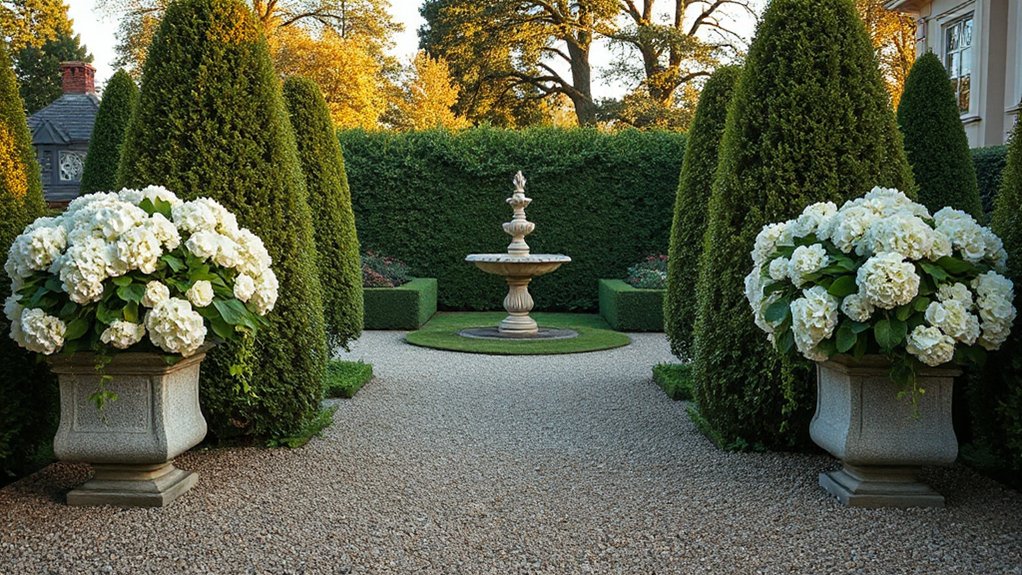
Place matching planters in pairs to balance your entryway and make the approach feel intentional. Set identical pots either side of a doorway, gate, or path junction, keeping height and planting consistent so the symmetry reads clearly.
Use the same twin planters to frame a view or garden feature, guiding the eye straight to your focal point.
Balance Entryways With Pairs
When you frame an entryway with a matched pair of planters, you create instant symmetry that guides the eye straight to the front door. Choose containers with the same height, diameter, and finish, then set them equidistant from the threshold to balance the approach and tighten the sightline.
Keep the planting identical in structure: one upright centrepiece, a mid-layer, and a trailing edge on both sides. Plan seasonal planting so the pair stays even year-round—swap out bedding together, and prune to the same outline. Use hardy evergreens for backbone and repeat a single accent colour for coherence.
Position planters without blocking wildlife corridors; leave a clear run for hedgehogs and pollinators around walls and paths.
Highlight Views Using Twins
Matched planters don’t just steady an entrance; they also sharpen the best sightlines in your garden. Set twins on either side of a view: the bend in a path, a specimen tree, a bench, or the gap between borders. Keep heights equal so your eye reads a clear “frame”, then align them square to the axis you want to emphasise.
Choose pots with simple profiles, especially in tight patios, so they don’t compete with the focal point. Build impact with Color contrast: pale pots against dark foliage, or charcoal pots beside silver leaves.
Add texture variation by pairing glossy evergreens with airy grasses, or spiky phormiums with soft ferns. Repeat the same planting mix in both for crisp symmetry.
Repeat Plants for Soft Garden Symmetry
How do you create symmetry in a garden without it looking rigid? Repeat plants in pairs or rhythmic drifts so your eye reads balance, not formality. Choose one structural plant—box, yew, or clipped lavandula—and mirror it left to right, then echo it deeper in the bed to reinforce the axis.
Keep it soft by varying planting textures within the same shape: pair upright grasses with rounded salvias, or glossy evergreen leaves with fine fern fronds. Limit garden colour to two or three tones, then repeat them at equal intervals to stitch borders together.
Use odd clusters within each side for a natural feel, but match overall mass and height. Deadhead and trim evenly so both halves stay aligned year-round.
Match Hardscape Elements (Pavers, Edging, Steps)
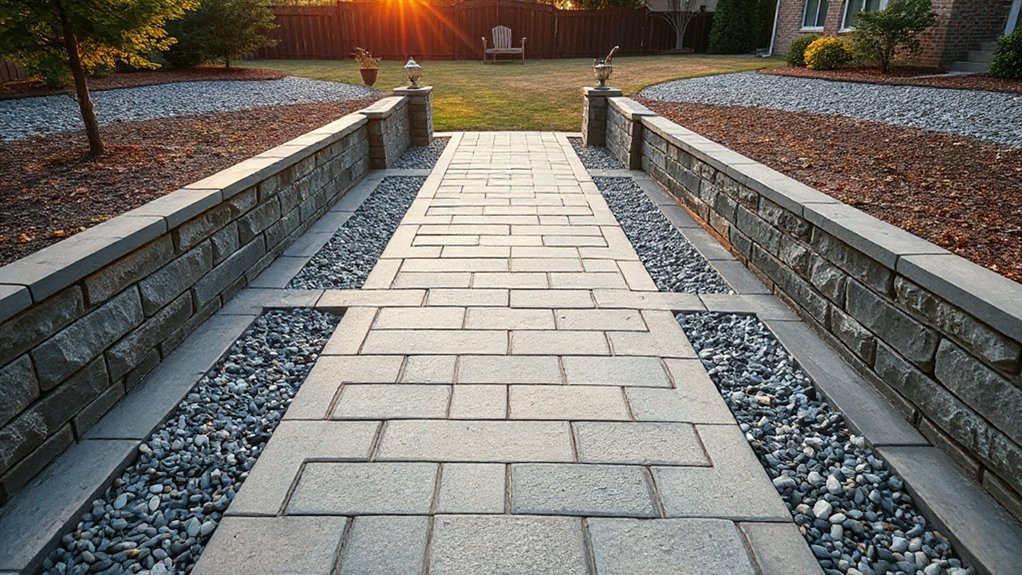
Keep your hardscape symmetrical by lining up paver joint lines across the main axis so the pattern reads cleanly from every approach.
Mirror edging profiles on both sides of paths and beds, matching height, material, and finish for a consistent outline.
When you set steps, balance the dimensions left-to-right—identical rise, going, and width—so the route feels even and intentional.
Align Paver Joint Lines
When you align paver joint lines across adjoining hardscape elements, the whole space reads as one intentional design rather than a set of separate parts. Start by choosing a clear datum line from a doorway, step nosing, or central axis, then run the Paver joint grid from it.
Check Joint alignment at every transition: patio to path, path to landing, and around steps. Use string lines, a laser level, and dry-lay a few courses before you commit, so cuts stay balanced on both sides.
If levels change, keep joints visually continuous even when falls run for drainage. Done well, you’ll feel:
- calm order on arrival
- confidence underfoot
- pride in crisp craftsmanship
- relief that nothing looks “off”
Mirror Edging Profiles
Aligned joint lines give you the grid; mirrored edging profiles give you the frame that makes it feel properly finished. Choose one edging type and repeat it on both sides of your patio, path, or terrace so the eye reads a deliberate boundary.
Match the paver thickness and the edging upstand, then keep the same reveal along each run for a crisp, UK-standard finish.
If you’re using kerbs, set them to the same line and radius left and right, and continue that profile around planting beds to avoid visual breaks.
Where a water feature sits on axis, mirror the edging detail around its plinth. Do the same around a garden sculpture base so the setting feels intentional, not accidental.
Check levels.
Balance Step Dimensions
Although the paving pattern sets your rhythm, your steps have to match the hardscape modules or the whole run looks improvised. Set risers and treads to repeat your paver sizes: align joints, keep the nosing parallel, and let edging units die neatly into the step returns.
If you can’t hit a full module, split the difference symmetrically so both sides read intentional. Keep Color harmony by carrying the same tone through pavers, copings, and edging, even if textures vary.
Plan for Seasonal shifts: allow for frost heave, drainage falls, and a slight tolerance so edges don’t creep out of line.
Aim to make users feel:
- confident on every tread
- calm in the layout
- welcomed at the landing
- impressed by crisp joints
Add Balanced Outdoor Lighting on Both Sides
If you want your garden to feel intentionally designed after dark, install matching outdoor lights on both sides of key features such as paths, steps, entrances, and seating areas. Use identical fittings and equal spacing, so the beam pattern mirrors itself and guides movement safely.
Choose warm-white LEDs and keep wattage the same to prevent one side dominating. Mount bollards or spike spots at consistent heights, and angle them inwards to reduce glare and highlight edges.
For entrances, pair wall lanterns at the same height either side of the door for a formal, balanced look. Extend symmetry to focal points: place twin uplighters to frame outdoor sculptures, or use paired downlights to wash a bench evenly.
Put both circuits on one timer for reliable symmetry.
Fix the Most Common Landscape Symmetry Mistakes
Once you’ve paired your lighting, check the rest of the garden for symmetry slip-ups that make the layout feel accidental rather than composed. Start with the main axis: if your path, lawn edge, or border line drifts, re-cut it and mirror the curve on the opposite side. Match heights, not just counts—two pots won’t read as balanced if one shrub is leggy.
Keep focal points centred; a bench that’s 200mm off will nag at you daily. Use Symmetry in nature as your benchmark, then add asymmetrical art deliberately, not by accident.
- Uneven planting makes you feel unsettled.
- Mismatched pots look stingy and fussy.
- Off-centre features create constant irritation.
- Cluttered edges steal calm and pride.
Frequently Asked Questions
What’s the Best Way to Add Symmetry on a Steeply Sloped Yard?
Create symmetry by terracing the slope with mirrored retaining walls and matching steps, aiding Steep slope stabilization. Repeat planting bands and lighting. Use paired planters and a balanced Vertical garden design on both sides.
How Can I Create Symmetry in a Small Outdoor Space Without Crowding?
Create symmetry by pairing slim planters or chairs either side of a central path, keeping clear circulation. Use garden focal points like a small urn, and rely on colour coordination with matching foliage and cushions.
Does Symmetrical Landscaping Increase Home Resale Value?
Yes, symmetrical landscaping can boost resale value because you create Landscape balance and Visual harmony buyers notice. Keep planting mirrored, use matching pots, maintain crisp edges, and avoid overfilling; you’ll signal care and add kerb appeal.
How Do I Maintain Symmetry as Plants Grow and Change Over Seasons?
Maintain symmetry by scheduling plant pruning to match growth rates, and mirror any new shoots on both sides. Make seasonal adjustments: swap matching annuals, refresh mulch edges, and re-measure spacing each quarter to correct drift.
What Are Budget-Friendly Ways to Create Symmetry Using Existing Features?
You can create symmetry for virtually pennies by mirroring what you’ve already got: repeat pots, lights, or edging, use colour coordination in pairs, and tighten pathway design with matching gravel borders, evenly spaced stepping stones.
Conclusion
Symmetry isn’t just about looks; it changes how you use the space. One study found people rate symmetrical scenes as more attractive in under a tenth of a second, so first impressions matter. You’ll get the best results if you commit to a clear axis, mirror your key hardscape, then soften it with repeated planting. Keep lighting paired, avoid mismatched heights, and don’t force perfect mirroring on sloping ground—adjust with balanced weights instead.