
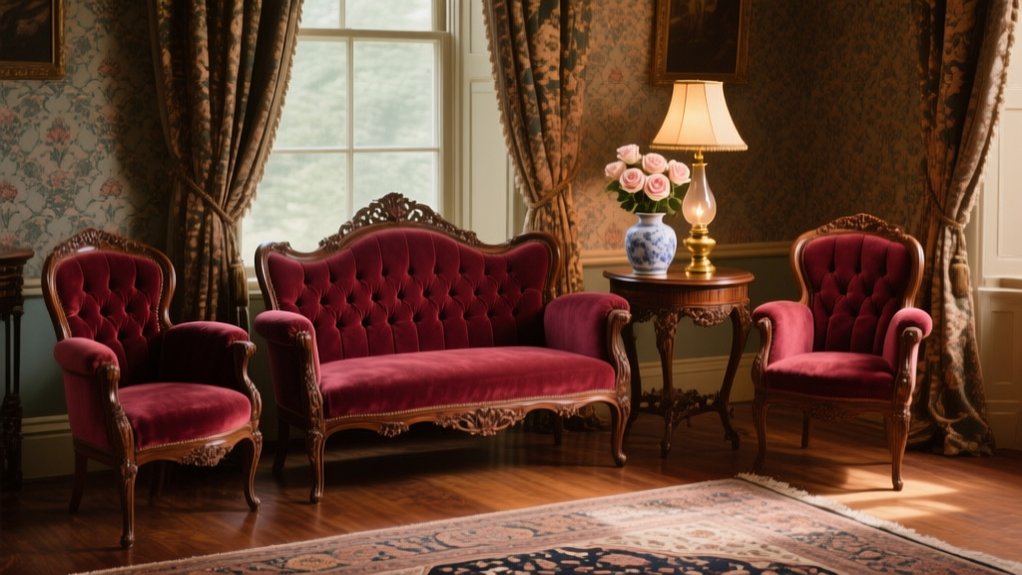

Victorian furniture gives your home classic elegance through bold silhouettes, ornate carving, and rich hardwoods like walnut, mahogany, rosewood, and oak. You’ll spot true craftsmanship in crisp, symmetrical details, tight dovetail and mortise-and-tenon joinery, stable bookmatched veneers, and hardware mortised flush with correct cutouts and original screws. Shellac-and-wax finishes add deep, warm sheen that ages well. Keep it timeless with gentle dusting, steady humidity, and smart buying checks—more guidance follows.
Key Takeaways
- Victorian furniture features ornate carving, bold silhouettes, deep button tufting, and disciplined symmetry for enduring visual impact.
- Authentic pieces use hardwoods like mahogany and walnut, with tight hand-cut joinery such as dovetails and mortise-and-tenon frames.
- Look for crisp undercut carvings, stable bookmatched veneers, and original hardware mortised flush with period-correct screws.
- Timeless durability comes from dense woods, strong construction, and finishes like shellac and wax that add depth without plastic shine.
- Buy smart by prioritizing intact structure and patina, then protect value with stable humidity, gentle dusting, and minimal restoration.
What Defines Victorian Furniture Style?
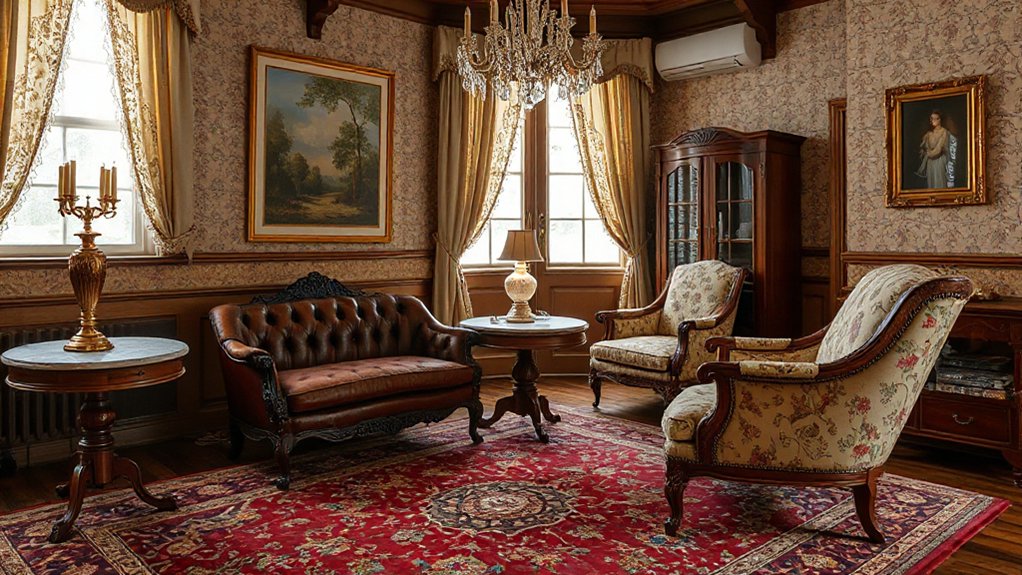
Although the term “Victorian” spans decades of change, Victorian furniture style is defined by an intentional sense of richness—ornate carving, bold silhouettes, and layered surface detail that signals status and craftsmanship. You’ll spot deep button tufting, cabriole or turned legs, and heavy moldings that frame marble, burled wood, or inlaid veneers. Materials lean substantial: mahogany, walnut, rosewood, cast brass, and cut glass, often finished to a high sheen.
Historical influences guide the look, blending Gothic revival tracery, Rococo curves, and Renaissance symmetry into one confident statement. For Interior integration, you’ll balance scale and pattern: pair substantial casegoods with structured upholstery, use mirrors and lamps to amplify sheen, and anchor pieces with rugs that echo their motifs.
Why Does Victorian Furniture Still Feel Timeless?
You still respond to Victorian furniture because it’s built from enduring hardwoods and quality joinery that hold up to daily use. You get visual richness from ornate carving, inlay, and hardware that read as intentional rather than excessive when executed well. You also benefit from balanced proportions—substantial silhouettes, disciplined symmetry, and practical scale—that let these pieces sit comfortably in both traditional and modern rooms.
Enduring Craftsmanship And Materials
Even after a century of daily use, Victorian furniture still looks current because makers built it around lasting materials and uncompromising joinery, not short-term trends. When you buy or restore a piece, you’re investing in dense hardwoods, stable veneers, and hand-fit connections that resist racking and loosening over time. Smart Material sourcing matters: you’ll match species, grain direction, and moisture content so repairs don’t telegraph or fail.
- Choose kiln-dried, period-appropriate hardwoods for structural members
- Preserve original joinery; re-glue with reversible adhesives where possible
- Use Restoration techniques that stabilize veneers and prevent future lift
- Finish with breathable sealers that protect without trapping moisture
Handled this way, your cabinet, table, or chair keeps its integrity, serviceability, and value for decades.
Ornate Details, Balanced Proportions
Because Victorian designers treated ornament as architecture—not decoration for decoration’s sake—their pieces still read as composed and intentional in today’s rooms. You’ll notice how ornate carvings follow structural lines: crest rails echo chair backs, bracket feet reinforce visual stability, and layered moldings frame panels like built-in trim. That disciplined placement keeps detail from feeling busy.
Balanced proportions do the rest. You get generous silhouettes, but legs, aprons, and arms maintain consistent thickness, so the mass feels anchored rather than heavy. When you pair these forms with modern finishes, the profile still holds its authority. Look for floral motifs that repeat at predictable intervals and terminate cleanly at corners; that rhythm guides the eye and makes the piece feel measured, not fussy.
Which Victorian Era Is This Piece? (Gothic to Aesthetic)
Although “Victorian” often gets used as a catchall, you’ll date a piece far more accurately by matching its defining motifs and construction to the major style phases—from early Gothic Revival’s pointed arches and cathedral-inspired tracery, through Rococo Revival’s deep carving and scrolling curves, to Aesthetic movement furniture that favors flatter surfaces, ebonized finishes, and Japanese-influenced line work. Start by reading the silhouette, then verify it with ornament placement and joinery typical of the period. When you can align multiple cues, you’ll avoid costly mislabeling and buy with confidence.
- Look for lancet shapes, trefoils, and clustered columns (Gothic Revival).
- Note asymmetrical shells, C-scrolls, and heavy relief carving (Rococo Revival).
- Check for incised linear decoration and simplified panels (Aesthetic Movement).
- Compare hardware cutouts and turnings to known dated examples.
What Woods and Materials Did Victorian Furniture Use?
Whether you’re judging a parlor chair or a sideboard, you’ll date it—and value it—more accurately once you know which woods and secondary materials Victorian makers chose for strength, show, and cost control. Start with Victorian wood types: mahogany and walnut dominate mid-century casework, while oak surges later; rosewood, satinwood, and ebony appear as accents, often as veneers. You’ll also see fruitwoods and birch used where paint or stain would cover the grain. For structure, makers routinely paired show veneers with pine, poplar, or deal as secondary woods in drawers and backs. Victorian material innovations matter too: machine-cut veneers, steam-bent components, papier-mâché panels, and early plywood-like laminations let shops scale production without abandoning heft. Watch for period-correct hardware materials, too.
What Details Reveal True Victorian Craftsmanship?
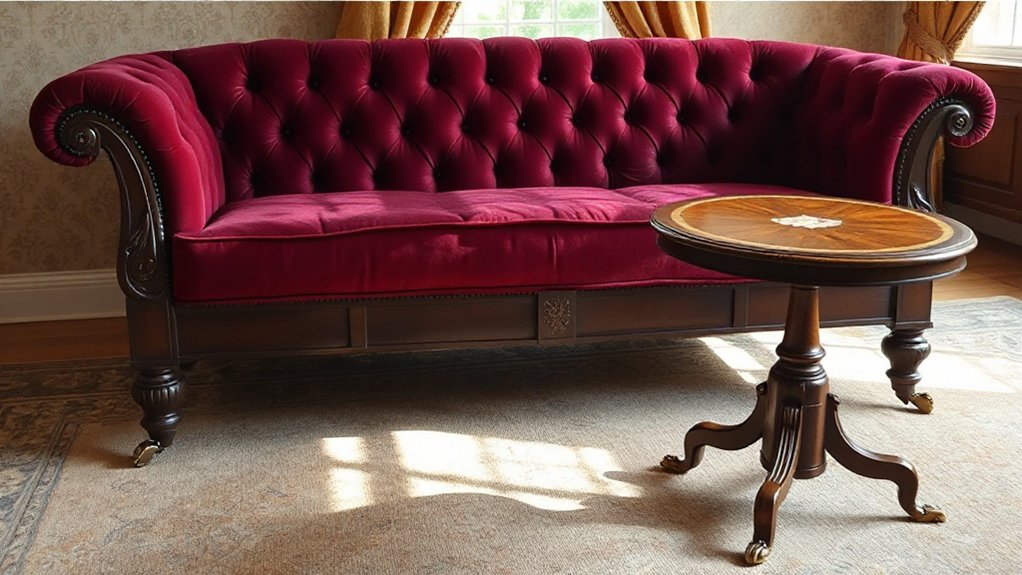
Even if a Victorian piece looks ornate at first glance, true craftsmanship shows up in the quiet details you can feel and verify: crisp, symmetrical carving with undercut depth; tight, consistent joinery (hand-cut dovetails in drawers, clean mortise-and-tenon frames); and smooth, well-fitted moving parts that run straight without racking. In a refined Victorian interior, these clues matter more than surface decoration, and they’ll still read as disciplined luxury beside today’s Victorian fashion-inspired styling. Check for:
- Drawer bottoms set in grooves, not stapled, with dust panels between runners
- Veneer seams bookmatched and aligned across edges and corners
- Hardware mortised flush, with original screws centered and undamaged
- Finish clarity that shows pore filling and careful rubbing, not muddy lacquer
What Are the Most Common Victorian Furniture Pieces?
As you start to identify Victorian furniture at a glance, you’ll see the same cornerstone forms repeating across parlors, dining rooms, and bedrooms: tufted settees and armchairs, marble-topped or walnut pier tables, whatnots and étagères, sideboards and dining tables with heavy turned legs, tall chests and wardrobes, and bedroom staples like washstands and high-back bedsteads.
You’ll also spot center tables for lamp light, occasional tables, and fireside chairs meant to frame conversation. In dining rooms, you’ll rely on sideboards for service and display, while hall stands and umbrella racks manage arrivals. In bedrooms, dressing tables and mirror-backed vanities support daily rituals. These pieces align with Victorian interior design’s love of layered function and ornament, echoing Victorian fashion: structured silhouettes, rich textures, and statement details that read instantly from across the room.
Is This Victorian Furniture Antique or Reproduction?
Spotting the hallmark Victorian forms—tufted seating, marble-topped tables, turned legs, and tall case pieces—gets you only halfway there, because the next question is age. To decide if you’re looking at an antique or a reproduction, you’ll need evidence beyond style, since many makers copy Victorian fashion for today’s Victorian interior.
- Check joinery: hand-cut dovetails vary; machine-cut look uniform and tight.
- Inspect hardware: slotted screws, worn brass, and irregular casting suggest age.
- Read surfaces: oxidized shellac, shrinkage cracks, and softened corners beat “distressing.”
- Verify labels and woods: period stamps, secondary pine, and consistent tool marks matter.
Ask for provenance and compare construction to known regional patterns; if details conflict, treat it as reproduction until verified.
What Victorian Furniture Is Worth Buying Today?

To buy Victorian furniture that holds value today, you should focus on proven high-demand categories like quality mahogany and walnut case pieces, original upholstered seating frames, and well-made tables with strong provenance. You’ll get the best return by prioritizing clear quality markers—tight joinery, intact veneers, crisp carving, original hardware, and minimal structural repairs. You can also buy smarter by verifying dates and makers, comparing recent sale comps, budgeting for restoration, and negotiating based on condition and completeness.
High-Value Victorian Categories
Although trends come and go, certain Victorian furniture categories still deliver consistent value because collectors and designers keep chasing the same mix of craftsmanship, rarity, and visual impact. If you’re buying for a curated Victorian interior, focus on forms that anchor a room the way Victorian fashion anchored a silhouette—structured, intentional, and instantly legible.
- Marble-top pier tables and consoles: they command entry halls and photograph beautifully.
- Walnut and rosewood étagères: you’ll gain vertical display without heavy visual mass.
- Gentlemen’s and ladies’ writing desks: they pair daily usability with period presence.
- Button-tufted settees and fainting couches: you’ll capture the era’s theatrical lounge profile.
Prioritize categories with strong demand across decorators, collectors, and boutique hospitality, so resale stays resilient.
Quality Markers To Seek
High-demand Victorian categories only hold their value when the piece itself shows disciplined making, honest materials, and sound survival. You’ll want tight joinery: hand-cut dovetails, pegged mortise-and-tenon, and drawer bottoms set in grooves, not stapled. Check timber choice and weight; solid mahogany, walnut, or oak should show consistent grain and oxidation, not fresh, pale cuts. Inspect veneer for book-matching and stable edges, and confirm hardware feels period-correct, with clean screw slots and no modern plating. Evaluate finish: shellac and wax should present depth, not plastic shine. For upholstery, prioritize intact frames and springing; Vintage textiles can be replaced, but broken webbing can’t hide. Finally, Decorative motifs should be crisp, symmetrical, and tool-mark authentic, not soft or cast.
Smart Buying Strategies
When you buy Victorian furniture today, you’ll get the best value by targeting forms that still live well in modern rooms and have proven resale demand—then insisting on condition and authenticity over ornament. Prioritize versatile case goods and seating with intact structure; you can update presentation without erasing history. Verify maker marks, original hardware, and consistent patina, and price any repairs with a conservator before you commit. Treat reupholstery as an investment only when frame quality justifies it, and choose Vintage textiles that suit the period.
- Buy dining tables, sideboards, and bookcases with standard heights and usable storage
- Avoid heavy over-restoration; demand documented Restoration techniques
- Check joints, veneers, and wormholes; negotiate for stabilization costs
- Favor complete sets or matched pairs for stronger resale
How Do You Mix Victorian Furniture With Modern Decor?
How do you blend Victorian furniture with modern decor without making the room feel like a museum or a mismatch? Start by choosing one standout antique—like a tufted settee or carved sideboard—and let it anchor the layout. Keep surrounding lines clean and low-profile so the silhouette contrast feels intentional in your Victorian interior.
Control the palette: pair dark woods with warm neutrals, then add one crisp modern accent (black metal, glass, or lacquer). Repeat materials twice for cohesion—brass on a mirror frame and on lighting, for example. Use scale rules: balance ornate pieces with generous negative space and streamlined rugs. Finally, edit accessories; one large abstract artwork delivers a Modern reinterpretation without competing with period details.
How Do You Care for Victorian Furniture Safely?
Blending Victorian pieces with modern decor only works long-term if you protect the antique finishes and joinery that make them special. You’ll get the best results by cleaning gently, controlling the environment, and knowing when to call in Antique restoration rather than experimenting.
- Dust weekly with a soft microfiber cloth; skip sprays that can dissolve Protective finishes.
- Keep humidity steady (40–55%) and avoid heat vents to prevent veneer lift and joint movement.
- Use coasters, felt pads, and table runners to block rings, abrasion, and UV fading.
- For spills, blot immediately with distilled water; don’t scrub, and never use silicone polishes.
If a surface feels tacky, crazed, or flaking, stop cleaning and request a conservator’s assessment before refinishing.
Frequently Asked Questions
Where Can I Find Reputable Victorian Furniture Dealers Near Me?
Find reputable Victorian furniture dealers near you via vetted antique mall directories, local preservation societies, and regional auction houses. Ask about Antique restoration, request provenance, and verify returns. Use Vintage sourcing forums and Google reviews.
What Are Typical Victorian Furniture Dimensions for Small Apartments?
For small apartments, you’ll want Victorian furniture dimensions like settees 48–60” wide, chairs 24–30” deep, tables 36–48” long, and wardrobes 24” deep. Small apartment furniture tips: choose slimmer silhouettes, multifunction pieces, and space-saving proportions.
How Can I Authenticate Victorian Furniture Without Professional Appraisal?
You can’t fully authenticate alone, but you can get close; about 70% of fakes reveal themselves in joinery and wear. Use material identification, study screws/labels, and avoid restoration techniques that erase patina.
Are There Ethical Concerns With Buying Victorian Furniture Made From Exotic Woods?
Yes, you’ll face ethical concerns: exotic woods may link to historic exploitation and habitat loss. Prioritize Sustainable sourcing and Conservation ethics by choosing documented provenance, reclaimed pieces, and sellers who disclose species, legality, and restoration materials.
What Should I Know About Insuring High-Value Victorian Furniture?
You should schedule specialized coverage, document provenance, and get an Insurance valuation from a qualified appraiser. You’ll update values after Antique restoration, set agreed-value terms, photograph condition, and confirm transit, theft, fire, and water protection.
Conclusion
You’ve traced Victorian furniture from its defining silhouettes to the era clues hidden in arches, turnings, and inlay. Now comes the moment that matters: you run your hand along the finish, you check the joinery, and you listen for what it isn’t saying. Antique or reproduction, the right piece holds its value in wood choice, crisp carving, and honest wear. Place it beside modern lines, then step back—there it is.