
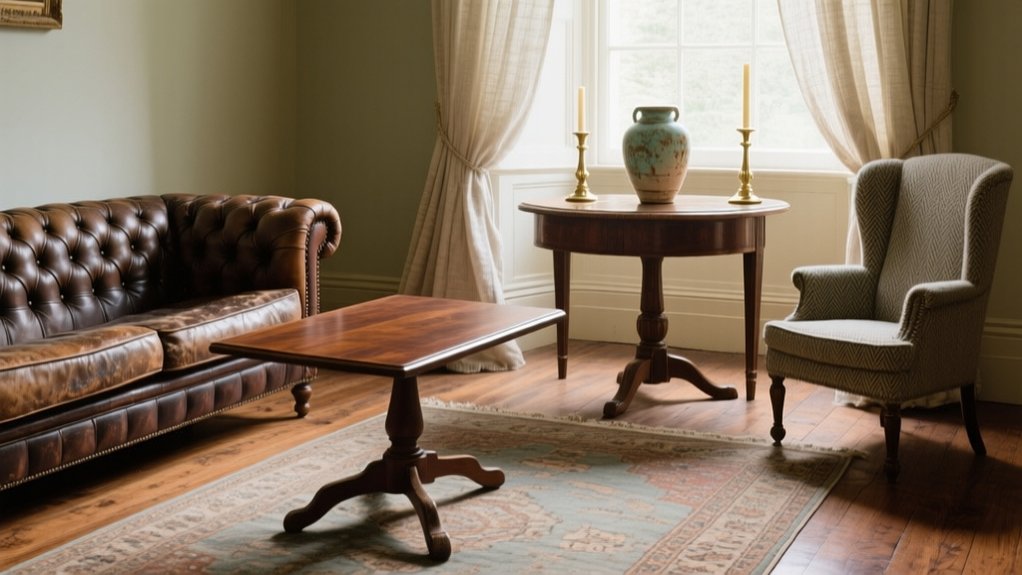

You’ll recognize traditional English furniture by its disciplined proportions, solid hardwoods like oak, walnut, or mahogany, and tight joinery such as mortise-and-tenon and dovetails. It favors symmetry, turned legs, chamfered edges, and restrained inlay over heavy carving or exaggerated curves. Classic pieces—gateleg tables, Windsor chairs, and chests of drawers—solve daily needs while signaling quiet status. Look for real patina, not fake distressing, and you’ll spot the difference ahead.
Key Takeaways
- Traditional English furniture draws from Tudor–Edwardian styles, favoring solid hardwoods, symmetry, and restrained ornament over heavy carving.
- Signature pieces like gateleg tables, Windsor chairs, and chests of drawers prioritize practical daily use with enduring, disciplined silhouettes.
- Look for quality materials—oak, walnut, mahogany—and honest surfaces that develop patina through oxidation, softened edges, and burnished hardware.
- Craftsmanship shows in tight joinery like mortise-and-tenon and dovetails, using well-seasoned timber for stable, aligned construction.
- Decorate by anchoring one heirloom silhouette per room, balancing dark woods with pale walls, negative space, and limited patterns for calm understatement.
What Is Traditional English Furniture: And How to Spot It?

Although “traditional English” gets used loosely, it refers to furniture rooted in Britain’s major period styles—Tudor through Edwardian—defined by solid hardwood construction, balanced proportions, and restrained ornament rather than showy excess. To spot it, you’ll look for oak, walnut, or mahogany; tight joinery (mortise-and-tenon, dovetails); and honest surfaces where grain, patina, and wax matter more than high-gloss lacquer. You can expect turned legs, chamfered edges, subtle inlay, and well-mannered symmetry, not exaggerated curves or heavy carving. Check drawer bottoms and backs for consistent tool marks and sturdy secondary woods. Cultural influences appear quietly in motifs—classical pilasters, chinoiserie hints, or campaign brass—while regional styles show up in proportions, woods, and practical detailing.
Which Traditional English Furniture Pieces Matter Most?
Because “traditional English” spans several centuries of design, the pieces that matter most are the ones that anchored everyday rooms and showcase the period’s priorities—durable hardwoods, crisp joinery, and calm proportion. You’ll get the clearest read on the style by focusing on forms that solved daily needs and signaled quiet status, while still accommodating Modern adaptations and broader Cultural influences. Prioritize these essentials:
- Gateleg or drop-leaf table: You can expand it for guests, then fold it back for tight rooms without visual fuss.
- Windsor or ladder-back chair: You’ll spot disciplined silhouettes and practical comfort, suited to kitchens and parlors alike.
- Chest of drawers or linen press: You’ll see orderly storage, balanced fronts, and restrained detailing that stabilizes a room’s composition.
Traditional English Furniture Materials: Woods, Leather, Patina
Why do traditional English pieces feel quietly settled the moment you bring them into a room? You’re usually feeling the timber first: dense oak for honest strength, mahogany for tight grain and deep color, walnut for crisp carving, and yew or elm for subtle figure. Makers season boards well, so joints stay true and edges don’t telegraph movement.
Leather matters next. You’ll notice full-grain hides, hand-tacked or stitched, taking on crease, sheen, and darkened touch points rather than peeling. That aging is patina: oxidation in wood finishes, softened corners, and burnished hardware that records use without looking ruined.
Contemporary adaptations keep these materials but simplify profiles and lighten stains. Modern reinterpretations may add performance leathers while preserving weight, joinery, and finish depth.
How to Decorate With Traditional English Furniture (Without Fuss)
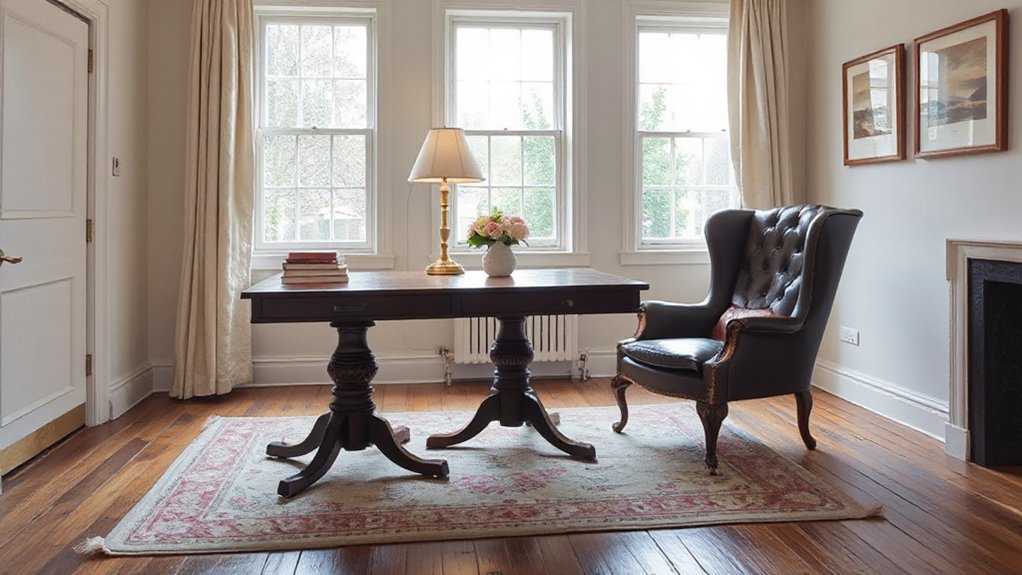
Once you understand how oak, leather, and patina carry weight and age well, decorating with traditional English furniture becomes a matter of placement and restraint, not rules. You’ll get the most from it when you treat each piece as an anchor, then edit everything else around it. Let Modern adaptations and Contemporary influences show up in scale, lighting, and art—keep the furniture’s lines calm.
- Start with one “heirloom” silhouette per room (desk, sideboard, wing chair), then leave clear negative space around it.
- Balance dark woods with pale walls, linen, and matte metals; repeat one warm tone to unify.
- Mix patterns sparingly: one plaid or stripe, one solid, and one textured neutral; keep rugs low-contrast.
How to Spot Quality: Antiques vs Bad Reproductions
Although a good reproduction can look convincing from across the room, quality shows itself the moment you get close: you can read it in the joinery, feel it in the weight and balance, and spot it in the wear patterns that only time produces. Check drawers for hand-cut dovetails with slight irregularity; machine-perfect spacing often signals a bad copy. Look underneath for consistent tool marks and pegged joints, not staples or fresh plywood. Run your hand along edges: honest softening occurs where fingers naturally rest, while fake distressing repeats in odd places. Inspect the finish for depth—shellac and wax age subtly, modern lacquer looks glassy. Ask about Restoration techniques; good work stays reversible and documented. With Authentic craftsmanship, screws align, timbers match, and everything sits square.
Frequently Asked Questions
What’s the Best Way to Insure Valuable English Antique Furniture?
You’ll insure valuable English antiques best by scheduling them on a specialist fine-arts policy, using recent appraisals, provenance documentation, and photos. Confirm worldwide transit, restoration coverage during Antique restoration, and require secure storage and alarm warranties.
How Do I Safely Ship Traditional English Furniture Internationally?
You safely ship it by crating each piece, wrapping with acid-free tissue, foam, and corner protectors—proper Packaging materials. You’ll choose insured, trackable Shipping carriers, document condition, manage customs paperwork, and control humidity.
Are There Legal Restrictions on Exporting Antiques From the UK?
Yes—you can face restrictions; exporting antiques can feel like threading a needle. You’ll need Export licensing for items over age/value thresholds, and Antique preservation rules may require permits or reviews; check DCMS, Arts Council.
How Should I Care for Traditional English Furniture in Humid Climates?
Control humid conditions: keep 45–55% RH, use a dehumidifier, and guarantee airflow. You’ll prevent warping and mold. For furniture maintenance, wax sparingly, wipe spills fast, and keep pieces off damp exterior walls.
Where Can I Find Reliable Appraisals for Traditional English Pieces?
You’ll find reliable appraisals through accredited ISA or ASA professionals, reputable auction houses, and established dealers offering Appraisal services. Ask for written Antique valuation reports, credentials, and comparables, and confirm USPAP compliance before committing.
Conclusion
You walk into an old rectory of a room, and the furniture behaves like quiet clergy. A rolled-arm Chesterfield keeps counsel; a gateleg table opens like a well-worn book. Oak, mahogany, and leather show honest patina, not sprayed perfection. You choose pieces with tight joinery, crisp carving, and weight that feels earned. Then you place them simply—lamp, rug, air—and let the story work without explanation, year after year.