
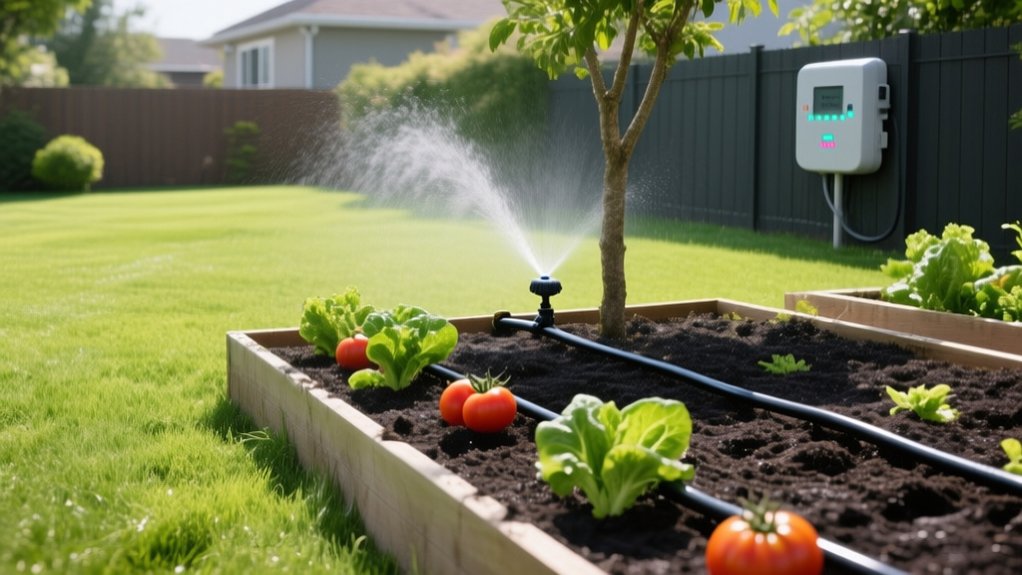

When you switch to a smart irrigation system, you’re fundamentally handing routine watering decisions to a network of soil sensors, weather data, and zone controllers that respond in real time. Instead of fixed timers, you get moisture-based schedules, flow monitoring that flags leaks, and app-based control from anywhere. The result is targeted watering that cuts waste and manual effort—yet the real advantage shows up when you understand how these systems actually decide when, where, and how much to water.
Key Takeaways
- Use smart controllers with zone-level scheduling so turf, beds, and drip areas get exactly what they need without manual reprogramming.
- Pair soil moisture sensors with weather-based scheduling to water only when root zones are dry, cutting waste and daily oversight.
- Enable automatic rain and freeze skip plus forecast-based adjustments to prevent unnecessary cycles before, during, and after storms.
- Add flow monitoring to detect leaks, broken heads, or stuck valves in real time, stopping water loss quickly.
- Manage the system via app or web portal for remote schedule changes, runtime caps, and monthly report reviews to fine-tune efficiency.
How Smart Irrigation Systems Actually Work

While the idea sounds complex, smart irrigation systems follow a clear, logical process: they collect data, analyze it, then control water delivery with precision. You start with sensors in your landscape that measure soil moisture, temperature, and sometimes salinity. Weather data from local stations or online services supplements these readings.
A central controller receives this data and runs algorithms that compare current soil moisture to target thresholds for each zone. These thresholds reflect your plants’ rooting depth, soil type, and plant health requirements. When levels drop below the set range, the controller opens specific valves and runs valves long enough to restore ideal moisture, then shuts them off.
You get consistent, data-driven irrigation that aligns with each plant’s real needs.
Key Features That Save Time and Water
That data-driven control loop becomes far more valuable when you pair it with specific features designed to cut waste and reduce manual work. You gain precise Water conservation through zone-level control, where each valve group follows its own schedule, flow limits, and runtime caps.
Soil moisture sensors let the controller irrigate only when root zones actually need water, not just when a timer says so. Weather-adjusted scheduling uses local forecasts, ET data, and rainfall measurements to automatically reduce or skip cycles.
Flow monitoring detects leaks, broken heads, and stuck valves in real time, then shuts down affected zones.
Remote management via app or web portal lets you adjust schedules, pause watering, and review usage analytics without visiting the controller.
Choosing the Right Smart Irrigation System for You
Because smart irrigation tech spans everything from simple app timers to full sensor-driven platforms, you’ll want to match the system’s complexity to your site’s real needs and your appetite for configuration.
Start by mapping your zones: turf, beds, containers, and any drip areas. Then confirm the controller supports enough zones and flexible schedules for each.
Prioritize systems that integrate rain sensors and, when budget allows, soil moisture probes. Rain sensors prevent waste during storms, while soil moisture data lets the controller fine‑tune run times based on actual root‑zone conditions, not assumptions.
You should also check Wi‑Fi reliability, app quality, and compatibility with your preferred smart‑home ecosystem.
Finally, review replacement-part availability and firmware update policies to protect your investment over time.
Installation and Setup Tips for Smooth Operation
When you install your smart irrigation system, you’ll get the best performance by starting with a clear plan for your zone layout, pipe runs, and valve placement.
You’ll then need to guarantee reliable connectivity between controllers, sensors, and your home network so schedules and data sync without interruption.
Finally, you should carefully calibrate flow rates, precipitation rates, and sensor thresholds so the system applies exactly the right amount of water to each zone.
Planning System Layout
Before you install any hardware, you need a clear system layout that links your water source, control valves, sensors, and irrigation zones into a coherent plan.
Start by mapping each zone’s plant types, root depth, and expected soil moisture range. Note sun exposure, slope, and runoff paths.
Next, calculate available water pressure and flow rate at the source. This lets you size mainlines, laterals, and emitters so zones operate efficiently without pressure drops.
Place valves where they’re accessible yet protected, grouping similar zones to simplify scheduling.
Position sensors in representative locations, away from puddling or unusually dry spots.
Route wiring and piping to minimize crossings, sharp bends, and future digging conflicts.
Document everything on a scaled plan you can update over time.
Connectivity And Calibration
Although the physical layout defines where water can go, connectivity and calibration determine how precisely it gets there and when. Begin by confirming stable Wi‑Fi coverage at the controller location; if signal strength is weak, add a range extender before pairing devices.
During wireless integration, link valves, flow meters, and weather or soil sensors one at a time, labeling each zone clearly in the app.
Next, perform careful sensor calibration. For soil probes, set the correct soil type, then compare readings with a manual moisture test and adjust offsets. Calibrate flow sensors by running a known zone and matching measured flow to manufacturer data.
Finally, schedule a test cycle, verify valve response times, and log baseline data for seasonal fine‑tuning.
Daily Use: Schedules, App Controls, and Automation
Once your smart irrigation system is installed, you’ll use it day to day through custom watering schedules, app-based controls, and built‑in automation.
You can set zone‑specific runtimes, frequencies, and start times, then adjust them remotely from your phone with real‑time status and manual override options.
The controller can also use live weather data to automatically reduce, skip, or extend watering so you maintain plant health while avoiding waste.
Custom Watering Schedules
How exactly does a smart irrigation system turn simple timing into a precise watering strategy? It lets you design custom schedules that respond to soil moisture, plant type, and microclimate instead of relying on a fixed timer. You define when zones run, how long they run, and how they adjust across seasons, all to protect plant health and avoid waste.
Here’s how you’d typically structure custom schedules:
- By zone conditions – Set different runtimes for shaded vs. sunny areas, lawns vs. beds, or slopes vs. flat ground.
- By soil and root depth – Match frequency and duration to clay, sand, or loam, and to shallow or deep roots.
- By seasonal patterns – Gradually increase or decrease watering through the year, not in abrupt steps.
Remote Control Via App
Custom schedules only work if you can see, adjust, and override them quickly, and that’s where remote app control changes daily use. From your phone or tablet, you can start, stop, or pause individual zones, tweak runtimes, and shift start times in seconds—without touching the controller.
You’ll see real-time status: which zones are running, how long they’ve watered, and what’s queued next. If rain sensors trigger, the app shows skipped cycles so you can verify that water conservation settings are working.
You can lock in minimum dry-out periods, prevent double-watering, and disable specific zones temporarily, for example around recent plantings or repairs. The result is precise irrigation control that matches your landscape’s needs and your daily schedule.
Automated Weather Adjustments
Why water on a fixed timer when your system can respond to actual weather in real time? With automated weather adjustments, your controller pulls live data from local forecasts and onsite sensors, then recalculates runtimes before each cycle. This is climate adaptation in practice: you apply only the water your landscape actually needs.
Your system uses sensor integration—rain, soil moisture, temperature, and solar radiation—to fine‑tune decisions.
Here’s how it works for you daily:
- Dynamic scheduling: The controller extends or shortens zones based on evapotranspiration, not guesswork.
- Rain and freeze protection: It pauses irrigation during storms or low temperatures to prevent waste and damage.
- Micro‑zone optimization: Sunny, sloped, or shaded areas receive distinct watering profiles, improving uniformity and plant health.
Common Mistakes and How to Get the Best Results
Although smart irrigation systems are designed to simplify water management, they often underperform when a few critical details are overlooked. You’ll see most issues fall into two categories: Overwatering mistakes and Manual adjustment pitfalls.
If you override schedules too often, you disrupt the controller’s learning algorithms and create inconsistent soil moisture levels.
To get the best results, verify sprinkler uniformity, nozzle flow rates, and valve performance before trusting automated scheduling.
Calibrate soil moisture sensors to your specific soil type and root depth, not default factory settings.
Regularly update weather data sources and confirm the system’s rain and freeze thresholds reflect local conditions.
Finally, review runtime reports monthly so you can fine-tune zones, detect leaks early, and maintain both efficiency and plant health.
Frequently Asked Questions
How Secure Are Smart Irrigation Systems Against Hacking or Unauthorized Access?
They’re only as secure as you configure them. You face cybersecurity vulnerabilities like weak passwords, outdated firmware, and open ports that enable unauthorized access. Use strong authentication, network segmentation, encryption, and regular updates to harden your system.
Can Smart Irrigation Systems Integrate With Existing Smart Home Platforms and Assistants?
Yes, you can integrate many systems with major smart home platforms and voice assistants, orchestrating garden automation like a digital Eden. They’ll sync schedules, leverage weather integration, trigger zones by routines, and expose detailed moisture, flow, and fault data.
What Ongoing Maintenance Do Smart Irrigation Systems Require Throughout the Year?
You’ll periodically inspect valves and emitters, clean filters, test zones, update firmware, verify sensor calibration, and adjust schedules using current weather data. You’ll also winterize exposed components and check for leaks, clogged heads, or damaged wiring each season.
Are There Rebates or Incentives for Installing Water-Saving Smart Irrigation Technology?
Yes, you’ll often qualify for local rebate programs and utility credits; coincidentally, many clients discover them only after installation. You should verify incentive eligibility, documentation requirements, approved controller lists, and pre-inspection steps before you purchase anything.
How Do Smart Irrigation Systems Affect a Property’s Resale Value or Market Appeal?
Smart irrigation typically boosts resale value because buyers see lower water bills, healthier landscape design, and better soil health. You demonstrate proactive maintenance, reduced manual labor, and future-ready infrastructure, making your property stand out in competitive real estate markets.
Conclusion
When you install a smart irrigation system, you’re fundamentally putting a quiet technician in your yard—one that never sleeps, measures every drop, and responds faster than storm clouds rolling in. By tuning zones, sensors, and schedules, you turn irrigation from guesswork into a calibrated process. With regular data checks and small tweaks, your landscape becomes a well‑orchestrated circuit: efficient, resilient, and consistently green, while your water bill and effort steadily shrink.