
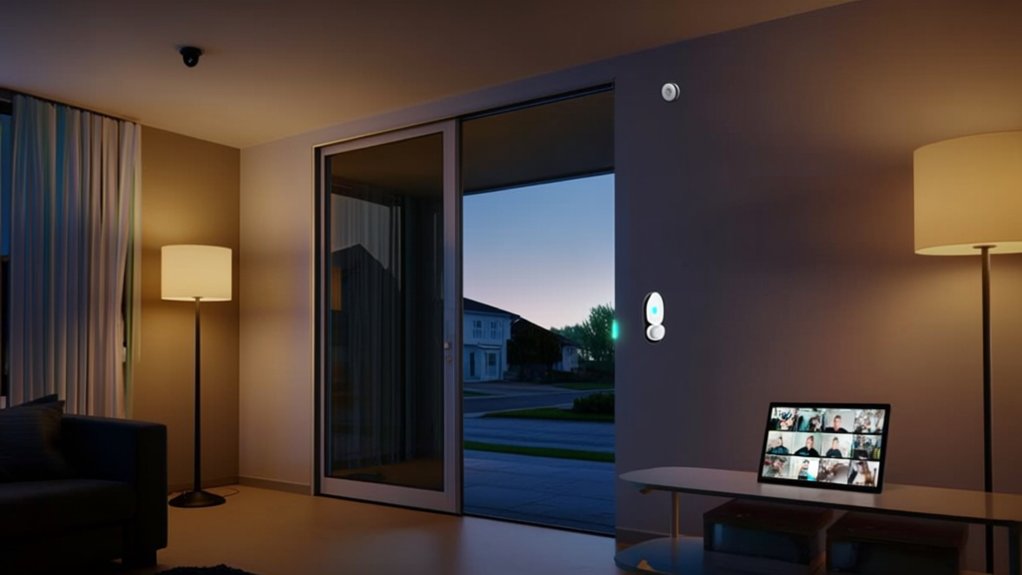

When you design a smart security stack for your home, you’re not just adding gadgets—you’re architecting a layered defense. Encrypted smart locks, high‑resolution IP cameras with IR night vision, and multi‑function motion/glass‑break sensors form the core, but their real power comes from how you integrate them. When you align device placement, automation rules, and network segmentation, small configuration choices can create surprisingly large gaps—or close them completely…
Key Takeaways
- Choose a central hub–based system that supports encrypted communication, strong authentication, and easy integration with locks, cameras, and sensors.
- Install smart door locks, video doorbells, and IP cameras to protect entry points with real-time alerts, access logs, and remote monitoring.
- Use multifunction sensors on doors, windows, and high‑value rooms for motion, contact, and glass‑break detection tied to automation scenes and alerts.
- Segment your home network with separate VLANs or guest SSIDs for security devices, enforcing WPA3, unique passwords, and regular firmware updates.
- Prioritize platforms offering local storage options, transparent privacy practices, granular user permissions, and scalable modular hardware for future expansion.
Start With the Smart Security Basics
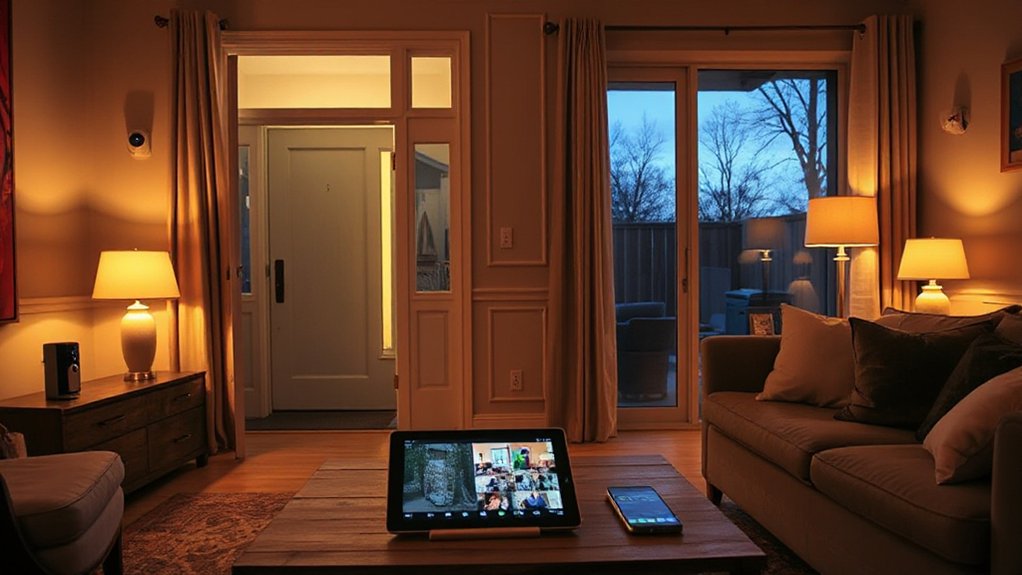
Before you specify cameras, sensors, or locks, you need a clear baseline architecture for your smart security system. You start by mapping entry points, high‑value zones, and likely attack vectors. Then define protection goals: deterrence, detection, delay, and documentation.
Next, you select a central hub or controller that supports robust security integration across your smart home ecosystem and uses encrypted communication protocols.
You design network segmentation so security devices reside on an isolated VLAN or guest SSID, minimizing lateral movement if a device’s compromised.
You establish identity and access management: unique user profiles, strong authentication, and granular permissions.
Finally, you create standard operating procedures—arming states, alert escalation paths, and failure modes—so every component operates coherently within a resilient security framework.
Must‑Have Smart Security Devices for Any Home
Once your foundational architecture is in place, you can translate that design into a focused set of hardware: a core stack of smart security devices that every modern home should deploy. You’ll specify components that integrate cleanly with your network topology, automation scenes, and notification policies for intruder detection and emergency alerts.
- Smart door locks – Provide encrypted keyless entry, access logs, and temporary credentials for guests or contractors.
- Video doorbells – Deliver real‑time video, two‑way audio, and motion‑based event tagging at the primary entry point.
- Indoor/outdoor IP cameras – Offer high‑resolution visual coverage with night vision, object classification, and secure cloud or local storage.
- Multifunction sensors – Combine motion, glass‑break, and contact sensing for envelope protection and automated alarm triggering.
Choosing the Right Smart Security System for You
With the core device categories defined, you can now engineer a smart security system tailored to your property, threat model, and technical comfort level rather than defaulting to a generic kit.
Start by mapping entry points, blind spots, and high‑value areas, then align sensor density and camera coverage to those zones.
Next, specify customized features: granular user permissions, geo‑fenced arming, privacy masking, or on‑device video analytics if you’re latency‑ or privacy‑sensitive.
Evaluate integration options with your existing ecosystem—Matter, Zigbee, Z‑Wave, HomeKit, or cloud APIs—so devices interoperate under a unified automation logic.
Finally, assess platform scalability, firmware update cadence, data retention policies, and local vs. cloud processing.
Prioritize vendors with transparent security practices, exportable data, and modular hardware you can expand over time.
Installation, Monitoring, and Everyday Use Tips
Although a smart security system can be highly complex under the hood, its real value emerges in clean installation, disciplined monitoring, and frictionless daily operation. You’ll get the best results by treating devices as an integrated Home automation layer, not isolated gadgets.
- Map camera sightlines, sensor zones, and Wi‑Fi signal strength before drilling; prioritize entry points, choke points, and power access for minimal visual clutter.
- Label hubs, routers, and PoE switches; document IP addresses and naming conventions to streamline troubleshooting.
- Configure tiered alerts—critical intrusions as push + call, secondary events as silent logs—to avoid notification fatigue.
- Build Emergency preparedness scenes: one tap turns on exterior lights, releases exits, disarms interior traps, and shares live feeds with trusted contacts.
Privacy, Data Security, and Long‑Term Maintenance
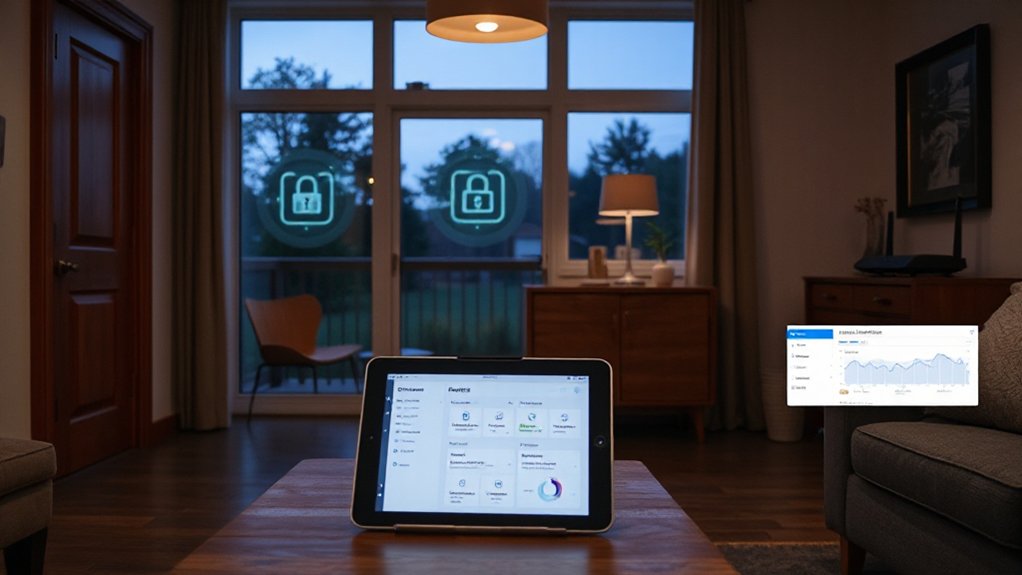
Why invest in smart security if you don’t harden the data it generates and the systems that sustain it over time? You should architect your ecosystem with cyber privacy as a core design constraint, not an afterthought.
Prioritize devices that support end‑to‑end data encryption, secure boot, and regular over‑the‑air firmware updates.
Segment your network so cameras, locks, and sensors operate on an isolated VLAN with strong WPA3 and unique credentials. Disable unused cloud features, audit app permissions, and enforce multifactor authentication on every administrative account.
For long‑term maintenance, document device locations, admin logins, and update policies. Schedule quarterly security reviews to remove unused accounts, rotate passwords, and verify log integrity, ensuring your system remains resilient as threats evolve.
Frequently Asked Questions
How Do Smart Security Systems Impact My Home Insurance Premiums or Eligibility?
They can reduce premiums through insurance discounts and improve eligibility if your devices satisfy specific policy requirements. You’ll integrate certified sensors, monitored alarms, and redundant connectivity, then document system specifications so underwriters accurately model risk reduction in your coverage design.
Can Smart Security Systems Assist Elderly or Disabled Household Members With Daily Safety?
Yes, you can leverage smart systems for Elderly assistance and Disability safety by integrating fall-detection sensors, voice-activated controls, geofencing, medication alerts, remote monitoring, automated lighting, and emergency call workflows into a unified, accessible home-automation architecture.
What Accessibility Features Exist for Users With Visual or Hearing Impairments?
You’ll access robust visual accessibility tools—high‑contrast UIs, enlarged icons, screen‑reader optimization—and redundant auditory alerts, including multi‑tone sirens and spoken notifications; with 15% of adults disabled, you’ll also rely on haptic feedback, configurable thresholds, and automation routines.
How Can I Integrate Smart Security With Vacation Rental Platforms Like Airbnb or Vrbo?
You integrate systems by selecting smart locks and cameras with Smart device compatibility for Airbnb/VRBO APIs, then configuring automated Guest access management, time-bound PINs, audit trails, and cleaning-staff codes through platform-linked workflows, webhooks, and secure credential tokenization.
What Legal Considerations Apply When Recording Audio or Video of Visitors and Neighbors?
You must evaluate Privacy laws, Consent requirements, and local wiretapping statutes before recording. You configure cameras to avoid public sidewalks, neighboring property, and private areas, disable interior audio, post conspicuous notices, update house rules, and log consent within platform messaging.
Conclusion
In the grand architecture of your home, smart security becomes the invisible structural steel—quiet, load‑bearing, uncompromising. When you deploy encrypted locks, high‑resolution IP cameras, and adaptive sensors, you’re not just adding gadgets; you’re engineering a resilient perimeter. Treat every entry point as a critical interface, every alert as a system heartbeat. Design your ecosystem with encryption, segmentation, and disciplined updates, and you’ll transform your house into a fortress that responds, learns, and ultimately, protects.