
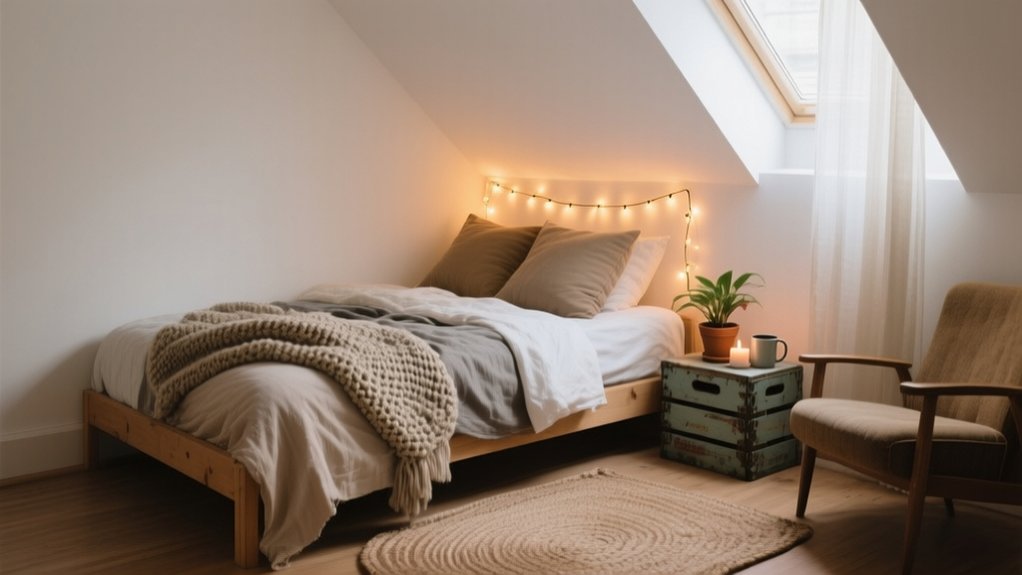

Your bedroom can feel like a boutique hotel on a shoestring budget if you focus on the right high-impact details instead of chasing trends. When you apply design principles like visual hierarchy, cohesive color palettes, and layered lighting, you maximise comfort per pound spent. You don’t need a full renovation—just strategic swaps in textiles, layout, and decor. The key is knowing which upgrades genuinely change how the space feels and which are just…noise.
Key Takeaways
- Define a realistic cosy vision, set a firm budget, and prioritize sleep essentials like a supportive topper, breathable sheets, and blackout solutions.
- Declutter surfaces, simplify wall decor, and rearrange furniture to create calm sightlines and functional zones for sleeping, reading, and dressing.
- Maximize hidden storage with under-bed bins, closed nightstands, and benches or ottomans with compartments to keep clutter out of view.
- Choose affordable, neutral bedding, layer textures with blankets and cushions, and use warm white layered lighting to create a soft, inviting glow.
- Personalize with DIY projects, removable decals, and thrifted solid-wood furniture or vintage artwork, keeping a restrained color palette for a cohesive, high-end feel.
Start With a Cosy Bedroom Decor Vision on a Budget
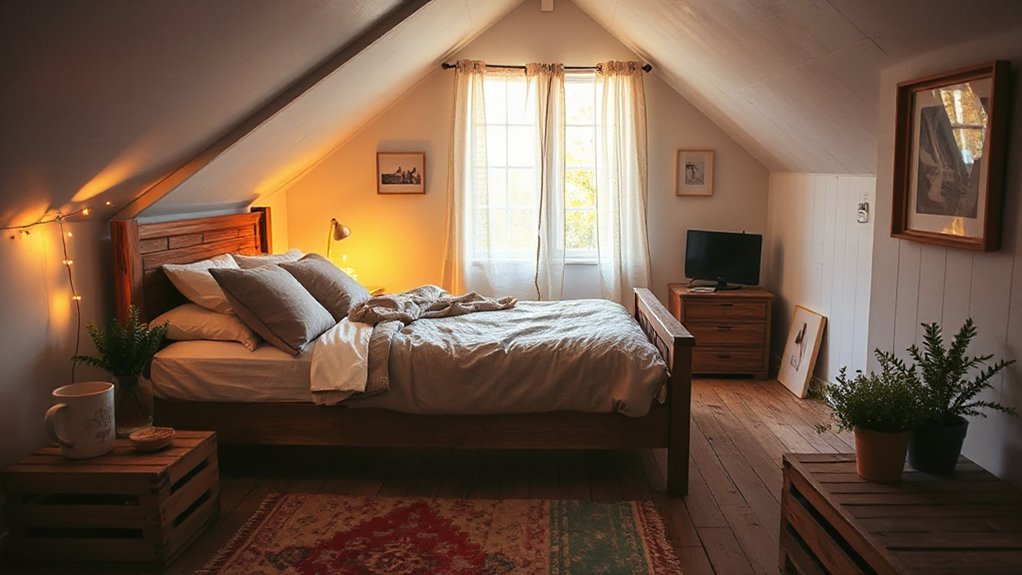
Before you spend a dollar on decor, define a clear, cosy bedroom vision that aligns with your budget, layout, and lifestyle. Start by setting a realistic spend ceiling, then reverse‑engineer your choices. Use research-backed color palettes—muted blues, soft greens, and warm neutrals—to lower arousal and support melatonin production.
Next, prioritize sleep essentials in your vision: a supportive mattress topper, breathable textiles, and blackout strategies rank higher than purely aesthetic accents. Build a simple mood board with reference images, fabric swatches, and paint chips so every purchase fits the visual direction.
Finally, map zones for sleep, reading, and dressing. This functional space planning lets you filter decor decisions through one question: “Does this serve comfort, rest, and cohesion?”
Declutter and Rearrange Furniture for Instant Calm
You can create an immediate sense of calm by clearing visual noise on nightstands, dressers, and floors. A strategy repeatedly linked in environmental psychology research to reduced cognitive load and better sleep quality.
Next, you’ll optimize furniture placement to improve circulation paths and sightlines, making the room feel larger and more restful without any structural changes.
Finally, you’ll leverage hidden storage solutions—under-bed bins, ottomans with compartments, and closet organizers—to keep essentials accessible but out of sight, preserving a streamlined, clutter-free aesthetic.
Clear Surfaces, Clear Mind
Although new decor is tempting, the fastest way to create a calmer bedroom is to clear visual noise and optimize your layout. Start by stripping back every surface: nightstands, dressers, window ledges. Remove anything non-functional, then reintroduce only essentials in curated “zones” to reduce cognitive load and decision fatigue.
Keep the top of your bedside table limited to a lamp, a book, and perhaps Aromatherapy diffusers for a low-cost, multisensory calming cue.
On walls, swap busy gallery clusters for one piece of Minimalist art; research in environmental psychology links simplified visual fields with reduced stress and improved sleep latency.
Use baskets, under-bed boxes, and drawer dividers to create “closed storage,” so you maintain a streamlined look without constant tidying.
Smart Furniture Placement
Once surfaces stay clear, the next high-impact move is editing and repositioning your furniture to support how you actually sleep and move. Smart furniture placement isn’t aesthetic guesswork; it’s space optimization grounded in ergonomics and circulation patterns.
Start by making the bed the focal point, with access on both sides to reduce visual and physical congestion. Pull bulky pieces off crowded walls and create a single, clear pathway from door to bed.
Avoid placing tall items directly opposite the bed; research on restorative environments shows that low visual load near your sightline reduces cognitive arousal.
Float a lightweight chair or narrow bench only if it serves a daily function. Remove any “orphan” furniture that doesn’t earn its footprint.
Hidden Storage Solutions
Three things consistently sabotage a calm bedroom: visible clutter, dead space, and underused vertical real estate—hidden storage solves all three at once. You reduce visual “noise,” which research links to higher cortisol and poorer sleep quality. Prioritize closed, integrated solutions over open shelving.
Start by upgrading the bed: choose a frame with built-in under bed drawers to store off-season textiles, spare bedding, or bulky sweaters. This leverages high-volume, low-visibility space without enlarging your footprint.
Next, specify nightstands and benches with hidden compartments; they provide concealed capacity for cables, books, and personal items, maintaining a clean sightline.
Finally, exploit vertical space with shallow wall-mounted cabinets or headboards with secret cubbies, keeping frequently used items accessible but out of view.
Affordable Bedding Upgrades That Feel Luxurious
You can generate a boutique-hotel look on a budget by prioritizing high-impact swaps like a new duvet cover in a higher GSM cotton or linen blend, rather than replacing your entire bedding set.
Research consistently shows that tactile comfort—think percale, brushed microfiber, or faux-linen textures—has a measurable effect on perceived sleep quality and overall room satisfaction.
High-Impact Duvet Switches
Although a full bedroom overhaul can feel cost-prohibitive, a strategic duvet switch delivers a disproportionate visual and tactile upgrade for relatively little spend. Because the duvet dominates your visual field, it’s the fastest way to reset bedroom color schemes and signal a more minimalistic design without new furniture.
- Opt for solid, neutral duvets (white, stone, greige) to create a high-end, hotel-like baseline that flatters most bedroom color schemes.
- Choose OEKO-TEX–certified cotton or brushed microfiber for proven softness, breathability, and durability on a budget.
- Prioritize higher GSM over gimmicky finishes; a slightly heavier fill reads visually richer and more tailored.
- Swap busy patterns for restrained piping, flange edges, or subtle quilting to achieve minimalistic design while still feeling considered and upscale.
Layered Textures On Budget
When a duvet already anchors the room, layering in a few targeted textures is the most cost-efficient way to make your bed look and feel boutique-level. Prioritize high-touch surfaces: add a waffle-knit or brushed microfiber blanket at the foot, then style two Euro shams in a contrasting weave. These upgrades leverage tactility and visual depth without a full bedding overhaul.
Choose a limited palette, then vary finishes—matte cotton, subtle sheen sateen, and a single chunky knit throw. This calibrated mix mimics luxury hotel “stacking” techniques.
To reinforce the cosy effect, coordinate your bedscape with adjacent elements: textured wallpapers behind the headboard and plush rugs underfoot. The cohesive material story boosts perceived quality and comfort while keeping spend tightly controlled.
Layer Textures for a Cosy Bedroom Look on the Cheap

While big-ticket furniture often steals the spotlight, it’s the layered textures that actually create a cosy, high-end bedroom feel on a tight budget. To hack this, focus on tactile contrast and visual depth. Start with breathable, high-thread-count bed linen in a matte finish, then add structured waffle or ribbed blankets for dimension without visual clutter.
- Mix fabrics: combine cotton bed linen, a chunky knit throw, and velvet or faux-linen throw pillows for multi-sensory impact.
- Play with scale: use oversized Euro pillows behind standard pillows to build a “hotel bed” profile.
- Add a budget runner: place a woven or tufted runner at the foot of the bed to anchor the textiles.
- Layer seasonally: rotate lightweight quilts and heavier knits to maintain comfort and visual interest year-round.
Budget-Friendly Lighting Ideas for Warm, Soft Glow
You can radically upgrade your bedroom ambience by layering task lamps and lanterns instead of relying on a single overhead fixture, a technique backed by lighting design best practices.
Opt for warm white LED bulbs (2700K–3000K) to achieve a soft, flattering glow that research links to increased relaxation and better pre-sleep routines.
Add affordable plug-in dimmer switches so you can modulate lux levels throughout the evening, mimicking a natural wind-down and reducing visual strain.
Layered Lamps And Lanterns
Ever notice how a room instantly feels more expensive under a warm, layered glow instead of a single harsh ceiling light? When you layer lamps and lanterns, you create depth, reduce glare, and visually “soften” the architecture.
Designers call this a multi-point lighting scheme, and studies show it increases perceived comfort and relaxation.
- Use table lamps at eye level for task lighting and to anchor your bedside zone.
- Add floor lamps in dark corners to balance luminance and visually enlarge the room.
- Incorporate Vintage lanterns for character-rich accent lighting and a curated, boutique-hotel feel.
- Hang lightweight paper lanterns to diffuse light broadly; their translucent shades scatter illumination, eliminating hard shadows.
Warm Bulbs And Dimmer Switches
Layered lamps and lanterns create structure, but the bulb type and control determine the actual mood. To achieve a cosy, hotel-grade ambience, you need warm-white LEDs in the 2200–2700K range. They emit a softer, amber-toned spectrum that supports melatonin production and better sleep hygiene.
Prioritise your bedside lamps first. Fit them with low-wattage, warm LEDs (around 5–7W) and choose opaque or fabric shades to diffuse glare and avoid harsh contrast ratios.
Next, install plug-in dimmer switches rather than hard-wired units to keep costs down and avoid an electrician. Dimming lets you modulate horizontal illuminance from task level (reading) to low-level ambient (winding down), so one fixture serves multiple functions while still feeling intimate, warm, and visually comfortable.
Low-Cost Wall Decor That Transforms Your Bedroom

Although a full remodel can feel out of reach, strategic wall decor delivers the highest visual impact per dollar in a bedroom. You’re fundamentally manipulating vertical real estate to shift focal points, perceived ceiling height, and overall mood.
Prioritize a cohesive color story and consistent framing finishes to keep the visual field calm, not cluttered.
- Curate an “art gallery” wall with thrifted frames and printable art; cluster pieces at eye level for a polished, designer look.
- Use removable wall decals to introduce pattern or botanical motifs; they add texture without repainting.
- Install a single oversized canvas above the headboard to anchor the bed as the primary focal point.
- Layer narrow picture ledges to rotate artwork seasonally, maximizing flexibility with minimal spend.
DIY Cosy Bedroom Decor Projects Anyone Can Try
When you shift from buying decor to making it, you gain granular control over texture, light, and acoustics, which are the core drivers of a cosy bedroom. Start with a DIY upholstered headboard using high-loft batting and a neutral, tactile fabric; this creates a visual anchor that supports bedroom feng shui by defining the command position of your bed.
Next, install dimmable, warm-white LED string lights behind sheer curtains to engineer circadian-friendly illumination and support sleep hygiene.
Add hand-sewn cushion covers in breathable natural fibers to increase tactile comfort and thermal regulation.
Finally, build a simple wooden bedside caddy to corral devices away from the mattress area, minimizing blue-light and noise exposure and reinforcing a bedroom environment optimized for restorative sleep.
Thrifted and Second-Hand Finds That Look High-End
Once you know what to look for, thrifted and second-hand pieces can deliver a high-end bedroom aesthetic at a fraction of retail cost. You’re curating, not cluttering, so prioritize pieces with strong silhouettes, quality materials, and timeless finishes.
Run a quick quality audit: joints should feel solid, drawers should glide, and fabrics should be free of musty odors.
- Prioritize solid wood casegoods you can refinish into sophisticated upcycled furniture.
- Source vintage artwork with substantial frames; re-mat in off-white for a gallery-quality look.
- Hunt for natural fibers—linen, cotton, wool—for textiles that photograph and wear better.
- Look for unlacquered brass or iron hardware to swap onto basic bedside tables.
A restrained color palette and consistent metals pull these disparate finds into a cohesive, high-end scheme.
Cosy Bedroom Storage Ideas That Don’t Ruin the Vibe
Done well, bedroom storage functions like invisible infrastructure: it keeps visual noise low while preserving that soft, cocooned feel you want in a cosy space. Prioritise closed storage with clean lines and soft textures so clutter doesn’t compete with your bedding and lighting.
Start with closet organization: use slimline hangers, vertical shelf dividers, and labelled baskets to increase capacity by up to 30%, according to professional organizing benchmarks. Zone items by frequency of use so surfaces stay clear.
Next, deploy under bed storage with soft-sided bins or rolling drawers that match your flooring tone. Store off-season textiles and bulky sweaters there to free up wardrobe space.
Finally, add wall-mounted shelves above eye level, keeping the visual field calm and the room feeling spacious.
Final Styling Touches That Make Your Bedroom Feel Snug
Smart storage sets the framework; layered styling gives the room its snug, finished feel. Once the big pieces are in place, you’ll refine the space through textile layering, light control, and scent enhancement. Prioritise touchpoints: what you see, feel, and smell as you wind down.
- Use a high-impact throw, two pillow types, and a contrasting cushion to create visual depth without clutter.
- Introduce warm, low-level lighting via dimmable bedside lamps or LED candles to maintain circadian-friendly ambience.
- Add scent enhancement with a budget diffuser: lavender, cedarwood, or chamomile all show evidence-based links to better sleep quality.
- Ground the room with a soft bedside rug and a curated nightstand vignette (book, carafe, small plant) to signal rest and comfort.
Frequently Asked Questions
How Can I Reduce Bedroom Noise for a Cosier, More Peaceful Sleep Environment?
You reduce bedroom noise by installing soundproof curtains, adding acoustic-grade soft wall panels, sealing door gaps with weatherstripping, and using a white-noise generator; research shows layered absorption and masking considerably lower decibel levels and improve sleep continuity.
What Are the Best Cosy Bedroom Ideas for Renters Who Can’T Paint or Drill?
You prioritise soft layering, modular lighting, and removable surfaces; contrast bare white walls with textured throws, wall decals, and temporary wallpapers. Add plug-in sconces, over-door hooks, freestanding shelves, and large textiles to maximise warmth, visual height, and perceived square footage.
How Do I Make a Very Small Bedroom Feel Cosy, Not Cramped, on a Budget?
Prioritize a tight color scheme, zone lighting options, and vertical storage. You’ll visually expand floor area, create layered ambience, and maintain negative space, which environmental psychology research links to reduced perceived crowding and increased restorative comfort.
What Cosy Decor Materials Are Safest for People With Allergies or Asthma?
You prioritize hypoallergenic fabrics and natural materials like organic cotton, linen, and wool; you avoid feather fills, heavy drapes, and synthetics, instead specifying tightly woven dust-mite-proof encasements, low-VOC finishes, washable textiles, and minimal textile layering for ideal allergen control.
How Can I Create a Cosy Bedroom That Works for Both Partners’ Styles?
You align both partners’ styles by defining a shared color palette, then layering personalized bedding, dual-control ambient lighting, and modular accent pieces; prioritize symmetrical layouts, tactile textiles, and compromise-driven focal points validated by environmental psychology research on cohabiting spaces.
Conclusion
You now know how to create a cosy, high-impact bedroom on a shoestring: strategic decluttering, smart layering of textiles, and low-cost lighting hacks all deliver maximum “perceived comfort” per pound. Remember, “less is more” when visual noise undermines sleep quality and cortisol levels. Combine thrifted hero pieces with DIY upgrades and functional storage, then iterate. When you optimise for texture, warmth, and sleep hygiene, you’ll get designer-level ambience without the designer price tag.