
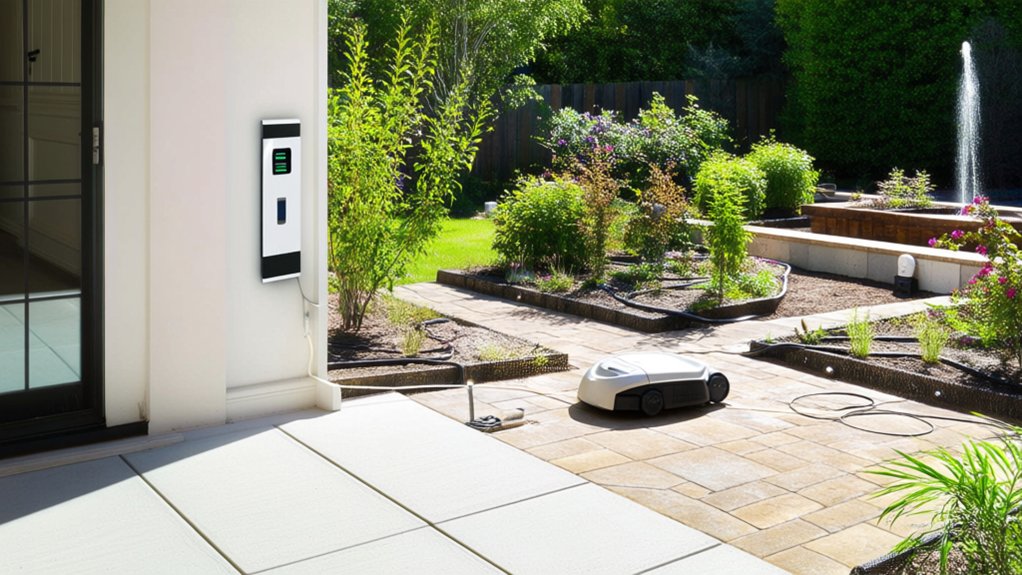

By coincidence, the same sensors that optimize greenhouse crops can turn your backyard into a self-regulating outdoor system. You’ll use soil moisture probes, zoned smart valves, and presence-based lighting to cut manual tasks while improving plant health and nighttime usability. As you integrate robotic mowers, weather-aware controllers, and scene-based automations, the garden begins to run on its own—once you understand which components to prioritize, and which to avoid.
Key Takeaways
- Install a smart irrigation controller with soil‑moisture sensors to automate precise watering by zone, reducing waste and daily manual checks.
- Use low‑voltage, app-controlled LED path and accent lights with photocells or astronomical timers for automatic dusk‑to‑dawn ambiance.
- Add a robot lawn mower with mapped boundaries to keep grass consistently trimmed and mulched without regular mowing effort.
- Integrate weather forecasts into your garden hub so watering, heating, or venting adjusts automatically before extreme heat, cold, or rain.
- Centralize control with a single app or hub to manage irrigation, lighting, cameras, and sensors through simple scenes like “Evening Relax” or “Vacation Mode.”
Start Here: How Garden Automation Actually Works
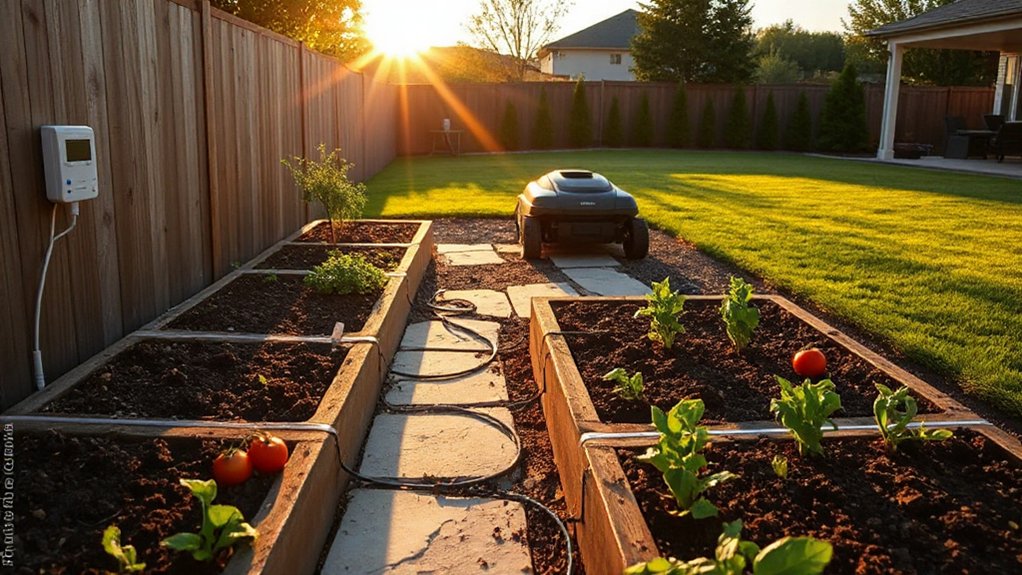
Before you start adding gadgets to your yard, it helps to understand that garden automation is simply a network of sensors, controllers, and actuators coordinating routine tasks with minimal human input.
You design a system where sensor integration collects real-time data on light, soil temperature, humidity, and motion. A central controller interprets this data, applies rules you’ve configured, then triggers actuators such as lights, fans, vents, or feeders.
You connect these devices through Wi‑Fi, low‑power radio, or wired links to guarantee reliable communication and low latency.
By layering in weather forecasting APIs, you let the system anticipate conditions instead of only reacting.
Thoughtful zoning, cable routing, and enclosure selection keep your automated garden robust, maintainable, and visually coherent.
Smart Irrigation Ideas to Water Less and Grow More
Once you understand the control logic behind your system, smart irrigation becomes a design exercise in delivering precisely the right amount of water, exactly when and where plants need it.
You start by zoning beds by crop type, sun exposure, and soil texture, then assign each zone its own flow rate, schedule, and sensor thresholds.
Use soil-moisture probes, rainfall data, and evapotranspiration models to automate run times, protecting plant health while cutting waste.
Replace broadcast sprinklers with pressure‑compensating drip lines and inline emitters for root‑zone precision and reduced foliar wetting.
Integrate fertiliser injectors for controlled fertigation and improved nutrient uptake.
Dry-surface irrigation also supports pest control by discouraging slugs, fungal pathogens, and mosquito breeding in standing water.
Easy Lighting Automation for Evenings Outdoors
Even when daylight fades, you can treat outdoor lighting as a programmable layer in your garden’s architecture rather than an afterthought. Start by mapping circulation paths, seating zones, and focal points, then assign each a dedicated lighting “scene” in your smart hub.
Use low-voltage LED fixtures with dimmable drivers and warm CCT (2700–3000K) to preserve outdoor ambiance and minimize glare.
Integrate photocell sensors and astronomical timers so evening illumination ramps up automatically at dusk without manual adjustment.
Layer bollards, wall-washers, and spike spots, then group them into zones you can schedule or trigger with presence sensors.
Add app-based control for quick overrides, and ensure fixtures are IP65-rated or higher to withstand weather while maintaining consistent, low-maintenance performance.
Low-Effort Lawn Care: Robot Mowers and Smart Tools
Instead of treating lawn care as a weekly chore, you can design it as a semi-autonomous system built around robot mowers and connected maintenance tools. You start by mapping mowing zones and safety boundaries, then let the mower maintain a consistent cut height that optimizes plant health and root density.
Frequent micro-clippings decompose in place, enriching soil structure and reducing manual fertilization.
You can pair the mower with soil-moisture probes and smart sprinklers to synchronize irrigation with turf demand, preventing stress that invites pests and disease.
Optical or ultrasonic sensors let the mower avoid ornamentals, furniture, and wildlife.
Integrated pest control modules—like targeted spot sprayers or ultrasonic deterrents—minimize blanket treatments, so you maintain a resilient, visually coherent lawn with minimal intervention.
Budget, Setup, and Apps to Run Your Smart Garden
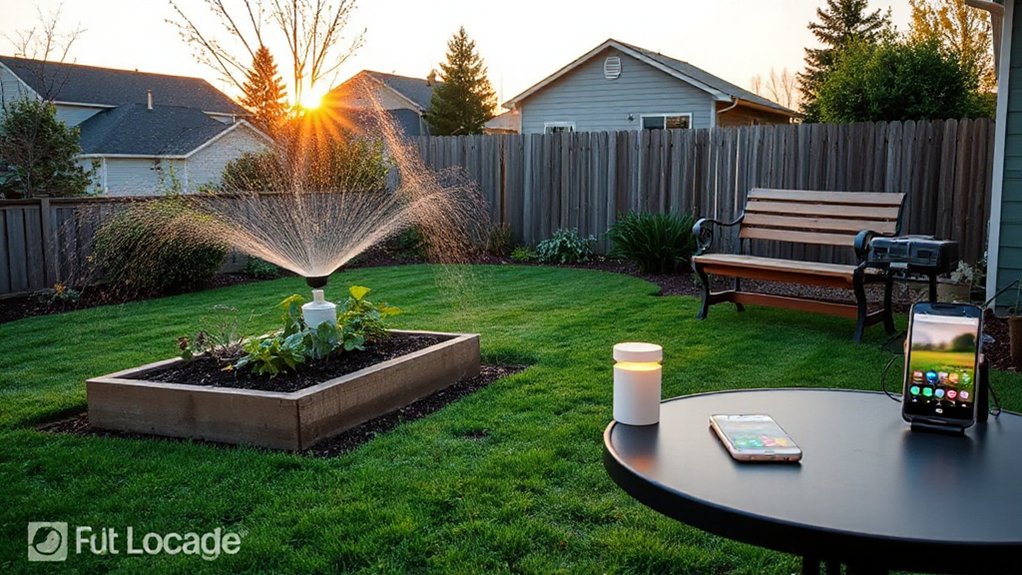
Although smart gardening can look expensive from a distance, you can architect it as a modular system that scales with your budget and technical comfort. Start with a Wi‑Fi irrigation controller and a few soil-moisture sensors, then add devices as your landscape, plant selection, and schedule evolve.
Prioritize hardware that integrates with a single app or hub so you don’t juggle fragmented dashboards. Most platforms now support automation scenes, usage analytics, and alerting for leaks, frost, or failed valves.
Visualize your smart garden stack as:
- A weather-aware irrigation brain
- Drip zones mapped to plant selection and sun exposure
- Discreet cameras for Pest control and wildlife monitoring
- Low-voltage lighting on time or presence triggers
- A central app orchestrating rules, alerts, and seasonal profiles
Frequently Asked Questions
How Can I Secure Smart Garden Devices Against Hacking or Unauthorized Access?
You secure smart garden devices by enforcing strong passwords, enabling device encryption, updating firmware, segmenting networks, disabling unused services, and applying layered cybersecurity measures, including WPA3 Wi‑Fi, VPN access, multifactor authentication, and strict router firewall rules.
What Garden Automation Options Are Best for Renters and Small Balconies?
You prioritize modular plug-in timers, smart plugs, and app-controlled drip systems optimized for container gardening and vertical planting; they’re non-invasive, preserve landlord finishes, integrate moisture sensors, and support scalable, cable-managed layouts for compact, high-density balcony ecosystems.
How Does Garden Automation Impact Local Wildlife, Pollinators, and Beneficial Insects?
You optimize irrigation and lighting schedules to enhance wildlife habitat while avoiding ecological disruption; you calibrate automation for pollinator support, preventing pesticide drift, nighttime light pollution, and overwatering that degrades nectar resources, soil microbiota, and nesting sites for beneficial insects.
Can I Automate Seasonal Tasks Like Frost Protection and Heatwave Plant Care?
You can automate frost protection and heatwave care like a climate-control architect: deploy sensor-driven covers, adaptive irrigation scheduling, and smart seasonal planting calendars that trigger row covers, shade cloth, misting, and root-zone watering based on temperature thresholds and evapotranspiration data.
What Accessibility-Friendly Garden Automations Help Older Adults or People With Disabilities?
You’ll optimize accessibility with adaptive gardening tools: automated raised beds, voice-activated irrigation, sensor-triggered lighting, and inclusive technology like app-controlled doors, roll-under potting benches, motorized trellises, and haptic alerts that translate environmental data into safer, low-effort garden interactions.
Conclusion
So after all this engineering, you’ll “work in the garden” by tapping an app. Your smart irrigation, zoned LEDs, and robotic mower will quietly execute what used to take entire weekends. The irony is you’ll spend more time curating scenes and automations than touching soil—but that’s the design. You’ve transformed outdoor living into a managed system: calibrated sensors, scheduled routines, and a landscape that behaves exactly the way you specified.