


Create a clean Shaker-style interior by clearing surfaces first, keeping only purposeful daily items, and organising cupboards to about 80% capacity. Choose honest materials—solid timber, linen, wool, and matt paint—with simple joinery and straight, unfussy forms. Use a restrained palette of warm off-whites, stone greys, muted sage, and soft earth tones, repeated room to room. Maximise daylight with plain window dressings, then finish with understated hardware, warm lighting, and a few vintage accents; there’s more to refine.
Key Takeaways
- Choose honest natural materials—solid wood, linen, wool, and matt paint—to add warmth without visual noise.
- Use simple Shaker forms: straight legs, framed doors, plain panelling, and minimal moulding that highlights craftsmanship.
- Keep a restrained palette of warm whites, stone greys, and earth tones, repeating undertones across rooms for cohesion.
- Declutter hard: clear surfaces, limit wall decor to one focal point per wall, and keep cupboards at 80% capacity with labelled boxes.
- Maximize calm light and function with plain window dressings, clear walkways, and simple hardware and lighting in matte black, nickel, or aged brass.
Define the Essentials of Clean Shaker Style

Although Shaker style began as a faith-led craft tradition, you can define a clean Shaker interior today by prioritising honest materials, disciplined simplicity, and purposeful function. Choose solid timber, linen, wool, and matt paint finishes; you’ll get warmth without visual noise. Keep forms spare: straight legs, framed doors, simple panelling, and unfussy joinery that shows how pieces are made. Select a restrained palette—soft whites, stone, muted greys, and quiet earth tones—then repeat it consistently across rooms. Let light do the decoration by using plain window dressings and balanced proportions. Add Vintage accents sparingly, such as a worn stool or brass hook, to suggest history. Introduce Modern contrasts through crisp black hardware or a slim-lined pendant, ensuring every item earns its place.
Declutter First: A Simple Shaker Reset Plan
Before you change colours or buy new furniture, strip the room back to what you actually use. Remove everything from surfaces, then return only items that serve a daily purpose or a clear function. Place the rest into three categories: relocate, donate, or recycle. Set a 20-minute timer per zone to prevent decision fatigue.Next, audit storage. Keep cupboards no more than 80 per cent full so air and order remain visible. Use matching boxes and labelled dividers to support Minimalist decor without looking austere. Maintain clear worktops and windowsills, and limit wall pieces to one focal point per wall. Finally, apply basic Color psychology by protecting visual calm: group similar objects together and avoid mixed materials that create cluttered contrast. You’ll notice immediate quietness.
Build a Soft, Natural Shaker Color Palette
Once you’ve cleared the visual noise, you can set a Shaker tone by choosing a restrained palette drawn from nature. Start with warm off-whites, stone greys, soft clay, and muted sage; these hues support calm and daylight without feeling cold. Keep contrast gentle: pair pale walls with slightly deeper trim, and limit accent colours to one or two tones.
For Color harmony, repeat undertones throughout the room: if your white leans creamy, keep woods, textiles, and metals equally warm. Test swatches at different times of day, and view them next to flooring and joinery. Use Paint techniques that look honest and durable: eggshell for woodwork, matt emulsion for walls, and careful cutting-in for crisp edges. Avoid high-gloss finishes and saturated colours.
Choose Shaker Furniture With Simple, Honest Lines
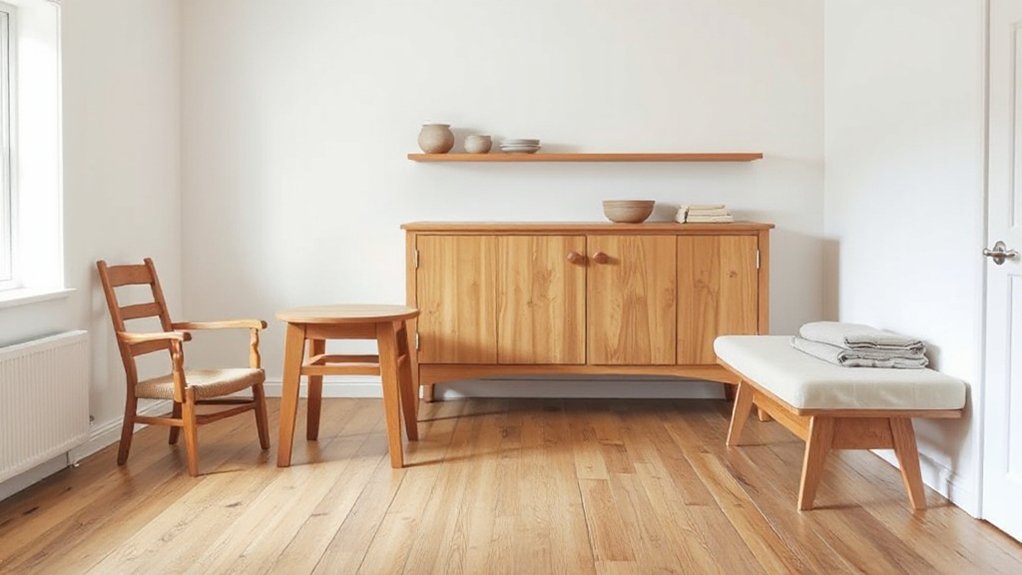
Choose Shaker furniture with straightforward silhouettes that read as calm and functional in your rooms. You should prioritise solid wood craftsmanship, favouring well-made joinery and durable finishes over flimsy composites. Keep ornamentation to a minimum, so every line and detail earns its place.
Embrace Straightforward Silhouettes
Although Shaker design grew from plain living, it suits a clean interior because it relies on straightforward silhouettes with honest, unfussy lines. Choose furniture with crisp rectangles, slim legs, and minimal moulding, so each piece reads quietly against pale walls and open floors.
Start with a plain dining table, ladder-back chairs, and a simple sideboard; keep proportions balanced and avoid bulky arms, deep tufting, or ornate profiles. Let negative space frame each item, and align edges to create order along sightlines. If you want character, add Vintage accents through a single brass lamp or aged ceramic, not clutter. Introduce bold patterns only in small, removable textiles—one striped runner or checked cushion—so the silhouette remains the focus. Keep hardware modest, with round knobs or plain pulls throughout.
Prioritize Solid Wood Craftsmanship
To keep a Shaker-style interior feeling calm and credible, you should prioritise solid wood pieces that show sound joinery and simple, honest lines. Choose tables, chairs, and cabinetry in oak, ash, or maple, and look for mortise-and-tenon joints, dowelled corners, and well-fitted drawer runners. You’ll get durability, a quieter visual rhythm, and a finish that improves with use rather than peeling or chipping.Keep surfaces lightly treated with oil, wax, or a matt lacquer so the grain remains legible. If you introduce Mixed material, do it with restraint: a timber top with painted legs, or a wood frame with a woven seat. Use statement accents sparingly, such as one well-made sideboard or bench that anchors the room.
Avoid Excessive Ornamentation
Sound timber and good joinery set the foundation, but the Shaker look only stays serene when the furniture keeps its lines honest and unadorned. Choose pieces with straight legs, plain rails, and minimal mouldings, and you’ll avoid ornamentation complexity that distracts from proportion and function.
Select tables, chairs, and cupboards where construction is visible rather than disguised by carving or appliqué. Keep profiles slim, edges softly eased, and hardware modest: wooden knobs or simple metal pulls suit best. If you introduce decorative accents, restrict them to one controlled note, such as a turned peg rail or a subtle inlay, then repeat it sparingly. Let the grain provide interest, and reserve pattern for textiles you can change without upsetting the room’s calm order.
Plan a Calm Layout With Breathing Room
You’ll keep a Shaker-style room calm by prioritising open walkways and resisting the urge to overfill each area. Arrange furniture so circulation routes stay clear and functional, with generous gaps that prevent bottlenecks. Balance scale and spacing by matching larger pieces with lighter companions and leaving intentional empty space to let the layout breathe.
Prioritize Open Walkways
Where do your feet naturally travel when you enter a room? Trace that path first, then keep it clear. In a Shaker-style interior, open walkways support quiet order and everyday efficiency. You’ll want direct routes from doorway to seating, storage, and windows, without weaving around obstacles.
Pull large pieces away from pinch points and align them with architectural features, such as hearths, built-ins, or panelling. Check furniture proportions so circulation feels effortless rather than cramped. Keep low tables out of turning zones, and place lamps or plants where they don’t intrude. Use colour harmony to guide movement: consistent tones along the route reduce visual noise and encourage a calm, continuous flow. Finish by testing each walkway carrying a tray or laundry basket.
Balance Scale And Spacing
Clear walkways set the route; balanced scale and spacing determine how restful the room feels once you’ve arrived. Start by anchoring the room with one modest focal piece, then size supporting furniture to suit it, not to fill every wall. Leave generous negative space around legs, corners, and door swings so the plan reads cleanly.
Keep proportions consistent: pair low seating with a simple, similarly scaled table; avoid mixing bulky profiles with spindly ones. Maintain even gaps between pieces, and align edges where practical to reinforce order. Use colour coordination to limit visual breaks, and rely on material harmony—timber, painted finishes, and natural textiles—to connect zones without extra items. If a piece crowds circulation, remove it rather than squeezing.
Warm It Up With Natural Wood and Finishes
How do you stop a clean Shaker-style scheme from feeling stark? You introduce natural wood and considered finishes that add depth without clutter. Choose oak, ash, or walnut for worktops, dining tables, or simple shelving, and keep the grain visible with matt oil or wax rather than high gloss. Add Rustic accents through turned wooden stools, a timber-framed mirror, or woven rattan, but limit them to a few pieces so the room stays composed. Create Modern contrasts by pairing warm timber with painted cabinetry in off-white, stone, or deep green, and specify brushed brass or blackened steel for handles and taps. Finally, layer tactility: linen, wool, and leather elevate warmth while preserving Shaker restraint.
Keep It Airy With Smart Shaker Storage
Although Shaker interiors prize simplicity, you’ll only keep the room feeling airy if you control what’s on display with smart, built-in storage. Choose full-height cabinets and closed base units to hide everyday clutter, then reserve open shelving for a small, curated run of essentials. Fit interior drawers, pull-out larders, and divided trays so everything has a designated place and you won’t need extra freestanding furniture.
Keep sightlines clear by aligning door heights and maintaining even gaps; this disciplined geometry reinforces calm. Add Vintage accents sparingly—such as a single glazed cupboard for crockery—so character reads as intentional, not busy. Introduce Modern contrasts through slim internal organisers and crisp, flush fronts, balancing heritage proportions with efficient capacity. Finally, edit regularly: if it doesn’t earn its place, store it away.
Pick Simple Lighting and Understated Hardware
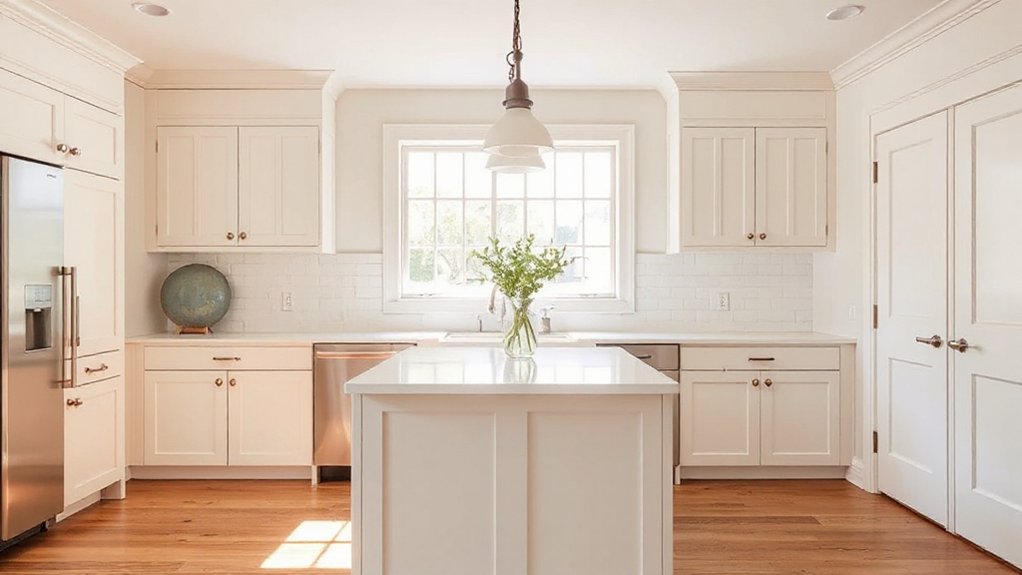
When you keep lighting simple and hardware understated, the Shaker lines stay crisp and the room feels calm. Choose fittings with plain shades, clean profiles, and warm bulbs so you get even, flattering ambient lighting without glare. Place ceiling lights centrally, then add a discreet table or wall light where you read or work.
For cabinets and drawers, specify minimalist hardware in brushed nickel, matt black, or aged brass, and keep the shape consistent throughout. Opt for simple knobs or straight pulls, sized for comfort and aligned precisely. If you prefer a handleless look, use a modest finger pull that doesn’t add visual noise. Match hinges and latches to your chosen finish, and avoid ornate plates or heavy detailing anywhere.
Style With Restraint: The Shaker Editing Rules
Since Shaker interiors rely on proportion and honest materials rather than ornament, you’ll need to edit your scheme with discipline to keep the space quiet and purposeful. Begin by clearing surfaces: keep one useful object per zone, and store the rest in cupboards or baskets. Choose Minimalist decor with clear function—timber tray, ceramic jug, linen throw—rather than novelty pieces. Repeat shapes and finishes so the room reads as a set, not a collection. Limit patterns to simple stripes or checks, used sparingly. Control Color contrast: pair warm wood with off-white walls, then add one dark anchor such as a black iron hook rail or framed print. Finally, leave negative space around key items; breathing room is the most authentic ornament.
Frequently Asked Questions
How Do I Adapt Shaker Style for a Small Apartment?
You adapt Shaker style in a small flat by choosing slim, built-in storage and multipurpose timber pieces. Keep Colour palettes light and restrained, add Vintage accents sparingly, and maintain clear floor space with uncluttered sightlines.
What Modern Materials Pair Well With Shaker Interiors?
Like a calm harbour beside modern tides, you’ll pair Shaker interiors with matte porcelain worktops, brushed stainless fittings, and clear low-iron glass. Add Vintage accents and Rustic finishes through oiled oak, linoleum flooring, and clay paint.
How Can I Mix Shaker Style With Existing Contemporary Décor?
Blend Shaker style by introducing plain-front cabinetry, honest timber, and simple joinery beside your contemporary pieces; keep lines uncluttered. Add Vintage accessories sparingly, and use restrained Color accents in soft furnishings to unify.
What Are Budget-Friendly Ways to Achieve a Shaker Look?
You can achieve a Shaker look on a budget by repainting cabinetry in soft neutrals, fitting vintage hardware, adding simple open shelving, choosing plain textiles, and using restrained colour accents through cushions, rugs, and artwork.
Which Plants Complement a Clean Shaker-Style Interior?
You’ll complement a clean Shaker-style interior with Indoor greenery like spider plants, peace lilies, rubber plants, and small ferns. Keep Plant placement simple: use terracotta pots, group sparingly, and favour windowsills or sideboards for balance.
Conclusion
You step into your home as if it’s a quiet meeting house: every object must earn its place. You clear the clutter, soften the palette, and choose honest, plain furniture, leaving breathing room in the layout. You warm the space with natural timber and calm finishes, then rely on discreet storage, simple lighting, and understated hardware. Like a lantern trimmed of smoke, your rooms glow brighter when you edit with restraint and keep only what serves.