

Key Takeaways
- Choose material based on vehicle loads, soil stability, and drainage; weak subgrades need stabilization to prevent rutting and cracking.
- In freeze-thaw climates, prioritize traction, drainage, and salt resistance; plan for snowplowing impacts on gravel and deicer damage on concrete.
- Compare costs and upkeep: gravel is cheapest but needs yearly regrading; pavers/stone cost more but last decades with low maintenance.
- Asphalt installs cheaply and can be resurfaced, but oxidizes and cracks; concrete costs more upfront yet typically needs less lifetime maintenance.
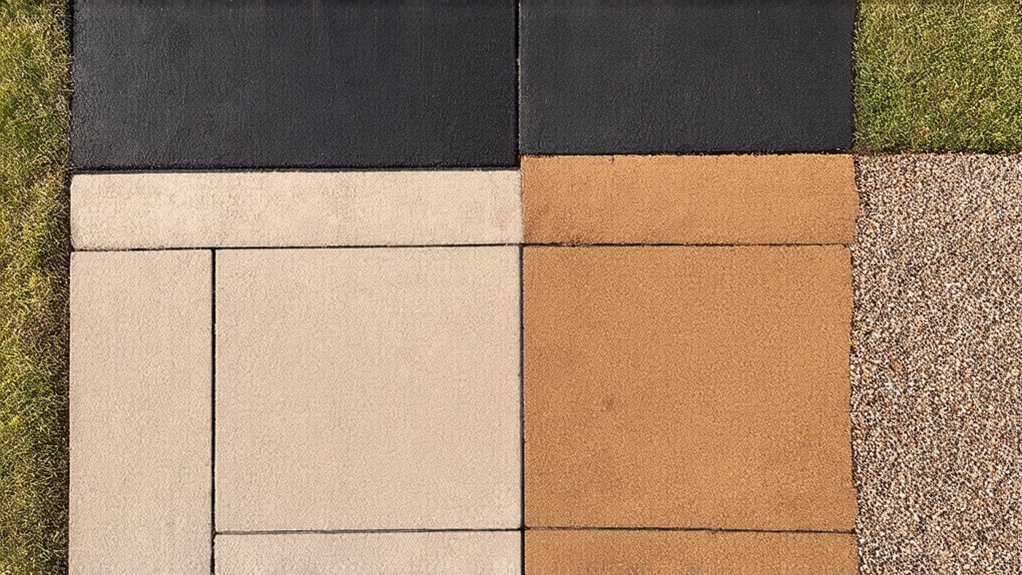
- For sustainability and runoff control, consider permeable pavers or resin-bound aggregate, recycled asphalt millings, and locally sourced, lighter-colored materials.
How to Choose the Best Driveway Material for You

Before you commit to asphalt, concrete, gravel, pavers, or another surface, pin down what your driveway must handle and what you’re willing to maintain. Start with loads: daily passenger cars, delivery trucks, or RV storage require thicker bases and higher bearing capacity.
Check drainage and soil; expansive clay or poor subgrade demands stabilization and positive slope to move water away from the house. Match traction to climate: freeze-thaw, snowplows, and deicing salts drive surface and joint decisions.
Decide how quiet you need it; smoother finishes support Noise reduction, while loose aggregate increases tire and plow noise.
Finally, review Sustainability options: permeable systems, recycled content, lighter colors for heat, and local sourcing to cut transport impacts.
Driveway Materials Comparison Chart: Cost, Lifespan, Upkeep
Although material choice often starts with curb appeal, the numbers—installed cost, expected lifespan, and ongoing upkeep—usually determine what performs best for your budget and time. Use this quick comparison to balance Driveway aesthetics and environmental impact without guesswork.
Gravel: $2–$6/sq ft; 10–25 years; regrading and top-offs yearly; best drainage, dust control needed.
Recycled asphalt millings: $3–$7; 15–20 years; periodic compacting/seal; lower embodied energy.
Concrete pavers: $10–$25; 25–50 years; joint sand and weed control; permeable options reduce runoff.
Natural stone (set on base): $15–$35; 50+ years; minimal, but skilled install; quarrying increases environmental impact.
Resin-bound aggregate: $9–$18; 15–25 years; wash and occasional patch; permeable, UV-stable if specified.
Concrete vs Asphalt Driveways: Cost, Cracking, Longevity?
If you’re deciding between concrete and asphalt, focus on three performance drivers—installed cost, how and why each surface cracks, and the realistic service life you’ll get in your climate and soil conditions.
Asphalt usually installs for less and can be resurfaced; concrete costs more upfront but often lowers lifetime maintenance when properly jointed and sealed.
Asphalt cracks from oxidation and traffic fatigue; you’ll see edge cracking if the base drains poorly.
Concrete cracks from shrinkage and slab movement; you control it with joints, rebar, and curing discipline.
In freeze–thaw zones, both need drainage and timely sealing, but concrete can spall if deicers are overused.
For driveway aesthetics, concrete offers more finishes; for environmental impact, asphalt’s recyclability helps.
Gravel Driveways: Low Cost, High Maintenance?
Concrete and asphalt compete on cracking behavior and life-cycle costs, but gravel changes the equation by trading a low install price for ongoing upkeep. You’ll pay less up front, especially on long rural drives, but you’ll manage migration, ruts, and washboarding under traffic and rain.
Specify a compacted base, geotextile where soils pump, and 3/4-inch minus for binding; loose round stone won’t lock.
You’ll need periodic regrading, top-ups, and edge control so stone doesn’t spill into Garden landscaping beds. Drainage matters: crown the surface and keep ditches clear to prevent soft spots.
Snow removal is trickier; set your blade shoes high, plow early, and expect spring touch-ups where the plow scrapes aggregate.
Pavers, Brick, and Permeable Driveways: Looks vs Drainage
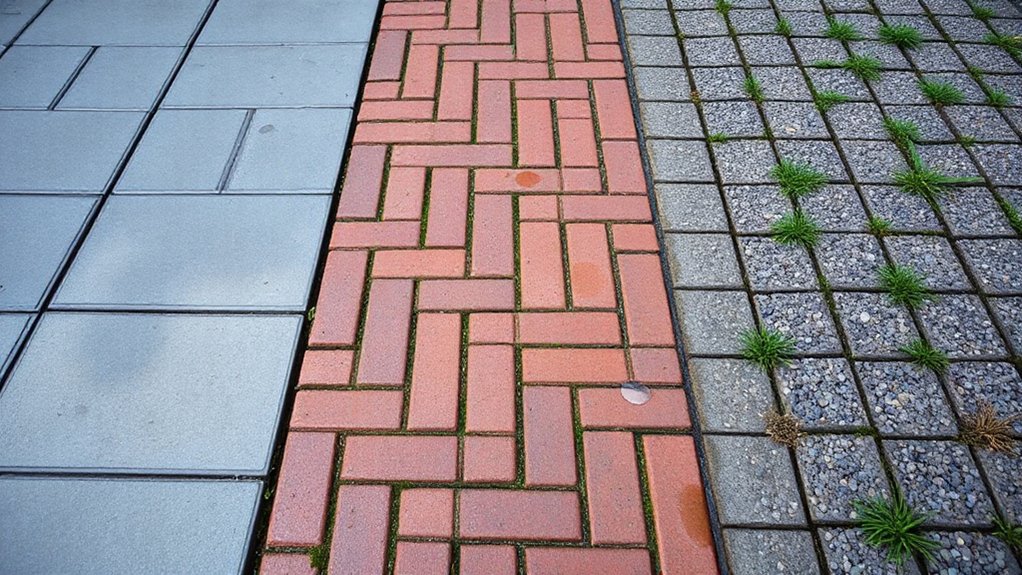
When you choose pavers or brick, you’re buying a segmented surface that looks premium but lives or dies by its base and drainage design. You’ll need 6–12 inches of compacted, well-graded aggregate, strict edge restraints, and proper slope so joints don’t pump fines and settle.
You can use Paver patterns to manage turning forces; herringbone resists tire shear better than running bond. Brick color options affect heat gain and visible staining, but performance depends on brick type and freeze-thaw rating.
Permeable pavers trade surface runoff for subsurface storage. You’ll specify open-graded base stone, clean joint aggregate, and an overflow path for extreme storms. Maintain by vacuum sweeping to prevent clogging; ignore it and infiltration drops fast.
Frequently Asked Questions
Do I Need a Permit to Replace or Widen My Driveway?
You often need a permit, especially if you’re widening, changing drainage, or modifying curb cuts; check your local building and zoning office. Permits protect driveway aesthetics, limit environmental impact, and guarantee code-compliant stormwater control.
How Long Should I Wait Before Parking on a New Driveway?
You should wait 7 days for concrete, 24–72 hours for asphalt, and 24 hours for pavers before parking. Schedule Driveway sealing after full cure. Respect Material durability by avoiding heavy loads longer.
Can Driveway Materials Affect My Home Insurance Premiums?
Yes, driveway materials can affect your home insurance premiums—ironically, that “cheap” gravel may cost more. You’ll get better rates when your insurer sees higher driveway durability, safer traction, and reduced liability claims.
What’s the Best Driveway Option for Heavy RV or Boat Parking?
For heavy RV or boat parking, you’ll get best performance from reinforced concrete over a compacted base. It maximizes Driveway durability, limits rutting, and reduces Material maintenance; avoid standard asphalt unless you thicken it.
How Do Snowplows and De-Icing Salts Impact Different Driveway Surfaces?
Snowplows can chew up your driveway like a grinder: Snow damage gouges asphalt and dislodges gravel, while Salt deterioration pits concrete and corrodes rebar. You’ll reduce wear by sealing, using rubber blades, and rinsing salts.
Conclusion
You choose your driveway by balancing cost, lifespan, and upkeep—not by guessing. You pay less up front with gravel, but you grade, rake, and refill more often. You get a smooth, strong slab with concrete, but you plan for joints, sealing, and crack control. You install asphalt faster, but you budget for periodic sealing. You invest most in pavers or permeable systems, but you gain modular repairs and better drainage.