


Key Takeaways
- Use large-format pavers with narrow joints, clean geometry, and a restrained color palette for an architectural, modern look.
- Organize patios and paths on strong axes with aligned edges and repeatable modules to create visual harmony and clear circulation.
- Integrate built-in seating and raised planters with matching caps, veneers, and joint rhythm for a cohesive, minimalist composition.
- Add linear fire features or sleek fire pits using steel, concrete, or porcelain surrounds to serve as strong architectural focal points.
- Conceal drainage and utilities, and use discreet LED step and linear lighting to define spaces after dark without visible clutter.
What Makes Modern Garden Hardscaping Look Modern

While modern garden hardscaping can use many of the same materials as traditional landscapes, it looks “modern” because you’ll prioritize clean geometry, tight detailing, and a deliberately limited palette—think large-format pavers with narrow joints, crisp edges on steps and walls, and consistent finishes that coordinate with the home’s architecture.
You’ll reinforce that clarity with a disciplined Garden layout: strong axes, aligned edges, and repeatable modules that make paths, terraces, and thresholds read as one system. Keep progressions flush, control reveals, and hide drainage with slots or gravel bands so performance stays invisible.
Use lighting as architecture—linear grazers and step lights—to sharpen forms at night. For Plant integration, mass fewer species, echo hard lines with sculptural silhouettes, and keep spacing intentional so planting supports, not softens, the design intent.
Modern Hardscaping Materials (Pros, Cons, Upkeep)
Clean geometry and tight detailing only land if the materials back them up, so your next decision is what modern hardscape palette can deliver the look *and* perform long-term.
Specify porcelain for ultra-low absorption, stain resistance, and crisp edges; note it can feel slick unless you choose textured surface options and manage ice.
Cast-in-place concrete reads monolithic and cost-efficient, but it can crack and needs joint planning plus periodic sealing.
Natural stone adds depth and resale appeal, yet it varies in thickness and may require more frequent cleaning and re-pointing.
For Eco friendly alternatives, consider permeable concrete, recycled-content composite decking, or locally quarried stone to cut transport impacts.
Whatever you select, budget for routine sweeping, pressure-washing, and spot sealing to keep tones uniform.
Large-Format Paver Patios for Modern Gardens
Because modern gardens lean on crisp lines and quiet surfaces, large-format paver patios give you a fast path to that architectural look with fewer joints and a more “slab-like” read than traditional unit pavers. You’ll get cleaner geometry, easier furniture layouts, and a calmer visual field that pairs well with minimal planting palettes.
Specify 24×24 or larger units with tight chamfers, then lock performance in with a properly compacted aggregate base and polymeric joint sand to resist washout and weeds.
For Contemporary paver patterns, run a stacked bond for strict modernity, or use a restrained ashlar mix to reduce repetition.
Colorful paving options let you introduce graphite, warm taupe, or muted terracotta without overpowering the garden. Choose a matte, textured finish for slip resistance and glare control.
Modern Retaining Walls (Height, Drainage, Codes)
If your modern garden uses grade changes to frame terraces or carve out seating zones, a retaining wall has to do more than look sharp—it has to meet height limits, manage water, and satisfy local code.
Start by confirming retaining wall height against municipal thresholds; many jurisdictions trigger engineering, permits, and guardrails beyond 3–4 feet, especially near property lines or driveways.
Specify a system that fits the aesthetic—smooth architectural concrete, gabions, or segmental units—then design for pressure. You’ll need a granular backfill zone, a perforated drainpipe to daylight or a sump, and properly placed weep outlets to meet drainage requirements.
Use geogrid where needed, and detail cap and coping adhesion for freeze-thaw. Finally, coordinate inspections, setbacks, and surcharge loads so the wall performs long-term.
Modern Paths and Stepping Stones (Layout + Base)

When you map a modern path or a stepping-stone run, treat it as circulation infrastructure—set clear sightlines, align it with doors and focal points, and size the route for how you’ll actually move (typically 36–48 inches for primary paths, with comfortable stepping-stone spacing around a natural stride).
Keep lines crisp: use rectilinear runs or offset grids that echo contemporary architecture, and lock geometry with clean garden edging.
Build the base like a pavement system: excavate to stable subgrade, add 4–6 inches of compacted angular aggregate (more in freeze zones), then a leveling layer of screenings or sand.
Set stones or pavers with tight tolerances, pitch 1–2% for drainage, and compact again.
Finish with discreet pathway lighting to reinforce wayfinding and nighttime safety.
Built-In Seating and Raised Planters That Match
Although they read as simple “site furniture,” built-in seating and raised planters work best as a single, coordinated system—one that matches your hardscape materials, clean lines, and daily use patterns.
You’ll get a sharper modern look when seat walls and planter faces share the same veneer, cap, and joint rhythm as your paving, with consistent reveals and tight 1/8–3/16-inch tolerances.
Specify caps with eased edges for comfort, then set seat height at 17–18 inches and depth at 16–18 inches for ergonomic lounging.
Use raised planters to control soil volume, drainage, and root zones; include a waterproof liner and weep details behind stone.
Integrate low-profile LED channels and discreet conduit.
Pair the built-ins with Contemporary outdoor furniture and matching garden sculptures to keep proportions intentional.
Minimalist Water Features That Stay Low-Maintenance
If you want the sound of water without the upkeep, you can specify a recirculating rill with clean linear channels, concealed pumps, and easy-access service points.
You’ll keep maintenance predictable by pairing it with a pondless fountain basin that stores water below grade, limits debris exposure, and reduces algae risk.
With smart pump sizing and filtration, you get a minimalist feature that reads architectural and runs efficiently year-round.
Recirculating Rill Designs
Why commit to a high-maintenance pond when a recirculating rill can deliver the same calming sound and motion in a cleaner, modern package? With a tight, linear channel, you get architectural clarity and an easy-to-clean water path that suits contemporary layouts.
A strong recirculating rill design pairs crisp stone or concrete edges with a concealed reservoir and energy-smart pump, so you’re not babysitting algae or sludge. Specify skimmer access, removable grates, and an auto-fill line to stabilize levels.
Dial in water flow control with a variable-speed pump and adjustable weir, letting you shift from glassy sheet flow to textured ripple without overspray. Add LED grazing lights and a timer to extend evening use while keeping operating costs predictable.
Pondless Fountain Basins
How do you get the visual punch of a fountain without committing to an open pond and its ongoing upkeep? You specify a pondless fountain basin: a buried reservoir with a high-flow pump, check valve, and intake screen that recirculates water through a nozzle or bubbler.
You’ll hide the vault under structural grating and decorative aggregate, so the surface stays walkable and kid-safe.
For performance, you size the basin to the spray height, wind exposure, and evaporation rate, then add an auto-fill line to stabilize levels. Maintenance stays simple: lift the top stone, rinse the filter, and winterize the line.
Among key Pondless fountain benefits, you cut algae risk and standing water while still supporting Urban wildlife with splash access and nearby planting.
Modern Fire Pits and Linear Fireplaces Outdoors
To extend your modern garden’s hardscape beyond water, you can anchor the lounge zone with a fire feature that’s clean-lined and code-smart. Specify sleek materials like powder-coated steel, GFRC, or sintered stone for durability, tight tolerances, and a refined finish.
If you’re choosing a linear fireplace, keep the opening proportioned to the wall plane, conceal the burner and controls, and coordinate venting, clearances, and seating distances for comfort and compliance.
Sleek Fire Pit Materials
Across today’s modern gardens, sleek fire pits and linear outdoor fireplaces rely on materials that look sharp, perform under heat, and age predictably in the weather. You’ll get the cleanest lines from powder-coated steel, stainless, or Corten, each offering distinct patina control and corrosion resistance.
For surrounds, choose dense concrete, porcelain slab, or sintered stone to resist spalling, staining, and thermal shock. These Contemporary material options also simplify maintenance and color matching with adjacent paving.
Prioritize Fire pit safety considerations by specifying UL-listed burners, noncombustible clearances, and heat-rated mortars and sealers. You should isolate metal from dissimilar metals to limit galvanic corrosion, and include drainage planes so freeze-thaw cycles don’t crack the base.
If you want premium feel, add basalt or honed granite caps.
Linear Fireplace Design Tips
While a linear fireplace reads effortlessly modern, you’ll get the best result when you design it like an architectural datum—long, level, and proportioned to the sightlines from key seating.
Anchor it to a low seat wall or a monolithic surround so the flame line feels calibrated, not decorative. Specify a recessed burner pan and wind guards to keep a clean ribbon flame, and use dark media for a sharper edge.
For Indoor ambiance, align the opening with interior glazing to create a continuous visual axis after dusk.
Plan gas, drainage, and an access door early to avoid cut-and-patch hardscape later.
For safety considerations, maintain clearances to overhangs, choose tempered glass screens, and size the shutoff for quick reach from the patio edge.
Simple Outdoor Lighting for Modern Hardscaping
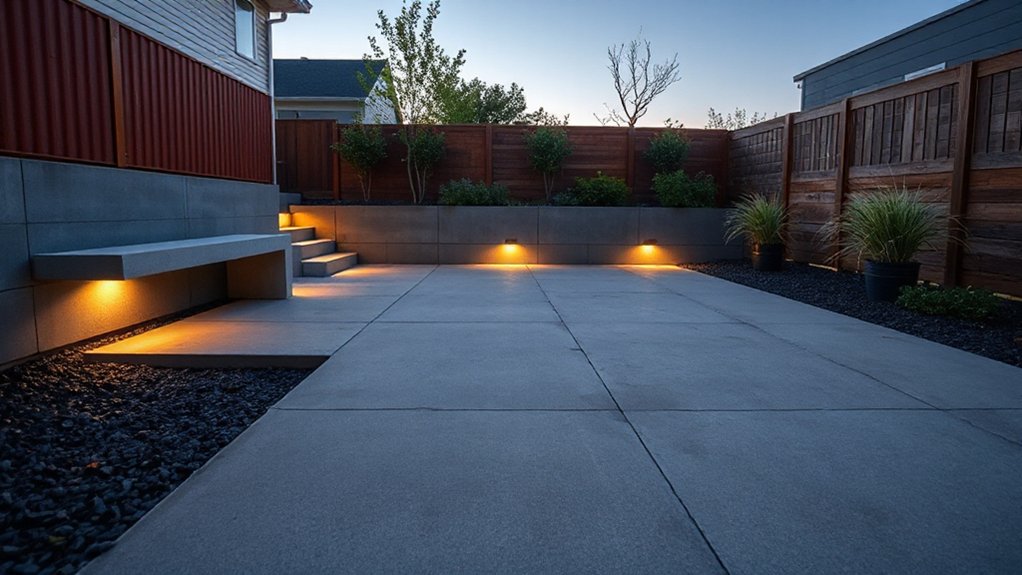
Although modern hardscaping often leans on crisp lines and low-maintenance materials, simple outdoor lighting is what makes those surfaces usable and visually sharp after dark. You’ll get the cleanest look by hiding sources: tuck LED strips under capstones, set low-profile step lights into risers, and graze textured walls to reveal depth without glare.
Aim for 2700–3000K warmth to keep concrete and metal from feeling cold, and spec fixtures with proper IP ratings for wash-down zones. If you want fast installs, solar powered fixtures can mark paths and edges with no trenching, but choose high-lumen models with replaceable batteries.
For control, integrate smart lighting systems so you can dim scenes, schedule run times, and match fireplace evenings automatically.
Frequently Asked Questions
What Does Modern Garden Hardscaping Typically Cost per Square Foot?
You’ll typically pay $15–$50 per square foot for modern hardscaping, installed; premium stone, drainage, and detailing can hit $60–$100. Add budget for landscape lighting and outdoor furniture to align performance, aesthetics, longevity.
Do I Need a Permit or HOA Approval for Hardscaping Changes?
You often do—check your city’s permitting process and your HOA regulations before you build. It’s like a guardrail for your project. Verify setbacks, drainage, and retaining-wall thresholds, then get written approvals to avoid fines.
How Can I Ensure My Hardscaping Design Is Accessible and Ada-Friendly?
Guarantee accessibility by designing Accessible pathways with firm, slip-resistant surfaces, 36-inch minimum clear width, gentle slopes, and flush connections. Add ADA compliant features like compliant ramps, handrails, tactile warnings, and turning radii for wheelchairs.
What Seasonal Maintenance Schedule Keeps Modern Hardscaping Looking New?
You’ll keep hardscaping fresh by pressure-washing quarterly, re-sanding joints in spring, sealing stone/concrete in fall, checking drainage after storms, doing seasonal pruning, and inspecting outdoor lighting monthly for alignment, moisture ingress, and LED output.
How Do I Choose a Contractor and Evaluate Hardscaping Bids?
You’ll dodge costly surprises by comparing hardscaping bids line-by-line: confirm scope, timeline, and allowances. Verify contractor credentials, insurance, and references. Demand transparent material selection specs, warranty terms, and change-order rates before you sign.
Conclusion
You build your modern garden like a quiet city: broad pavers become boulevards, crisp walls hold the grade like zoning, and paths move you with intention. You choose materials that age clean, detail bases and drainage so nothing shifts, and tuck seating and planters into the grid. You keep water and fire minimalist, efficient, code-smart. Then you thread low-glare lighting through the lines, and your landscape performs—sleek, stable, and current.