
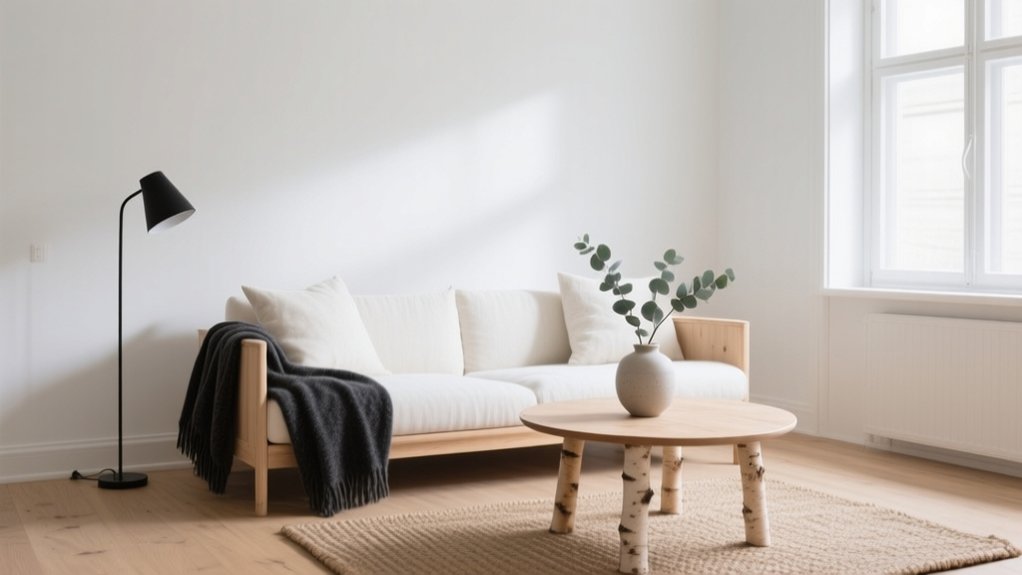

To get the Scandinavian look with furniture, start with one or two clean-lined anchor pieces—a low-profile sofa, bed, or dining table—then build around a neutral palette of warm whites, soft greige, and muted blues or sage. Choose light woods like oak, ash, or birch in matte finishes, and keep silhouettes slim with tapered legs and open bases. Add warmth through bouclé, wool, cane, and a flatweave rug, while keeping surfaces uncluttered. Next, you’ll see how to perfect layout and avoid common missteps.
Key Takeaways
- Choose 1–2 low-profile, clean-lined anchor pieces, then keep supporting furniture slim-legged and visually light.
- Stick to a neutral palette (warm whites, greige, pale gray) with muted accents like sage, dusty blue, or clay.
- Prioritize pale woods (oak, ash, birch) in matte finishes, and keep wood undertones consistent for a cohesive look.
- Arrange for flow: define pathways, float seating off walls, and leave negative space to maintain long, open sightlines.
- Add warmth with restrained texture—wool, bouclé, linen, cane—and limit decor to a few intentional statement pieces.
Define Scandinavian-Style Furniture (Materials, Shapes, Colors)
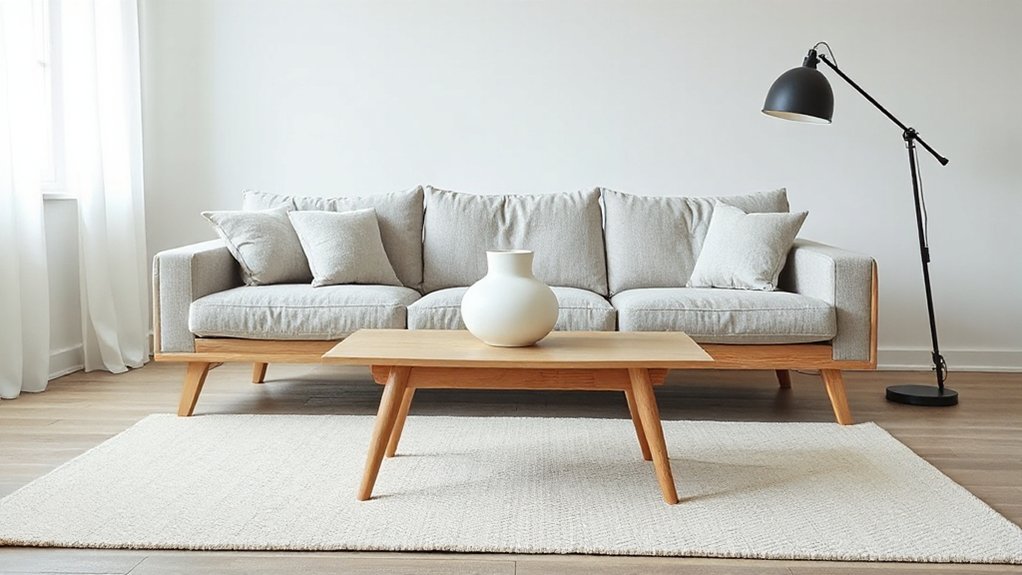
Although Scandinavian style keeps evolving, its furniture stays rooted in a clear formula: honest materials, clean shapes, and a light, calming palette. You’ll spot lots of oak, ash, birch, and walnut, often paired with wool, linen, leather, or matte metal accents. Choose pieces that celebrate grain and texture rather than hiding them under heavy stain or gloss.
Shapes stay simple and functional: tapered legs, slim frames, soft curves, and minimal hardware. You want visual “air” under and around furniture, so bulky silhouettes feel off-brand. Color palettes lean white, warm neutrals, and pale gray, then add muted blues, sage, or clay for depth. Prioritize furniture craftsmanship—tight joinery, durable finishes, and thoughtful details—so each piece looks effortless and lasts.
Start With 1–2 Scandinavian Anchor Pieces (Sofa, Bed, Table)
Before you buy a dozen “Nordic” accessories, pick 1–2 anchor pieces that instantly set the Scandinavian tone—typically a sofa, a bed frame, or a dining table—then let everything else support them. Choose one with clean lines, slim arms/legs, and a calm, tailored silhouette so the room feels airy, not busy.
Lock in your Color palettes next: soft neutrals, muted blues, charcoal, or warm greige, and keep big upholstery and surfaces in one or two core tones. Then scale everything around the anchor’s proportions—rug size, lighting height, and side tables should feel intentional, not cramped. Finally, edit your decorative accessories: a single statement vase, one textured throw, or two graphic prints beats a shelf of clutter. You’ll get that effortless, modern Scandinavian balance.
Choose Light-Wood Scandinavian Pieces (Oak, Ash, Birch)
Once you’ve chosen your anchor piece, reinforce that Scandinavian calm with light-wood furniture—think oak, ash, or birch—to keep the room bright and visually weightless. Use these species for side tables, dining chairs, bed frames, or shelving so daylight bounces around instead of being swallowed by dark finishes.
Prioritize matte or lightly oiled surfaces; they read current and hide fingerprints better than high-gloss lacquer. For Sustainable sourcing, look for FSC-certified wood, transparent chain-of-custody notes, and brands that specify veneer thickness and core materials. Then dial in Color palette choices: pair pale woods with warm whites, soft greige, muted sage, or dusty blue, and keep metals to brushed nickel or black accents. If you’re mixing woods, stay within similar undertones so everything feels cohesive.
Prioritize Clean-Line Scandinavian Silhouettes (Avoid Bulky Forms)
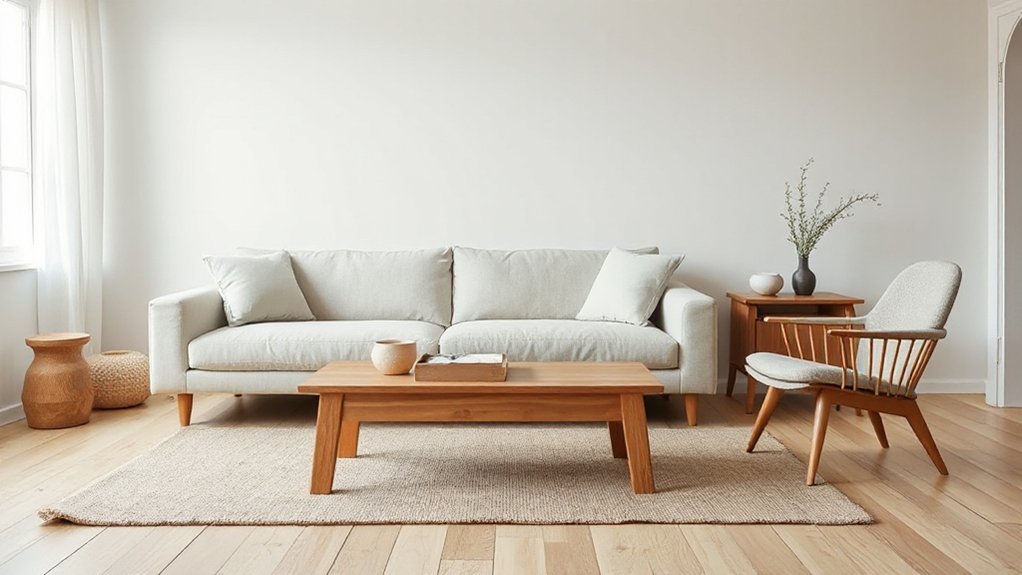
To nail the Scandinavian look, choose furniture with clean, uninterrupted lines and low visual weight, so the room feels open rather than crowded. Seek crisp silhouettes: squared arms, tapered legs, and simple slab fronts. Skip overstuffed sectionals, rolled arms, heavy carved details, and thick skirted bases that read dated and dominate sightlines.
Keep furniture proportions disciplined: a sofa with a tight back, a dining table with slim rails, and chairs with open frames. You’ll get that airy, modern calm without sacrificing comfort. Match these shapes to restrained Color palettes—soft whites, warm grays, muted greens, and black accents—so the form does the work. Finish with minimal hardware and integrated pulls to maintain uninterrupted geometry throughout the room.
Use Low-Profile Pieces to Keep Rooms Airy and Bright
Even if your space is small, low-profile furniture instantly makes it feel brighter by opening up sightlines and letting natural light travel. Choose sofas with slim arms, low backs, and raised legs so daylight reaches the floor and your room reads wider. Keep coffee tables and media consoles closer to the ground to reduce visual “stacking,” and float key pieces a few inches off walls to prevent shadowy corners. For smart color contrast, pair pale upholstery with a darker, grounded base (like black legs or a charcoal table) to define zones without heaviness. Limit decorative accessories to a few intentional items, and place them low or clustered so they don’t interrupt the horizon line. You’ll get that calm, airy Scandinavian clarity.
Add Texture Through Scandinavian Furniture Materials (Bouclé, Wool, Cane)
Once you’ve kept the room light with low-profile pieces, you can add depth with texture-forward Scandinavian materials. Choose bouclé or wool upholstery to warm up clean lines and make seating feel inviting without adding visual clutter. Bring in cane—on chair backs, cabinet doors, or side tables—to layer a natural weave that keeps the look airy and current.
Bouclé And Wool Warmth
While clean lines set the Scandinavian foundation, tactile materials make the room feel livable. Choose bouclé for soft, cloudlike seating that still reads modern; look for tight loops and high rub counts to guarantee textile durability in daily-use chairs and sofas. Layer in wool throws and flatweave rugs to add warmth without visual clutter, especially in open-plan spaces.
Use color psychology to keep the mood calm: creamy bouclé and oatmeal wool brighten low-light rooms, while charcoal or heathered gray grounds airy interiors and hides wear. Balance texture with restraint—one bouclé statement piece plus one wool layer per zone is enough. Finish with simple wood or matte black legs so the fabrics stay the focus, not the hardware.
Cane And Natural Weave
Because Scandinavian rooms can skew sleek, cane and other natural weaves add just enough texture to keep the space from feeling flat. Start with a single statement piece: a cane-backed lounge chair, a woven cabinet door, or a slim daybed with cane weaving to break up solid wood planes. You’ll keep the look airy while adding depth.
Stick to light oak, ash, and matte black frames so the weave reads modern, not beachy. Balance it with smooth surfaces—lacquer, stone, or wool upholstery—so the texture feels intentional. Choose tight, even weaves for a cleaner silhouette, and reserve chunky rattan for baskets or occasional accents. Prioritize sealed, well-finished natural materials to prevent snagging and make everyday cleaning easier with a soft brush.
Mix Scandinavian Furniture With One Vintage Statement Item
Pick one hero vintage piece—like a mid-century credenza or a sculptural armchair—and let it be the focal point. Keep the rest of your Scandinavian furniture simple, light, and low-profile so the room stays airy and modern. You’ll get character and patina without losing the clean lines and calm palette that define the Scandinavian look.
Choose One Hero Vintage
One standout vintage piece can give your Scandinavian setup the character it sometimes lacks without cluttering the room. Pick a “hero” item with unmistakable Vintage charm: a teak sideboard, a curved 1970s lounge chair, or an Italian brass floor lamp. Look for strong silhouette, honest materials, and a patina that reads intentional, not worn out.
Anchor your Retro revival by choosing a piece that’s functional first—storage, seating, or lighting—so it earns its footprint. Check scale before you buy: measure wall width, seat depth, and clearance for doors and drawers. Reupholster in wool bouclé or leather to modernize without erasing history. If you’re sourcing online, request close-ups of joints, veneer edges, and maker’s marks to avoid costly surprises later.
Balance With Scandinavian Simplicity
Once you’ve chosen a hero vintage piece, keep everything around it distinctly Scandinavian so the room reads curated, not chaotic. Anchor it with clean-lined seating, pale woods, and simple textiles, then let negative space do the heavy lifting. Use color theory: pull one muted hue from the vintage item and repeat it in two small places (a cushion and a rug stripe) while keeping the base palette warm white, greige, or soft oak.
Stay disciplined with furniture ergonomics, too. Choose chairs with supportive backs, a sofa with a comfortable seat depth, and tables at practical heights so the room feels effortless, not staged. Limit accessories to a few tactile pieces—linen, wool, ceramic—and keep lighting minimal but warm to soften the contrast.
Arrange Scandinavian Furniture With Space and Flow (Layout Rules)
Even if you’ve nailed the palette and materials, the Scandinavian look won’t land unless the layout feels open and easy to move through. Start by defining clear pathways first, then anchor the room with one low-profile focal piece, like a sofa or dining table, positioned to face light and conversation.
Use “float” rules: pull key seating a few inches off walls to create breathing room and better circulation. Keep sightlines long by choosing slim legs and open bases, and align heights so surfaces step down gradually. Let Color palettes guide zoning—light rugs and pale woods expand, while a single darker element marks a nook. For furniture placement, group pieces in tight, functional clusters, then leave generous negative space around them. Measure clearances before you commit.
Scandinavian Furniture Mistakes That Make Rooms Feel Cold or Cluttered

An airy Scandinavian layout can still miss the mark if your furniture choices and styling cues skew too sparse or too busy. If you buy only pale wood and white upholstery, you’ll drain warmth; add Color contrast with charcoal, cognac leather, or a muted forest green to ground the room. Don’t push every piece to the wall—floating a sofa or chairs creates intention and improves circulation.
Clutter happens when you skip editing and proper furniture layering. Limit surfaces, then give each zone one anchor (sofa, dining table, bed) and one supporting piece (side chair, bench, stool). Avoid tiny rugs that chop the floor; size up to unify. Finally, don’t over-accessorize open shelving—mix closed storage with a few curated objects so the room stays calm.
Frequently Asked Questions
What’s the Best Scandinavian Furniture Style for Small Apartments?
For small apartments, you’ll do best with Swedish-inspired, space-saving Scandinavian style: clean-lined multifunctional pieces, light woods, and low profiles. Keep minimalist decor, choose natural materials, and add smart storage like benches, nesting tables.
How Do I Scandinavian-Style My Home on a Tight Budget?
You can Scandinavian-style your home on a tight budget by thrifting light-wood pieces, choosing neutral textiles, and decluttering hard. Add Budget friendly decor like paper lamps, plus DIY Scandinavian accents—painted frames, peg rails, minimalist art.
Which Scandinavian Furniture Brands Are Most Durable and Long-Lasting?
You can’t go wrong with Carl Hansen & Søn, Muuto, and HAY—they build for decades. Funny enough, you’ll spot similar quality in Vintage finds. Choose Sustainable materials like solid oak, wool, and leather, and you’ll win.
How Can I Make Scandinavian Rooms Feel Cozy With Kids and Pets?
You’ll keep Scandinavian rooms cozy with kids and pets by layering pet friendly textiles, choosing wipeable rugs, and adding cozy lighting options like dimmable lamps. Pick rounded-edge furniture, stash toys in closed storage, and prioritize washable slipcovers.
Does Scandinavian Furniture Work Well With Open-Plan Kitchens and Dining Areas?
Yes—you’ll find it works: it flows, it breathes, it connects. You’ll unify zones with cohesive color palettes, and you’ll define functions through smart material choices like light wood, matte finishes, and durable textiles.
Conclusion
Nail the Scandinavian look by anchoring your space with one or two standout pieces, then build out with light woods, clean lines, and low profiles that keep everything bright and breathable. Layer in warmth with tactile materials like bouclé, wool, and cane, and add one vintage find for character. Leave negative space so the layout flows. Interesting stat: IKEA reports it sells about one BILLY bookcase every five seconds—proof simplicity scales.