
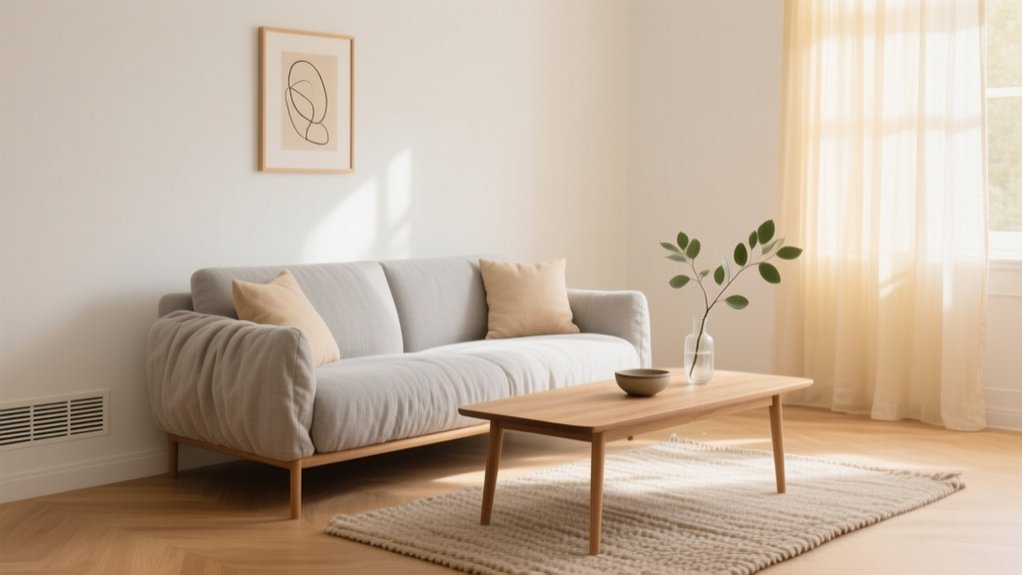

When you strip a space down to its essentials, it’s easy for minimalism to slip into sterile and uninviting. To prevent that, you need to think beyond “less stuff” and focus on sensory warmth: calibrated color temperature, layered textures, and intentional negative space. When you start with how you want the room to feel, you can reverse‑engineer every choice—from palette to lighting—so your minimalist home looks refined yet still…
Key Takeaways
- Define the emotional mood you want (calm, cozy, luxurious) and let it guide choices in layout, finishes, and movement through the space.
- Declutter to essentials, but keep a few meaningful, well-displayed personal items to add warmth, story, and character.
- Use a warm, cohesive color palette and layer natural textures—linen, wool, wood, and woven rugs—to soften minimalism.
- Choose fewer, high-quality furniture pieces with integrated storage, clean lines, and comfortable proportions to balance function and visual calm.
- Layer warm-temperature lighting (2700K–3000K) with dimmers—ambient, task, and accent—to create depth, soften edges, and avoid a sterile feel.
Start With How You Want Your Minimalist Home to Feel

Before you edit a single object or paint a wall white, define the emotional atmosphere you want your minimalist home to evoke—calm focus, quiet luxury, cozy retreat, or light-filled openness. This emotional connection becomes your design brief, guiding every spatial decision.
Translate that feeling into concrete criteria: color temperature, material palette, acoustic quality, and light levels. If you want calm focus, you’ll prioritize matte finishes, controlled visual stimuli, and clean sightlines.
For a cozy retreat, you’ll specify tactile textiles, warm tones, and intimate lighting zones.
Then map the functional flow. Track how you move through your space and align circulation paths, furniture placement, and storage solutions with the mood you’re targeting, so the atmosphere supports both behavior and comfort.
Declutter Strategically Instead of Stripping Everything Bare
Instead of stripping your rooms bare, you’ll edit them by prioritizing meaningful essentials that support both function and aesthetic cohesion.
You’ll declutter by daily zones—entry, living, kitchen, bedroom—so each space aligns with how you actually use it, not an abstract ideal.
And rather rather than tossing everything, you’ll integrate smart storage solutions that conceal visual noise while preserving the pieces you truly need and value.
Identify Meaningful Essentials
Although minimalism often gets mistaken for owning as little as possible, the real discipline lies in identifying your meaningful essentials and eliminating the visual noise around them. Instead of purging randomly, curate with intention. Ask how each object contributes to comfort, function, or narrative.
Use color psychology to decide what stays in view; prioritize hues that calm or energize you in the right zones. Then refine furniture arrangement so every major piece supports traffic flow, conversation, and light.
Retain only what passes a strict relevance test:
- Items you use daily or weekly with a clear, non-duplicated function
- Pieces with strong emotional resonance that still harmonize visually
- Objects that reinforce your design concept through material, form, or color
Declutter By Daily Zones
When you declutter by daily zones rather than by room or category alone, you align minimalism with how you actually live in the space. Start by mapping your routines: where you drop keys, prep coffee, answer emails, do skincare. These activity hubs reveal true clutter zones, not just messy rooms.
Then, edit each zone according to function. In an entry zone, keep only weather gear, keys, and bags; in a work zone, restrict surfaces to current tools and a few visual anchors. Calibrate quantity to frequency of use, not sentiment.
Integrate discreet storage solutions—like slim consoles, lidded trays, or wall-mounted organizers—right at the point of use. This creates streamlined, visually calm stations that feel intentional, not stripped or sterile.
Store, Don’t Just Toss
Because minimalism often gets misinterpreted as radical purging, you need a more nuanced approach that prioritizes intentional storage over indiscriminate tossing. Instead of emptying your rooms, design a concealed infrastructure of storage solutions that supports daily living while preserving visual calm.
Evaluate what you use seasonally, sentimentally, and functionally, then allocate it to designated zones.
Use clutter management as a design exercise: every object either earns display status or gets a precise, hidden home. Prioritize integrated millwork and dual-purpose furniture to avoid random bins.
- Install built-ins that align with architectural lines for seamless volume.
- Choose coffee tables and benches with interior compartments.
- Employ labeled, uniform containers inside closets for visual order.
Use Warm Color Palettes to Soften Minimalist Rooms
Even in a pared-back interior, a warm color palette calibrates the mood, preventing your minimalist rooms from feeling sterile or austere. You can still privilege negative space and clean lines, but shift the chromatic temperature.
Lean into soft whites with cream or ivory undertones, warm taupes, and muted terracottas instead of stark gallery white and cool grays.
Use color psychology deliberately: warm hues visually advance, creating a sense of proximity and emotional warmth, while cool tones often recede and feel distant.
Introduce a controlled gradient—walls in a warm neutral, millwork in a slightly deeper shade, and accents in saturated rust, camel, or ocher.
Keep the palette tightly edited to preserve minimalism, but assure every surface reads inviting, not clinical.
Layer Textures and Textiles for Cozy Minimalism
To keep minimalism warm and livable, you’ll rely on a sophisticated interplay of textures rather than added ornament.
Start by mixing soft and structured elements—think boucle with leather or linen with metal—to create visual and tactile contrast within a restrained palette.
Then layer natural fiber textiles and select a few tactile accent pieces to introduce depth, comfort, and sensory richness without disrupting clean lines.
Mix Soft And Structured
While minimalist interiors prioritize clean lines and restraint, they feel inviting when you deliberately balance soft and structured elements through layered textures and textiles. You’re aiming for soft contrast against clear geometry, so each surface reads as intentional rather than sparse.
Pair rigid silhouettes with tactile finishes to achieve structured balance that still feels livable.
- Combine a tailored sofa with dense cushions and a finely textured throw to soften its rectilinear frame without adding visual clutter.
- Offset a sharp-edged coffee table with an upholstered ottoman or boucle accent chair to diffuse the hardness of the form.
- Layer flat-weave rugs with plush upholstery and crisp window treatments so your planes, volumes, and textiles interact, creating depth while preserving a disciplined, minimalist envelope.
Layer Natural Fiber Textiles
Once you’ve established a balance of soft and structured forms, you anchor that harmony with natural fiber textiles that add warmth without visual noise. Focus on natural fibers like wool, linen, cotton, and jute; they introduce subtle texture while preserving a restrained palette.
Prioritize high-quality weaves—bouclé, basketweave, and slubbed finishes—to create depth without clutter. Use deliberate textile layering rather than piling on accents. Pair a flat-woven wool rug with a lighter linen curtain, then add a tightly edited combination of a linen duvet and cotton percale sheets.
Vary weight and weave, not color, to maintain cohesion. Repeat select materials across the room to create rhythm, so the space feels intentionally composed, not sparsely furnished.
Add Tactile Accent Pieces
Even in a rigorously edited space, you need a few tactile accent pieces to convert visual simplicity into physical comfort.
When you introduce tactile textures strategically, you preserve clean lines while enriching the haptic experience of the room. Prioritize objects that invite touch and create subtle contrast against smooth, minimal surfaces.
Use a restrained palette of sensory accents so each piece feels intentional, not decorative clutter:
- Sculptural wool or bouclé throw pillows that visually soften angular seating
- A low-pile, textured area rug that grounds the room and adds underfoot warmth
- A solid wood or stone side table with a distinct hand-feel—ribbed, chiseled, or honed
Assess every accent by asking: does it enhance comfort, or just occupy space? Keep only what earns its place.
Choose Fewer, Better Pieces of Furniture and Decor
Instead of filling every corner, you curate fewer, higher-quality pieces that define the room’s function and visual hierarchy. Prioritize furniture with clean lines, durable materials, and ergonomic proportions. A single well-constructed sofa, a solid wood dining table, or an upholstered accent chair will anchor the space more effectively than multiple mediocre items.
You then layer in restrained decor that still carries presence. Select Vintage accessories with patina, sculptural lighting, and artistic accents that introduce contrast, color, and form without crowding surfaces.
Evaluate each object for both utility and aesthetic impact; if it doesn’t enhance circulation, comfort, or cohesion, omit it. By editing rigorously, you create negative space that allows every chosen element to read as intentional, warm, and inviting.
Add Personal Touches Without Creating Visual Clutter
While minimalism favors restraint, it doesn’t require you to strip away personality; you simply need to curate it with the same rigor you apply to furniture and finishes. Treat every personal object as a deliberate visual anchor, not background noise. Limit personal expression to a few high-impact pieces and integrate them into your existing color palette to maintain visual harmony.
Use a consistent framework for display:
- Consolidate photos and mementos into a single gallery plane, such as a gridded wall or linear shelf.
- Contain small objects in trays or vitrines so surfaces read as ordered compositions, not scatter.
- Rotate collections seasonally, storing the rest, so each item has breathing room and retains significance.
This way, your home feels intimate yet visually disciplined.
Make the Most of Lighting to Keep Minimalism From Feeling Cold
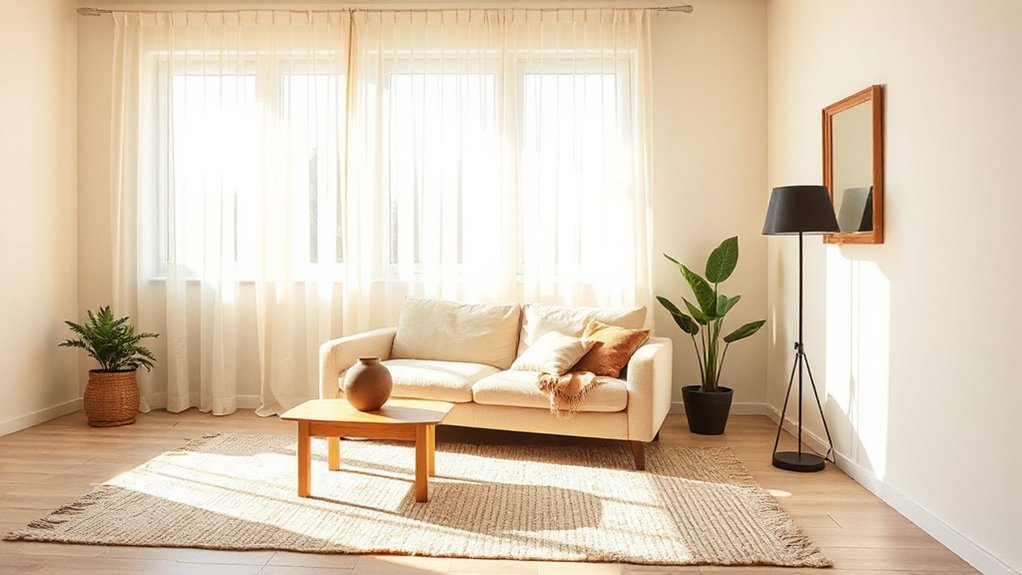
Because light shapes how you perceive every surface and volume, it’s the primary tool for preventing a minimalist space from feeling sterile. Begin by maximizing natural illumination: expose window frames, use sheer treatments, and specify matte finishes that diffuse daylight rather than create glare. This softens edges and reveals material texture.
At night, layer light sources to build intentional lighting ambiance. Combine ambient ceiling fixtures, task lighting at work zones, and low-level accent lamps that graze walls or highlight art.
Choose warm color temperatures (2700K–3000K) and high CRI bulbs to render colors accurately and avoid a clinical cast. Integrate dimmers everywhere so you can modulate intensity throughout the day, maintaining visual warmth while preserving your minimalist composition.
Frequently Asked Questions
How Can I Maintain a Minimalist Home With Young Kids or Pets?
You maintain minimalism by zoning storage, using closed cabinetry, and enforcing strict item quotas. Specify Kid friendly decor with rounded edges, wipeable surfaces, and anchored furniture. Select Pet safe materials: performance fabrics, low-VOC finishes, hideaway litter, and integrated feeding stations.
What Budget-Friendly Strategies Create Warm Minimalism Without Major Renovations?
You prioritize budget friendly texture: layer cozy accents like knitted throws, dense weaves, and plush rugs. Then, introduce warm color temperatures, low-lumen lamps, and natural materials—wood, linen, rattan—to engineer visual warmth without structural intervention.
How Do Cultural or Regional Styles Fit Into a Minimalist Home Aesthetic?
You integrate cultural influences and regional adaptations by curating essential artifacts, textiles, and materials, then editing aggressively. You’ll prioritize clean lines, restrained color palettes, and consistent visual rhythm so vernacular elements read as intentional focal points, not clutter.
Can I Practice Minimalism in a Rental Without Making Permanent Changes?
You absolutely can; you curate rather than construct. Prioritize sustainable decor, modular storage, and neutral textiles, then layer movable lighting. Use DIY projects—removable hooks, peel-and-stick treatments, custom slipcovers—to optimize functionality, visual harmony, and reversibility in any rental.
How Do I Transition From Maximalist Decor to Minimalism Without Feeling Deprived?
You shift by curating, not purging. Start editing collections into intentional vignettes, employ restrained color palettes, and use artistic layering of textures and materials so surfaces feel visually rich, ensuring minimalism reads as elevated, not deprived.
Conclusion
When you design with intention, minimalism doesn’t feel sterile—it hums with quiet warmth. You’ve edited with purpose, calibrated a cohesive palette, layered tactile materials, and curated furniture and lighting like a well-orchestrated composition. Now your home works hard and feels soft. Keep refining: question every new object, adjust lighting temperatures, and reassess flow. As you do, your minimalist space will function like a well-tuned instrument—precise, calm, and deeply inviting.