
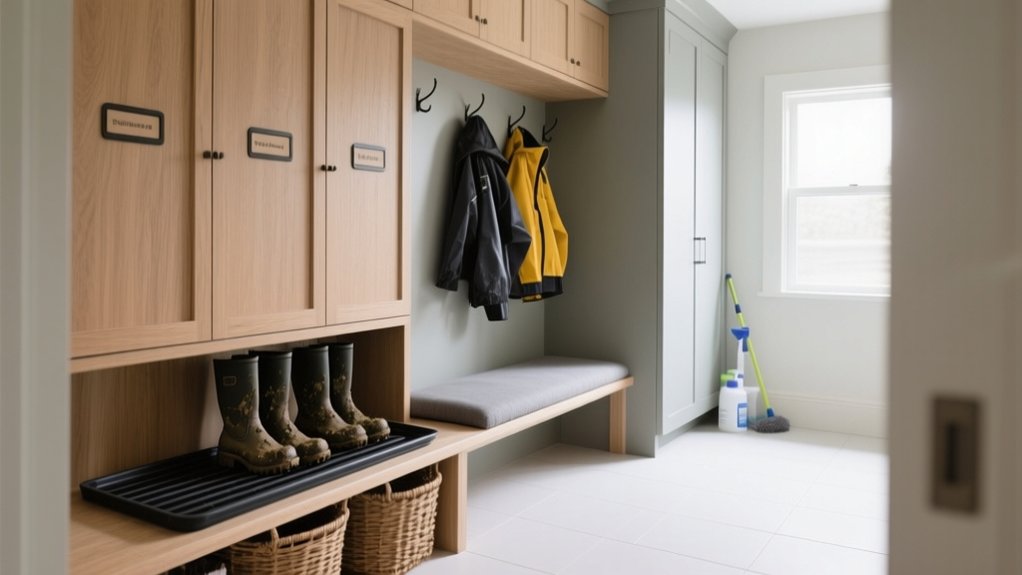

Create an organised bootroom by mapping your traffic flow first: put a clear drop zone one step inside the door and keep a straight path through. Use hardwearing flooring like porcelain tile or LVT with a coir runner, plus instant-on lighting. Store by category and frequency, keeping daily coats and shoes at arm height on hooks and open racks. Add a bench with 800mm clearance and a key tray. Next, you’ll see easy upgrades that keep it tidy.
Key Takeaways
- Plan zones around traffic flow: add a drop zone by the door and keep a clear straight path to the corridor.
- Organise storage by frequency and category, keeping daily items at arm height and occasional gear higher or deeper.
- Add a bench and landing strip for putting on shoes and parking keys, post, and passes to prevent surface clutter.
- Keep shoe storage ventilated with slatted racks, wall gaps, and drip trays so wet footwear dries quickly and doesn’t create mess.
- Install dual-level, labelled hooks per person with proper spacing, plus a hat shelf, to stop coats and bags piling up.
Plan Bootroom Zones Around Daily Traffic
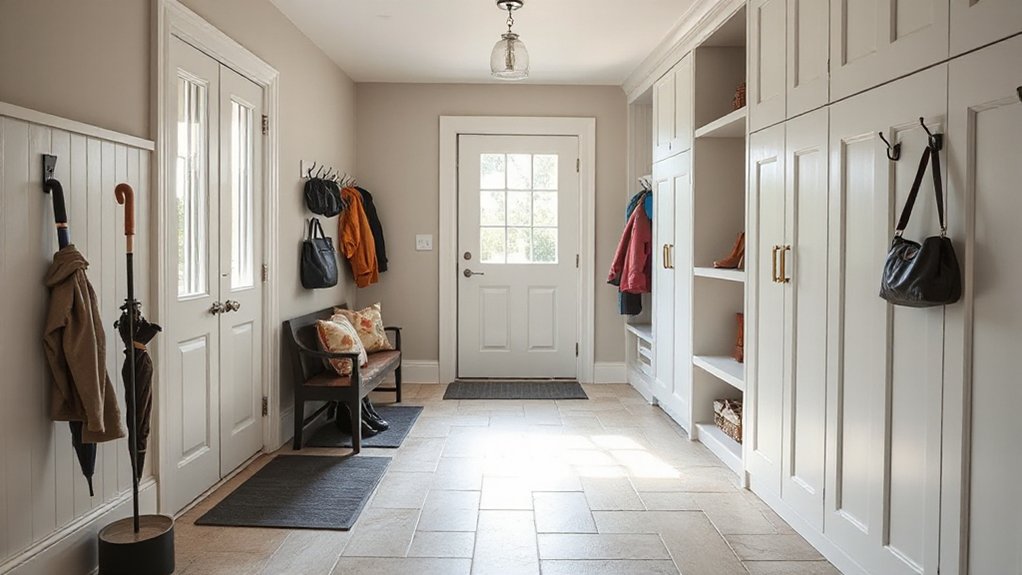
If you map your bootroom layout to how you actually come in and out of the house, you’ll stop clutter building up at pinch points. Stand at the door and trace the route: keys to the hallway, schoolbags to the kitchen, muddy boots to the back garden. Place a clear “drop” zone within one step of the threshold, and keep a straight walking line through to the main corridor so no one sidesteps piles. Use entryway lighting that switches on instantly (PIR or a bright ceiling fitting) so you don’t fumble in winter evenings. Choose flooring materials for your traffic: porcelain tile for wet wellies, LVT for warmth, and a coir runner where grit lands. Keep door swing and pram turning space clear.
Choose Bootroom Storage by Category and Frequency
Because you’ll never keep a bootroom tidy by shoving everything into one cupboard, sort storage by what the item is and how often you grab it. Put everyday shoes, coats, and school bags at arm height, with hooks and open shelves you can reach one-handed. Keep occasional kit—walking boots, wellies, spare gloves—higher up or deeper back so it doesn’t block the daily flow.
Group by category: wet gear, pet leads, umbrellas, sports bits, cleaning supplies. Use stackable storage bins for each group, sized to your shelves so they don’t slump or waste space. Add simple label systems (printed or wipe-clean) on the front and lid, so anyone in the house can put things back properly, even in a rush.
Add a Bootroom Bench and Landing Spot
Once you’ve sorted your storage, add a proper bench and a clear landing spot so you can sit to pull boots on, drop bags without blocking the doorway, and keep muddy kit contained. Fix the bench along the longest wall, leaving at least 800mm clear to pass, and choose a height around 450mm for easy sitting. Add a wipe-clean cushion for Seating comfort, and tuck a low basket underneath for gloves and dog leads.Create a landing strip: a small tray or shelf at elbow height for keys, passes, and post, plus a lidded tub for school letters. Install two hooks per person above the bench, spaced 200mm apart, and add a mirror for quick checks. Finish with coordinated paint and oak or matte-black hardware for aesthetic design.
Keep Bootroom Shoe Storage Dry and Ventilated

Where does the damp come from in a bootroom? It’s tracked in on rainy school runs, dog walks, and muddy fields, then trapped when shoes sit in closed cupboards. Even Weatherproof footwear holds water in seams and linings, so you need airflow, not just storage.
Choose open slatted shelves or wire racks, and leave a 25–50mm gap from the wall so air can move behind pairs. Add a drip tray with a raised grid so soles don’t sit in puddles. For Moisture control, fit a small extractor fan or a continuously running low-energy vent, and crack a window when you can. Use silica gel or rechargeable dehumidifier blocks in drawers, and rotate shoes so yesterday’s pair dries fully before it’s worn again.
Prevent Bootroom Coat Clutter With the Right Heights
Stop coats piling on the bench by fitting dual-level hooks, with an upper row for adult jackets and a lower row for lighter layers. Set the lower hooks at child-friendly heights so kids can hang their own coats without dragging hems on the floor. You’ll keep it tidy by giving each person a dedicated coat zone, labelled if needed, so everything goes back in the same place.
Install Dual-Level Hooks
Because coats pile up when everyone reaches for the same hook height, you’ll keep your bootroom tidier by installing dual-level hooks. Fit a top rail for longer outerwear and occasional guests, then a lower rail for everyday jackets and bags, so items don’t stack and snag. Choose robust dual hooks with a wide backplate, and fix them into studs or use proper wall plugs for masonry, especially in older UK terraces with crumbly plaster. Keep an organisational hierarchy: reserve upper hooks for bulky coats, scarves, and umbrellas; keep lower hooks for frequently used layers and dog leads. Leave 150–200mm between hooks to stop sleeves overlapping. Finish with moisture-resistant paint or a wipeable panel behind hooks.
Set Child-Friendly Heights
Even if you’ve fitted plenty of hooks, your bootroom will still look chaotic if children can’t reach their own storage. Set hooks and cubbies at child-friendly heights so they can hang coats and bags without help, keeping traffic flowing at busy school-run times. Aim for roughly 90–110cm from the floor for primary-age kids, and 60–80cm for toddler accessibility.
Prioritise Child safety: use rounded pegs or timber hooks with no sharp edges, and fix them into studs or with suitable wall plugs for plasterboard. Keep heavy items (helmets, sports kit) on higher shelves, not low hooks that can be pulled. Leave a clear 15–20cm between hooks so sleeves don’t tangle, and add a low bench for stable changing.
Add Dedicated Coat Zones
One simple change keeps coats from piling up: give each person a dedicated zone at the right height. Fix a coat rack for adults at about 170–180cm from the floor, and a lower row for kids at 110–120cm so they can hang their own coats. Label hooks with names or colour dots to stop mix-ups on school runs. Leave 10–15cm between hooks for puffer jackets, and add a slim shelf above for hat storage so beanies don’t end up in pockets. If space is tight, use a vertical rail with staggered hooks and a small basket per person underneath. Keep one spare hook for guests, and you’ll avoid overflow.
Use Bootroom Wall Storage for Small Grab-and-Go Items
When you’ve only got a minute to get out the door, bootroom wall storage stops small essentials from vanishing into baskets and coat pockets. Fit a narrow peg rail by the door for keys, dog leads and lanyards, and add labelled Wall hooks at adult and child height so everyone can reach their own bits.
Mount a shallow shelf with a lip for sunglasses, post and hand sanitiser, and fix small Storage baskets underneath for gloves, caps, headtorches and bike lights. Use sticky labels or a label maker so items go back fast. Keep one “today” basket for school letters and parcels, and empty it each evening. If you rent, use adhesive hooks and a lightweight wire rack to avoid drilling.
Set Up a Bootroom Wet-Weather Cleaning Station
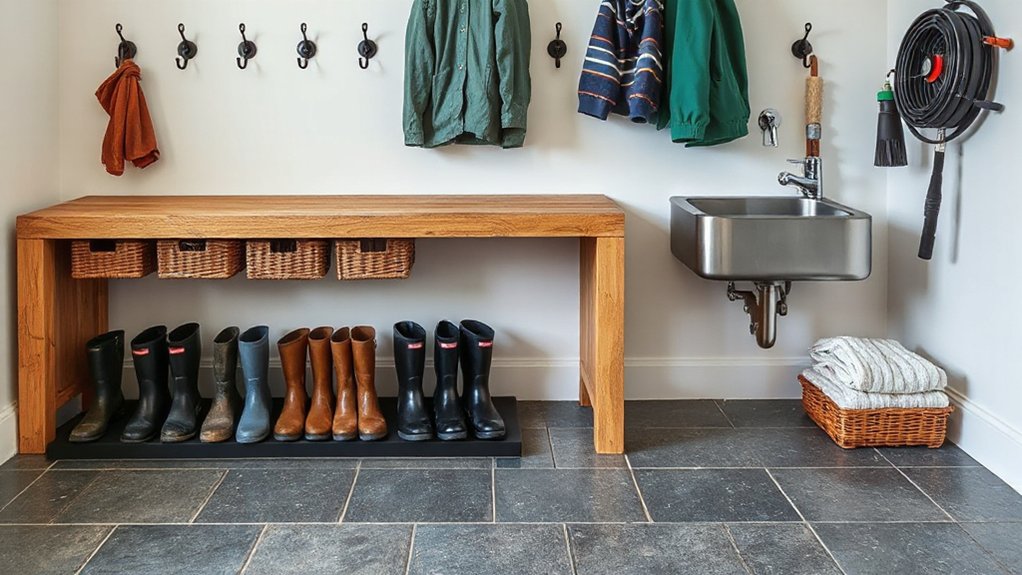
After a soggy walk or a muddy school run, a bootroom wet-weather cleaning station lets you deal with mess before it spreads through the house. Keep it by the door, on a washable mat or tray, so drips don’t reach your hallway carpet. Include a stiff brush and cloths for Shoe cleaning, plus a small bucket for warm water and a splash of washing-up liquid.
- Fit a wall hook rail for Wet weather gear, and add a drip tray underneath for damp coats and umbrellas.
- Store a boot scraper or brush set at floor level, and keep spare laces and polish in a lidded caddy.
- Add a compact hand sprayer and microfibre towels, so you can rinse mud off soles fast.
Create a 5-Minute Bootroom Reset Routine
Although a bootroom can look chaotic in minutes, a 5‑minute reset routine keeps it functional and stops mud, damp kit, and stray shoes building into a weekend job. Set a timer as you come in: scrape soles, hang coats on labelled hooks, and put wet gloves on a drying rack, not the radiator. Tip grit from the tray, wipe the bench, and spray deodoriser inside wellies for Shoe hygiene. Next, pair shoes and return them to the right cubby; keep school shoes at child height and walking boots up top. Empty pockets into a small bowl, then chuck rubbish straight in the bin. Once a week, rotate Seasonal storage: swap beach kit for scarves, and bag outgrown footwear. Repeat daily.
Frequently Asked Questions
What’s the Ideal Bootroom Size for a Family of Four?
You’ll want about 2–3m² (roughly 1.5m x 2m) for a family of four. Fit shoe storage along one wall, add sturdy coat racks, and keep 90cm clear for pram access.
Which Flooring Materials Are Most Durable for Muddy, Wet Bootrooms?
You’ll get the best durability with porcelain tiles, luxury vinyl (LVT), or sealed concrete—proper Water resistant flooring made from Heavy duty materials. You’ll clean mud fast, avoid swelling, and handle wellies; add non-slip finishes.
How Can I Add Lighting That Makes the Bootroom Feel Brighter and Safer?
Like a lighthouse at your doorstep, you’ll brighten and secure the bootroom with layered ambient lighting plus PIR ceiling spots. Add IP65 safety fixtures by the door and over benches, and choose warm LEDs.
What Are the Best Budget Upgrades to Organise a Bootroom Quickly?
Add wall hooks, a slim shoe rack, and stackable boxes for quick Storage solutions and better footwear organization. Use labelled baskets, a boot tray, and an over-door organiser. Shop IKEA, Dunelm, and B&Q for budget-friendly fixes.
How Do I Childproof a Bootroom With Hooks, Benches, and Storage Units?
Turn sharp chaos into calm safety: mount wall mounted hooks above head height, add soft-close hinges, anchor storage units to studs, choose cushioned benches with rounded corners, fit non-slip mats, and lock cleaning products.
Conclusion
When you zone your bootroom for traffic, store by use, and add a bench with a clear landing spot, you’ll stop clutter before it starts. Keep shoes on ventilated racks, hang coats at the right heights, and use wall caddies for keys and dog leads. Add a wet-weather station for muddy wellies and brollies. Then do a five‑minute nightly reset—like winding up a pocket watch—so tomorrow’s school run starts calm.