
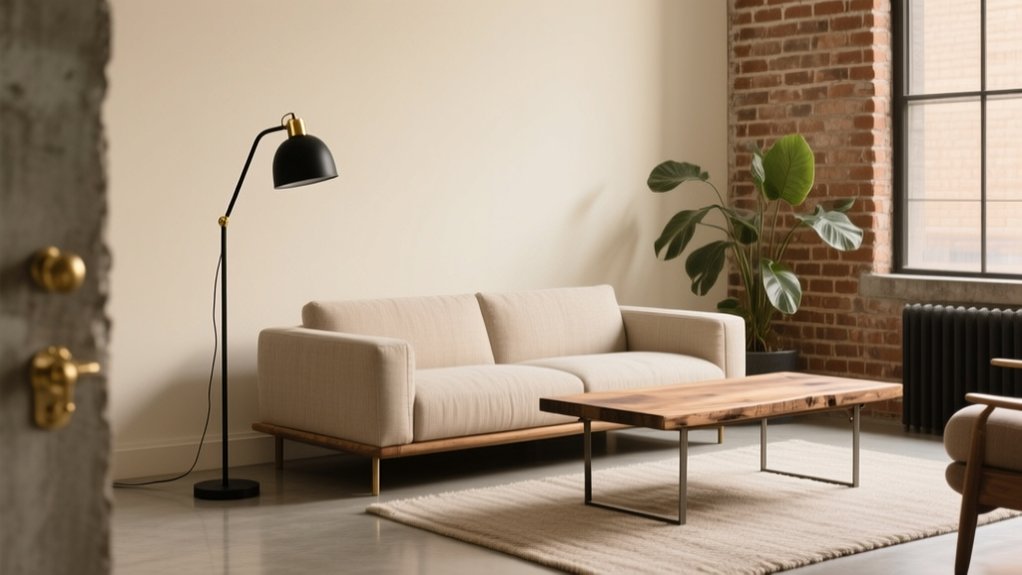

Use industrial pieces like a strong accent: choose one anchor item (a steel table or oversized pendant), then keep the rest pared back. Add just 2–3 supporting touches in matching finishes, and cap metals at two (matte black plus aged brass works well). Warm everything with wool rugs, linen curtains, and soft cushions in oatmeal and warm greys. Use 2700K LEDs and hide cables to avoid a cold, cluttered warehouse feel. There’s more to refine next.
Key Takeaways
- Choose one industrial anchor piece per room and keep surrounding furniture simple to avoid a cluttered, “theme” look.
- Stick to a restrained palette—warm greys, off-whites, and inky accents—to soften industrial edges and suit UK light.
- Limit metal finishes to two (e.g., matte black plus aged brass) and repeat them across lighting, hardware, and frames.
- Balance hard materials with soft textiles—rugs, linen curtains, wool throws—to add warmth, comfort, and better acoustics.
- Add only 2–3 functional industrial accents, and conceal cables and clutter so the space feels intentional, not workshop-like.
Start With an Industrial Anchor Piece (Choose 1)
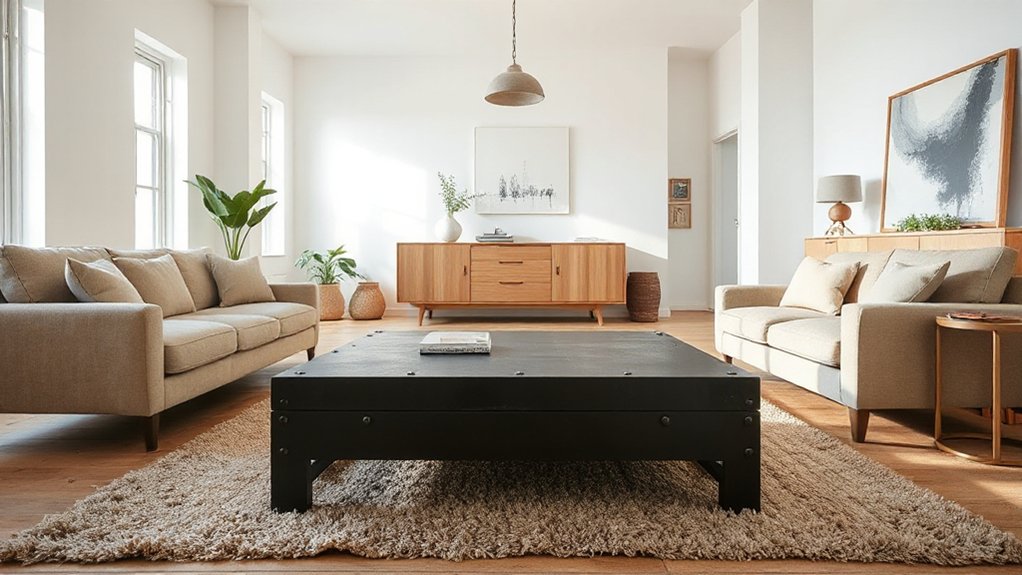
One well-chosen industrial anchor piece sets the tone without turning your room into a warehouse. Pick a single statement item you’ll see and use daily: a blackened steel coffee table, a reclaimed-wood dining table with metal legs, or an oversised factory-style pendant over the island. Keep the silhouette clean and the scale right for typical UK rooms; if it blocks walkways, it’s too much. Let it guide your Industrial color palettes: charcoal, warm greys, rust, and off-white work with British light and don’t feel harsh. Balance raw metal with soft textiles and painted walls. Skip clutter and choose quality: one solid anchor beats a mix of flimsy vintage industrial accessories. Aim for calm contrast, not chaos.
Pick 2–3 Supporting Industrial Accents
Once you’ve set your anchor piece, add just 2–3 supporting industrial accents to reinforce the look without tipping the room into “theme pub.” Think functional, repeatable touches: a slim black metal shelf or console, an aged-brass wall light, and a single factory-style mirror with a steel frame. Keep finishes consistent: stick to one dark metal and one warm metal so the room feels considered. If you’ve got exposed brick, let it lead—choose accents that sit slightly off the wall and cast clean lines rather than cluttering the surface. Swap novelty for restraint: one piece of Vintage signage is enough, ideally small and framed, not a wall of slogans. Aim for pieces that earn their keep—storage, lighting, reflection—so the industrial note reads intentional, not costume.
Warm Up Industrial Decor With Textiles
To stop industrial pieces feeling cold, you can soften the room with textiles. Layer rugs underfoot for instant warmth, then bring in linen and wool through cushions and throws. Finish with curtains to mute hard edges and make the space feel more liveable year-round.
Layer Rugs For Softness
Although industrial interiors thrive on concrete floors and exposed finishes, layered rugs stop the room feeling stark. Start with a hard-wearing, low-pile base that can handle muddy shoes and city grit, then add a smaller rug to define the seating area and soften the echo. Layer rugs so the top one sits under the front legs of the sofa and chairs; you’ll anchor the arrangement without cluttering walkways. Choose subtle pattern or tonal contrast to break up large expanses of grey, and keep shapes simple for a clean look. Use grippers or underlay to prevent slips on polished concrete or timber. Soft textiles underfoot make steel, brick, and black frames feel considered, not cold.
Add Linen And Wool
Layered rugs give you softness underfoot; linen and wool carry that warmth up through the room. In an industrial space, you’ll want textiles that soften steel and concrete without looking fussy, so stick to natural fibres and calm tones—oatmeal, stone, charcoal, and inky navy work well in UK light. Dress the bed with Linen bedding, slightly rumpled for an easy, lived-in feel that balances sharp metal lines. Add Wool throws on the sofa or a leather chair; you’ll get instant texture, plus practical insulation for draughty Victorian terraces and modern lofts alike. Choose chunky knits for depth, or fine merino for a cleaner look. Keep patterns minimal, and let weave and weight do the work.
Use Curtains To Soften
When brick, steel, and concrete make a room feel a bit stark, curtains add instant warmth and calm without fighting the industrial look. Choose full-length drops to soften hard lines, and hang them high to lift the ceiling and balance heavy beams or metal shelving.
For the best result, use curtain layering: pair a sheer voile for daytime privacy with a heavier wool-blend or lined cotton for evenings and draught control. You’ll keep that warehouse edge while improving comfort in typical UK terraces and flats. Stick to muted greys, oat, or inky navy to echo steel and slate, then let fabric textures do the work—slubby linen, brushed cotton, or velvet for depth. Finish with simple black or brass poles, not fussy tiebacks.
Choose Warm Industrial Finishes (Matte, Aged, Black)

To keep industrial elements looking considered rather than harsh, choose finishes that feel warm and lived-in. Matte black reads calmer than shiny chrome, and it pairs neatly with oak, linen, and painted plaster. When you’re building Industrial color palettes, lean into off-blacks, charcoal, soft greys, and warm whites rather than stark contrasts that can feel clinical in a UK home.
Bring in aged metal finishes where you want depth: think antiqued brass on a wall light, darkened steel on a shelf bracket, or a patinated frame on a mirror. These tones disguise fingerprints, reflect less glare in winter light, and add character without shouting. Keep textures tactile—powder-coated, brushed, or waxed—so the room feels comfortable, not cold.
Limit Industrial Metal to Two Finishes Max
Although industrial style celebrates metal, your room will look calmer if you cap it at two finishes. Pick a lead finish for the biggest items—say black steel table legs or an aged iron shelving frame—then choose one supporting finish, such as brushed nickel for lighting or handles. Keep every other metal detail in one of those lanes, including curtain poles, sockets, and mirror frames, so your colour coordination stays intentional.
Use material contrast to add interest without adding more shine: pair matte metal with glass, concrete, leather, or painted cabinetry rather than introducing a third metal. If you’ve already got mixed hardware, swap the easiest pieces first (knobs, hooks, lamp bases) and repeat your two finishes across the room. This reads polished, not patchy.
Mix Industrial Pieces With Wood Tones
Even if you love the crisp edge of steel, wood tones stop industrial pieces from making the room feel cold. Pair blackened metal with warm oak, walnut, or smoked ash to add depth without losing that warehouse character. Aim for one dominant timber finish across key surfaces, then echo it in smaller touches—frames, shelving, or a tabletop—to keep the scheme cohesive. For Rustic contrast, set a reclaimed wood sideboard against concrete-look walls or a steel-framed mirror. You’ll soften hard lines and make the space feel more liveable, especially in UK terraces with limited light. For Vintage integration, mix in aged brass handles, a patinated timber stool, or an antique tool chest to bridge old and new.
Choose Slim Industrial Furniture (Open Legs, Airy Frames)
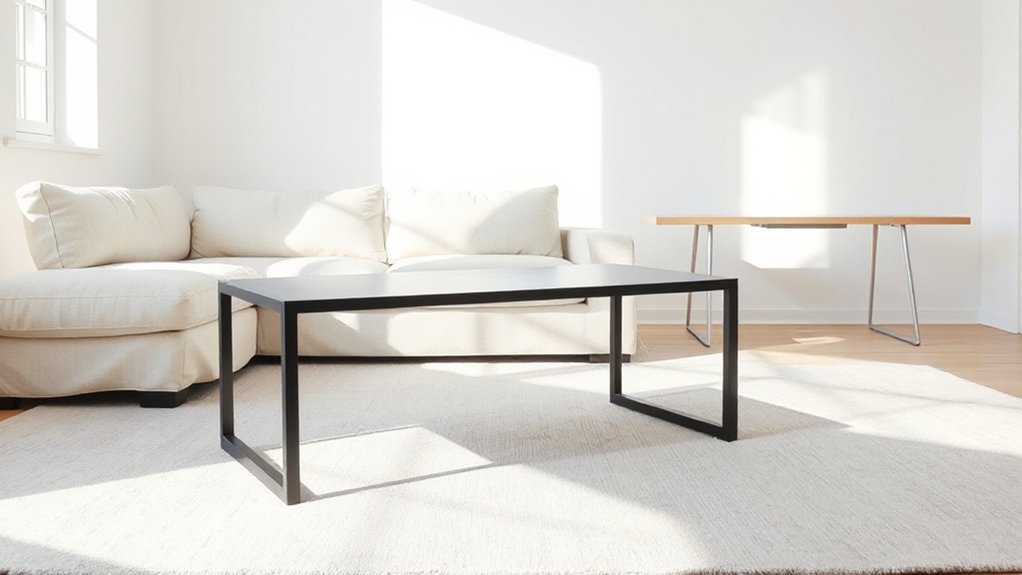
If you want an industrial look that still feels light in a UK home, choose slimline pieces with open legs and airy frames. They keep sightlines clear in narrower terraces and flats, so your room doesn’t read heavy or crowded. Favour blackened steel or powder-coated metal with minimalist frames, and let the flooring and rugs do the warming up.
- Pick a coffee table with open leg designs and a thin top, so it floats above the rug.
- Choose dining chairs with slender tubing and a small footprint to suit compact UK dining nooks.
- Go for a console or desk with a raised base and tidy cross-bracing, leaving skirting boards visible.
Stick to two industrial items per zone to maintain balance.
Use One Industrial Light as a Focal Point
Pick one industrial light that suits the room’s scale and finish, so it reads as a deliberate focal point rather than clutter. Soften its metal edge with warm textiles—think linen curtains, a wool rug, or upholstered dining chairs—to keep the space feeling liveable. Then frame it with clean lines and tidy sightlines, letting simple furniture and uncluttered surfaces make the fixture stand out.
Choose The Right Fixture
When you want an industrial look without tipping into warehouse chic, start with a single statement light and let it do the heavy lifting. Choose Industrial lighting with a crisp silhouette, then keep everything else quiet so it reads intentional, not themed. In UK homes, scale matters: a chunky pendant suits a dining table, while a slim arm works over a reading chair.
- Pick one hero type: pendant, wall arm, or oversized dome—don’t mix styles in the same zone.
- Mind Metal finishes: stick to one family (aged brass, blackened steel, or brushed nickel) to avoid visual noise.
- Use the right bulb: warm LEDs (2700K) soften glare and keep the mood calm.
Hang it low enough to feel purposeful, but clear sightlines.
Balance With Soft Textures
Although an industrial light brings crisp lines and hard metal into the room, you can keep it feeling lived-in by surrounding it with soft textures that absorb contrast. Let the fixture act as your single statement, then layer in a wool throw, linen cushions, and a deep-pile rug beneath to create deliberate textural contrast. Add full-length curtains in a matte weave to soften glare and improve acoustics, especially in flats with hard floors. Keep your color palette calm and British: warm greys, oat, ink, and muted greens help the metal read as considered, not cold. If the light hangs over a table, choose upholstered dining chairs or a leather bench to balance weight. Finish with a ceramic vase or paper lampshade nearby.
Highlight With Clean Lines
If you keep the rest of the scheme pared back, a single industrial light can read as intentional rather than shouty. Choose a simple pendant or cage fitting in blackened steel, aged brass, or matte enamel, then let it anchor the room. Keep surrounding forms crisp—straight-edged furniture, uncluttered shelves, and plain window dressings—so the fixture feels designed, not dumped in. Build the backdrop with Industrial color palettes: warm greys, off-whites, and inky accents. Finish with a couple of Vintage industrial accessories, but stop before it turns themed.
- Hang the light centrally over a dining table or kitchen island.
- Match metals to one other detail: tap, handle, or frame.
- Use a warm LED (2700K) to soften the hard lines.
Add Industrial Style With Small Decor Swaps
Because the quickest way to introduce an industrial edge is through the details, start by swapping a few small decor pieces rather than committing to major furniture. Replace glossy frames with matte black metal, and choose ribbed glass candleholders or enamel desk lamps for a subtle workshop note. Add Vintage signage in a single, well-placed print or plaque—think a railway-style typeface above a bar cart or in a hallway. Bring in distressed wood with a small tray, stacking boxes, or a picture ledge to warm up painted walls. Update hardware: fit knurled drawer pulls, aged brass hooks, or a simple steel rail in the utility area. Keep finishes consistent, and you’ll get impact without disrupting your existing scheme.
Avoid Industrial Style Mistakes (Warehouse, Clutter, Cold)
When you lean too hard into metal, exposed bulbs, and raw timber, industrial style quickly tips from curated to warehouse. Keep the look liveable by balancing hard finishes with warmth, editing your display, and softening acoustics. Aim for rustic charm without feeling like a loading bay, and let vintage authenticity show through a few well-chosen pieces, not a full set.
- Stop the clutter: limit open shelving, group objects, and hide cables in trunking or behind skirting.
- Warm it up: add wool rugs, linen curtains, and matte paint; choose warmer LED bulbs and dimmers.
- Break the grid: mix one industrial hero with rounded forms, plants, and a comfortable sofa in a textured fabric.
Frequently Asked Questions
What Industrial Decor Works Best in a Small Rental Apartment?
Choose compact Vintage lighting, like a cage pendant or adjustable wall lamp, to add character without clutter. Add Metal accessories—tray, hooks, slim shelving—in matte black. Keep surfaces clear, and stick to two finishes.
How Do I Balance Industrial Style With a Traditional Home’s Architecture?
Thread industrial notes through your period bones like a subtle bassline. Use Vintage contrasts—aged steel beside oak panelling—and aim for Textural balance with linen, wool, and leather. Keep lines clean, scale modest, lighting warm.
Which Paint Colors Complement Industrial Pieces Without Darkening the Room?
Choose warm whites, light greys, or soft greige to keep industrial pieces crisp without dimming the room. Build calm colour palettes with muted sage or dusty blue accents. Use paint techniques like matt walls, satin trim.
How Can I Childproof Industrial Furniture With Sharp Corners or Edges?
Fit clear corner guards, edge trim, and non-slip pads, and anchor units to the wall—key childproofing tips. Choose rounded hardware, soften metal edges, and check fixings weekly; these safety precautions keep rooms safer and stylish.
Where Can I Find Affordable Industrial Pieces That Still Look Authentic?
Coincidentally, you’ll spot authentic-looking industrial bargains where tradespeople and stylists browse: Vintage markets and Online boutiques. Check UK reclamation yards, Gumtree, Facebook Marketplace, and warehouse sales. Prioritise patina, solid welds, and provenance notes.
Conclusion
If you want industrial style without the warehouse feel, keep it edited: start with one anchor, layer just a few accents, and soften everything with warm textiles and matte, aged finishes. Limit metals to two tones, choose slim frames, and let a single statement light do the heavy lifting. It pays to stay restrained—Houzz reports 54% of homeowners prioritise a cosy, comfortable look. With a few smart swaps, you’ll hit that balance.