


Key Takeaways
- Define “low-maintenance” goals, budget, and weekly upkeep limits, then translate them into specific allowed tasks like mowing, pruning, and irrigation checks.
- Analyze site conditions—sun zones, drainage, soil type/pH, slopes, wind, and heat reflection—to match plants and hardscape to reality.
- Choose region-appropriate, drought-tolerant plants and place them by mature size, layering and grouping by hydrozones to reduce watering and pruning.
- Suppress weeds with 2–4 inches of mulch, dense groundcovers, and durable edging or trench edges that create clean, maintainable boundaries.
- Install efficient drip irrigation with separate valves, filters, and smart controllers, and use durable hardscape bases, mow strips, and weed-resistant joints.
Set Goals, Budget, and Maintenance Time

Before you pick plants or hardscape, define what “low-maintenance” means for your site by setting clear goals, a firm budget, and a realistic weekly time allowance for upkeep.
Decide your primary outcomes: privacy, outdoor dining, pet space, or curb appeal, and rank them so tradeoffs stay controlled.
Translate your time limit into tasks you’ll tolerate—mowing, pruning, irrigation checks, debris cleanup—and set performance targets like “one monthly trim” or “no seasonal replanting.”
Build a budget with line items for grading, edging, irrigation hardware, mulch, and labor, plus a contingency.
Use landscape aesthetics criteria (form, texture, year-round structure) to guide plant selection strategies that reduce interventions and replacement costs.
Document decisions in a simple scope and maintenance brief.
Read Your Site: Sun, Soil, Drainage, Slope
Where does water linger after a storm, and where does the sun actually land in midsummer? Walk the property at different times, then sketch a simple base map. Mark sun exposure zones (full sun, part shade, deep shade) using real observations, not assumptions from a compass app.
Test drainage with a 12-inch hole: fill it twice and time the second drain; slow percolation signals compaction or clay. Check soil composition by rubbing damp soil between your fingers and noting grittiness, stickiness, and organic matter; verify with a lab test for pH and texture.
Flag slopes and flow paths; water accelerates downslope and erodes bare soil. Plan grades, swales, and hardscape placement accordingly. Note wind funnels and heat-reflecting surfaces near walls and pavement.
Choose Climate-Smart, Low-Maintenance Plants
Choose plants that match your local climate so you’re not fighting heat, cold, or seasonal moisture swings.
Prioritize native species because they’re adapted to your region’s soils and pests, which cuts irrigation, fertilizer, and intervention.
Round out the palette with proven drought-tolerant varieties to stabilize performance during dry spells and reduce long-term water demand.
Prioritize Native Plant Species
Because native plants evolved in your region’s soils and weather, they typically need less irrigation, fertilizer, and pest control once established. Start by matching species to your site’s sun exposure, soil texture, pH, and drainage so they perform without constant correction. Source locally appropriate ecotypes when possible; they’re adapted to regional microclimates and seasonal timing.
Use native plants in layered groups—canopy, understory, shrub, and ground layer—to stabilize soil, suppress weeds, and reduce mowing. Prioritize long-lived perennials over short-lived ornamentals to cut replacement cycles.
For habitat creation, include nectar plants, host plants, and seed-bearing species, and avoid broad-spectrum pesticides that disrupt beneficial insects. Keep maintenance predictable by spacing for mature size, minimizing pruning, and using clean edging to define beds and prevent turf creep.
Select Drought-Tolerant Varieties
How do you keep a landscape attractive when water gets scarce? You start by specifying drought-tolerant cultivars proven in your heat zone and soil type.
Choose Drought resistant plants with deep root systems, small or waxy leaves, and low transpiration rates—traits that reduce irrigation demand without sacrificing structure or color.
In Xeriscape design, group plants by hydrozone, then place the lowest-water selections on high, fast-draining sites and reflective exposures.
Favor perennials and shrubs that don’t need frequent shearing, and avoid thirsty turf except in functional play areas.
Verify mature size so you won’t overplant and prune constantly.
Finally, match plants to irrigation: drip emitters for shrubs, micro-sprays only where needed. This keeps maintenance predictable and low.
Place Plants in Low-Care Zones (Group by Needs)
Once you map sun exposure, wind, and soil moisture across your yard, you can place plants into low-care zones by grouping those with matching water, light, and fertility needs. This Plant grouping strategy reduces corrective watering, over-fertilizing, and pruning because each bed runs on one set of inputs.
Define maintenance zones by how often you’ll irrigate, amend, and monitor, then match species accordingly. Keep high-demand plants near spigots and paths; push tough, self-sufficient selections farther out. Use consistent mulching and drip lines per zone to simplify scheduling and avoid mixed signals to roots.
- Delineate microclimates with flags and notes.
- Cluster plants by identical irrigation frequency.
- Separate heavy feeders from lean-soil natives.
- Edge zones cleanly to prevent creep and cross-care.
Low-Maintenance Lawn Alternatives (No-Mow Options)
If you want the look of a continuous green carpet without the weekly mowing, swap turf for a no-mow groundcover or hardscape-and-plant mosaic that fits your site’s light, foot traffic, and irrigation limits.
For sunny areas, install No mow grasses like fine fescue blends, buffalo grass, or sedge mixes; you’ll mow once or twice yearly, and they tolerate lean soils with moderate watering.
In shade, use low-growing sedges or shade-tough fescues and keep traffic to paths.
Where kids or dogs concentrate wear, consider Artificial turf over a compacted, free-draining base with perimeter drainage; you’ll avoid mud, but you must rinse and brush infill periodically.
In tight spaces, replace lawn with pavers plus planting pockets to cut irrigation demand.
Block Weeds With Mulch, Groundcovers, and Edging
You’ll suppress weeds fastest when you choose the right mulch type and maintain a consistent 2–4 inch depth that blocks light without smothering roots.
You can also install dense, low-growing groundcovers to shade bare soil and outcompete germinating weed seedlings.
To keep turf and aggressive plants from creeping back in, you’ll add clean edging lines that physically stop spread and simplify trimming.
Mulch Types And Depth
Because bare soil invites light-triggered weed seeds to germinate, mulch works best when you choose the right material and install it at the correct depth: spread 2–3 inches of shredded bark or wood chips (1–2 inches for composted fine mulch, 3–4 inches for coarse chips in beds) and keep it pulled back from stems and trunks to prevent rot.
Match mulch types to site conditions and monitor mulch depth yearly, topping off only where it’s thinned by wind, splash, or decay. Avoid “volcano” piles; they trap moisture and invite pests.
For clean edges and fewer blowouts, keep mulch below hardscape grade and refresh after storms. Use these checks:
- Choose shredded bark for slopes; chips for beds.
- Skip dyed fines near drains.
- Lay on moist soil, not bone-dry.
- Rake flat, don’t mound.
Groundcovers For Weed Control
Once your mulch depth is dialed in, living groundcovers add a second weed barrier by shading soil, cooling the surface, and outcompeting seedlings. Choose groundcover varieties matched to light, moisture, and traffic: sedges and sweet woodruff for shade, creeping thyme for sun, and low-growing junipers for dry slopes.
Plant densely on a tight grid so foliage closes quickly; aim for 6–12 inch spacing for fast knitters, wider for woody types. Water consistently the first season, then taper to encourage deep roots.
Keep mulch pulled back an inch from crowns to prevent rot, and top-dress lightly until coverage is complete. Combine these weed suppression techniques with periodic hand-pulling of escapes before they set seed.
Edging To Stop Spread
Even with mulch and tight-knit groundcovers in place, weeds and aggressive plants will still creep in at the edges unless you install a physical boundary. Use durable edging techniques to separate beds from turf, gravel, or paths, and you’ll reduce trimming, invasion, and erosion.
- Set a crisp trench edge: cut 4–6 inches deep, undercut slightly, and refresh once or twice a year.
- Install metal or composite edging: stake it level, leave a 1/2-inch reveal, and overlap joints to block runners.
- Combine edging with a weed barrier: pin fabric 3–4 inches short of the edge, then cap with 2–3 inches of mulch.
- Stop rhizomes: for bamboo or mint, use 24–30 inch root barrier panels and seal seams.
Inspect edges monthly and spot-cut intruders.
Set Up Low-Maintenance Irrigation That Saves Water
How do you keep plants thriving without wasting water or babysitting hoses? Start with Smart irrigation built around your plant zones. Group beds by sun exposure and water needs, then run separate valves for each zone so you don’t overwater low-demand areas.
Install dripline or micro-sprays for beds and shrubs; they deliver water at the root zone with minimal evaporation and overspray. Add a pressure regulator, filter, and flush valves to prevent clogging and keep flow consistent.
Use a weather-based controller plus a soil-moisture sensor to skip cycles after rain and fine-tune runtimes for Water conservation. Finally, set seasonal schedules and audit coverage quarterly, fixing leaks and adjusting emitters as plants mature.
Add Hardscaping to Cut Mud and Trimming
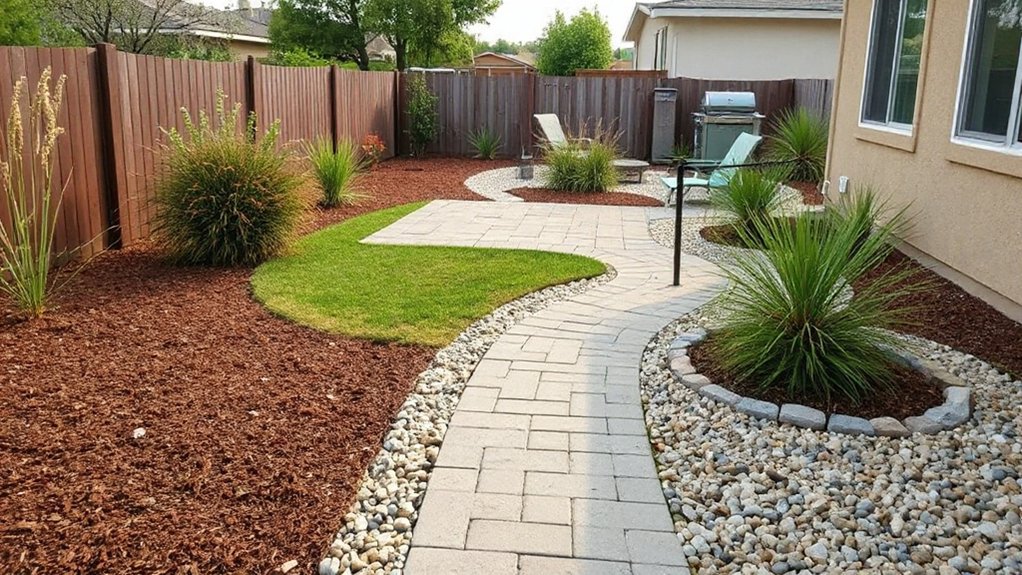
When you replace high-traffic lawn edges with hardscaping, you eliminate the muddy choke points and the constant string-trimmer work that chews up borders. You’ll get immediate hardscaping benefits: cleaner boundary shifts, fewer ruts, and less turf stress along paths, gates, and hose routes.
- Install pavers, flagstone, or compacted gravel on a geotextile base to stop soil migration.
- Add steel, aluminum, or concrete edging to lock lines and reduce blowout from wheels and foot traffic.
- Set a 6–12 inch mow strip along beds so you can mow tight and skip most trimming techniques.
- Use polymeric sand or stabilized aggregate in joints to limit weeds and prevent washouts.
Keep grades sloped away from structures, and tie hardscape to drainage swales for dry footing.
Avoid These Low-Maintenance Landscaping Mistakes
Although low-maintenance landscaping aims to reduce weekly chores, a few common missteps can lock you into more weeding, pruning, and repairs than a conventional yard. Don’t plant without matching species to sun, soil, and drainage; stressed plants invite pests and constant watering.
Avoid crowding beds—tight spacing forces repeated thinning and increases disease pressure. Skip fast-growing shrubs that demand frequent shearing; choose slow, well-formed cultivars and train them early.
Don’t rely on flimsy fabric under mulch; it tears, traps debris, and becomes a weed nursery. Install edging and proper grades so mulch and gravel don’t migrate onto hardscape.
Finally, don’t ignore structure: place native trees for long-term shade and root stability, then add seasonal color with tough perennials you can cut back once.
Frequently Asked Questions
How Do I Keep Deer and Rabbits From Eating Low-Maintenance Plants?
You’ll stop deer and rabbits by installing fencing, using Deer deterrents like repellents and motion sprinklers, and choosing rabbit resistant plants. You’ll rotate products, protect new growth with cages, and reduce cover nearby.
Are Low-Maintenance Landscapes Safe for Pets and Small Children?
Yes, you can keep them safe, like building a secure sandbox. Choose Pet friendly plants, avoid toxic species, mulch with cocoa-free options, fence hazards, lock chemicals, and design Child safe landscaping with soft edges, stable paths.
Do I Need HOA Approval Before Replacing My Lawn With Alternatives?
Yes—you’ll likely need HOA approval before replacing your lawn. Review HOA policies and local landscaping regulations, then submit plans and material specs. Get written approval, confirm irrigation changes, and document compliance to avoid violations.
How Can I Reduce Mosquitoes While Using Drought-Tolerant Plants?
You’ll reduce mosquitoes by eliminating standing water to stop Mosquito breeding, using drip irrigation, and choosing Drought resistant plants. Keep mulch thin, prune dense canopies, add airflow, and maintain clean gutters, basins, and saucers.
What Permits Are Required for Adding Patios, Gravel Paths, or Retaining Walls?
Patio slabs—often none; retaining walls—often permitted; gravel paths—usually exempt. You’ll check local Construction regulations and zoning requirements: setbacks, lot coverage, drainage, wall height. Don’t skip HOA rules or utility locates.
Conclusion
You don’t need a “perfect” yard to get a low-maintenance landscape—you need a system. Set clear time and budget limits, match plants to your sun and soil, and group them by water and pruning needs. Replace high-input turf with no-mow groundcovers, suppress weeds with mulch and crisp edging, and install efficient drip irrigation. If you worry the upfront cost is too high, remember you’re buying back weekends through fewer repairs, less water, and less labor.