


Scandinavian furniture helps you make a UK flat feel calmer and work harder. You’ll get clean lines, light-toned birch, ash, or pale oak, and matte, low-sheen finishes that hide dust and fingerprints. Choose slim frames on raised, tapered legs for easier vacuuming and better light flow, plus neat joinery and fuss-free storage. Add wool for warmth and breathability, and full-grain leather for wipe-clean durability. Next, see which pieces and layouts suit your space best.
Key Takeaways
- Scandinavian furniture blends clean lines with practical function, creating calm, uncluttered rooms that feel light and easy to live in.
- Look for light-toned woods like birch, beech, ash, or pale oak with matte, low-sheen finishes that highlight grain without orange tones.
- Choose quality craftsmanship: tight joinery, softened edges, and simple hardware for durability, stability, and a refined, understated look.
- Favor space-smart forms—slim frames, raised legs, wall-mounted storage, and nesting or drop-leaf pieces—to improve flow and cleaning in small homes.
- Prioritize sustainable, repairable materials: FSC/PEFC timber, durable wool or full-grain leather, and low-VOC finishes suited for long-term indoor use.
What Is Scandinavian Furniture Design?
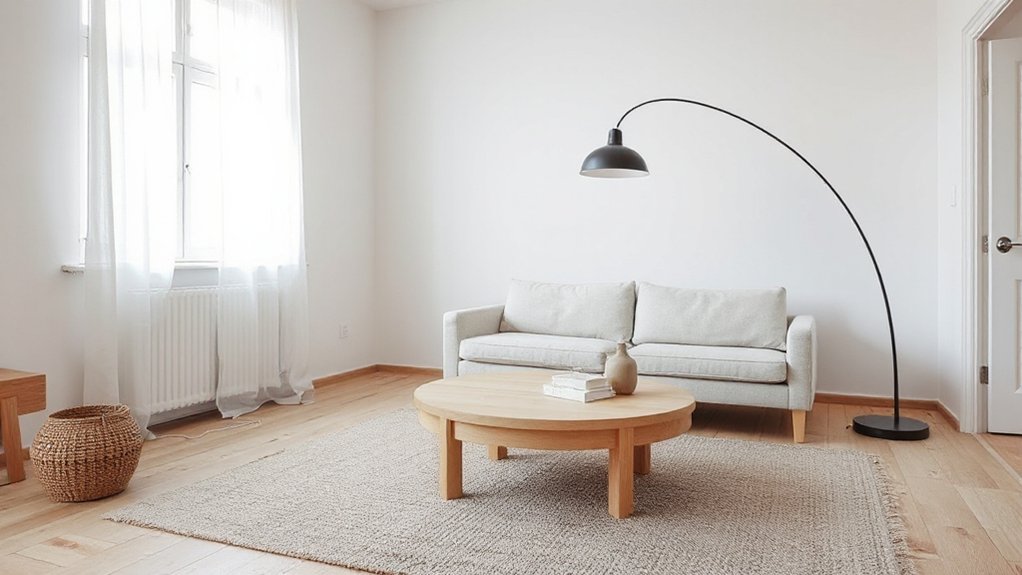
Although it looks effortless, Scandinavian furniture design follows a clear set of principles: clean lines, practical function, and a calm, uncluttered feel that suits everyday living. You’ll usually see light-toned woods, matte finishes, and simple silhouettes that don’t dominate a typical UK room size, from compact terraces to modern flats.
You define it by how it’s made and used: joints feel neat, edges stay soft to the touch, and storage works without fussy hardware. Artistic craftsmanship shows up in precise joinery, turned legs, and well-proportioned frames rather than heavy ornament. Sustainable sourcing matters too, so you’ll often find FSC-certified timber, durable textiles, and repairable components that extend lifespan. When you choose pieces with these cues, you get furniture that looks understated and performs reliably.
Which Scandinavian Furniture Traits Matter Most?
When you’re choosing Scandinavian furniture for a UK home, prioritise traits that improve day-to-day living rather than just the “look”. Our smaller rooms, central heating, and mixed weather demand pieces that cope with real use and easy upkeep while still feeling calm and light.
- Tight, well-finished joinery that won’t wobble on older floorboards
- Light-toned woods and matte finishes that hide dust and fingerprints
- Practical proportions: slim frames, raised legs, and easy vacuum access
- Comfortable ergonomics, especially for long sofa and dining sessions
- Sustainable sourcing, plus repairable parts for longevity and lower waste
Check for certified timber, hardwearing fabrics, and removable covers. If you like Vintage appeal, look for reissues or pre-owned pieces with intact frames and original hardware, then refresh upholstery locally.
What Scandinavian Furniture Pieces Should You Buy First?
Because Scandinavian design works best as a system, you’ll get the biggest day-to-day payoff by buying the “workhorse” pieces first: a supportive sofa with raised legs, a solid dining table and comfortable chairs, and smart storage like a sideboard or shelving that keeps clutter off the floor. Next, add a well-sized rug to zone your living space (handy in UK open-plan flats), plus a reading lamp with an adjustable head for dark evenings. Choose a simple bed frame and a quality mattress before you spend on Decorative accessories; you’ll feel the difference nightly. Finish with one or two statement pieces—an armchair or nesting tables—so the room stays flexible. Let Cultural influences guide subtle pattern and colour choices, not extra furniture.
What Woods and Finishes Define Scandinavian Furniture?

You’ll spot Scandinavian furniture by its light-toned native hardwoods—think birch, beech, ash, and pale oak—that keep rooms feeling bright in typical UK light. Makers usually use pale stains and oils to lift the grain without turning it orange, so you get a clean, natural look that’s easy to live with. For a tougher everyday finish on tables and sideboards, you’ll often see matte lacquer that protects against spills while keeping the surface low-sheen.
Light-Toned Native Hardwoods
Where does Scandinavian furniture get its unmistakably bright, calm look? You’ll usually find it in light-toned native hardwoods, chosen for clean grain and steady colour. In the UK, you can mirror that feel by picking well-milled timber and checking moisture content so panels stay flat in centrally heated homes. Prioritise sustainable sourcing: look for FSC or PEFC certification and clear chain-of-custody, especially with imported birch or ash. You’ll also get better longevity when makers use straight-grained boards and thoughtful joinery over heavy ornament.
- Birch for pale, even grain on cabinets and chairs
- Ash for springy strength in legs and frames
- Beech for smooth, uniform surfaces and bentwood
- Maple for a crisp, light appearance
- Oak (light grades) for subtle texture without heaviness
Pale Stains And Oils
How do makers keep Scandinavian pieces looking bright without turning them glossy or yellow? You’ll often see pale stains used to even out birch, pine, or beech, nudging colour towards a clean, washed tone while keeping the grain readable. In the UK, ask for water-based stain samples and check them in north-facing light; warm LEDs can make pale finishes look creamier than they are.
For protection, you’ll typically choose natural oils that sink in rather than sit on top. Hardwax oil is common: it resists spills, stays low-sheen, and suits tabletops and chair seats. Apply thin coats with a lint-free cloth, de-nib lightly between coats, and wipe off excess to avoid tacky patches. Maintain with a soap-and-water clean, then re-oil worn lanes yearly.
Matte Lacquered Finishes
- Ask if it’s water-based lacquer for lower odour indoors
- Confirm repairability: spot-sanding and re-coating should be possible
- Look for UV resistance to limit yellowing near windows
- Wipe with a damp microfibre cloth; avoid abrasive creams
- Expect a soft-touch feel, not a glossy wipe-clean surface
How Do Wool and Leather Show Up in Scandinavian Furniture?
Although Scandinavian design often leans on pale woods and clean lines, wool and leather bring the warmth and durability you’ll actually notice day to day. You’ll see wool on seat pads, lounge chairs, and throws, where Wool textures add grip, breathe well, and feel comfortable in draughty UK homes. Go for tightly woven blends if you’ve got pets; they resist snagging and clean up with gentle vacuuming and a damp cloth. Leather shows up on dining chairs, armrests, and bench tops, giving you a surface that wipes clean after spills. Choose full-grain Leather upholstery for longevity, and check for stitched seams and removable cushions so you can maintain it easily. Add felt pads to protect timber floors and reduce scraping noise.
How Do Scandinavian Furniture Colors Brighten a Room?
When you choose Scandinavian furniture in light neutrals like white, ash, and warm grey, you’ll bounce more daylight around the room—handy for UK spaces that don’t always get strong sun. You can keep walls and big pieces pale, then add soft contrast with muted blues, sage, or blush in cushions and rugs to stop the scheme feeling flat. By balancing reflective neutrals with gentle colour accents, you’ll make the room look brighter while still calm and lived-in.
Light Neutrals Reflect Brightness
Because Scandinavian pieces favour pale woods and light neutrals like white, cream, soft grey, and beige, they bounce daylight around your room instead of soaking it up. In UK homes where winter light can feel thin, these finishes help you stretch brightness from bay windows and skylights, especially with Minimalist decor and Neutral palettes. You’ll notice rooms look larger, cleaner, and easier to style without adding more lamps.
- Choose ash, birch, or oak veneers for cabinets and tables
- Use matte white paint on walls to reduce glare and hide patches
- Pick cream upholstery to lift corners without looking clinical
- Add beige wool rugs to brighten floors while staying practical
- Keep window dressings sheer, so light reaches pale surfaces
Soft Color Contrast Effects
Rather than relying on all-white surfaces, Scandinavian furniture uses soft contrast—think warm oak against cool grey, or cream upholstery with black metal legs—to make daylight look brighter and more defined. In UK homes with changeable light, these pairings stop rooms looking flat while keeping them calm.
Use soft contrast techniques by anchoring big pieces in light neutrals, then adding one darker line: a charcoal sideboard, slim black frames, or a deep-green wool throw. Keep paint and textiles in muted pastel palettes (sage, dusty blue, blush) so colour lifts the space without shouting. If your room faces north, choose warm-toned timber and off-whites; if it’s south-facing, cooler greys and pale ash will still feel airy. Repeat each accent twice for balance.
What Scandinavian Furniture Shapes Save Space?
Although Scandinavian design looks effortless, its most space-saving shapes work hard in UK homes by keeping footprints tight and sightlines open. You’ll get more usable floor by choosing slim, elevated pieces that let light travel under and around them, making terraces and new-build rooms feel wider. Look for Space saving designs that balance straight lines with gentle curves, so you can move past furniture without snagging hips or shins. Prioritise Modular storage with low visual weight, especially where hallways and box rooms need calm order.
- Tapered legs on sofas and sideboards
- Wall-mounted cabinets and floating shelves
- Nesting tables that tuck away
- Round dining tables for tight corners
- Bench seating that slides fully under tables
How Do You Plan Scandinavian Furniture for Small Apartments?
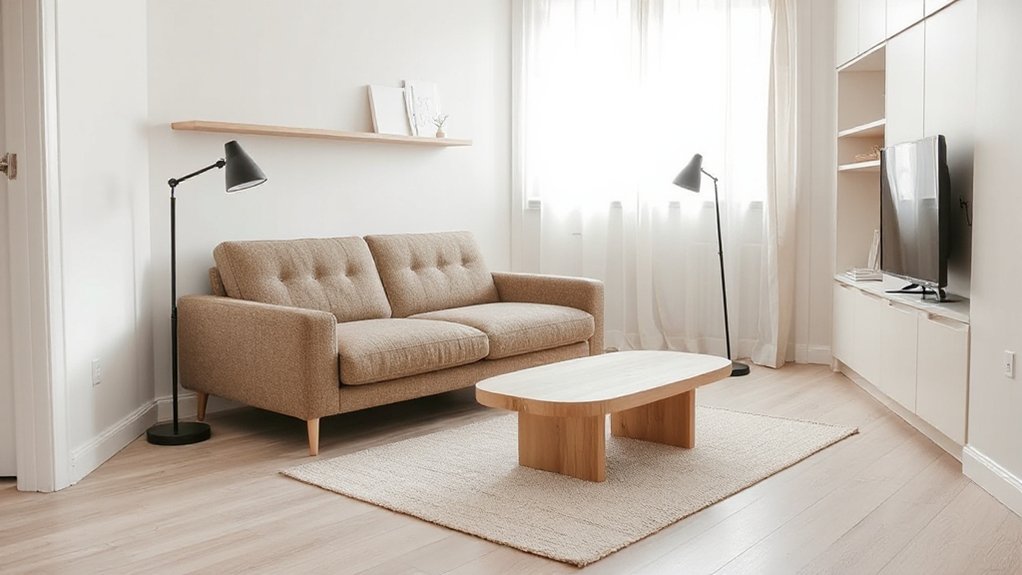
When you plan Scandinavian furniture for a small apartment, start by measuring each zone (living, dining, sleep, and work) and map the routes you actually walk, so you can place slim, raised pieces without blocking door swings, radiators, or bay windows. Next, pick one multi-use anchor per zone: a drop-leaf table for dining, a sofa bed, or a wall-mounted desk that folds up. Keep clearance tight but workable: aim for 70–80cm walkways and check skirting boards and plug sockets before you commit. For Decorating small spaces, limit finishes to pale timber, white, and one accent tone so rooms read bigger. Focus on maximizing storage with ottomans, under-bed drawers, and tall, narrow shelving beside chimney breasts.
How Do You Choose Quality Scandinavian Furniture?
After you’ve mapped your layout and chosen space-saving pieces, make sure the furniture you buy will hold up to daily use in a UK flat. Check build quality in person where you can, and compare specs online before you commit. Prioritise Modern craftsmanship and Sustainable sourcing, not just the look.
- Look for solid oak, ash, or birch; avoid thin veneers on high-wear edges.
- Inspect joinery: dowels, mortise-and-tenon, or finger joints beat staples and glue.
- Test drawers and doors: soft-close, smooth runners, and no racking when pulled.
- Check finishes are low-VOC and suited to central-heating dryness and radiators.
- Confirm provenance: FSC/PEFC timber, recycled metals, and clear maker warranties.
If it wobbles in the showroom, it’ll wobble at home.
How Do You Care for Scandinavian Furniture Long-Term?
To keep Scandinavian furniture looking sharp for years, you’ll stick to gentle cleaning routines: dust with a microfibre cloth, wipe spills fast, and avoid harsh sprays. You’ll also use protective placement strategies in UK homes by keeping pieces out of direct sun from south-facing windows, away from radiators, and on felt pads to prevent floor and leg wear. For periodic wood maintenance, you’ll re-oil or wax as the finish dulls, check joints for looseness, and treat small scratches early before they spread.
Gentle Cleaning Routines
Although Scandinavian furniture looks effortlessly minimal, it stays that way only if you clean it little and often with the gentlest tools. In UK homes, dust and grit act like sandpaper on pale timber and matte finishes, so you’ll want a quick, regular routine rather than heavy scrubbing. Keep moisture low, work with the grain, and dry immediately to avoid swelling or tide marks. For stain removal, treat spills fast, test any product on an unseen edge, and stop once the mark lifts.
- Microfibre cloth, lightly dampened with warm water
- Soft brush head on your vacuum for seams and crevices
- pH-neutral wood soap diluted as directed
- White cotton cloths for blotting, not rubbing
- Mild washing-up liquid for greasy marks, then rinse and dry
Protective Placement Strategies
Regular gentle cleaning keeps Scandinavian pieces looking fresh, but where you place them does most of the long-term work. Keep timber sideboards and tables out of direct sun from south-facing windows; use lined curtains or UV film to reduce fading. In UK homes, avoid putting furniture tight against radiators, log burners, or damp external walls, as heat swings and moisture can stress joints. Add felt pads under lamps, ceramics, and Decorative accessories to prevent rings and scratches, and use coasters on oak or ash. Fit breathable chair glides to protect flooring and legs, especially on vinyl or stone tiles. When you rearrange, lift—don’t drag. Choose rugs and runners with natural backings; they align with Sustainable sourcing and reduce scuffing.
Periodic Wood Maintenance
How often should you maintain Scandinavian wood furniture to keep it stable and good-looking for decades? In the UK’s damp winters and heated homes, plan light monthly care, plus a deeper check each season to manage Seasonal wood adjustments. Dust weekly with a dry microfibre cloth, then spot-clean with a barely damp cloth and dry immediately. Every 3–6 months, refresh oiled finishes; for lacquered pieces, skip oils and use a gentle, pH-neutral cleaner. Aim for Eco friendly maintenance by choosing water-based products and avoiding silicone sprays.
- Check joints, screws, and wobble each quarter
- Re-oil worktops when water stops beading
- Treat marks with fine sanding, then re-oil
- Keep humidity around 40–60% indoors
- Use felt pads and replace them promptly
Frequently Asked Questions
Is Scandinavian Furniture Environmentally Sustainable and Ethically Produced?
Yes, you can find sustainable, ethical Scandinavian pieces, but you must check. Choose eco friendly materials, FSC timber, and low-VOC finishes; confirm fair labor practices, traceable supply chains, and UK certifications like B Corp.
What’s the Difference Between Scandinavian, Nordic, and Danish Modern Styles?
Like a clean-lined map, you’ll find Scandinavian covers the region, Nordic’s a broader umbrella, and Danish Modern’s mid-century Danish subset. You’ll see design minimalism across all, but Danish emphasises teak and material durability, especially.
How Can I Spot Authentic Scandinavian Vintage Pieces Versus Reproductions?
You’ll spot authentic Scandinavian vintage by checking authentic markings, maker labels, and UK import stamps; examine joinery, patina, and vintage condition; compare wood species, hardware, and dimensions to catalogues; ask for provenance and receipts.
Does Scandinavian Furniture Work Well With Smart-Home and Modern Tech Setups?
Yes, it works brilliantly—like your Nan’s sideboard quietly hiding a radio, comforting. You’ll manage smart home integration by routing cables and choosing lamps; minimalist design principles keep rooms calm while UK sockets and hubs stay discreet.
What Are the Typical Price Ranges for Scandinavian Furniture by Category?
In the UK, you’ll pay £100–£400 for chairs, £250–£1,200 for sofas, £150–£900 for tables, £200–£1,000 for storage, £80–£400 for lighting. Budget considerations track material costs: solid oak/ash costs more.
Conclusion
Furnishing with Scandinavian pieces is like crossing a Northern fjord: you travel light, but every item earns its place. You start with a solid oak table or ash sideboard, then add wool throws and leather accents for warmth. You choose pale, matt finishes that bounce UK daylight, and slim-legged chairs that free floor space in a small flat. You check joinery, weight, and warranties—then care with gentle soap and felt pads.