
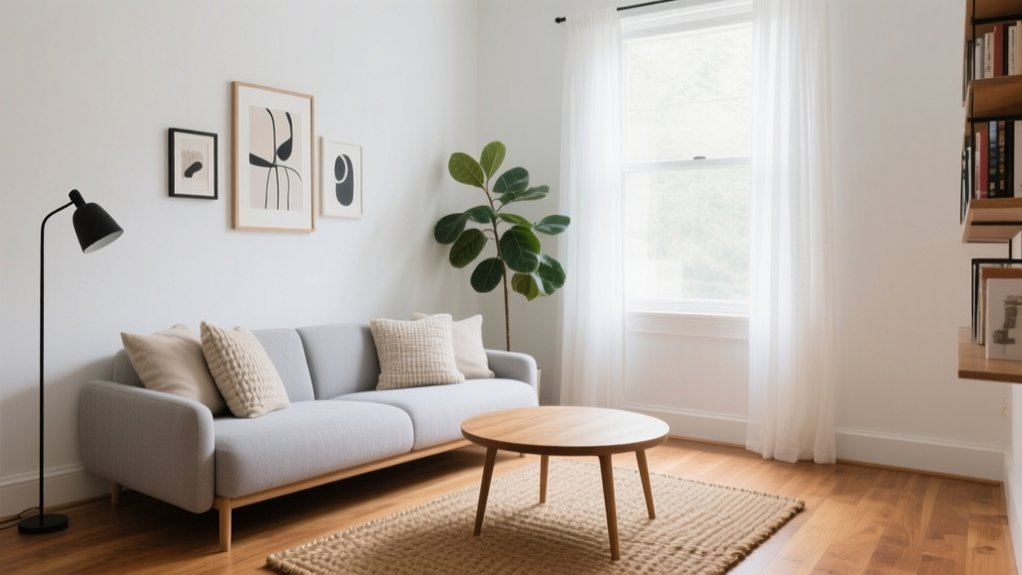

When you’re working with a small living room, every inch has to justify itself—visually and functionally. The layout, furniture scale, and storage strategy all influence how spacious the room feels, and the wrong choices can make it look cramped fast. By treating color, light, and surfaces as performance tools rather than just decoration, you can create a compact space that looks elevated, market-ready, and far more flexible than its square footage suggests.
Key Takeaways
- Plan clear walkways around furniture (30–36 inches) and orient seating toward a focal point like a window, fireplace, or media wall.
- Choose multi-functional, space-saving pieces such as storage ottomans, slim-leg sofas, nesting tables, and wall-mounted consoles.
- Use a light, low-contrast color palette on walls, trim, and ceilings to blur boundaries and visually enlarge the room.
- Maximize hidden storage with drawer-base sofas, lift-top coffee tables, built-in media units, and storage benches to keep surfaces clutter-free.
- Extend continuous flooring, add soft layered lighting, and use vertical paneling or subtle textures to draw the eye upward and lengthen the space.
Start With the Right Small Living Room Layout
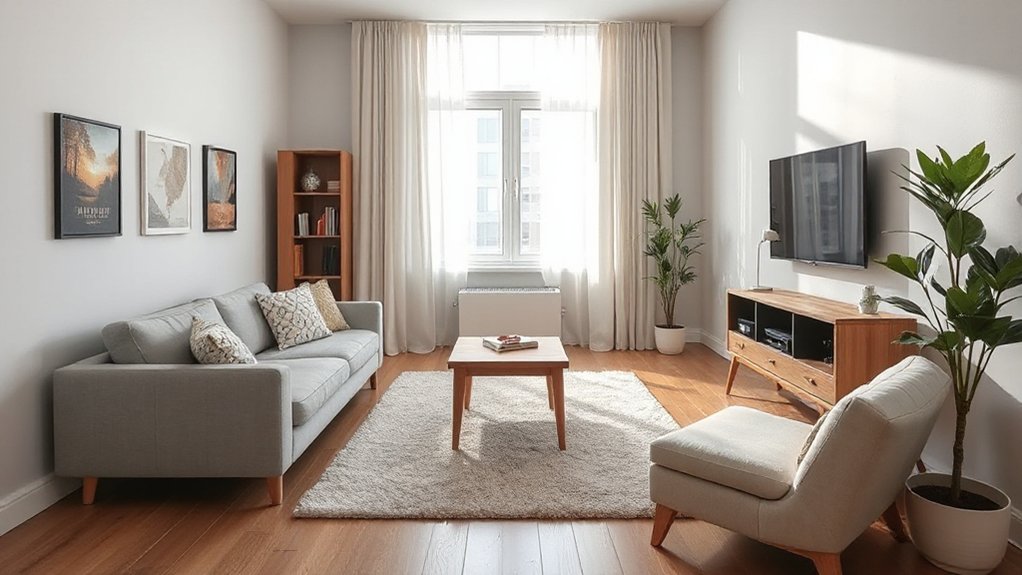
Three core decisions define an effective small living room layout: traffic flow, focal point, and functional zones. First, map circulation paths so you’re not forcing guests to squeeze past seating or cut through conversation areas. Maintain at least 30–36 inches of clear passage where possible.
Next, anchor the room with a clear focal point—media wall, window, or artwork—and align your primary furniture arrangement to reinforce it. This creates visual hierarchy and reduces visual noise.
Then, define compact zones for conversation, media, and occasional work by layering color contrast in rugs, accent chairs, or wall treatments. Use these contrasts to delineate areas without adding bulk, ensuring the layout feels intentional, market-ready, and scalable for future styling updates.
Choose Space-Saving Furniture That Works Harder
Once your layout supports clear circulation and defined zones, the next performance gain comes from furniture that earns its footprint. Prioritize multi functional furniture that consolidates roles: a storage ottoman as coffee table, a sleeper sofa for guests, or side tables with integrated shelving. These compact designs let you reduce overall piece count while maintaining usability.
Specify wall-mounted consoles instead of bulky media units to free floor area and visually declutter. Choose armchairs with slim arms and raised legs so more air and floor remain visible. Nesting tables flex between entertaining and everyday living, then park away.
When you evaluate products, check exact dimensions, hidden storage capacity, and transformation mechanisms to guarantee they operate smoothly within your circulation paths and zoning strategy.
Use Color and Light to Open Up a Small Living Room
Even with fixed square footage, calibrated color and strategic lighting can make a small living room read larger, brighter, and more coherent. Apply color psychology by selecting low-contrast, light-toned palettes—soft whites, warm greiges, and blue-based neutrals—to visually push walls outward and reduce visual noise.
Keep trim, walls, and ceilings within a tight value range so the envelope feels seamless, not chopped up.
Layer lighting techniques instead of relying on a single overhead fixture. Combine a dimmable ceiling light, wall sconces, and floor lamps that wash walls and bounce light off the ceiling. Use glass or light-reflective finishes on tables and accessories to amplify lumen efficiency.
Position fixtures to eliminate harsh shadows that visually “shrink” corners and lower the perceived ceiling height.
Smart Storage Ideas to Keep Clutter Out of Sight
When square footage is tight, concealed storage becomes a primary design tool, not an afterthought. You’re not just hiding clutter; you’re engineering flow, resale value, and daily efficiency.
Consider these high-impact strategies:
- Sofa bases with drawers – Specify deep, full-extension runners to store textiles and tech, keeping visual noise minimal.
- Coffee tables with hidden compartments – Opt for lift-top mechanisms that double as work surfaces, creating multi functional storage without extra furniture.
- Built-in media walls – Integrate flush-front cabinets to conceal cables, consoles, and speakers, preserving a streamlined silhouette.
- Benches and ottomans with internal cavities – Use them for toys, magazines, and seasonal decor; select durable upholstery to handle frequent access.
Each solution keeps surfaces clean while maximizing every cubic inch.
Styling Walls, Floors, and Ceilings in a Tiny Lounge
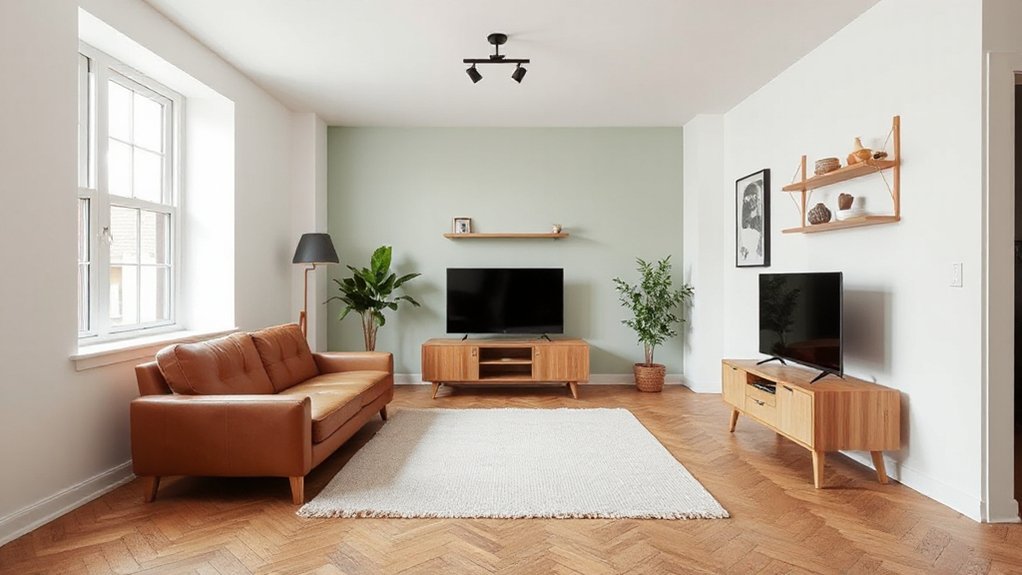
Although a small lounge offers limited footprint, its walls, floors, and ceilings form a powerful envelope that controls perceived volume, light, and brand-level polish. Start by choosing a unified, low-contrast palette; it visually expands edges and reads as higher-end.
Use refined wall textures—fine plaster, microcement, or vertical paneling—to elongate walls and bounce light.
Specify flooring as a continuous surface across the zone: wide-plank timber, poured resin, or large-format tiles. Run planks lengthways to stretch the room, and keep baseboards slim for a contemporary profile.
For ceilings, deploy discreet ceiling accents: shallow coffers, a perimeter shadow gap, or a minimal track lighting channel. These details lift the eye, hide services, and give your compact lounge a custom, architectural feel.
Decorating a Small Living Room With Textiles and Decor
As the architectural shell does its quiet work, textiles and decor deliver the sensory and brand-level finish that makes a small living room feel deliberate rather than improvised. You’ll use every soft surface to control color, texture, and perceived volume.
1. Anchor with rugs
Select low-pile rugs with tight textile patterns; align edges with seating to define circulation and visually stretch the floor.
2. Layer smart upholstery
Use performance fabrics in a tight palette; introduce micro-scale patterns on accent chairs, larger ones on cushions.
3. Calibrate soft lighting
Combine fabric shades and slim lamps as decorative accents that also diffuse light, reducing visual clutter.
4. Edit decor density
Curate grouped decorative accents—books, ceramics, trays—on key sightlines, keeping negative space to preserve openness.
Small Living Room Design Ideas for Different Lifestyles
Rather than chasing a one-size-fits-all “small space solution,” you should calibrate your living room to the way you actually live—whether that’s hosting, working, parenting, or unplugging.
Start by mapping circulation paths, then lock in furniture placement that preserves at least 30–36 inches of clear walkway.
If you entertain, specify a compact sectional, nesting tables, and low-back seating that keeps sightlines open.
For work-from-home, integrate a wall-mounted desk and prioritize task lighting and acoustic control.
With kids, choose performance fabrics, rounded corners, and modular storage that doubles as seating.
If you mainly unwind, orient seating toward your key focal point and layer soft, dimmable lighting.
In every scenario, treat window treatments as architecture: hang them high, match wall color, and maximize daylight.
Common Small Living Room Mistakes to Avoid
Even with a strong concept, small living rooms often underperform because of a handful of avoidable errors: oversized seating, wall-hugging layouts, poor lighting hierarchy, and visual clutter. You want every square inch working hard, visually and functionally.
1. Using large furniture with low utility
Scale pieces to circulation paths; prioritize compact, multi-functional seating and storage.
2. Pushing everything against the walls
Float a sofa or chair to define zones and improve proportion.
3. Creating a flat, single-source lighting scheme
Layer ambient, task, and accent lighting to stretch perceived volume.
4. Allowing overcrowded clutter to dominate
Curate surfaces, use closed storage, and limit décor density.
When you avoid these mistakes, your small living room looks intentional, market-ready, and comfortably livable.
Frequently Asked Questions
How Can I Make a Small Living Room Kid- and Pet-Friendly?
You prioritize durable, washable fabrics, anchor furniture to walls, and define clear traffic paths. You integrate rounded edges, low-profile seating, creative storage, and playful decor that doubles as learning tools, ensuring safety, flexibility, and long-term family resale appeal.
What Budget-Friendly Upgrades Most Improve a Tiny Living Room’s Feel?
You’ll improve a tiny living room most by optimizing Furniture arrangements, tightening Color schemes, and layering lighting. Reposition existing pieces, repaint walls, swap slipcovers, add mirrors, and integrate multifunctional storage to upgrade perceived volume without major capital expenditure.
How Do I Hide Tech Devices and Cables in a Compact Lounge?
You make tech practically vanish: route concealed wiring through baseboards, mount a cable raceway, and deploy furniture camouflage with media units, ottomans, and sideboards integrating cord channels, vented backs, and charging docks that hide everything yet boost perceived product value.
What Are Small Living Room Design Tips for Renters Who Can’T Renovate?
You optimize impact with cohesive color schemes, compact multipurpose furniture, and disciplined furniture arrangement. Float pieces from walls, layer lighting, use tension rods, peel-and-stick surfaces, and oversized art to create perceived volume without violating rental constraints.
How Can I Seasonally Update a Small Living Room Without Adding Clutter?
You rotate seasonal color schemes like fashion capsules: swap pillow covers, throws, and one tray of decorative accents. Don’t add volume; replace items. I once refreshed a studio using only reversible textiles—zero clutter, maximum perceived change.
Conclusion
When you treat your small living room like a constraint, it feels limiting; when you treat it like a brief, it becomes strategic. You’re not just picking sofas, you’re curating circulation paths. You’re not chasing trends, you’re investing in pieces with resale appeal and longevity. By balancing negative space with smart storage, quiet neutrals with tactile contrast, and comfort with market-savvy choices, you turn a tight footprint into a polished, high-performing, future-ready space.