
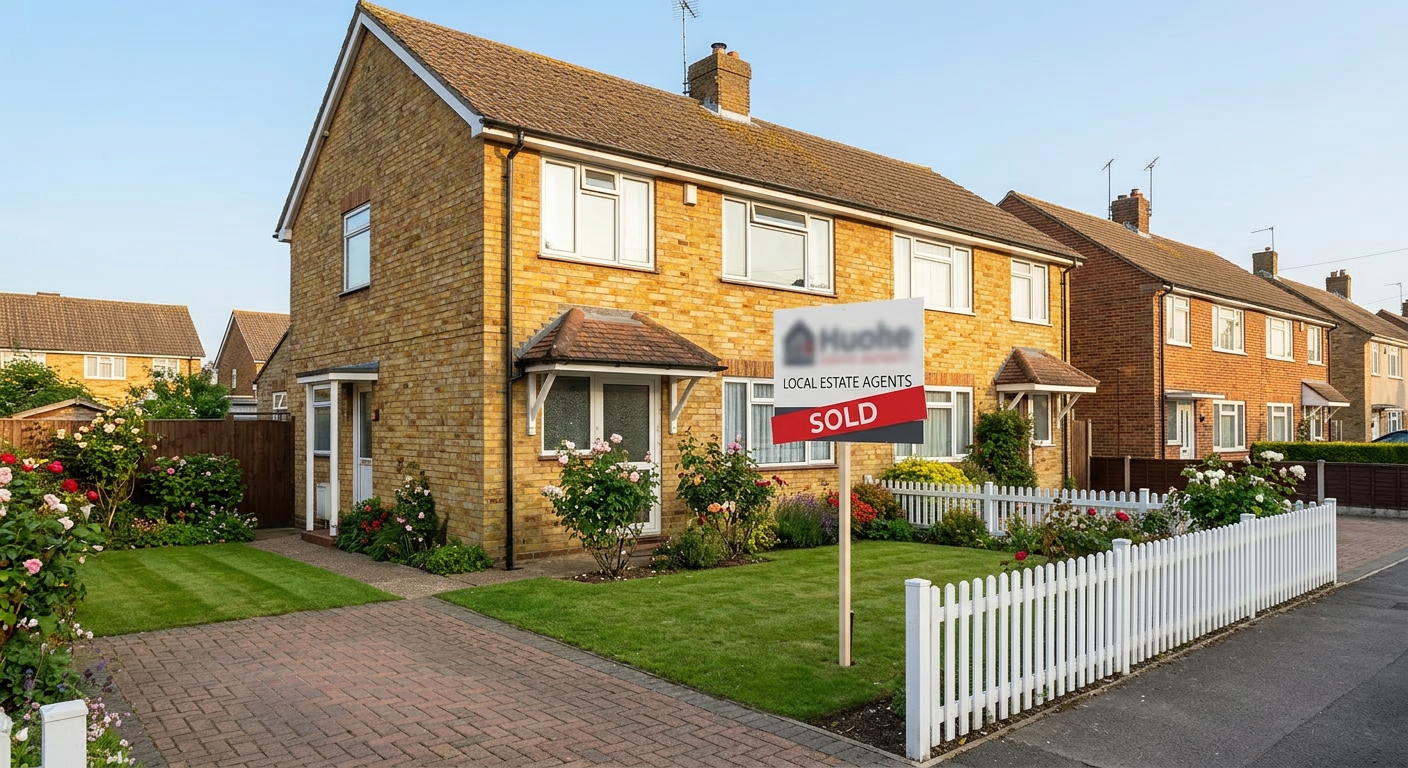

Have you ever thought about the actual process of selling a property and what it entails? Selling a property involves more stages, more professionals, and more decisions than most first-time sellers anticipate. The process in England and Wales — from the decision to sell through to receiving the sale proceeds on completion day — typically takes between three and six months for a straightforward transaction, and longer where chains, complications, or delays intervene. Understanding the full sequence before it begins allows sellers to make better decisions, avoid common mistakes, and manage the process with greater confidence.
Key Takeaways
- The process has three distinct phases — pre-market preparation (valuation, agent selection, documentation), the marketing and offer phase (listing, viewings, offers), and the legal phase (conveyancing, exchange, completion). Each has its own requirements and decisions.
- The legal process cannot begin until a solicitor is instructed — instruct a solicitor before the property is listed, not after an offer is received. Delays at the instruction stage add weeks to the transaction unnecessarily.
- Getting the asking price right at launch is the single most important commercial decision — an overpriced property that requires a price reduction will achieve a lower final price than a correctly priced launch, because price reductions signal market weakness to buyers.
- The seller’s Property Information Forms are among the most legally significant documents in the transaction — inaccurate or incomplete answers can constitute misrepresentation and create liability after completion.
- Exchange of contracts is the point of legal commitment — before exchange, either party can withdraw without legal penalty (though not without potential costs). After exchange, withdrawal has serious financial consequences for the defaulting party.
- The completion date is agreed at exchange — it is a binding contractual obligation from that point, not a target date. Plan practical arrangements (removals, utilities, forwarding address) around the agreed completion date.
- Chain complexity is the most common source of delay — a transaction that is straightforward in isolation can be held up for months by problems at other links in a chain the seller has no direct control over.
Stage 1: Deciding to Sell and Preparing the Property
The decision to sell triggers a sequence of preparatory steps that are best completed before any agent is instructed, because they affect how the property is valued, how it is marketed, and how the transaction proceeds once a buyer is found.
Energy Performance Certificate (EPC)
A valid EPC rated E or above is a legal requirement before a property can be listed for sale or rent. If the property does not have a current EPC (valid for 10 years from the date of issue), one must be commissioned before marketing begins. An EPC assessor can typically survey and issue the certificate within a few days. The EPC is also provided to potential buyers as part of the property information.
Consider Presentation
While a full renovation before sale is rarely economically justified (most buyers factor in their own preferences and deduct renovation cost from their offer), targeted presentation — decluttering, repainting in neutral colours, attending to obvious maintenance defects — consistently improves viewings and can support a stronger asking price. The goal is to enable buyers to visualise living in the space rather than managing its current condition.
Instruct a Solicitor Early
This is one of the most consistently overlooked steps in the pre-market phase. Most sellers instruct their solicitor only after an offer has been accepted — which means that when the buyer’s solicitor requests the contract pack, it has not yet been prepared. This adds two to four weeks to the transaction unnecessarily.
Instructing a solicitor before the property is listed allows them to:
- Obtain the title information and title register from HM Land Registry
- Identify and resolve any title issues before they become problems in a live transaction
- Prepare the draft contract and the Property Information Forms for the seller to review and complete
- Address any defects in the title (missing consents, covenant breaches, gaps in title documentation) before they are discovered by the buyer’s solicitor
Stage 2: Valuation and Agent Selection
Obtaining Valuations
Invite two or three local estate agents to value the property. At each valuation appointment, ask the agent to support their recommended asking price with specific comparable sold transactions — not asking prices, not general market data, but actual completed sales of genuinely comparable properties. One good one is Jacksons estate agents Rainham town centre based.
Be cautious of the highest valuation if it cannot be evidenced with specific comparables. Overvaluation at instruction is a common practice in competitive agent selection — the agent who names the highest figure wins the instruction, and the seller who chooses on that basis is likely to experience a price reduction after a period of insufficient interest.
Ask each agent about their recent sales of comparable properties, their average days-to-sale, their fall-through rate, and specifically who will manage the sale day-to-day. These questions reveal more about an agent’s likely performance than their marketing materials.
Instructing an Agent
Once an agent is selected, a sole agency agreement is signed. This defines:
- The agent’s fee (typically 1–3% plus VAT for residential sales, though this varies by region and property type)
- The sole agency period (typically 12–16 weeks, during which no other agent can be instructed)
- The notice period required to terminate the instruction
- Any additional charges (photography, portal fees, EPC costs if not already covered)
Read the agreement carefully before signing — in particular, the definition of “ready, willing and able buyer” which determines the circumstances in which the fee becomes payable even if the sale does not complete.
Stage 3: Pre-Market and Marketing
Pre-Launch Activity
A good local agent will contact buyers on their active register before the property goes live on the portals — buyers who are specifically looking for a property of this type in this area and who have already been viewing comparable properties. This pre-launch activity can produce offers before the public marketing even begins, and in a competitive market, it can produce the best offer the property receives.
The Portal Listing
When the property goes live on Rightmove and Zoopla, the listing should include:
- Professional photography — the quality of the lead photograph determines how many buyers click through. Poor photography is one of the most avoidable reasons for insufficient viewings.
- A detailed floor plan — buyers who can view the floor plan self-qualify before requesting a viewing, improving the quality and relevance of enquiries
- An accurate and specific written description — not generic estate agent language, but specific descriptions of the property’s features, its condition, and the local context
- The EPC rating
The first two weeks on the market are the most valuable — this is when the listing is new, when the widest pool of active buyers sees it, and when the strongest offers tend to be made. Everything about the listing and the pre-launch activity should be aimed at maximising this window.
Stage 4: Viewings and Offers
Managing Viewings
The agent should be conducting viewings — not leaving the seller to conduct them alone. An accompanied viewing allows the agent to answer questions, read buyer interest, and make the immediate follow-up contact that produces feedback and advances offers.
After each viewing, the agent should collect feedback — specific feedback, not a vague summary — and share it with the seller promptly. Feedback that consistently identifies the same issue (price, condition, a specific aspect of the property) is actionable market intelligence that should inform the marketing strategy.
Receiving and Assessing Offers
When an offer is received, the agent should report it to the seller in writing promptly. Before advising the seller on whether to accept, the agent should have confirmed:
- The buyer’s financial position — are they a cash buyer, do they have a mortgage in principle, and has the mortgage in principle been confirmed?
- The buyer’s chain position — are they in a chain, and if so, how many links and how far along are they?
- The buyer’s solicitor — have they instructed one?
- The buyer’s timescale — when do they want to complete?
An offer from a buyer in a strong financial and chain position may be preferable to a higher offer from a buyer in a weaker position, even where the price difference is meaningful. Speed and certainty have commercial value in a property transaction.
Negotiation and Acceptance
Most initial offers are below the asking price. The seller’s decision on whether to accept, reject, or counter-propose should be made on the basis of the full information about the buyer’s position, the level of competing interest, and the seller’s own timescale and objectives.
Once an offer is verbally accepted, neither party is yet legally committed — in England and Wales, the binding contract is not concluded until exchange of contracts. The acceptance is the beginning of the legal process, not its conclusion.

Stage 5: Instructing Solicitors and Beginning Conveyancing
Memorandum of Sale
Once an offer is accepted, the estate agent issues a memorandum of sale — a document confirming the agreed price, the identities of both parties, and the names and contact details of both sets of solicitors. This triggers the formal conveyancing process.
The Seller’s Conveyancing Tasks
The seller’s solicitor will ask the seller to complete a series of Property Information Forms. These are among the most legally significant documents in the transaction:
TA6 — Property Information Form: Covers a wide range of questions about the property — disputes with neighbours, notices, planning history, guarantees and warranties, insurance, environmental matters, rights and informal arrangements, parking, and utilities. The answers must be accurate and complete. Inaccurate or misleading answers can constitute misrepresentation, which can give the buyer grounds for a claim after completion.
TA10 — Fittings and Contents Form: Defines what is included in the sale and what is not — which fixtures, fittings, and items of furniture are being sold with the property and which are being retained. Disputes about what was included in the sale are among the most common post-completion complaints; completing the TA10 carefully and specifically avoids this.
TA7 — Leasehold Information Form (leasehold properties only): Additional form for leasehold properties covering the lease terms, service charges, ground rent, and the management company.
The Buyer’s Conveyancing Process
While the seller is completing the Property Information Forms, the buyer’s solicitor is conducting searches — enquiries to local authorities, water companies, environmental agencies, and other bodies to identify any issues affecting the property. Common searches include:
- Local authority search (planning history, road adoption, enforcement notices)
- Drainage and water search
- Environmental search (contamination, flood risk)
- Coal mining or other specialist searches where relevant
The buyer’s solicitor will also raise enquiries — specific questions arising from the title documents, the Property Information Forms, or the search results. The seller’s solicitor must respond to these enquiries before exchange can proceed.
Stage 6: Exchange of Contracts
Exchange of contracts is the moment at which the transaction becomes legally binding. Before exchange, either party can withdraw without legal penalty (though not without costs — solicitor’s fees, survey fees, and other incurred costs are not recoverable). After exchange, the defaulting party faces serious financial consequences.
On exchange day, both sets of solicitors telephone each other, confirm the terms of the contract, and confirm that contracts have been exchanged. The buyer’s solicitor simultaneously transfers the deposit (typically 10% of the purchase price) to the seller’s solicitor to hold. The completion date is confirmed at exchange — it is a binding contractual obligation from this point.
In a chain, all links in the chain exchange simultaneously — a single solicitor in the chain cannot exchange without all other solicitors also being ready to exchange. Coordinating simultaneous exchange across multiple links is one of the most complex operational tasks in a residential conveyancing chain, and it is the point at which chain problems most commonly manifest.
Stage 7: Between Exchange and Completion
The period between exchange and completion — which may be a few days or several weeks — involves practical preparation:
- Arranging removals and confirming the date
- Notifying utility providers of the completion date for meter readings and final billing
- Arranging buildings insurance to transfer to the buyer on completion (in most contracts, risk passes to the buyer on exchange, meaning the buyer should have buildings insurance in place from exchange)
- Arranging redirection of post
- Completing any final tasks at the property before vacating
The seller’s solicitor is preparing the completion statement — a financial summary of the transaction including the sale price, the repayment of any mortgage, the deduction of solicitor’s fees and agent’s fees, and the net proceeds to the seller.
Stage 8: Completion
On completion day, the buyer’s solicitor sends the balance of the purchase funds (sale price minus the deposit already held) to the seller’s solicitor. Once the seller’s solicitor confirms receipt of the full purchase price, completion has occurred.
The seller is required to vacate the property and leave it in the condition agreed in the contract before the completion time — typically 1pm, though this is agreed between the parties. Keys are released to the buyer (usually through the estate agent’s office) once the seller’s solicitor confirms completion.
The seller’s solicitor then:
- Redeems any outstanding mortgage on the property from the sale proceeds
- Deducts solicitor’s fees
- Transfers the remaining balance to the seller
The estate agent’s fee becomes payable on completion and is typically deducted by the seller’s solicitor from the sale proceeds and paid directly to the agent.
Common Causes of Delay
Chain problems: A sale that is straightforward in isolation can be held up by problems at other links in the chain — a buyer at the bottom of the chain who cannot proceed, a lender who is slow to issue a mortgage offer, a survey at another link in the chain that requires remediation. The seller has limited direct influence on these issues and must rely on the estate agent’s chain management.
Slow conveyancing: Solicitors who are slow to respond to enquiries, slow to raise searches, or slow to review documents extend the transaction timeline. Instructing a solicitor before listing and choosing one who is responsive and experienced in residential conveyancing significantly reduces this risk.
Survey findings: A buyer’s survey that identifies defects may trigger a renegotiation of the agreed price. The seller can accept the renegotiated price, reject it and risk the buyer withdrawing, or obtain their own evidence (a specialist’s report) to challenge the buyer’s assessment of the defect’s significance.
Title issues: Problems with the property’s title — gaps in ownership history, missing consents for works that have been carried out, restrictive covenants that affect the buyer’s intended use — can require resolution before exchange can proceed. Instructing a solicitor early and having title issues identified before marketing begins is the most effective way to prevent these from derailing a live transaction.
Mortgage issues: A buyer whose mortgage offer is delayed, revised, or declined after the sale is agreed can cause the transaction to collapse or extend significantly beyond the anticipated timeline.
The typical transaction timeline in England and Wales is 12–16 weeks from offer acceptance to completion in a straightforward case. In a chain, or where complications arise, 20–24 weeks or more is not unusual. Planning around this timeline from the outset — and selecting an agent and solicitor who actively manage the process rather than waiting for the next stage to arrive — is the most effective way to minimise unnecessary delay.
This article provides general information only and does not constitute legal advice. Anyone selling a property should instruct a qualified solicitor or licensed conveyancer to advise on their specific transaction.