


Key Takeaways
- Map sightlines from windows, patios, and paths across seasons to decide where to keep views open and where to add screening.
- Place seating first, then screen at seated eye level using light, layered elements like pleached trees, slatted panels, or climbers on trellis.
- Define public-to-private zones with soft transitions, using curved paths, thresholds, and taller planting at bends to slow and redirect views.
- Build privacy in layers—boundary fencing or hedges, mid-garden structures, and planting belts—so screening feels natural rather than enclosing.
- Ensure year-round cover by mixing evergreens with seasonal height (grasses, dogwood, bulbs) and review gaps in winter before spring growth.
Map Sightlines to Shape Garden Privacy

Before you add a single plant or panel, map the key sightlines into and out of your garden so you know exactly where privacy breaks down. Stand at typical viewing points: upstairs rear windows, neighbouring patios, side passage gates, and the pavement. Use a simple sketch of your garden layout and draw lines to where eyes naturally land.
Note where you want openness—towards a focal tree, lawn, or borrowed landscape—and where you need screening. Assess visual permeability: open railings, low hedges, and slatted fencing let views leak, while solid boundaries block them but can feel harsh.
Walk the plot at different times of day, because low sun angles and winter leaf-drop change exposure. Then you’ll target privacy measures precisely, not everywhere.
Place Seating First (Privacy at Eye Level)
Place your seating first, because it sets the eye-level sightlines that matter most. Sit where you’ll actually relax, then note exactly what you can see into and out of the garden from that spot.
Position screens, pleached trees, or planting to block unwanted views at eye height while keeping the wider outlook open.
Anchor Seating Sightlines
Because your garden only feels as private as the spot where you actually sit, start by anchoring your main seating area and checking sightlines at eye level. Put the bench, bistro set, or outdoor sofa where you’ll genuinely use it, then sit down and look around: doors, upstairs windows, the neighbour’s patio, and the footpath. Nudge the position until you’ve got a comfortable view out without feeling on display.
Next, judge comfort factors from that same seated position. Notice how sound carries; hard boundaries can bounce noise, so think about garden acoustics when choosing nearby surfaces and planting.
Also track breezes and draughty corners; you’ll need wind mitigation through placement near walls, hedges, or pergolas, so you can linger outside longer.
Screen Views At Eye Level
Once you’ve fixed your seating spot, screen the views that hit you at eye level rather than trying to block everything overhead. Sit in the chair, note sightlines to neighbours’ windows, footpaths, and the road, then mark the exact height you need to interrupt—usually 1.2–1.6m when seated.
Use slim, layered screens: pleached hornbeam, evergreen shrubs, or a trellis panel with climbers, positioned only where the view intrudes. Choose landscape materials that feel light: slatted timber, perforated metal, or willow hurdles, set perpendicular to the sightline for maximum effect.
Apply privacy algorithms in practice: prioritise the closest and widest viewpoints first, then add only as much screening as required to keep light, sky, and airflow.
Split the Garden Into Privacy Zones
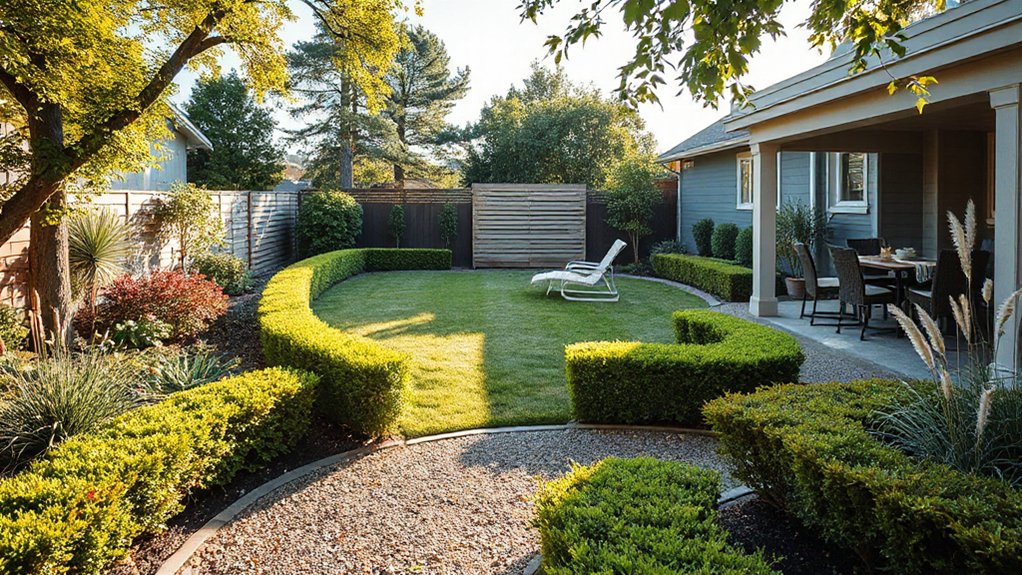
Start by deciding what counts as public space (near the patio or lawn) and what’s private (your seating nook or kitchen garden). Then plan the layout around that split.
Layer your boundaries with fences, trellis, hedging, and taller planting so you screen views without closing the garden in.
Link each zone with simple flow pathways—gravel, stepping stones, or a mown strip—so the space feels connected while still controlled.
Define Public And Private
Before you choose screening plants or put in a pergola, decide which parts of the garden should feel public and which should feel private. Start by mapping how you use the space day to day: arrival, bins, bike storage, play, dining, and lounging.
Treat areas visible from the house and path as public spaces, keeping them open, tidy, and easy to navigate.
Then define private retreats for quieter moments. Place them where you’ll naturally linger: near the morning sun, by a favourite border, or off the main route to the shed.
Check sightlines from upstairs windows, neighbouring patios, and the street, and note where you feel overlooked. Use these observations to set clear zones that suit your lifestyle, not an idealised plan.
Layer Screening Boundaries
Although a single fence line can mark your boundary, you’ll get a calmer, more usable garden by layering screening so each area has the right level of privacy. Start with the outer edge: upgrade panels, add trellis, or use pleached trees to block upper-floor views.
Then introduce mid-garden breaks—pergolas with slatted sides, evergreen hedging, or tall planters—to define a quiet sitting spot separate from play or dining.
Use Vertical barriers where sightlines matter most, and keep lower layers lighter so the garden still feels open.
If noise is an issue, pair dense planting with Soundproofing techniques: double fencing with an air gap, mineral-wool infill, or water features that mask traffic.
Check heights against local planning rules first.
Create Transition Pathways
When you build clear passageways through the garden, you control sightlines and movement so each area feels like its own privacy zone without closing the whole space in. Lay a main route in gravel, brick pavers, or resin-bound aggregate, then branch into narrower side paths to seating, veg beds, or a shed.
Use gentle curves to slow views, and align gaps between screens so you reveal one “room” at a time. Add thresholds: a simple timber arch, a change in paving, or a step-over sleeper edge.
Keep widths practical—about 1m for main access, 600–800mm for secondary runs. Support garden aesthetics with consistent edging, and refine plant selection by placing taller grasses and shrubs at bends.
Choose Light Privacy Screens (Slats, Trellis, Glass)
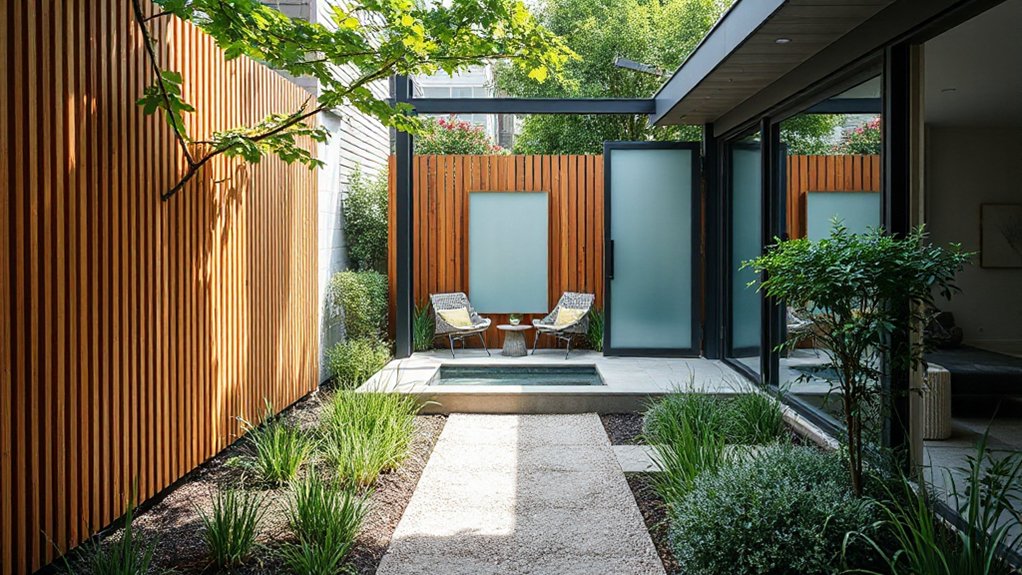
If you want your garden to feel sheltered without boxing it in, choose light privacy screens that filter views rather than block them. Use horizontal timber slats with 10–20mm gaps to soften sightlines while keeping daylight and airflow; stain them to match fencing and reduce visual weight.
Fix trellis panels above a low wall or boundary, and pick Decorative lattice for a softer, cottage-style finish that still reads airy.
For tight patios, install a frameless or lightly framed screen in Recycled glass to diffuse outlines and bounce light back into the space; specify toughened, textured panels for safety and glare control.
Keep heights just above seated eye level and align panels with existing posts for a tidy, intentional look.
Layer Plants for Privacy Without Closing In
Light screens set the boundary, but planting does the softer work of making a garden feel private without looking shut off. Build privacy in layers: low edging plants at path level, mid-height shrubs for body, then airy climbers that filter views instead of blocking them.
Choose semi-evergreen options like Portuguese laurel, Griselinia, or Pittosporum, and soften with grasses such as Miscanthus to keep movement and light.
Use pleached trees or multi-stem birch to lift the canopy, so you’re screened at eye level yet still get sky.
Add Vertical gardens on sunny fences with wire panels and pocket planters to thicken coverage where ground space is tight.
For noise, plant dense hedging and climbers as living sound barriers alongside a solid fence. Maintain with thinning, not shearing.
Use Focal Points to Guide Views Away
Although you can’t control what’s beyond your boundary, you can control where the eye lands by introducing strong focal points that pull attention into the garden and away from neighbouring windows. Start with one clear feature: a clipped specimen tree, a water bowl, or a slim obelisk with climbers, set on a sightline from your back door or patio.
That’s Focal point placement: position it slightly off-centre so views travel diagonally, not straight to the fence. Use Visual flow control by repeating a material or colour—brick edging, pale gravel, or a painted bench—leading the gaze from foreground to mid-garden.
Frame the feature with lower planting and keep surrounding shapes simple, so it reads instantly and feels intentional.
Keep Privacy Working in Every Season
How will your garden hold its privacy once winter strips back the borders? Plan for year-round cover, not just summer leaf. Start with evergreen structure: yew, holly, Portuguese laurel, or pleached hornbeam to keep sightlines blocked when herbaceous beds die down. Reinforce gaps with climbers on trellis—ivy or evergreen jasmine—so fencing feels green, not harsh.
Use seasonal plantings to add layers: tall grasses for autumn screens, dogwood for winter stems, and spring bulbs to thicken edges early. Mix heights so you don’t rely on one hedge.
Build natural barriers too: a low earth berm, mixed shrub belt, or woven willow screen softens wind and noise. Check your boundary in January and adjust before growth starts again.
Frequently Asked Questions
What Permits or HOA Rules Affect Adding Privacy Screens or Fences?
You’ll check Fence regulations and HOA restrictions: planning permission for taller boundary fences, listed buildings, or conservation areas; Party Wall notices near neighbours; covenants on height/materials/colour; council guidance; get written approval before installation.
How Do I Reduce Noise From Neighbors or Nearby Roads?
Like Odysseus against the sirens, you’ll tame noise with soundproofing techniques: install close-board fencing, add mass-loaded barriers, and seal gaps. Choose natural barrier options—dense hedging, berms, and climbers—to muffle sound.
What Budget Range Should I Expect for a Privacy-Focused Garden Redesign?
You should expect £1,500–£5,000 for a modest privacy refresh, or £8,000–£25,000+ for a full redesign. Costs hinge on plant selection, yard layout, fencing, screening, groundworks, lighting, and labour rates.
How Can I Add Privacy Without Blocking Sunlight to Indoor Rooms?
Use Plant screens like pleached hornbeam or multi-stem birch, set away from windows, to filter views while letting light through. Add Outdoor curtains on pergolas. Choose slatted trellis, keep canopies lifted.
Which Materials Are Safest and Most Durable for Windy or Coastal Gardens?
Choose stainless steel fixings, aluminium or galvanised steel frames, and UV-stable composite decking; they’ll resist salt and gales. Use wind resistant structures with deep post anchors. Prioritise Plant selection: tamarisk, escallonia, sea buckthorn.
Conclusion
Map your sightlines, then place seating where you’ll actually linger, because privacy matters most at eye level. Break the space into zones so you can feel sheltered without fencing yourself in. Choose light screens—slatted panels, trellis or frosted glass—and layer planting to soften edges. Add a focal point to pull the gaze, like a lodestar guiding views away. Check winter structure, so privacy holds when leaves drop.