


Contemporary furniture is what you choose now when you want a clean, current look that blends minimal silhouettes with warmer, tactile comfort. You’ll spot low profiles, crisp lines softened by curves, and mixed materials like wire-brushed oak with matte-black metal or honed stone with bouclé. You’re also getting refined details—tight seams, hidden hardware, and sculptural bases—plus practical ergonomics and better sustainability (FSC wood, low-VOC finishes). Keep going to see how to spot the best pieces fast.
Key Takeaways
- Contemporary furniture reflects today’s evolving minimalism with crisp silhouettes, low profiles, and softened curves for a clean, current look.
- It emphasizes mixed materials and calm palettes—wood with metal, stone with bouclé, and warm neutrals with matte-black accents.
- Forms balance softness and structure, using rounded sofas, barrel chairs, pebble-like tables, and sculptural, architectural bases.
- Unlike modern (era-specific) design, contemporary blends influences and contrasts, adapting to trends while keeping spaces visually light and refined.
- Quality is defined by ergonomic comfort, durable joinery, resilient finishes, and sustainability proof like FSC wood, low-VOC coatings, and repairable components.
What Is Contemporary Furniture Today?
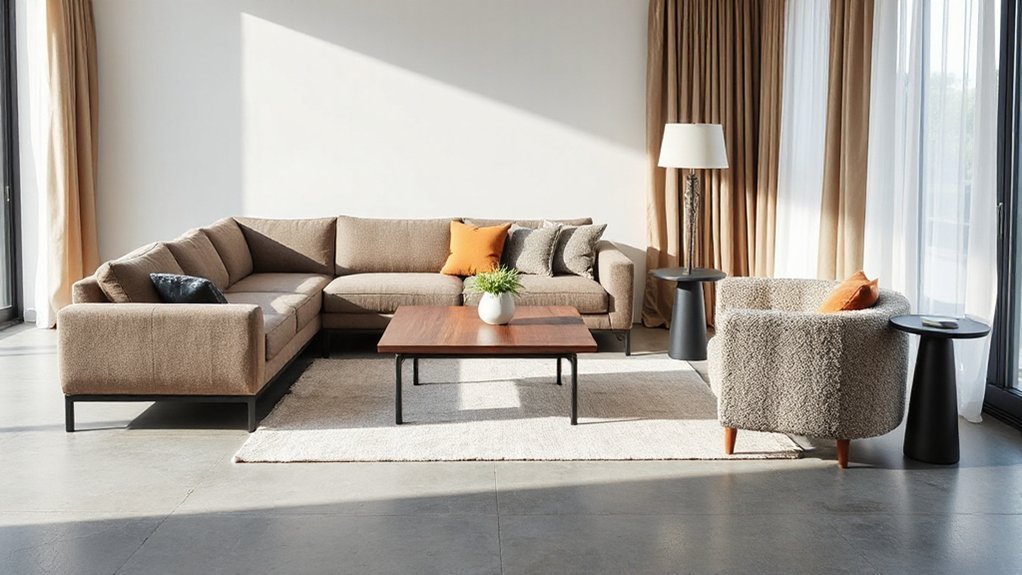
Although “contemporary” once meant whatever was new right now, contemporary furniture today describes a clean, current look that borrows from modern minimalism while staying flexible enough to evolve with trends. You’ll spot crisp silhouettes, low profiles, and open visual weight, often softened by rounded edges and tactile fabrics. You should prioritize mixed materials—wood with metal, stone with bouclé—to keep the space layered without clutter. Choose a restrained palette, then add contrast through matte-black accents or warm neutrals. To keep it from feeling sterile, work in Vintage charm via a single aged-leather chair or patinated side table. Let Artistic expression lead your finishing moves: sculptural lighting, asymmetrical décor, or statement art that anchors the room.
Contemporary vs Modern: What’s Different?
Where do contemporary and modern furniture actually split? Modern refers to a specific early-to-mid-20th-century design movement: clean lines, honest materials, and function-first forms. You’ll see disciplined silhouettes, minimal ornament, and a consistent, era-rooted aesthetic that doesn’t chase seasonal shifts.
Contemporary, instead, means what’s happening now. You’ll mix current shapes with evolving materials, color, and texture, and you can pivot as trends change. Today’s contemporary rooms often blend softness and contrast—curves with sharp edges, matte finishes with reflective accents. You can also layer in Vintage charm without breaking the “contemporary” label, because it welcomes curated tension. Modern tends to avoid those mashups. Contemporary can even nod to Traditional influences, as long as the overall look feels fresh and edited.
How Can You Spot Contemporary Furniture Fast?
You can spot contemporary furniture fast by looking for clean lines and streamlined forms that feel current, not ornate. Check the build for mixed modern materials—like metal, glass, wood, or performance fabrics—paired with neutral tones that keep the look crisp. Then confirm it with bold accents, such as a standout color, sculptural lighting, or a statement chair that instantly signals today’s trends.
Clean Lines And Forms
When you need to spot contemporary furniture fast, look for clean, uninterrupted lines and simple, intentional forms. You’ll notice edges that feel crisp, profiles that stay slim, and silhouettes that don’t rely on ornate trim or heavy curves. Prioritize pieces that read as purposeful from every angle—nothing looks accidental.
To verify the look, scan for balanced proportions and smooth gradations between surfaces. Contemporary design often signals minimalist aesthetics through low visual clutter: tight seams, hidden hardware, and streamlined bases. You can also catch the style in subtle geometric patterns—think linear stitching, squared tufting, or repeated rectangles that add structure without decoration overload. If the shape feels refined, functional, and quietly architectural, you’re looking at contemporary furniture.
Mixed Modern Materials
Clean lines set the silhouette, but contemporary furniture usually proves itself through material pairings that feel current and intentional. You can spot it fast when you see mixed modern combinations: matte metal legs under a warm wood top, molded plastic shells framed by powder-coated steel, or stone and glass balanced with slim aluminum. Look for crisp junctions where textures meet cleanly—no fussy trims, no heavy ornament. Prioritize performance materials too: engineered wood, high-pressure laminate, and stain-resistant textiles signal today’s lifestyles. Material diversity should feel edited, not random; designers repeat one finish across a piece to keep it cohesive. Run your hand along edges and hardware—tight tolerances and minimal fasteners confirm a contemporary build.
Neutral Tones, Bold Accents
Although materials do a lot of the heavy lifting, contemporary furniture often telegraphs its era through a restrained palette punctuated by a deliberate pop. You’ll see base tones like warm white, greige, charcoal, and soft black anchoring sofas, casegoods, and rugs, so the silhouettes read clean and current. Then you spot a single high-impact accent—cobalt chair, rust ottoman, chartreuse lamp—used sparingly, not sprinkled everywhere.
To identify it fast, check how designers balance textile textures: nubby bouclé against smooth leather, matte wool beside glossy lacquer. If the room relies on a few sculptural decorative accessories—oversized vase, graphic art, statement tray—rather than clutter, you’re looking at contemporary restraint with confident color. It feels intentional, not thematic.
What Shapes Look Contemporary Right Now?

If you want your space to read as contemporary right now, prioritize shapes that balance softness with structure—think rounded silhouettes with crisp edges. Choose barrel chairs, curved-back sofas, and pebble-like coffee tables, then ground them with rectilinear consoles or square plinth bases for contrast. You’ll also see bold, continuous lines: waterfall edges, looped arms, and wraparound backs that nod to Futuristic aesthetics without feeling cold. Add Vintage influences through reinterpreted classics—tulip-inspired pedestals, low-slung lounge profiles, and gentle art-deco arches—but keep proportions cleaner and less ornate. When you’re mixing pieces, stick to two dominant geometries (curve + block, arch + line) so the room feels intentional, not scattered. Oversized forms read current fast.
Which Materials Define Contemporary Furniture?
Those contemporary shapes land best when the materials feel just as current. Start with solid, responsibly sourced woods or engineered veneers for stability without bulk. Pair them with metal—powder-coated steel or brushed aluminum—for crisp structure and slim profiles. Add stone or sintered surfaces where you want durability and a refined, architectural edge, especially on tables and credenzas.
For softness, choose high-performance textiles, boucle, or leather alternatives that handle daily use while keeping a tailored look. Work in glass or acrylic to lighten visual weight and sharpen silhouettes. If you want a forward-leaning space, use recycled plastics, composites, and bio-based laminates; they signal modern values. Let Cultural influences guide textiles and weaving techniques, and let Artistic expressions show through sculptural bases and mixed-material joins.
Contemporary Colors and Finishes That Feel Current
As contemporary rooms shift toward calmer, more intentional styling, you’ll see colors and finishes that balance warmth with restraint: soft neutrals (oat, sand, clay), muted earth tones (olive, terracotta, umber), and inky anchors like charcoal and deep navy. You can use color psychology to keep a space feeling focused—warm mid-neutrals read inviting, while cooler darks add clarity and visual structure.
Finishes look current when they’re tactile but not flashy: matte lacquers, honed stone, cerused or wire-brushed oak, and powder-coated metals in black, bronze, or champagne. Skip high-gloss trends unless you want deliberate contrast. Pair finishes with ergonomic design: low-sheen surfaces reduce glare, soft-touch textiles feel better on skin, and subtly textured materials hide wear without looking busy.
How to Use Contemporary Furniture in Real Rooms

Soft, low-sheen finishes and grounded colors set the mood, but contemporary furniture makes the room work day to day. Start with one crisp anchor piece, then build outward with shapes that feel light, not sparse. Balance Historical influences—midcentury lines, Bauhaus geometry—with today’s cleaner proportions so the space reads current, not themed. In living rooms, float seating to open circulation; in bedrooms, keep sightlines calm with low profiles; in dining areas, mix sculptural bases with simple tops for contrast. Prioritize ergonomic considerations: seat depth, back angles, and table heights should match how you actually lounge, work, and host.
- Choose a statement sofa or bed
- Layer modular storage for flexibility
- Use negative space as a design tool
- Repeat one metal or wood tone
- Add one bold silhouette for punch
Sustainable Contemporary Furniture: What Counts?
When you shop contemporary, “sustainable” only counts if you can trace the materials, the making, and the lifespan. Start with Eco friendly sourcing: FSC-certified wood, recycled metals, low-VOC finishes, and transparent upholstery supply chains. Demand documentation, not buzzwords, and check whether adhesives and foams meet indoor-air standards. Next, evaluate transport and packaging; regional production and flat-pack efficiency can cut emissions fast. Then look at longevity: modular components, replaceable covers, and take-back or repair programs keep pieces out of landfills. Finally, weigh Cultural influences thoughtfully—designs that reference traditions should credit origins, support responsible makers, and avoid extractive aesthetics. If a brand won’t share audits, origin maps, or end-of-life plans, you’re buying style, not sustainability.
Contemporary Craftsmanship Details to Look For
Although contemporary furniture often looks effortless, the best pieces telegraph precision in the details—so train your eye to read construction, not just silhouette. You’ll spot quality in how parts meet, how surfaces flow into each other, and how makers resolve edges. Today’s best studios blend clean minimalism with Artisan techniques and subtle cultural influences, signaling intent rather than decoration. Look for these cues when you shop or spec:
- Tight, even joinery lines with no visual “step”
- Purposeful reveals and shadow gaps that look consistent
- Hand-finished edges that feel crisp, not sharp
- Grain or pattern matching across panels and doors
- Hardware that sits flush and operates silently
If those details align, the piece reads elevated, current, and confidently made without shouting.
Will It Last? Contemporary Furniture Durability Checklist
To judge if contemporary furniture will last, you’ve got to start with material and joinery quality—solid cores, tight joints, and proven hardware beat flimsy shortcuts every time. Next, check the finish and upholstery for real-world resilience: scratch- and stain-resistant coatings, durable weaves, and high-rub ratings keep pieces looking current under daily use. Use this checklist before you buy, and you’ll invest in modern designs that don’t just photograph well—they perform.
Material And Joinery Quality
Before you fall for a sleek silhouette or viral showroom look, check what’s underneath: the materials and the joinery decide whether contemporary furniture feels solid for years or starts wobbling in months. Material longevity starts with what’s structural, not what’s trendy. Ask what the frame is made of, how it’s reinforced, and whether parts are replaceable instead of disposable. Seek Innovative joinery that resists racking and loosening under daily load, especially on chairs, dining tables, and modular sofas.
- Prefer kiln-dried hardwood, quality plywood, or steel, not mystery “engineered wood”
- Check for corner blocks, stretchers, or bracing on long spans
- Look for mortise-and-tenon, dowels, or metal hardware over staples
- Test for flex: push, twist, and lift—listen for creaks
- Confirm tight tolerances and clean alignment at all joints
Finish And Upholstery Resilience
When you live with contemporary furniture day after day, the finish and upholstery reveal the real durability story faster than the design does. Start with Finish application: you want even color, consistent sheen, and sealed edges on doors and tabletops. Run a fingertip along corners; if you feel roughness, you’ll see chipping soon. Ask whether it’s catalyzed lacquer, powder coat, or performance oil, and confirm it’s rated for heat, UV, and cleaners.
Next, vet Textile durability like you’re buying athletic gear. Check double rub counts, tight weaves, and high-resilience foam, then look for stain-resistant, solution-dyed, or leather top-grain finishes. Flip cushions: you want zippered covers, strong seams, and matched pattern alignment. If it pills in-store, it won’t improve at home.
Frequently Asked Questions
Does Contemporary Furniture Hold Its Resale Value Over Time?
Contemporary furniture can hold resale value, but you’ll see it vary by brand, materials, and scarcity. You’ll boost investment potential by choosing iconic designers, neutral finishes, and keeping receipts, condition, and provenance pristine.
What Contemporary Furniture Styles Work Best for Small Apartments?
You’ll want “big” style that shrinks: choose modular sectionals, nesting tables, wall-mounted storage, and armless profiles. You’ll ironically gain room by adding Space saving solutions and minimalist design elements—light finishes, slim legs, multifunction pieces.
How Do You Mix Contemporary Furniture With Antiques Without Clashing?
Mix contemporary pieces with antiques by choosing one dominant era, then echo colors and materials across both. Use antique pairing as a focal point, keep silhouettes clean, and rely on style blending through balanced scale and spacing.
Are Contemporary Furniture Brands Usually More Expensive Than Traditional Ones?
Yes, you’ll often pay more for contemporary brands because luxury pricing and designer labels drive costs. You can save by prioritizing materials and construction, shopping direct-to-consumer lines, and mixing iconic pieces with basics.
What Should You Know About Delivery, Assembly, and Warranty for Contemporary Pieces?
You should confirm delivery options upfront, including white-glove scheduling, stair fees, and packaging removal. Check assembly requirements and tool needs, or pay for setup. Read warranty terms on finishes, hardware, and fabric, plus claims timelines.
Conclusion
Contemporary furniture today is a moving target, like a compass that keeps recalibrating to culture, tech, and how you live. You’ll spot it in clean lines, balanced curves, and adaptable forms that fit open layouts. Choose honest materials—wood, metal, glass, performance fabric—and prioritize smart construction, not just looks. If sustainability matters, demand certifications and repairable parts. Buy fewer, better pieces, and you’ll keep your space current without chasing every trend.