


Modern minimalist furniture works when you buy fewer pieces and choose quality you can live with. Stick to clean lines, simple silhouettes, and honest materials like FSC-certified oak, ash, birch ply, and powder-coated steel, finished in hardwax oil or water-based lacquer for easy repairs. Keep a tight neutral palette, add one considered vintage accent, and favour flush, handleless storage to hide clutter and cables. Get proportions and walkways right, and you’ll create a calmer home—next, you’ll see what to prioritise room by room.
Key Takeaways
- Choose clean-lined, functional pieces with tight proportions, avoiding ornate shapes to keep rooms calm and uncluttered.
- Prioritise quality materials—FSC oak/ash/birch ply, durable metals—and repairable finishes like hardwax oil or water-based lacquer.
- Buy fewer, better essentials: a supportive sofa, sturdy table, and well-built storage before adding decorative extras.
- Plan scale and flow: measure carefully, keep 75–90cm walkways, and use low profiles to preserve daylight and openness.
- Maintain a restrained neutral palette, adding texture and one intentional accent piece to create character without visual noise.
Define Modern Minimalist Furniture (With Examples)
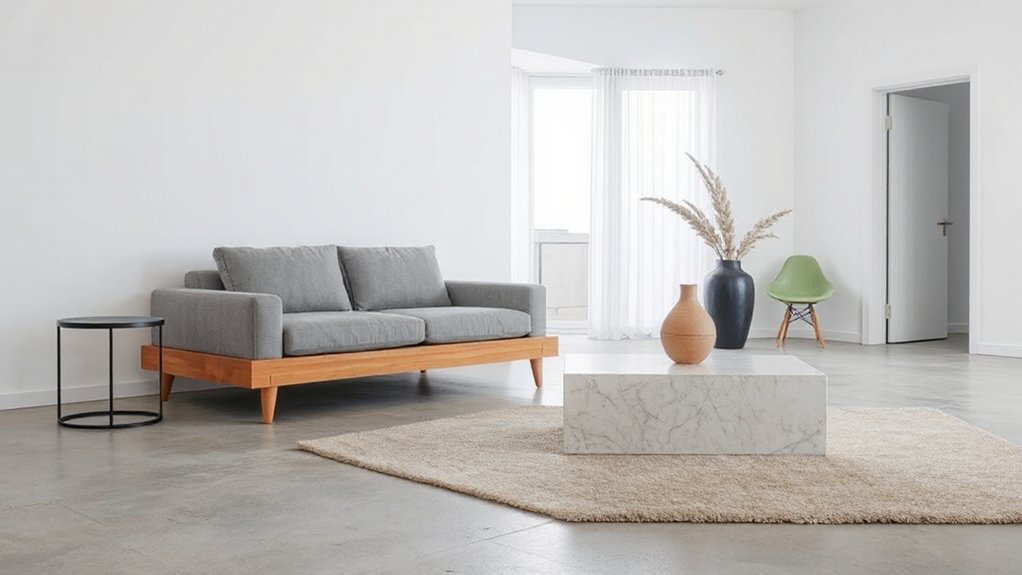
Although it looks simple at first glance, modern minimalist furniture is a design approach that strips pieces back to what they genuinely need: clean lines, functional forms, and a calm, uncluttered feel. You’ll notice honest materials, tight proportions, and detailing that’s deliberate rather than decorative. In UK homes, it often means a slim oak sideboard on tapered legs, a low-profile sofa with squared arms, or a matte-black steel dining table with a single slab top. Storage stays flush: handleless wardrobes, floating shelves, and TV units that hide cables. Your Color palettes tend to be soft neutrals—warm whites, greige, charcoal—with one restrained accent. For Design inspiration, look for Scandinavian restraint or contemporary British joinery: simple, well-made pieces that don’t shout.
Use the “Less but Better” Minimalist Buying Checklist
Once you know what modern minimalist furniture looks like, the next step is buying it without ending up with a house full of “nearly right” pieces. Use a simple checklist every time you shop, whether you’re in a London showroom, a British antique centre, or browsing UK-made online.
Start with function: what job must it do daily? Then build quality: solid timber, proper joinery, durable upholstery, and repairable parts. Check the silhouette: clean lines, no fussy trim, hardware kept quiet. Limit finishes to a tight palette so items play well together. Add personality deliberately: one piece with Vintage charm, or small artistic accents, not both everywhere. Finally, set a waiting rule: if you wouldn’t buy it again next week, don’t buy it today.
Get Minimalist Furniture Proportions Right for Your Room
Before you fall for a perfect-looking sofa or sideboard, check its proportions against your room, because minimalist pieces only look “calm” when they fit the space with intent. Measure wall lengths, radiator positions, and door swings, then mark footprints with masking tape so you can judge circulation. Aim for 75–90cm clear walkways and keep low pieces below window sills to protect daylight. Match visual weight to ceiling height: taller rooms handle higher-backed forms; lower ceilings need slimmer profiles and raised legs. Use your Color schemes to reduce bulk—light tones recede, dark finishes read heavier. Finally, test Lighting options: a bulky item that looks fine at noon can feel oppressive under warm evening pools, so check it under your actual lamps too.
Minimalist Furniture Staples by Room (Living, Bed, Dining)
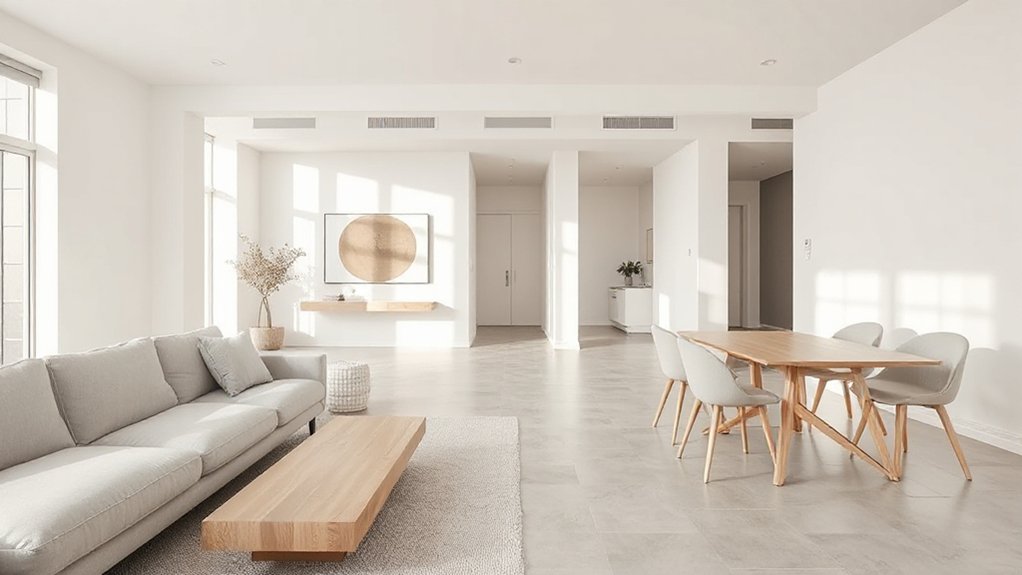
When you keep the essentials consistent across the living room, bedroom, and dining space, minimalist furniture stops feeling sparse and starts working hard for everyday UK homes. In the living room, anchor everything with a compact sofa, a low media unit, and one closed-storage piece to hide clutter fast. In the bedroom, prioritise a simple bed frame, two slim bedside tables, and a wardrobe that keeps sightlines calm. In the dining space, choose a table sized for your household, then add stackable chairs or a bench to flex for guests.
- Stick to two to three Colour schemes across rooms for cohesion.
- Repeat one silhouette (rounded or linear) to reduce visual noise.
- Limit Decorative accents to one tray, one lamp, and one artwork per room.
Minimalist Furniture Materials That Actually Last
Although minimalist pieces look simple, the materials do most of the heavy lifting, so it pays to choose options that cope with daily UK life—radiators, humidity swings, and the odd knock from moving furniture. Start with Sustainable woods like FSC-certified oak, ash, or birch plywood with a quality veneer; they stay stable and refinish well. Avoid soft, knotty pine in high-wear spots unless it’s properly sealed. For frames and legs, pick Durable metals: powder-coated steel for scratch resistance, or brushed stainless for kitchens where splashes happen. Check welds and weight ratings, not just looks. Choose water-based lacquers or hardwax oils for easy touch-ups, and felt pads to protect floors. You’ll get clean lines that still handle real use for years.
Minimalist Furniture With Hidden Storage (Best Picks)
Long-lasting materials keep minimalist furniture looking sharp, but smart storage is what makes it work in real UK homes where space is tight and clutter shows fast. You’ll get the clean look without losing everyday function by choosing pieces built around Hidden compartments and multifunctional designs.
- Ottoman beds with gas-lift frames: you stash spare duvets, suitcases, or kids’ bits without sacrificing floor space.
- Nesting coffee tables with slide-out drawers: you hide remotes, chargers, and post, then reset the room in seconds.
- Slim hallway benches with lift-up seats: you store shoes and dog leads, while keeping the entrance clear.
Measure first, especially in Victorian terraces and new-build flats. Prioritise soft-close hardware and removable dividers so storage stays tidy, not chaotic.
Warm Minimalist Furniture With Texture and Tone
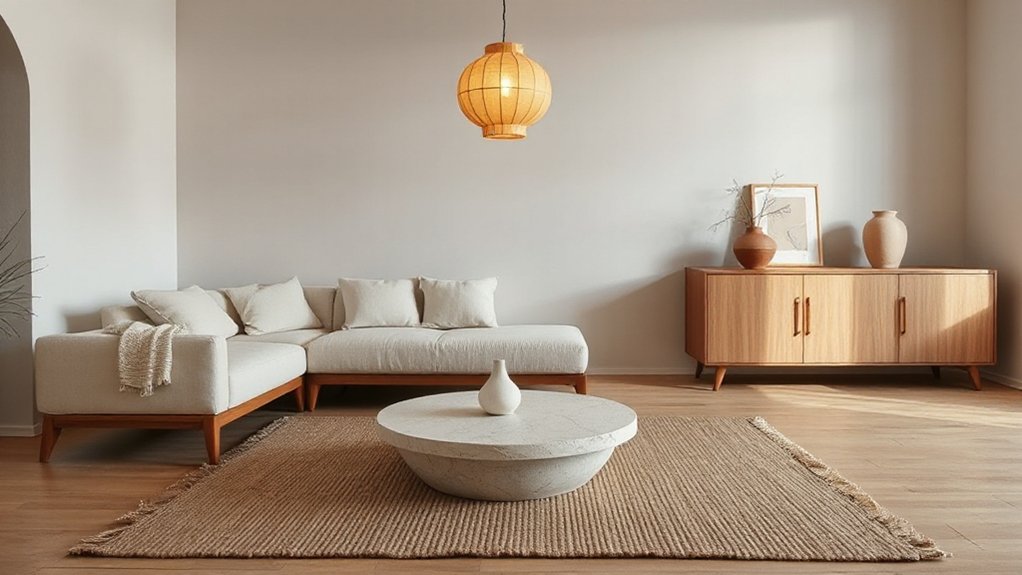
Because stark white and hard edges can feel chilly in a UK climate, warm minimalist furniture leans on texture and tonal layering to keep the look clean but liveable. Start with timber: oak, ash, or walnut veneer reads modern yet cosy under grey skies. Then add Textured fabrics—bouclé dining chairs, a wool-blend sofa, or a ribbed linen headboard—so the room feels soft without looking busy. Use Warm color palettes in tight bands: oatmeal, clay, camel, and muted olive work well with black metal or brushed brass. Keep surfaces matte rather than glossy to cut glare from winter light. In smaller British rooms, repeat one tone across key pieces and vary the weave and grain instead, so you get depth without visual clutter.
Modern Minimalist Furniture Mistakes to Avoid
In modern minimalist furniture, you can’t let a sleek silhouette trump comfort, or you’ll end up with a room that looks good but doesn’t work for everyday living. You also need to respect scale and proportion—an oversized sofa in a typical UK terrace lounge, or spindly chairs under a heavy dining table, will throw the whole scheme off. Get these two fundamentals right first, and the rest of your minimal choices will feel intentional rather than stark.
Choosing Style Over Comfort
Although sleek silhouettes and crisp lines suit a modern minimalist look, you’ll regret it if the sofa feels like a showroom prop rather than somewhere you actually want to sit. Prioritise Comfort over aesthetics by testing pieces properly: visit a UK showroom, sit for ten minutes, check back support, and ask about foam density and seat suspension. Minimalism shouldn’t mean discomfort; it should mean fewer, better choices you’ll use daily.
- Choose performance fabrics (wool blends, hard-wearing linen, or stain-resistant upholstery) for real life.
- Pick ergonomic details: proper seat depth, supportive arms, and a back angle that suits how you lounge.
- Balance Personalization versus simplicity with one tactile upgrade—textured throw, lumbar cushion, or softer rug—without cluttering the room.
If it doesn’t invite you in, don’t buy it.
Ignoring Scale And Proportion
How often does a “minimal” room feel wrong simply because the furniture’s the wrong size? In minimalist interiors, you can’t hide mistakes behind pattern or clutter, so scale balance matters more. An oversized sofa swallows a London flat; a dainty coffee table gets lost in a spacious Manchester open-plan.
Measure before you buy: room length, walkway clearances (aim for 75–90cm), and sightlines from doorways and the sofa. Then match heights—side tables near seat height, media units below the screen—and keep rugs generous enough for at least the front legs of seating.
Chase proportion harmony by mixing one anchor piece with lighter companions, and repeat a couple of dimensions across the room for calm.
Minimalist Furniture Priorities by Budget Tier
- Tight budget: buy a sturdy sofa frame, decent mattress, and one hardwearing table; choose neutral colour schemes and add texture with throws.
- Mid budget: upgrade storage with soft-close hinges, solid handles, and adjustable shelves; prioritise furniture placement that hides clutter and improves light.
- Higher budget: pay for craftsmanship—solid timber, quality upholstery, and repairable finishes; keep silhouettes plain so materials carry the room.
Whatever you spend, avoid fragile veneers and fussy shapes you can’t maintain.
Frequently Asked Questions
What’s the Best Way to Care for Minimalist Furniture Finishes Long-Term?
Follow consistent maintenance routines: dust weekly with a microfibre cloth, wipe spills straight away, use pH-neutral cleaners, avoid abrasives. Protect surfaces with coasters and felt pads, and keep decorative accessories away from direct sun.
How Do I Mix Minimalist Furniture With Existing Traditional Pieces?
Mix minimalist furniture with traditional pieces by choosing one anchor item, then use decor pairing through shared materials. For colour coordination, stick to a tight UK-neutral palette, repeat metals/woods, and balance silhouettes—like tuning a gramophone.
Is Modern Minimalist Furniture Suitable for Homes With Pets and Kids?
Yes, it’s suitable if you choose robust finishes and plan cleaning. Use Kid friendly materials like wipeable laminate or performance fabric, and follow Pet proofing tips: scratch-resistant legs, washable covers, rounded edges.
Where Can I Find Affordable Minimalist Furniture Beyond Big-Box Retailers?
Like a well-edited gallery wall, you’ll find affordable minimalist pieces through charity shops, Facebook Marketplace, and local auctions. Prioritise Vintage finds for solid wood, and commission Custom designs from UK joiners via Etsy.
How Do I Avoid Minimalist Furniture That’s Actually Greenwashed or Low-Quality?
You avoid greenwashed, low-quality minimalist furniture by demanding certifications, full material disclosure, and repairable joinery. Prioritise Eco friendly materials and Authentic craftsmanship. In the UK, check FSC/PEFC, low-VOC finishes, warranties, and independent reviews.
Conclusion
You don’t need more furniture—you need better furniture. In the UK, WRAP estimates around 22 million pieces of furniture get discarded every year, so choosing fewer, longer-lasting staples really matters. Stick to the “less but better” checklist, scale pieces to your room, and prioritise durable materials with hidden storage where it counts. Add warmth through texture and tone, not clutter. Avoid common proportion mistakes, and spend smartly for your budget.