


Use one or two classic English antiques as anchor pieces, then give them pride of place on a long wall, by the fireplace, or under the main pendant. Keep the backdrop fresh with warm off-white or misty grey walls and light oak or satin finishes. Choose plain linen or wool upholstery, then add one hero pattern like tartan or a small floral. Pull furniture slightly off walls and leave a surface bare. Next, add brass and framed art for quiet character—there’s more to refine.
Key Takeaways
- Choose 1–2 antique English anchor pieces and place them where they naturally dominate, like a fireplace wall or under the main pendant.
- Keep walls and finishes light—warm off-white, pale stone, and light oak—to make heritage furniture feel fresh and modern.
- Pair neutral, plain upholstery with one patterned hero (tartan, floral, or check), then repeat its colors subtly across cushions and art.
- Create breathing room by pulling furniture 10–15 cm off walls, keeping clear walkways, and leaving one surface intentionally uncluttered.
- Add character with a few vintage accents—brass, framed art grids, or an old trunk—while limiting finishes to three for cohesion.
Choose 1–2 Classic English Anchor Pieces (and Place Them)
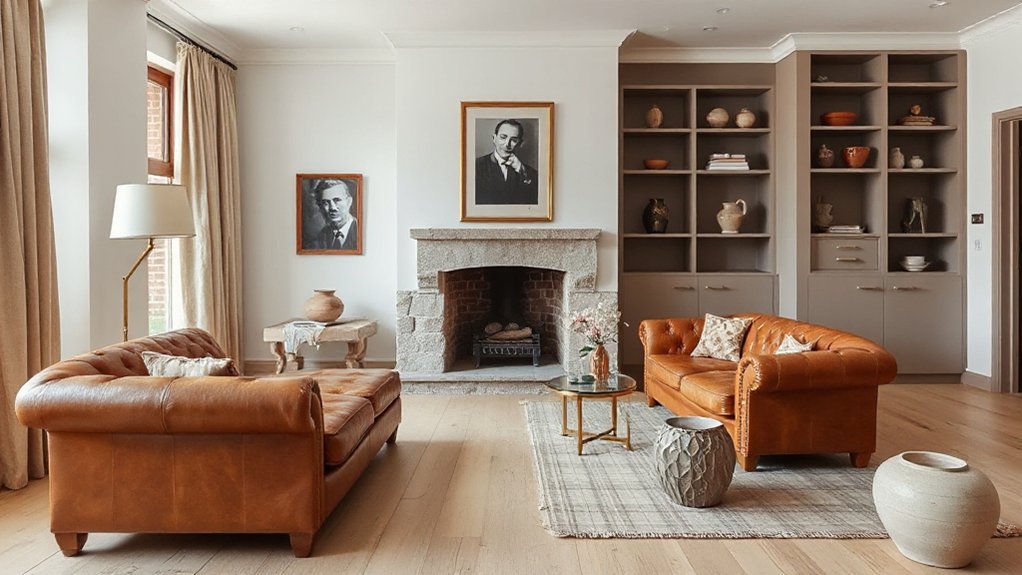
If you start with just one or two classic English anchor pieces, you’ll give your room instant structure without tipping into “country house” cliché. Pick a single hero item of Antique furniture—such as a Georgian chest, a Chippendale dining chair, or a well-made oak refectory table—then let everything else play support.
Place your anchor where it naturally commands attention: the chest on the longest wall, the table centred under the main pendant, or the chair angled by the fireplace. Keep clear sightlines; you’re after balance, not a jumble. Add one layer of Heritage textiles for authority and comfort: a wool throw over the chair or a pair of cushion covers on the sofa. Stop there, and the room stays modern.
Keep It Modern With Airy Color and Light Finishes
Once you’ve set your classic English anchor pieces, keep the room feeling current by lifting everything around them with airy colour and light finishes. This respects the Historical context while showing Design evolution through a brighter, cleaner palette and reflective surfaces. Aim for daylight, crisp contrasts, and understated sheen so heritage forms read fresh, not fusty.
- Paint walls in warm off-white, pale stone, or a misty grey; keep ceilings and woodwork a half-step lighter.
- Choose light oak, limed ash, or satin-painted cabinetry; avoid heavy gloss and overly orange stains.
- Use sheer linen curtains, slim brass or chrome hardware, and glass-topped side tables to keep sightlines open.
- Layer lighting: a simple pendant, a pair of wall lights, and a table lamp with a parchment shade.
Mix English Patterns (Plaid, Floral) With Solid Basics
While English plaids and florals bring instant character, they’ll look deliberate rather than busy when you ground them with solid basics. Start with plain upholstery in linen, wool, or cotton—stone, navy, or warm white—and then add one patterned hero: a tartan throw, a floral armchair, or printed curtains. Keep the rest calm with solid rugs, matte-painted walls, and simple timber or blackened steel tables. Match pattern scales: pair a large floral with a tight check, but repeat one colour across cushions, lampshades, and artwork to tie it together. Choose pieces showing Traditional craftsmanship—hand-finished joinery, well-cut pleats—so patterns feel premium, rooted in English heritage, not costume-like. Maintain crisp edges with tailored piping and neat, squared cushions.
Leave Breathing Room So Traditional Pieces Feel Fresh

How do you stop an antique sideboard or rolled-arm sofa from making the room feel heavy? You give it air. In modern UK homes, breathing room is the quickest route to contemporary simplicity, because the eye needs pauses between strong silhouettes. Treat each heritage piece as the feature, then use balancing space to keep it crisp, not crowded.
- Pull big furniture 10–15 cm off the wall so skirting and shadow lines show.
- Leave one clear route from doorway to window; don’t force extra chairs in.
- Keep one surface bare: a sideboard top or mantel, not every ledge dressed.
- Choose slim, open-legged pieces nearby to counter the bulk and lift the sightline.
You’ll make traditional shapes feel intentional, not dated.
Layer Vintage English Accents: Brass, Art, and Old Trunks
Because small details carry a room’s character, you can modernise classic English style by layering a few vintage accents—brass, framed art, and an old trunk—rather than adding more heavy furniture. Choose one or two brass notes: a candlestick, gallery light, or door knocker repurposed as wall décor, and let the patina show Antique craftsmanship. Hang framed prints or oils in a tight grid above a sofa, keeping mounts simple and black or oak so the artwork reads crisp against modern paint. Use an old trunk as a coffee table or end-of-bed storage; top it with a tray so it functions daily. Line it with Heritage textiles, or drape a tartan throw nearby to tie colours together. Keep to three finishes max.
Frequently Asked Questions
How Do I Authenticate an Antique English Piece Before Buying?
Check provenance, maker’s marks, and construction details; compare with catalogues and auction records. Use Antique valuation from a UK-accredited valuer, and inspect Authenticity markers like patina, repairs, and period hardware. Avoid vague dealer guarantees.
What Budget Range Should I Expect for Quality Classic English Furniture?
Expect £800–£3,000 for quality classic English pieces; rare items run £5,000+. You’ll pay less at auctions, more at dealers. Prioritise condition. Use Furniture arrangement and color coordination to justify spend.
Where Can I Source Classic English Pieces Locally or Online?
You can source classic English pieces via Vintage resale shops, local Antique fairs, and reputable auction houses. You’ll also find them on eBay UK, Vinterior, and 1stDibs. Check dealers’ VAT terms, delivery, and condition reports.
How Do I Care for and Clean Vintage Wood, Leather, and Brass?
You’ll care for vintage wood with beeswax polish, clean lightly with a damp cloth; for leather, use saddle soap then conditioner; for brass, apply Brasso sparingly. These Care techniques and Cleaning tips prevent patina loss.
Will Classic English Furniture Work in Small Apartments or Open-Plan Spaces?
Yes, it’ll work if you plan it. Use Space optimization: choose slim profiles, drop-leaf tables, storage ottomans. Guarantee design compatibility by balancing scale, keeping sightlines clear, and anchoring pieces with rugs.
Conclusion
Choose one or two classic English anchor pieces and set them where they’ll earn their keep. Keep walls airy, finishes light, and daylight working hard. Mix plaids and florals with calm, solid basics; pair heritage character with modern restraint. Leave breathing room in your layout, in your storage, in your styling, so nothing feels fussy. Then layer in brass, framed art, and an old trunk for grit, history, and function.